
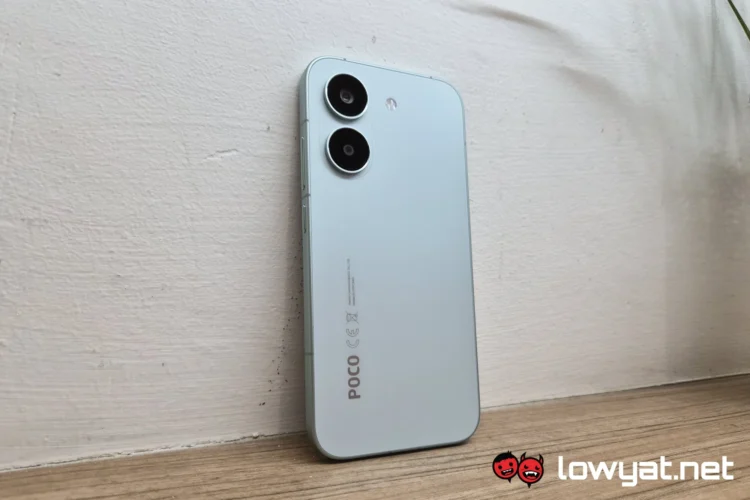
Xiaomi’s gaming-focused sub-brand POCO has gone down a strange path as far as naming convention is concerned. In its eighth generation of its F series, the brand has elected to not launch a base model, with the F8 line only represented by the Pro and Ultra. It looks like the same is happening to the X series, with the X8 series containing only the Pro and Pro Max models.
Which brings us to the subject of this review, the POCO X8 Pro. With a starting price of RM1,499, can it perform well enough to hold on to its gaming phone lineage? Let’s find out.
Specifications
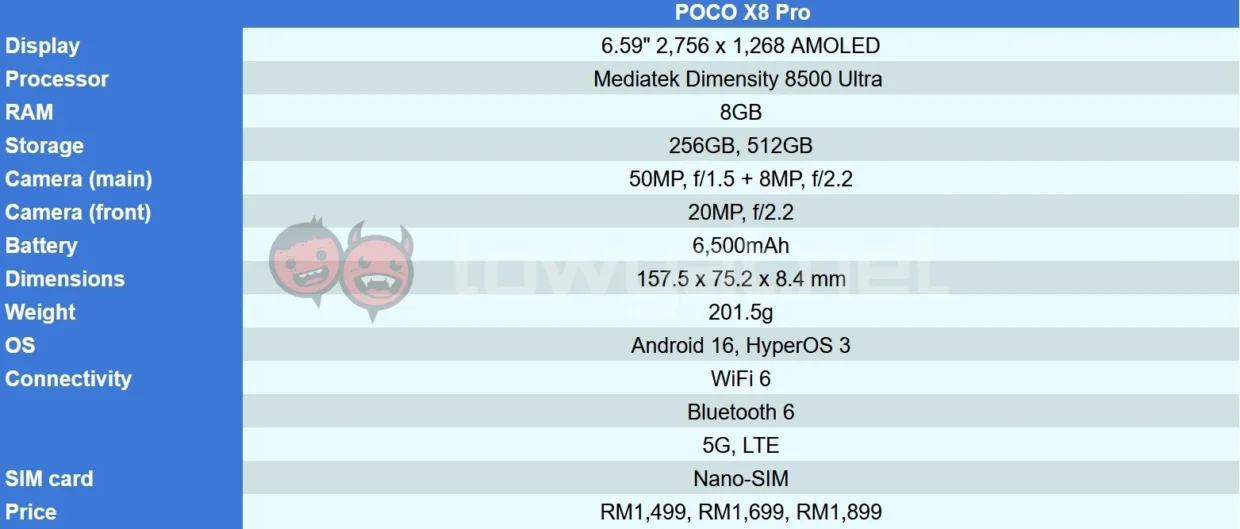
To be clear, the device we were passed for this review is the slightly pricier one, costing RM1,699. This is simply for more storage space, which will have minimal effect on performance compared to, say, more memory.
Looks & Functionality
On the outside, the POCO X8 Pro doesn’t much standout, as it sports the pretty typical smartphone layout. You get the usual power button and volume rocker on the right side, two cameras at the back, and you’ve pretty much described the phone. Not that it’s specifically a bad thing. And on the flip side, it would be a tad strange for a phone of this price point to have a garish look to it.
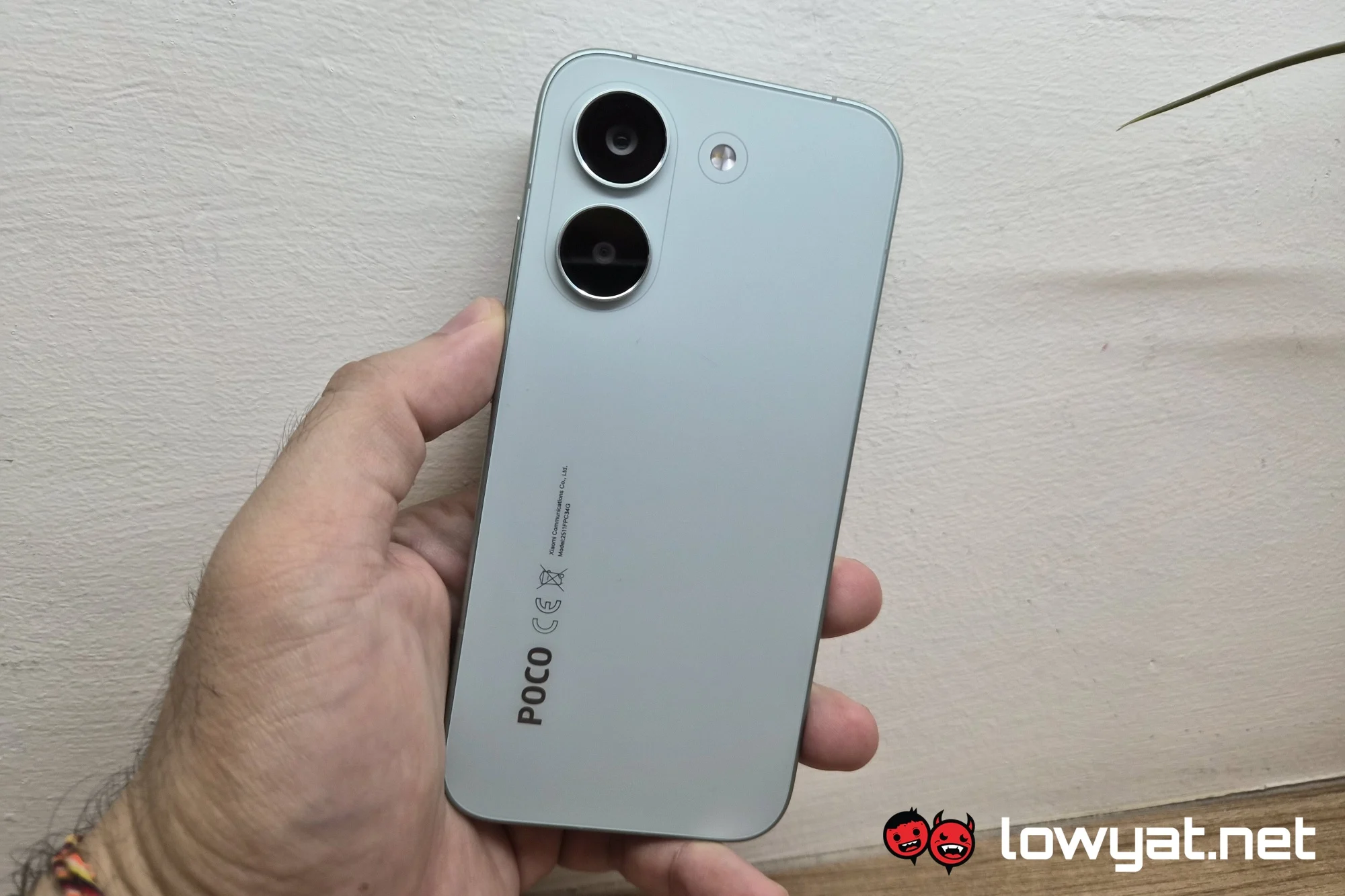
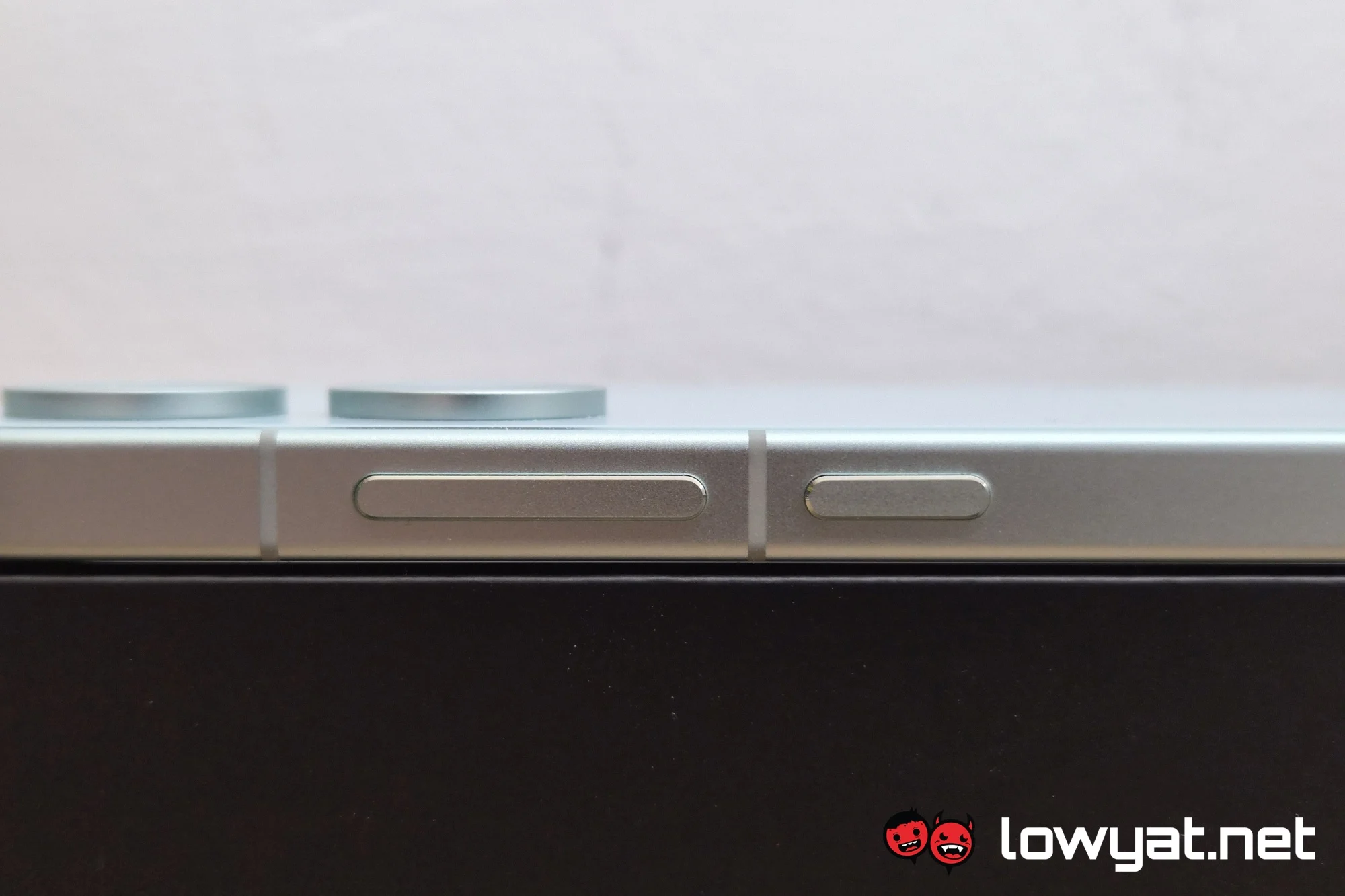
In a similar vein, it is flat on both sides, but with its edges rounded on the metallic frame. This allows it to be comfortable while being held, without negatively affecting the user experience. Of course, look a bit closer and you see some visual flair on the back. Beyond just the frosted glass, you get lines outlining, as it were, both the LED flash as well as the dual camera combo. No camera island here either, with said outline doing that job in a sense.
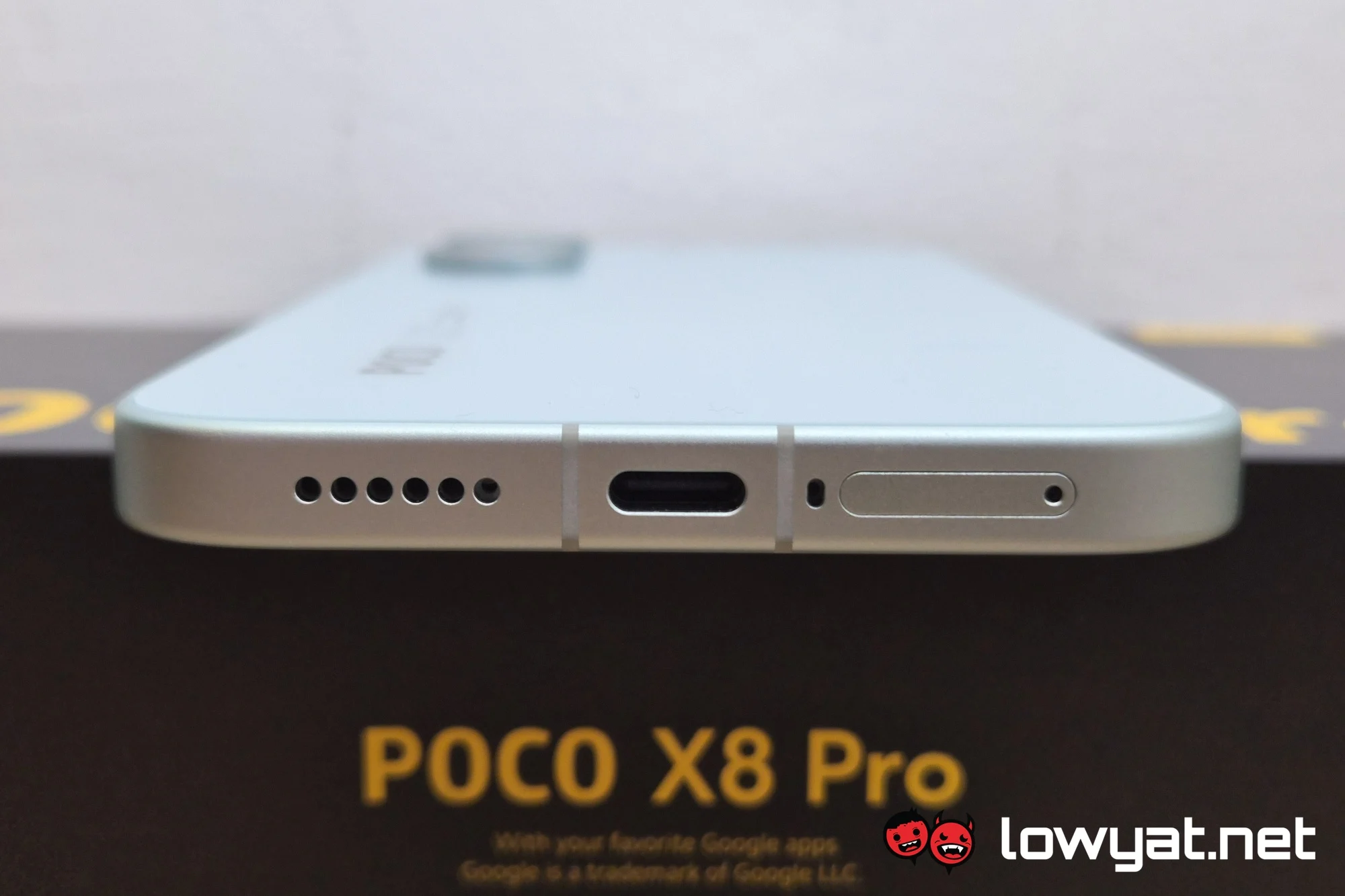
As with many phones, you get a pseudo stereo setup with the POCO X8 Pro. The bottom gets the usual speaker grille. On top, its the old earpiece pulling double duty once again. They definitely don’t disappoint in the volume department, and that’s realistically all you can ask for from phone speakers.
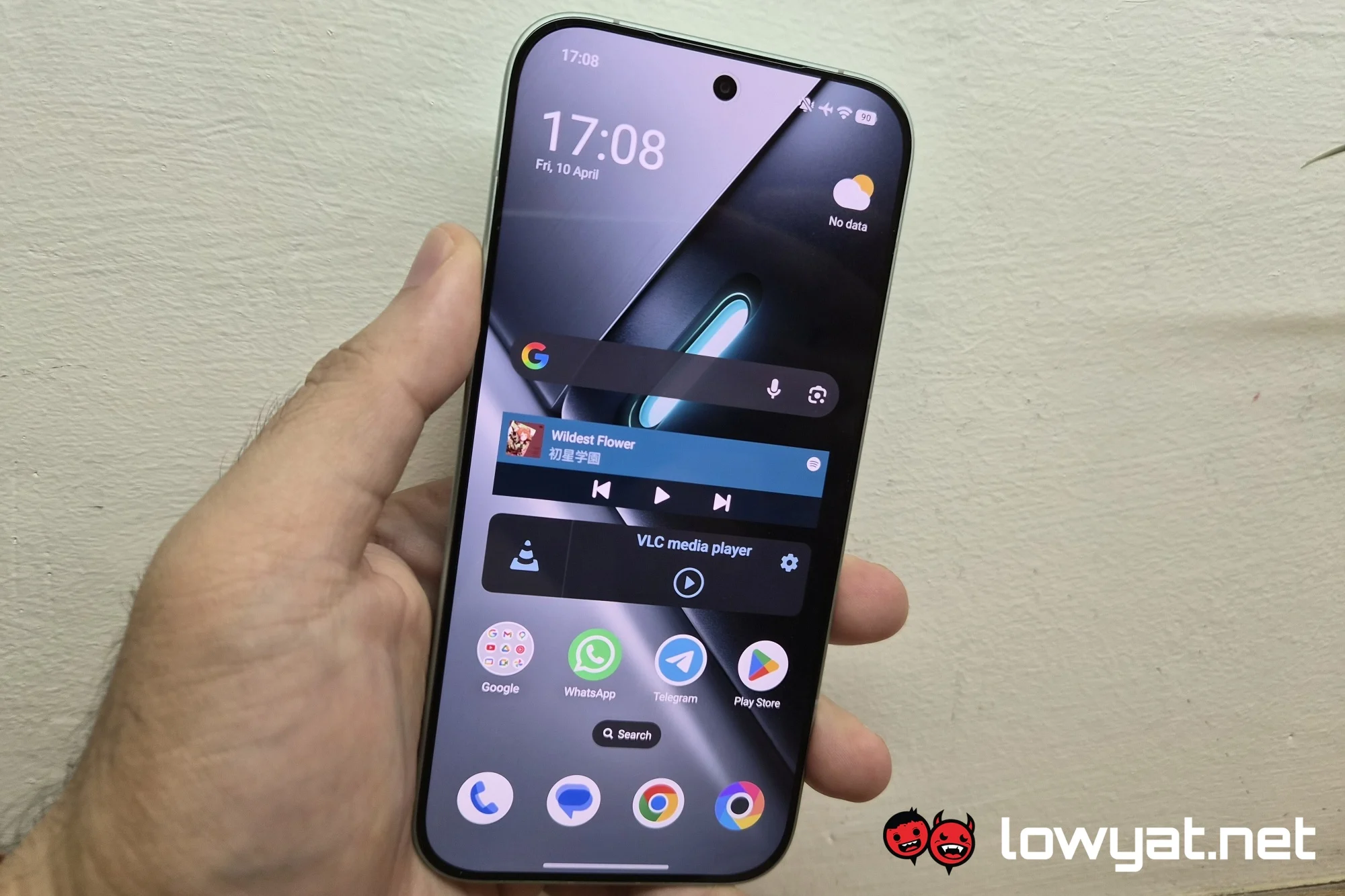
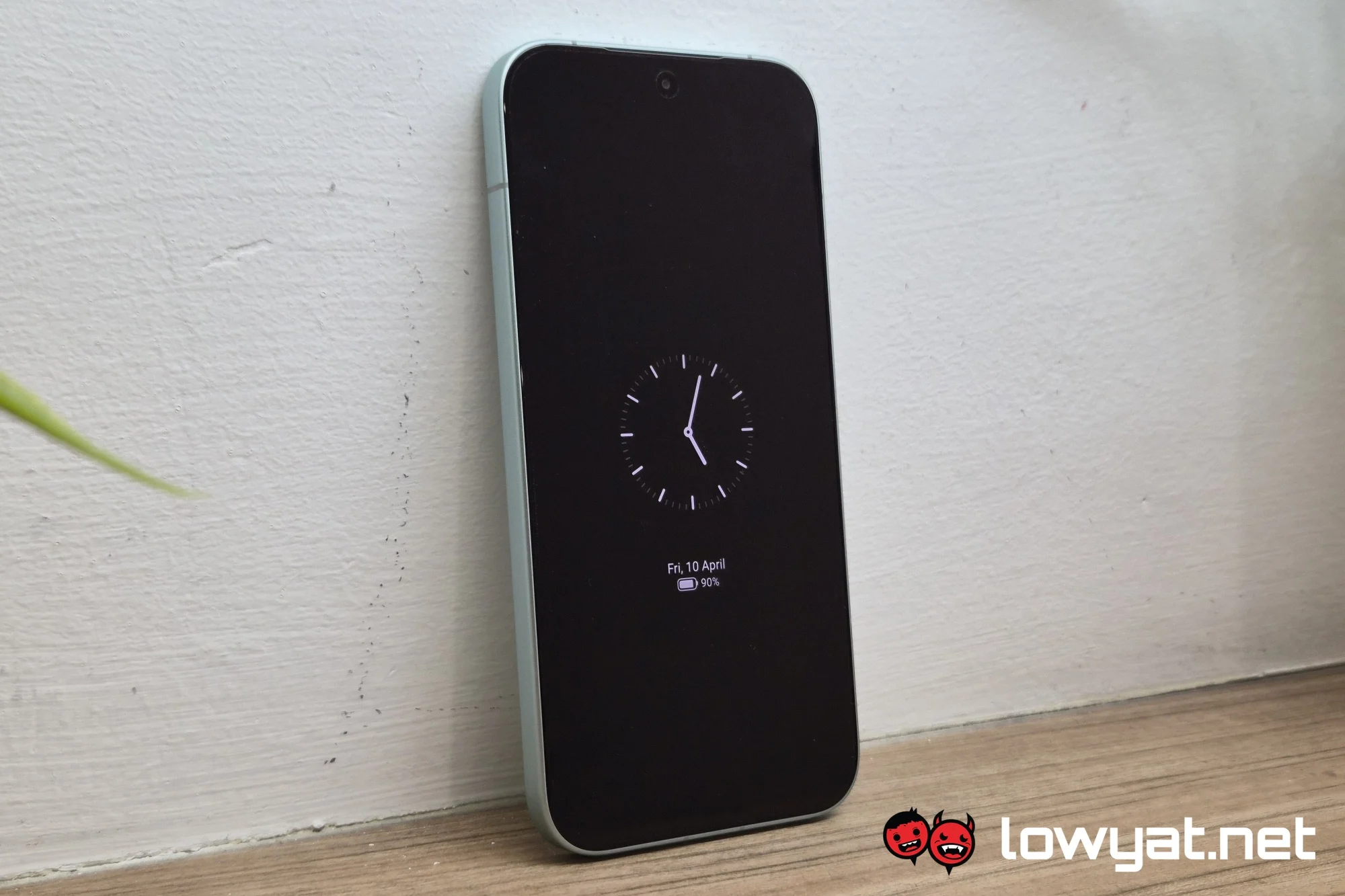
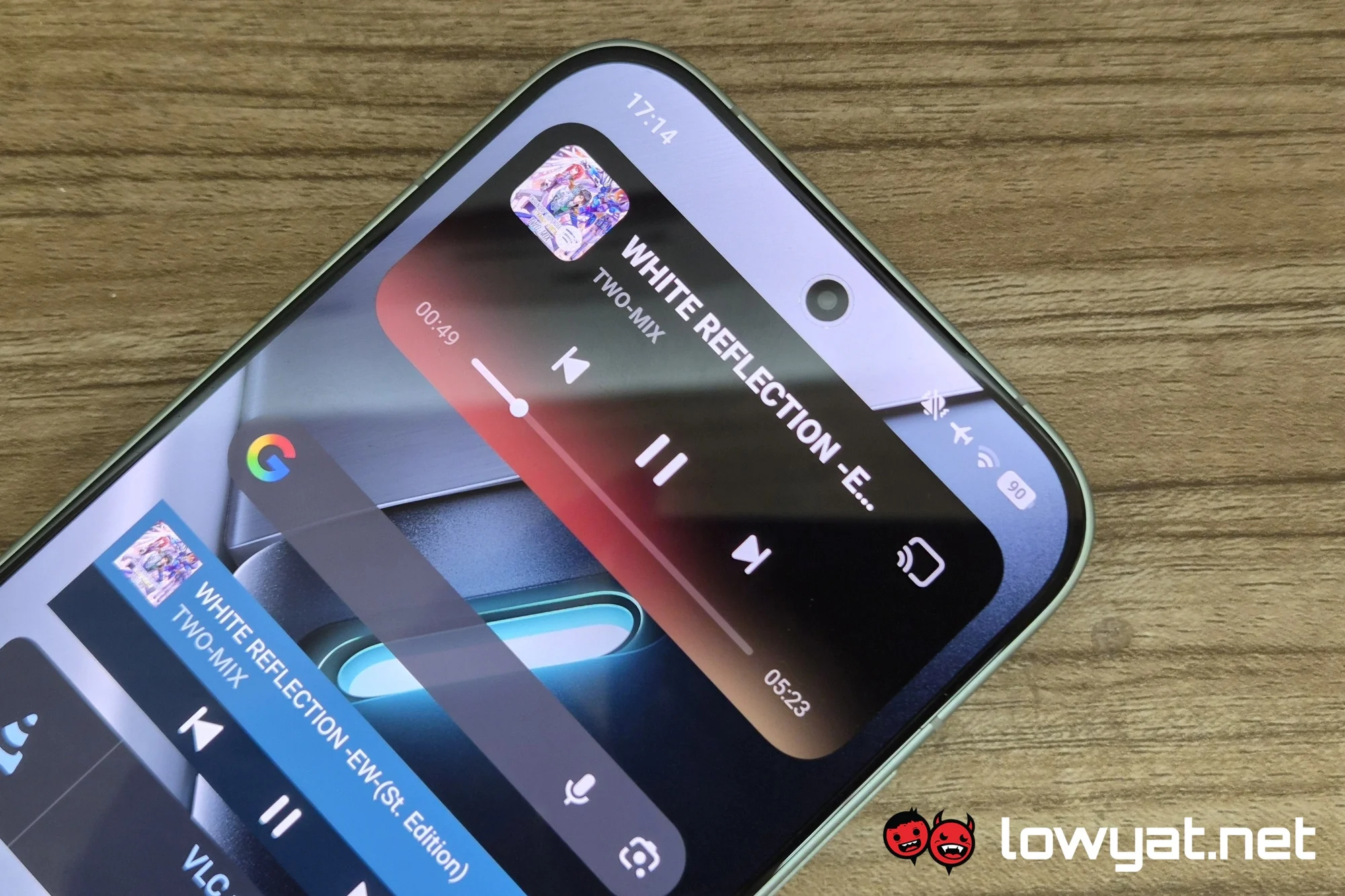
Being a Xiaomi sub-brand, the POCO X8 Pro also makes use of HyperOS 3. And this is probably the second Android overlay to have its own take on Apple’s Dynamic Island. Nothing much to say here besides it works as expected, even if there are fewer compatible apps for now. But on the other end of the spectrum, this also means you see ads on occasion while using the phone.
Performance & Battery
The POCO X8 Pro comes with a MediaTek Dimensity 8500-Ultra. And while some may prefer to see a Qualcomm Snapdragon in there instead, this chip is no slouch. You’ll see as much from the synthetic benchmarks. In actual tests, I ran a few Exterminate missions on Warframe, and it maintained a smooth 60fps. That being said, there’s the usual issue of massive battery drain. Two missions took off just under 10% of charge
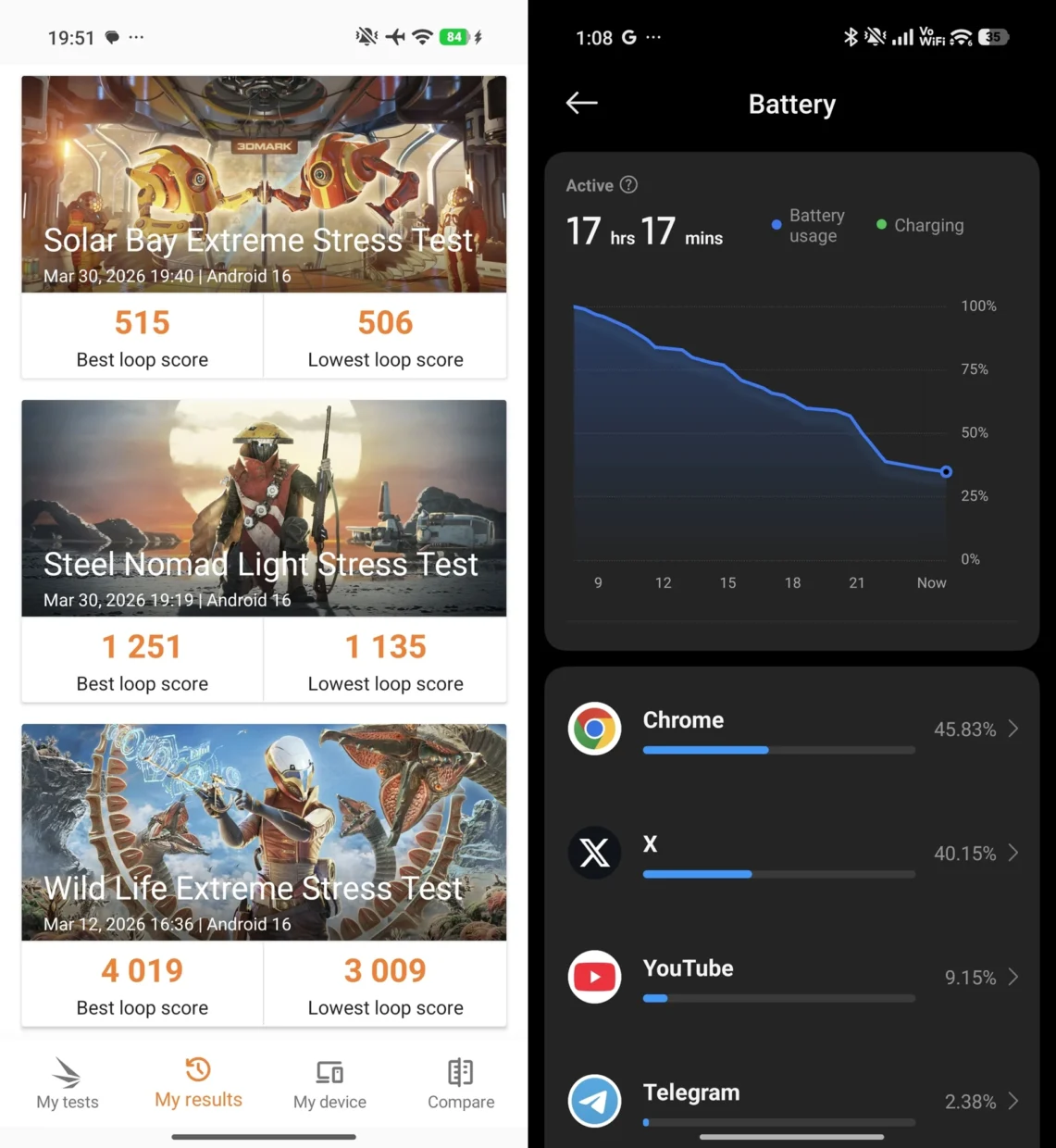
Which brings me to the battery life of the POCO X8 Pro. Officially, it’s listed with a 6,500 mAh battery. That’s just about the norm for modern phones by Chinese makers, but otherwise still on the large side. But that doesn’t seem to extend its battery life by much. Putting it through our video loop test, it lasted just over 22 hours. Charging, using the provided 100W charger, takes about 53 minutes to go from empty to full.
It’s about the same story for when it’s used as a daily driver too. With moderate social media scrolling and video streaming, I end the day with about 35% of charge. Add in some photo shooting or navigating, and it would be just barely enough to last the full day. To say nothing about gaming, of course.
Camera
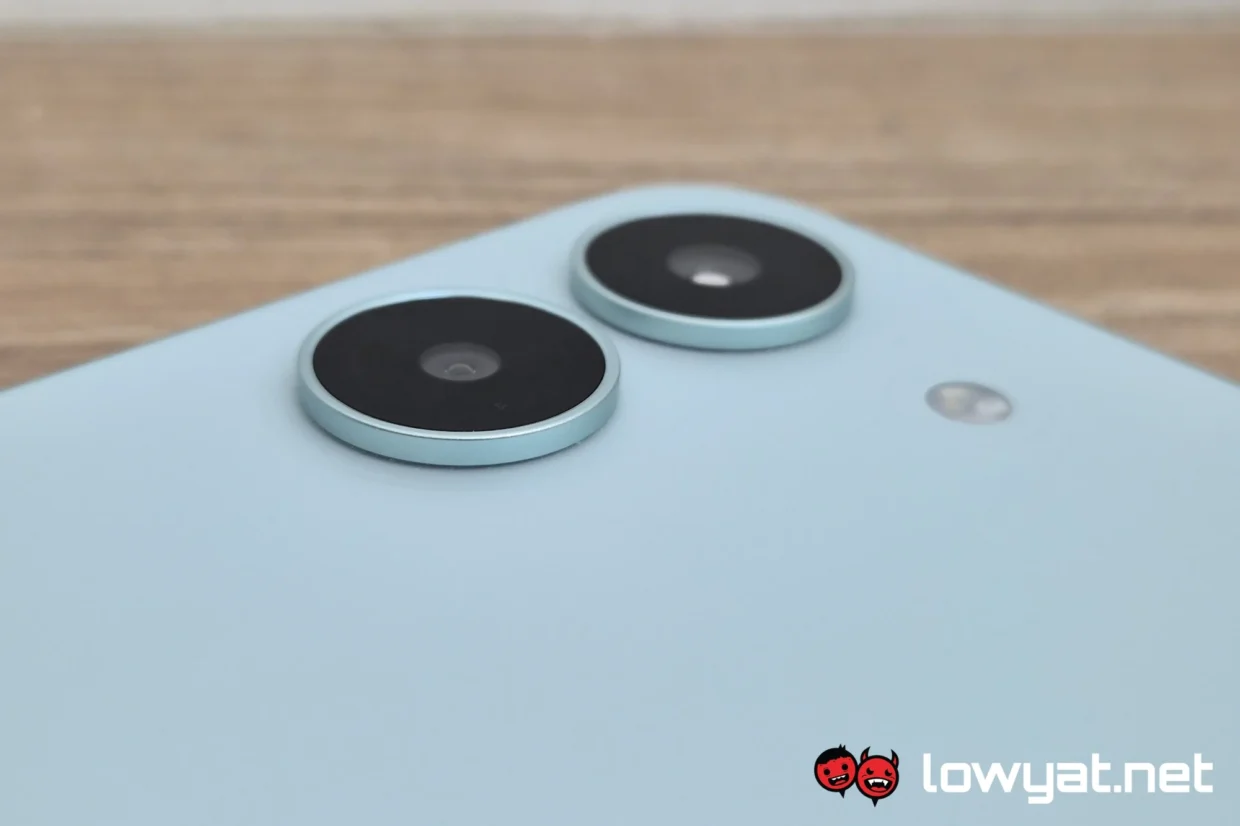
The POCO X8 Pro has a 50MP main + 8MP wide-angle combo at the back. While it doesn’t take the best of shots, it’s still a far sight better than its price would suggest. It also helps break the stereotype to some degree, that gaming phones usually have poor performing cameras.
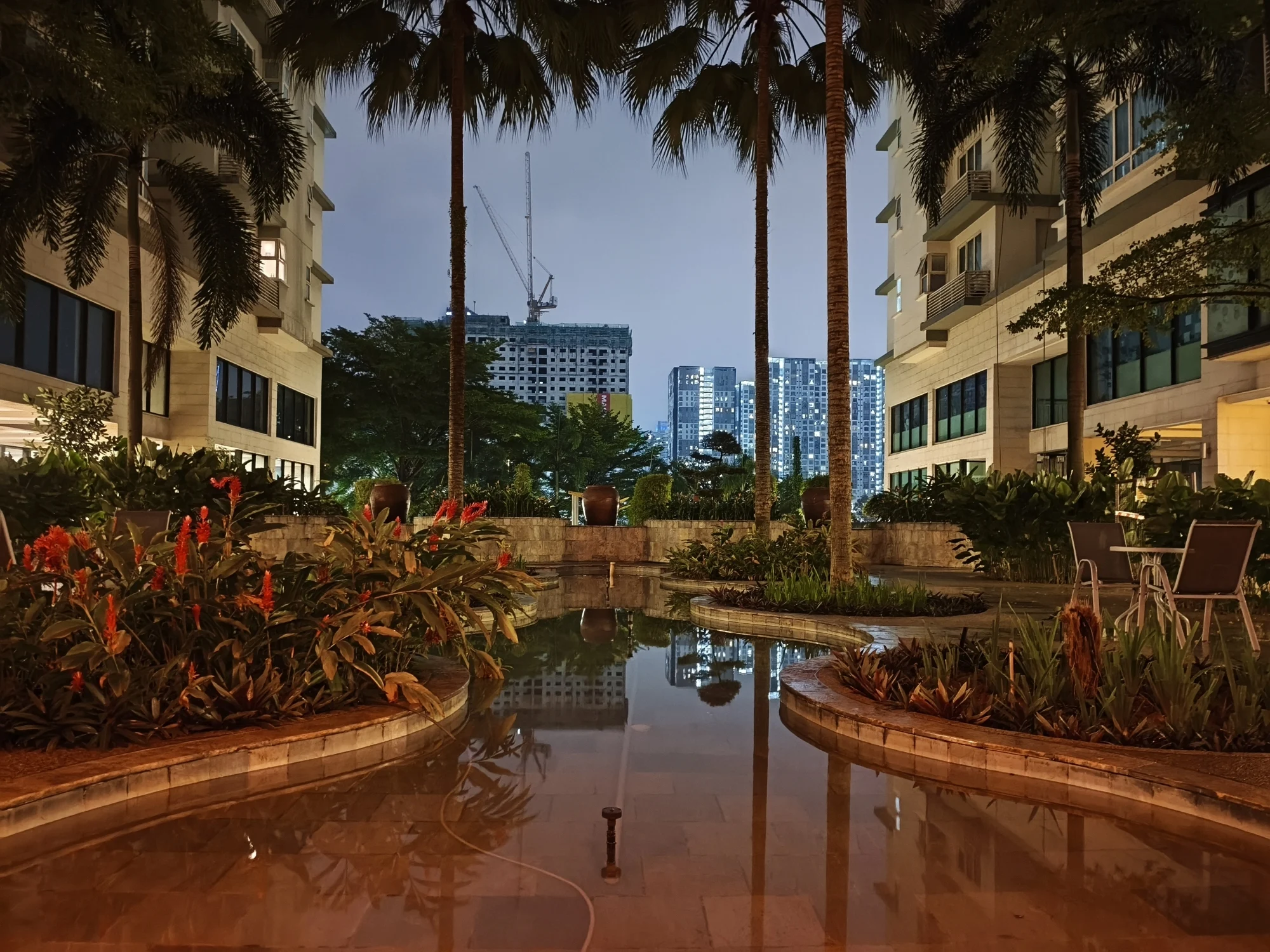
That being said, photos taken with this phone does tend to have higher than average contrast. Bright parts are brighter than usual, and when it’s dark, it’s really dark. Granted, I’ve left HDR at automatic, but the phone does tend to think that it’s necessary more often than not. Detail retention is also not the best, but it’s not usually something that you’d notice until you start pixel-peeping. At night, There’s enough AI algorithmic magic to sharpen buildings, but not things like textured brick walls.
Sample Images















Competition
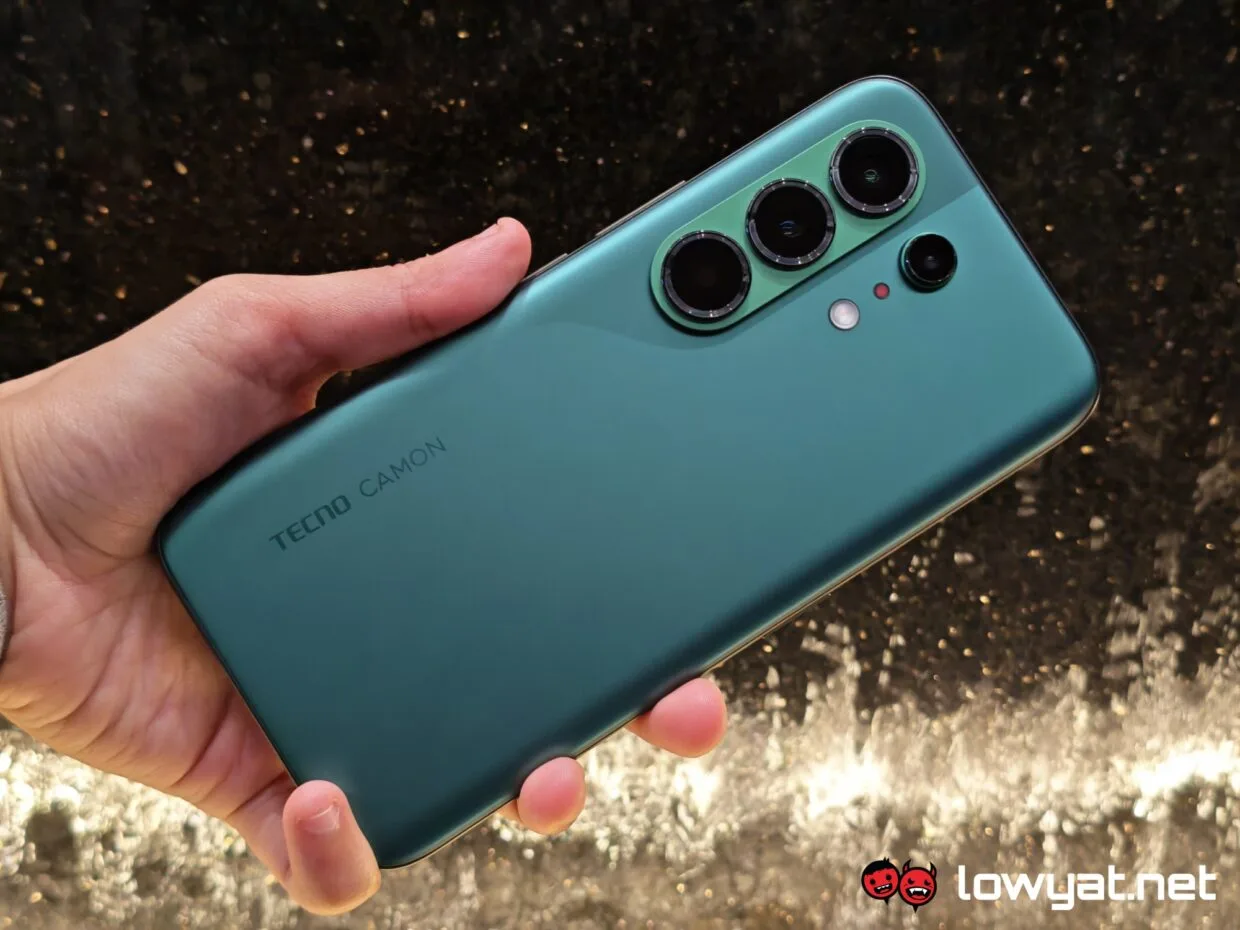
As a direct price comparison, we have the Tecno Camon 50 Ultra. It shares the same starting price as the POCO X8 Pro, but there’s definitely some variation here in terms of specs. To start, this one has a 6.78-inch 1.5K 144 Hz curved AMOLED screen, a MediaTek Dimensity 7400 Ultimate chipset, 8GB of RAM and a 6,500 mAh battery, with 45W charging.
Its cameras include a 50MP main + 50MP 3x telephoto + 8MP wide angle combo at the back. In front, it has another 50MP shooter. As alluded to earlier, all of this has a starting price of RM1,499.
realme 16 Pro
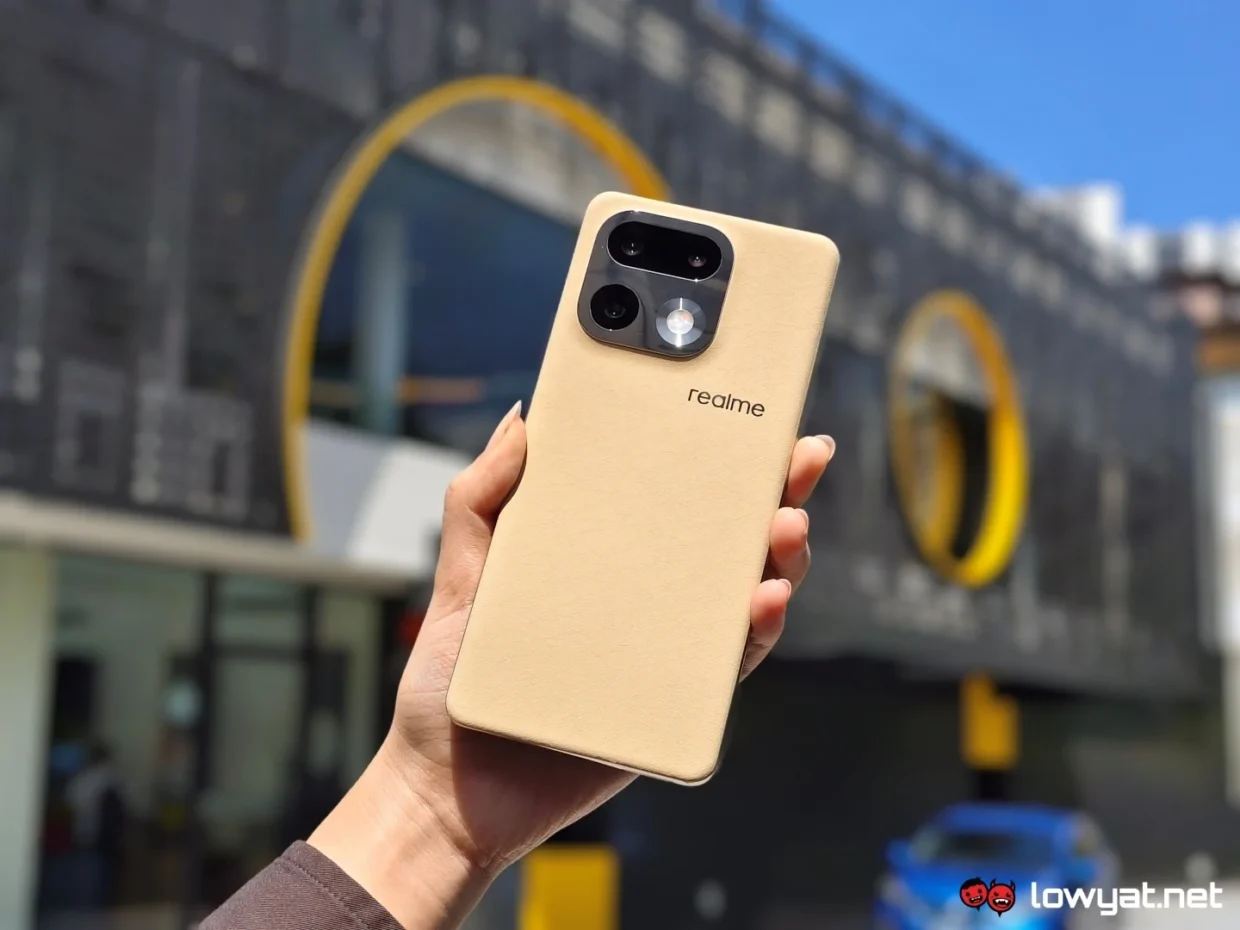
Slightly pricier is the realme 16 Pro. This one features a 6.78-inch Full HD+ 144 Hz AMOLED display, and notably a 240 Hz sampling rate. Inside is a MediaTek Dimensity 7300 Max 5G chipset, 12GB of RAM, and a 7,000 mAh battery which supports up to 80W charging.
For cameras, it has a 200MP main + 8MP wide-angle pair at the back, and a 50MP shooter in front. And it has an asking price that starts from RM1,599.
Conclusion
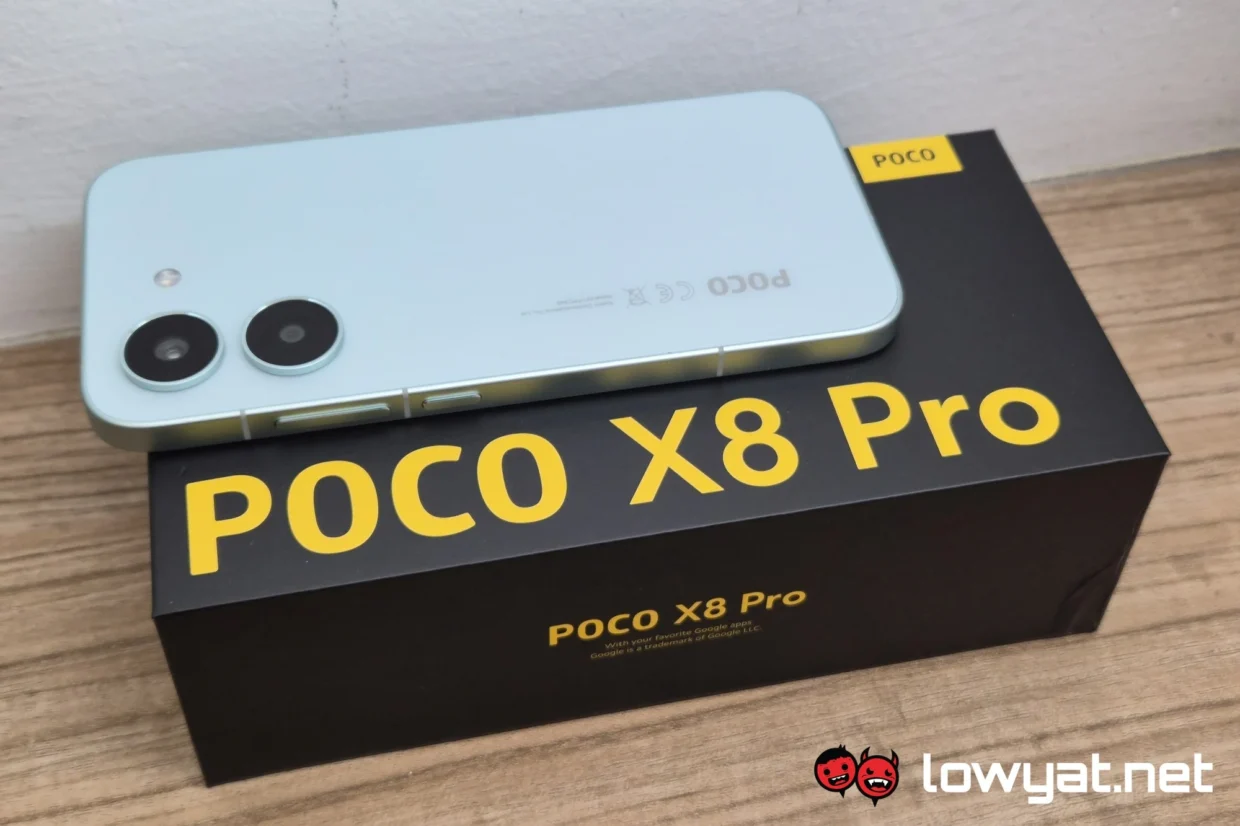
The POCO X8 Pro, then, is a pretty interesting phone. Mobile photography remains its weakest point, but it’s not that big a gulf as it was with prior entries. Hopefully this improvement in imagine capability is a trend and not just a one-off.
Beyond that, it used to be that, with less focus on mobile photography, POCO phones did everything else pretty well, if not very well. Ads as part of the UX aside, this looks to be consistent. With that in mind, all POCO needs to do is to keep its strength consistent, while continue improving its imaging.
Forward-looking hopes aside, the POCO X8 Pro is a good choice for the mobile gamer that doesn’t intend to take much photos. Or at least isn’t too fussy about them. Which is pretty much the brand in a nutshell.
