

Earlier today, Qualcomm unveiled its Snapdragon 8 Elite Extreme Gen 6 chipset, which is one half of two flagship Gen 6 platforms announced at its keynote today. The chipmaker also gave attendees a chance to see the chipset in action during a special benchmarking session, and we took a chance to do so.
This was a good opportunity for us to take a look at the new chipset, but more specifically, it gave us a chance to take a look at the brand’s new Adreno Neural Fusion (ANF) technology that is basically a combo of an upscaler and Frame Generation, and just like AMD’s and NVIDIA’s own upscalers, you could opt to turn them on separately or work in tandem. Oh, and it’s supposed to be performance-per-watt efficient.
Powerful Chipset And Top-Notch Specs
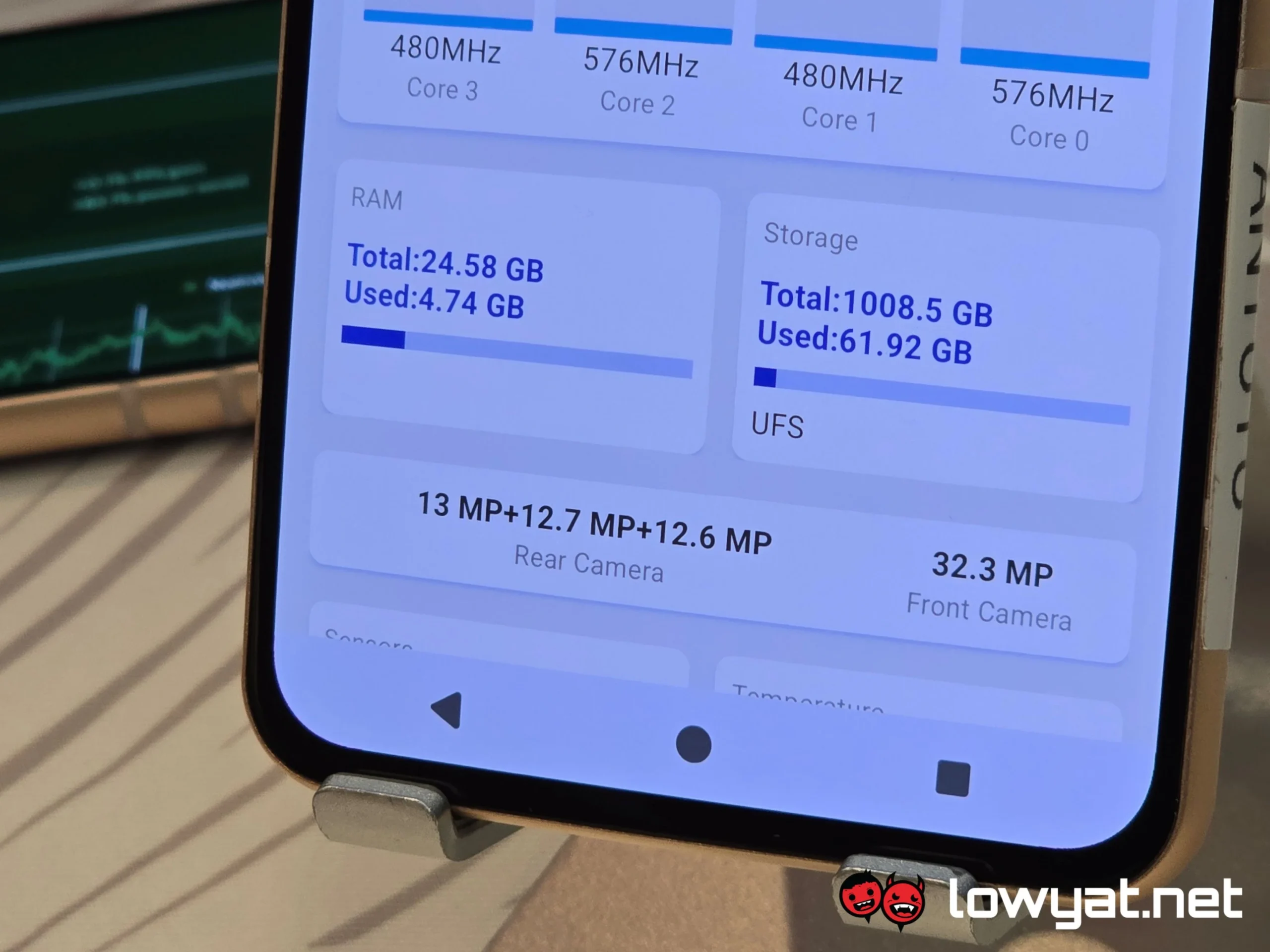
There are a couple of things to point out about the benchmarking session. First, the devices Qualcomm put together were, as they usually are, just prototypes meant to house their flagship chipset. As such, the phone was “everything but the kitchen sink” sort of scenario, and by that, I mean that it had 24GB of LPDDR5X RAM, 1TB of storage, and the coveted Snapdragon 8 Elite Extreme.
The second thing you need to know is that, for the purpose of demonstrating the ANF engine of the 8 Elite Extreme, Qualcomm came up with their own benchmark to test the waters: Evolve. On that note, I should point out that only the Extreme platform has the Matrix Engine that allows it to run upscaling and Frame Generation. On another note, Qualcomm did say that it was trying to get this new benchmark program consumer-ready and downloadable to the masses, but fell short of a specific timeline. Anyway, moving on.
Predictable Flagship Performance

The results on the CPU side of the 8 Elite Extreme aren’t out of the ordinary and expected. Again, it’s got 24GB of RAM and 1TB of UFS 5.0 storage, so running anything on this absolutely beast of a configuration would yield results that are far greater than anything the market has. So, when the platform eventually reaches the market, don’t be surprised if the flagships they are installed in carry less RAM and have lower storage capacities.
Getting to the GPU portion of the benchmarking, the Evolve benchmark effectively showed off the differences between running the demo with and without ANF. Without ANF turned on, the demonstration chugged along at an average of 15 fps. Once toggled, that average framerate jumped straight to around 45 fps, and mind you, this was before Frame Generation came into the picture.


Once turned on, the average frames jumped into the low 60 fps, but more impressive is the amount of power these presets consumed. While running natively, the 8 Elite Extreme was showed to be consuming close to 15W in power, which is a lot when you factor in the long gaming hours that gamers tend to engage in.
With just the ANF upscaler turned on, that number dropped down to an average of 8W. Again, this is without Frame Generation yet. Once that turns on, that power draw dropped further, down to an average of 5W and 6W.
Impressive as it is, I have to remember that this was all done in a controlled environment and, as such, real-world performance is still subject to the implementation of the 8 Elite Extreme chipset by its brand partners. And with those phones launching later this year, we’ll definitely be getting that chance soon.
