
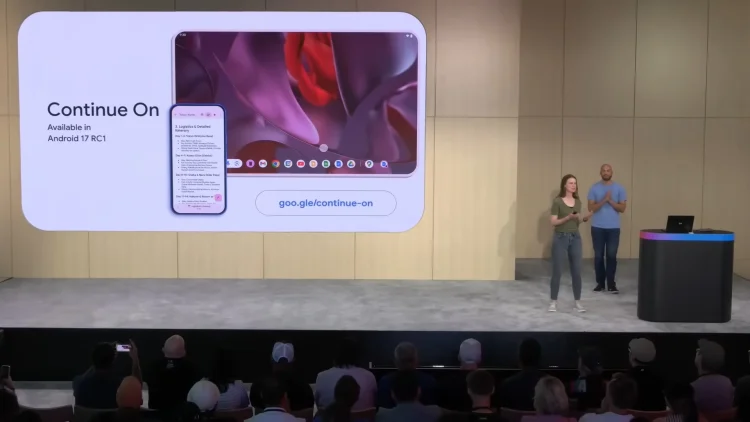
In addition to unveiling a slew of AI-focused initiatives and future wearable technologies, Google is also laying the groundwork for a new feature that is similar to Apple’s Handoff. The new feature is called “Continue On”, and it will soon let users seamlessly continue their work across Android devices in Android 17.
The company briefly showcased the feature during its “What’s New in Android” session at Google I/O 2026, while a newly published developer page provides more details about how it works. According to Google, Continue On allows users to start an app on one Android device before continuing the same activity on another device within their Android ecosystem.
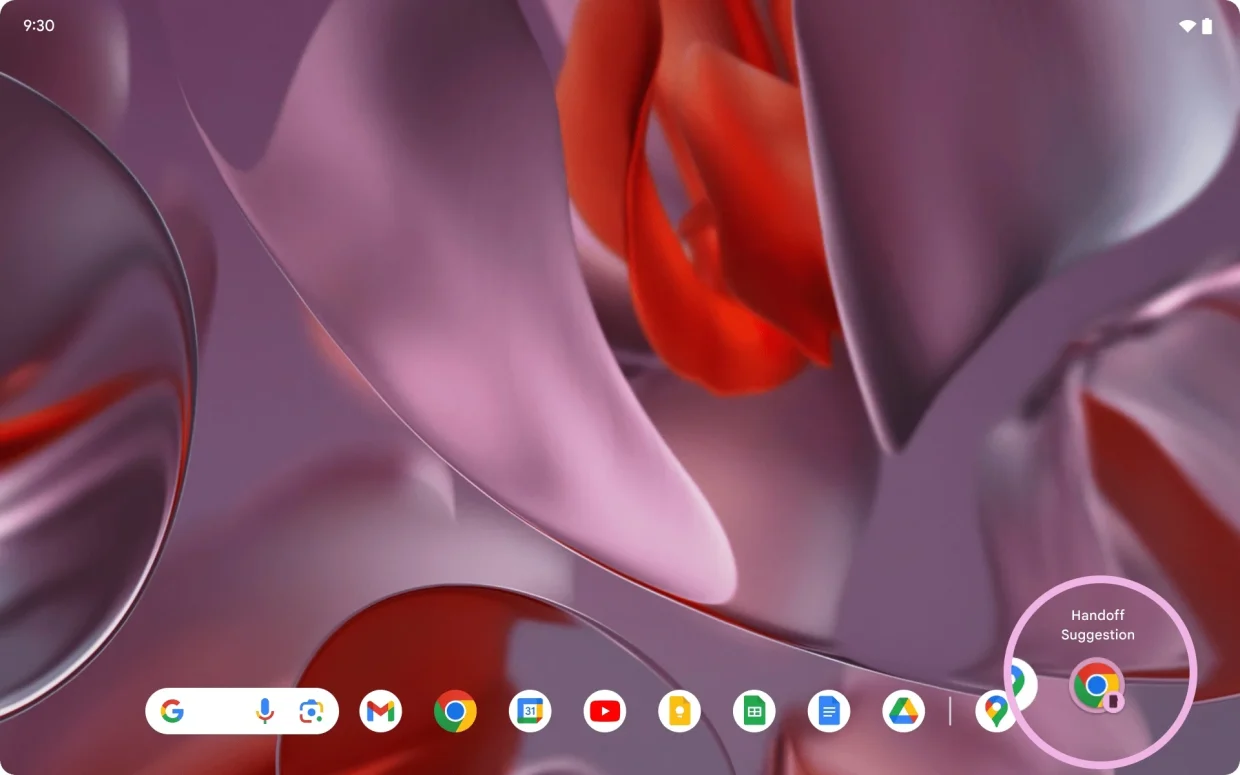
The page adds that the feature works bidirectionally, meaning supported Android devices can both send and receive activities. However, Google currently limits Continue On to phone-to-tablet transitions, although the company could expand support to more device types in the future.
Google explains that users will see a suggestion for their most recently opened app from their mobile device on their tablet’s taskbar. The company says the feature provides users with a one-tap option to resume an app on another device and continue where they left off.
The tech giant gave a few examples. The first (which you can see above) shows a document opened in Google Docs on a phone, with a “handoff” suggestion appearing in the tablet’s dock that lets users continue right where they left off. The second (the video below) demonstrates browser integration, where an email opened in Gmail on one device seamlessly continues in Chrome on a tablet, opening directly to the same message.
Moreover, Google has fallback mechanisms in place for cases where an app is not available on the receiving device. Instead of attempting to open a native app, Google says apps can specify a fallback URL that launches in the user’s default browser. This allows users to continue with their task on the web instead. In some cases, this direct-to-web handoff may be used as the primary experience if the developer prefers the web version over the native app.
(Source: Google, 9to5Google)
