
AMD has partnered up with Unsloth to allow its XDNA2 NPUs to work with the latter’s self-named Unsloth Desktop, making it the first NPU platform to be able to do so.
Through the partnership, AMD’s XDNA2 architecture is able to run LLMs on Unsloth via integration with Lemonade and FastFlowLM (FLM). As the red chipmaker puts it, “It’s a new way to put the NPU to work: running agent inference locally, efficiently, and through familiar applications.”
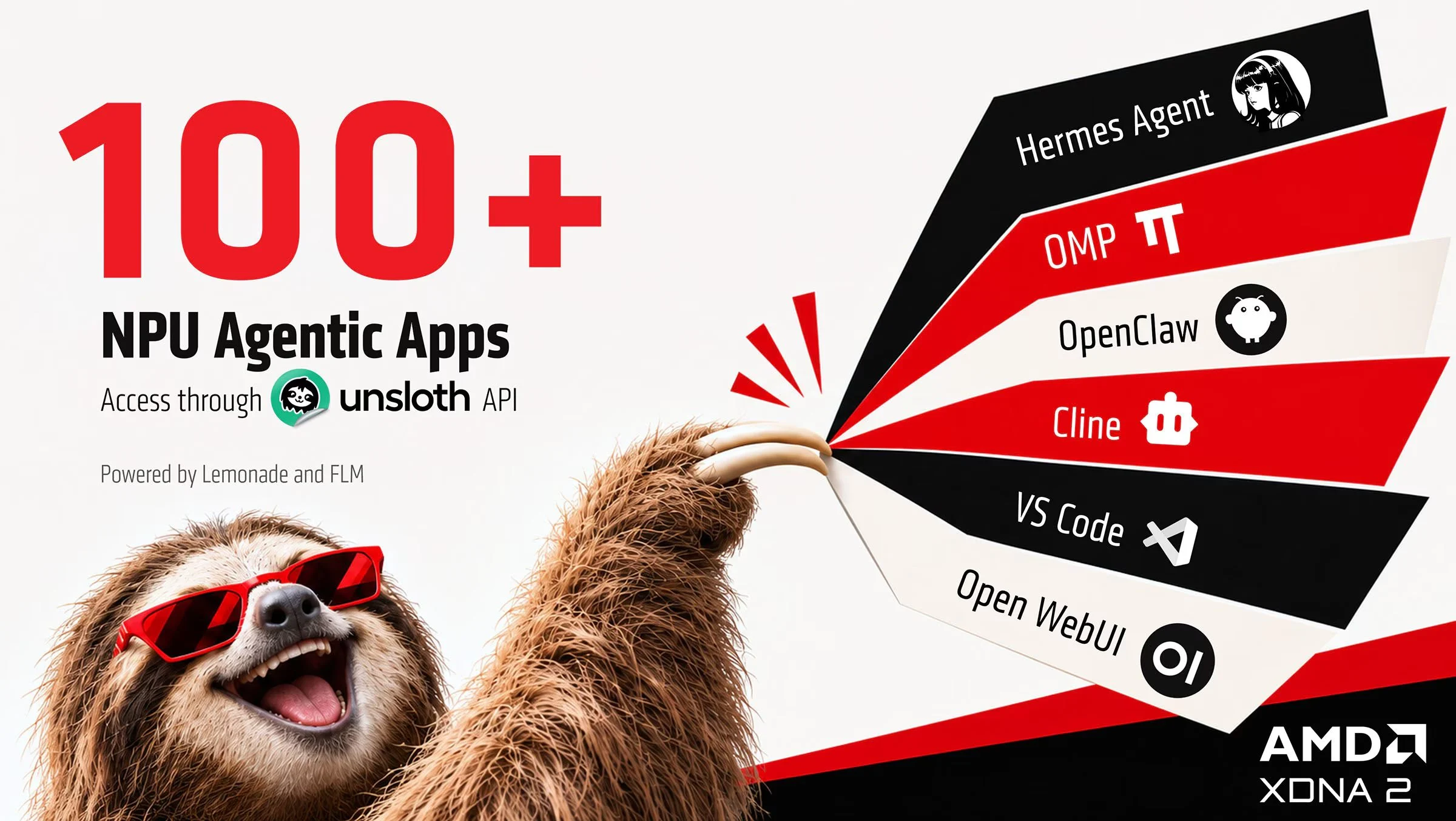
While it uses Unsloth as an agent, AMD says that access to its XDNA2 is also open to other AI Agents, albeit through the Unsloth API. This includes Hermes Agent, OpenClaw, Open WebUI, Cline, OMP, and VS Code illustrate the breadth of that ecosystem, from coding assistance to connected agent workflows.
One of the more appealing draws that AMD is promoting with XDNA2 is the ability to AI models locally. This form of Agentic AI and running models is one of the trends now, as it allows AI enthusiasts, developers, and vibecoders to prompt the agent without having to worry about their token consumption. Such is the appeal of AMD’s green rival, NVIDIA, and its all-encompassing RTX Spark processor too.

“AMD XDNA 2 NPUs are designed for power-efficient AI inference. Offloading supported inference workloads to this dedicated engine can help preserve battery life and leave CPU and GPU resources available for other applications (memory permitting). For users, that means a foundation for agent experiences that fit the way they use their PCs, including when working unplugged and getting more out of their battery. For developers, it creates another execution option for bringing local AI into everyday workflows – enabling low power, persistent agents.”
If you have an AMD device with an XDNA2 NPU, you can get started with Unsloth Desktop by downloading the Agent for Windows first. AMD has provided simple instructions on the announcement page to get your started, so just follow them and you’ll be prompting and utilizing your AI agent in no time.
(Source: AMD)
