
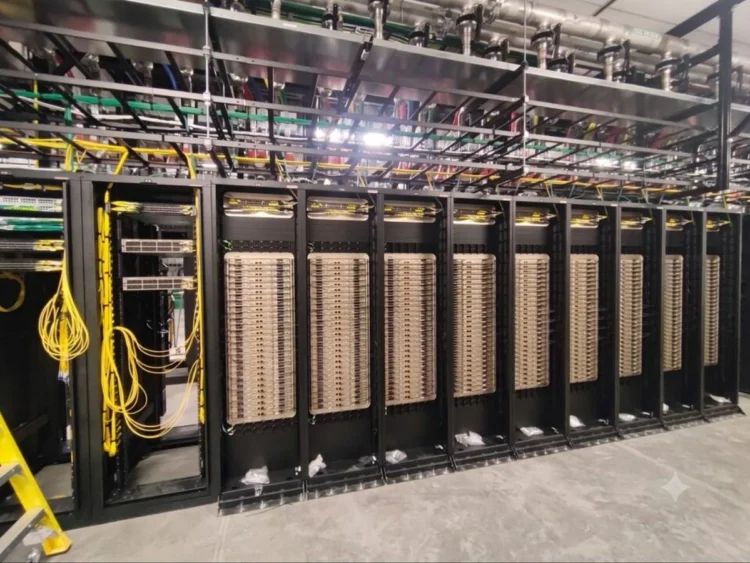
Six pallet of unknown NVIDIA hardware was reportedly stolen in the US, while they were being transported between the state of Oakland and Texas two months ago. The value of the cargo was valued at US$11.4 million (~RM46.3 million) and was reportedly picked up by a truck in the state of California before vanishing off the grid completely.

State police tried to trace the route of the truck, which reportedly belonged to the food transportation company, after the buyers reported that it had not received their shipments yet, nearly a month after the order shipped out in August of this year.
This isn’t the first time we’ve reported on the theft of NVIDIA hardware, and this is the third case of this scale alone. The reason driving these looting spree is no secret either: the growing AI boom.
Just this September, there was a report that thieves targeted two trailers labelled with NVIDIA and PlusAI logos, thinking that the cargo was AI GPUs and other electronics, only to abandon them because all they found was 20 tons of sand inside.
Then, in October Oderço, a Brazilian hardware distributor, reported the theft of two pallets of RTX 5090 GPUs from its country’s São Paulo/Guarulhos International Airport. Its owner took to social media to report the theft, stating that it was the first time in 38 years that their company had experienced such an event. The move was also borne out of frustration of the Brazilian authorities’ lack of action.

After going public, Brazilian publication Jornal da Band reportedly obtained security footage, showing more details on how the heist occurred; two subcontracted forklift operators and a third individual letting them through airport security.
Less than a week later, one of the stolen NVIDIA RTX 5090 GPUs showed up on OLXX, the country’s second-hand online marketplace, being sold for nearly full market price. Oderço was able to identify the card as part of its stolen merchandise because whoever posted it on the site didn’t bother blocking out the serial number on the box.
(Source: Videocardz, Ars Technica, Tom’s Hardware)
