

Discover-Tech, an Israeli advertising technology company is facing scrutiny over allegations that it used digital advertising systems to track and profile Starlink users around the world, including in Malaysia. According to a report by Reuters, cybersecurity researchers at TrendAI believe the firm was among the biggest buyers of digital advertisements shown to users of SpaceX’s satellite internet service. Its bidding activity was unusually high in more than 100 countries, including places where Starlink is banned or restricted.
TrendAI’s research, published on 15 October, identified the company under the codename SHADOW-EARTH-79 without publicly naming Discover-Tech. The researchers’ findings suggest that the activity could be part of a surveillance operation rather than an ordinary advertising campaign.

Malaysia Among Countries Flagged
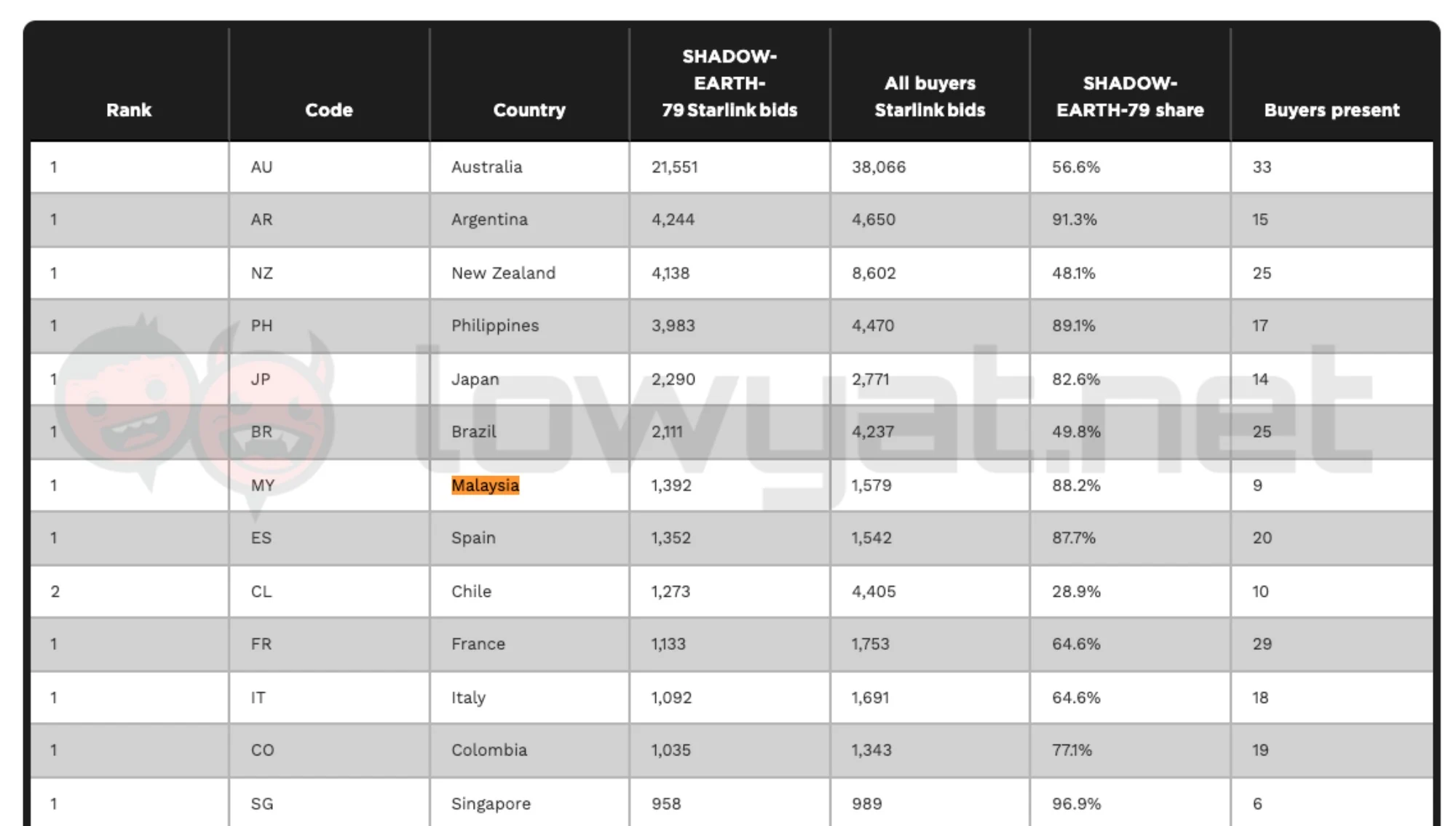
TrendAI’s report found that SHADOW-EARTH-79 was the largest buyer of digital ad impressions in 49 countries across all the advertising traffic it analysed. Malaysia was among the countries where the entity recorded a high share of bidding activity, alongside Thailand, Saudi Arabia and the United Arab Emirates.
The report also found that the entity was the number one bidder for advertising impressions associated with Starlink traffic in 105 countries. It accounted for approximately 13% of all winning bids in the Starlink traffic examined, around five times the average share recorded for other bidders.
These findings do not establish that every Malaysian Starlink user was tracked, or that the activity necessarily involved a successful compromise of their devices. Instead, they point to suspicious advertising activity that could potentially be used to identify users, infer their locations and build profiles of their behaviour.
How Digital Ads Could Be Used For Surveillance
The alleged operation takes advantage of a process known as real-time bidding, which allows advertisers to compete for space to display advertisements on websites and within apps. During these auctions, information about a device may be shared with multiple bidders, including its IP address, approximate location, device type and other identifying details. When combined with advertising identifiers, browsing activity and location history, this information can help build a profile of a user, even when they have never directly interacted with the advertiser.
The winning bidder can then deliver an advertisement to the device. TrendAI’s research suggests that advertising infrastructure could potentially be abused to collect further information, track movement patterns and identify people in sensitive locations.

Discover-Tech Already Under Scrutiny
According to Reuters, another cybersecurity research group, Citizen Lab, as well as advertising technology company Confiant also publicly identified Discover-Tech in separate investigations into suspicious advertising activity. The two organisations said the company had abused the advertising bidding process, potentially allowing it to collect information that could be combined with other data to identify users and follow them across the internet. Their findings also linked its advertisements to sensitive networks associated with media organisations, governments and technology companies.
Following the investigations, Google, Comcast and other companies said they had removed Discover-Tech from their advertising platforms. Reuters also reported that at least one major US technology company and an international organisation had begun internal inquiries into whether their employees had been targeted.
Discover-Tech did not respond to Reuters’ requests for comment following TrendAI’s report. Meanwhile, SpaceX also did not respond.

What Users Can Do
TrendAI recommends reducing the amount of information shared through advertising systems, particularly for people whose locations or movements could put them at risk. Users can start by limiting advertising personalisation and resetting their device’s advertising identifier where supported. They should also review app permissions, especially location access, and consider reducing their use of ad-supported applications on devices used for sensitive work.
Ad blockers may help, but TrendAI cautions that simply hiding advertisements does not necessarily stop tracking. Tools that can block tracking requests and prevent apps or websites from communicating with advertising backends may offer better protection.

Will Starlink Come Under Scrutiny?
Given recent events, the mention of Israeli ties raises an obvious question: could Starlink also come under the Malaysian authorities’ scrutiny? However, the SpaceX-owned satellite internet service operates under a different legal jurisdiction.
Similar to Google Maps, which was exempted from the government’s restriction on Waze for official duties, Starlink is a US-based service subject to US law. This differs from Waze, whose data controller is incorporated in Israel and whose terms of use place disputes under Israeli law and the jurisdiction of courts in Tel Aviv.
That said, Starlink’s US jurisdiction does not necessarily mean it is exempt from scrutiny. The National Security Council (MKN) has previously said that the National Cyber Security Agency (NACSA) would continue evaluating other products and applications, particularly those subject to Israeli law, and take appropriate action if similar risks are identified.
