
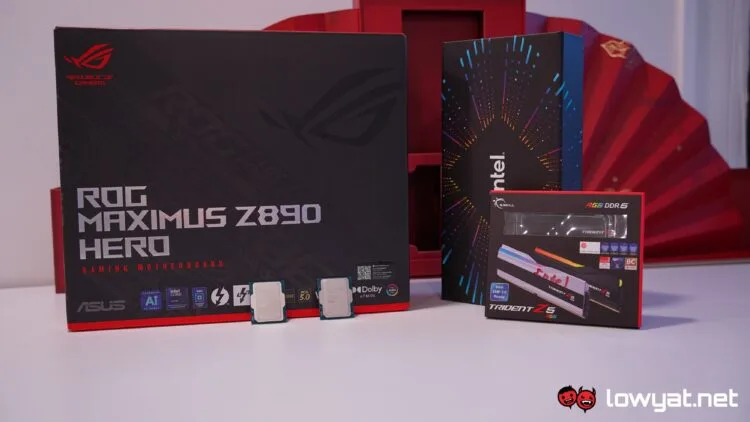
Intel Nova Lake desktop CPUs will arrive for desktops first, well before they reach any datacentre. These were the words of Robert Hallock, VP and General Manager of the Enthusiast Channel Business, Intel, during an interview with Tom’s Hardware.
When asked about his rival AMD’s decision to launch its Zen 6 architecture for datacentres first with its new EPYC Venice CPUs, Hallock responded by saying that Intel is “very serious” about giving consumers the product first. “I think it’s a natural reaction for them. Makes a lot of sense. What I would say is, as we think about our own roadmap, I have a new core. It’s coming to desktop first. I mean, I hope enthusiasts do the math about that one, and that’s all I’m going to say.”
Learning From Mistakes

Compared to its mobile laptop segment, which has been showing improved performance generation on generation (just look at Lunar Lake and its successor Panther Lake), it’s been less so for its desktop processor segment. You may remember that just a few years ago, its 13th and 14th Gen lineup, both based on the Raptor Lake architecture, came under fire when multiple reports and incidents of the Core i9 SKUs in both lineups began dying from an onboard voltage irregularity, and that the damage was irreversible.
Intel eventually addressed the issues, releasing a BIOS update and ensuring that its follow-up, Arrow Lake, wouldn’t suffer from the dreaded issue. However, 15th Gen was meant with another issue; the new Core Ultra 2 Series, while powerful, favoured performance-per-watt efficiency over increased performance, which was met with mixed reviews by fans. It’s not all doom and gloom, though, with Intel having a soft redemption arc with its Core Ultra 200S Plus lineup, specifically with the Core Ultra 7 270K Plus and Core Ultra 5 250K Plus.
Still On Track With Its Roadmap
Getting back on point, Hallock says that Nova Lake is still on track for a 2026 launch, although he didn’t specify when exactly. To that end, another report says that Intel is already testing two CPUs, one 24-core and one 28-core. Supposedly, the 24-core unit has a 3.5GHz base clock, while the 28-core model runs at a lower 3.2GHz base clock.
Additionally, both alleged Nova Lake processors were listed as running with AVX-512 enabled, a sign that the instruction set introduced by Intel is making a comeback in the next generation. For that matter, the mention of the 28-core sort of reaffirms the potential existence of a 52-core SKU, which we’ve reported on extensively since it first cropped up.
