
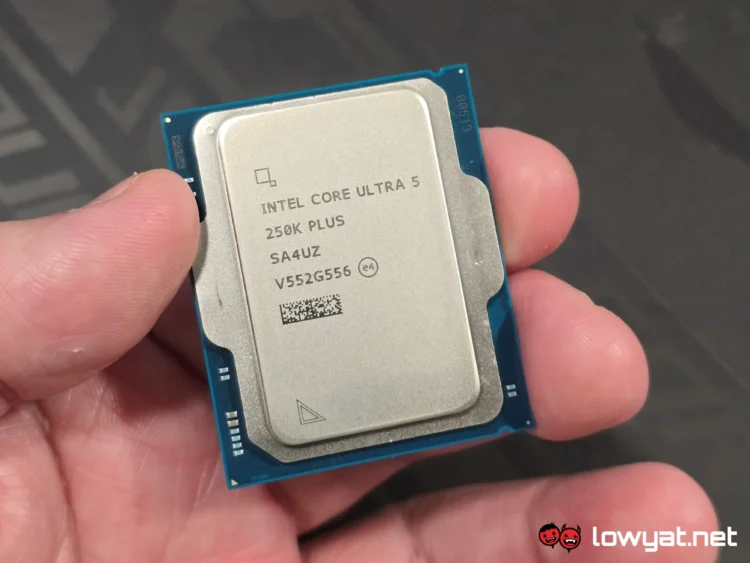
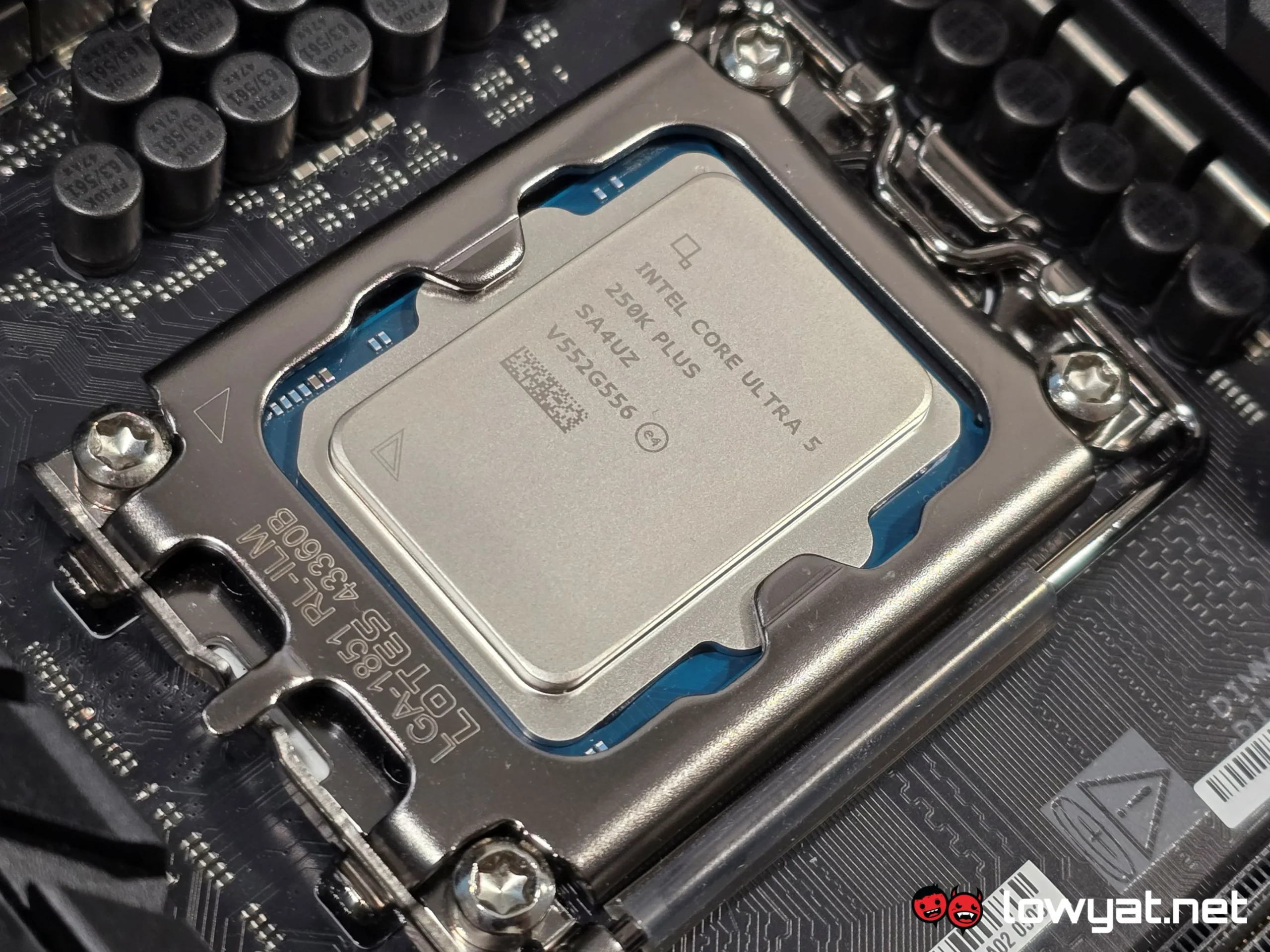
After the stellar performance of the Core Ultra 7 270K Plus, it was only natural that I take the Intel Core Ultra 5 250K Plus for a spin in the gaming sector. And boy, does it slap, hard.
Specifications
Design
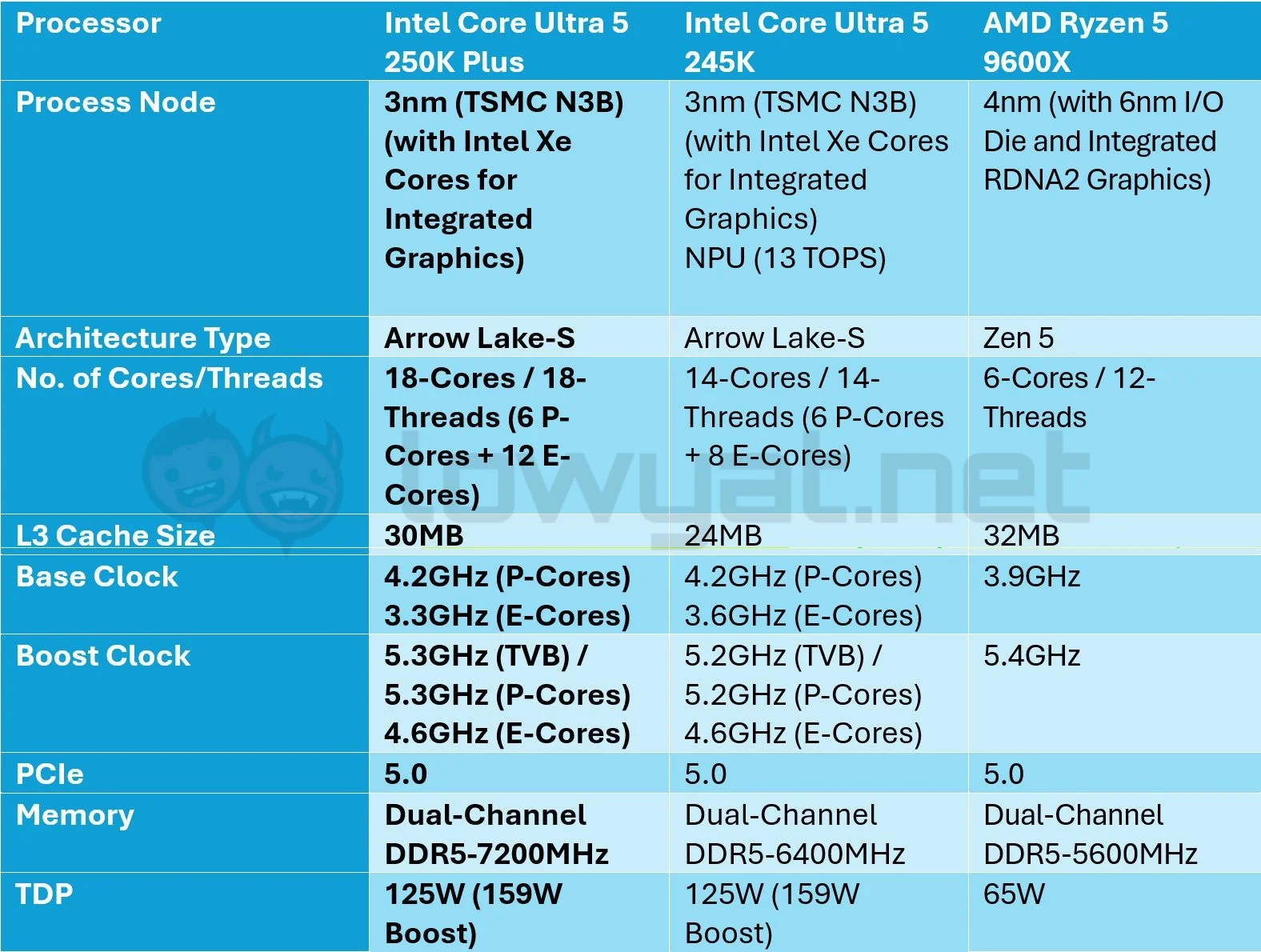
Like the 270K Plus, the 250K Plus isn’t looking to reinvent the wheel for the mid-range segment. Compared to its direct predecessor, the Core Ultra 5 245K, the increments are minor.
It’s got more cores, yes, but in the form of E-Cores; its P-Core count remains the same at six. In addition, the boost clock for the P-Cores have been given a slight uplift of 100MHz, while retaining the same default and Turbo TDP of 125W and 159W, respectively.
But where the 250K Plus stands out – over the 245K, at least – is with its support of DDR5-7200MT/s memory speeds. On paper, that’s all the differences between the 250K Plus and the 245K. In practice however, and as you’ll see in the charts, you’ll see that it’s not so cut and dry.
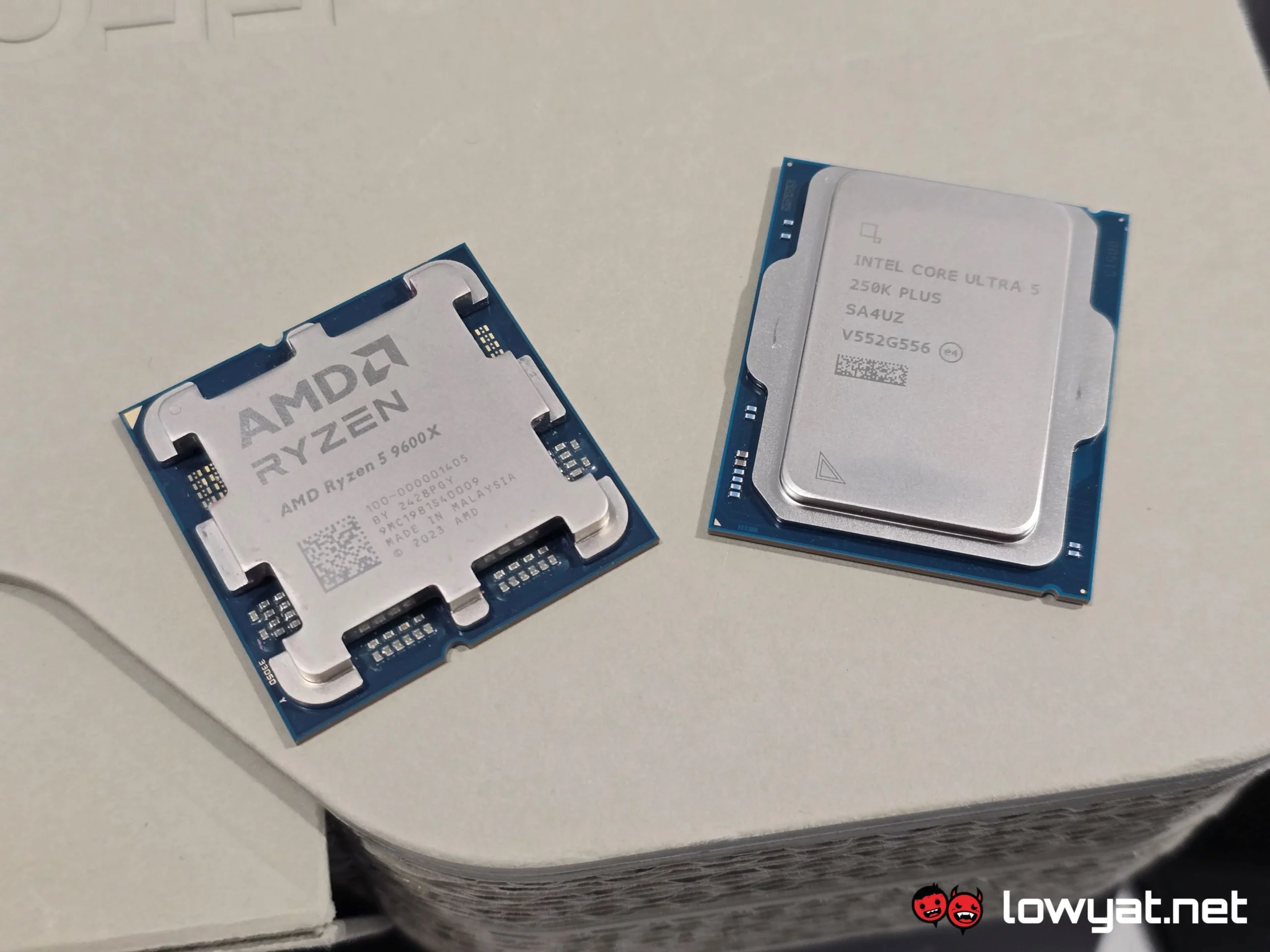
In this review, I’m using the same Z890 motherboard as when I reviewed the 270K Plus. For comparison and in keeping things fair, I also retested the 245K’s gaming metrics with the same motherboard, as well as added some new synthetic benchmarks to the list. Likewise, I did the same with the AMD Ryzen 5 9600X, considering how this is also the only, if not direct rival to Intel’s new mid-range Plus series CPU. Oh, and I benchmarked all three CPUs using the NVIDIA GeForce RTX 5090 for uniformity, too.
Testbed
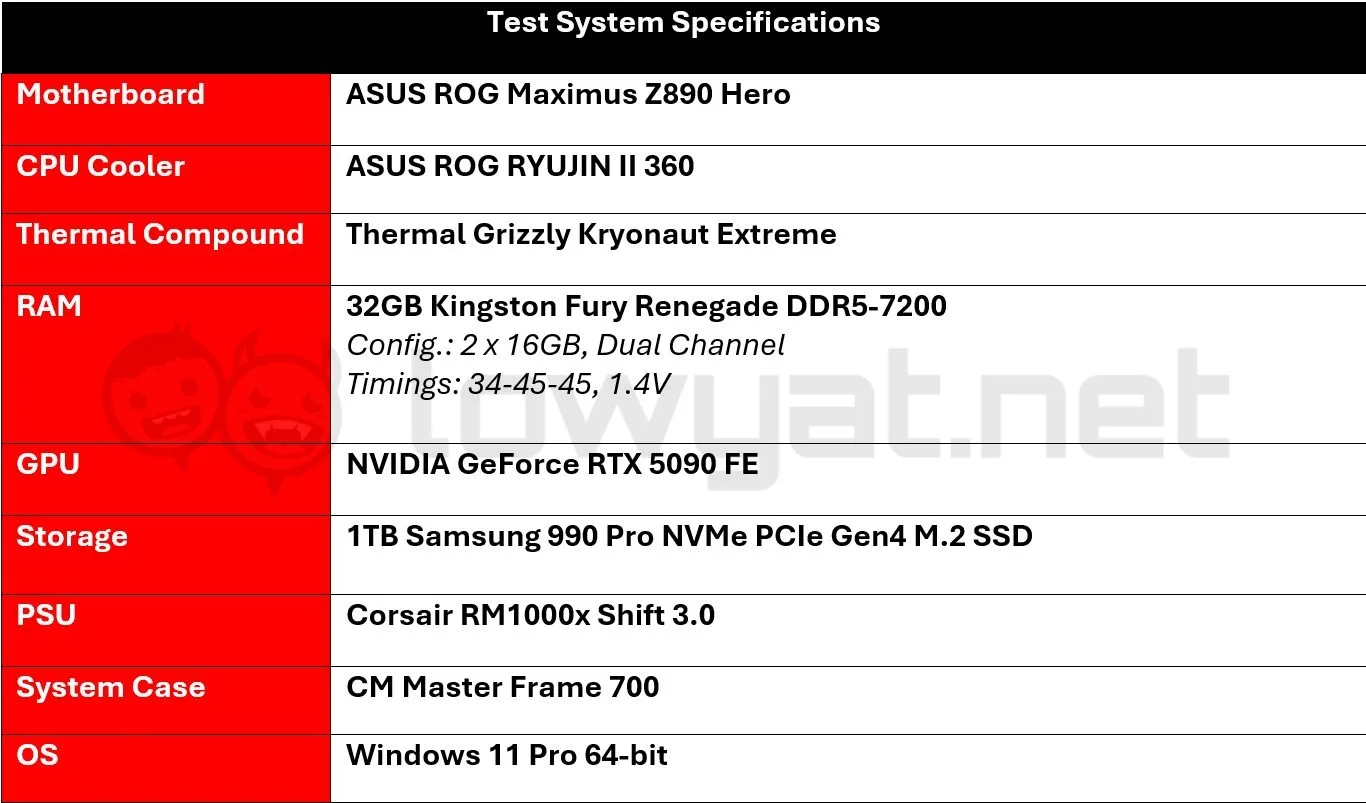
Benchmarks, Temperatures, And Power Consumption
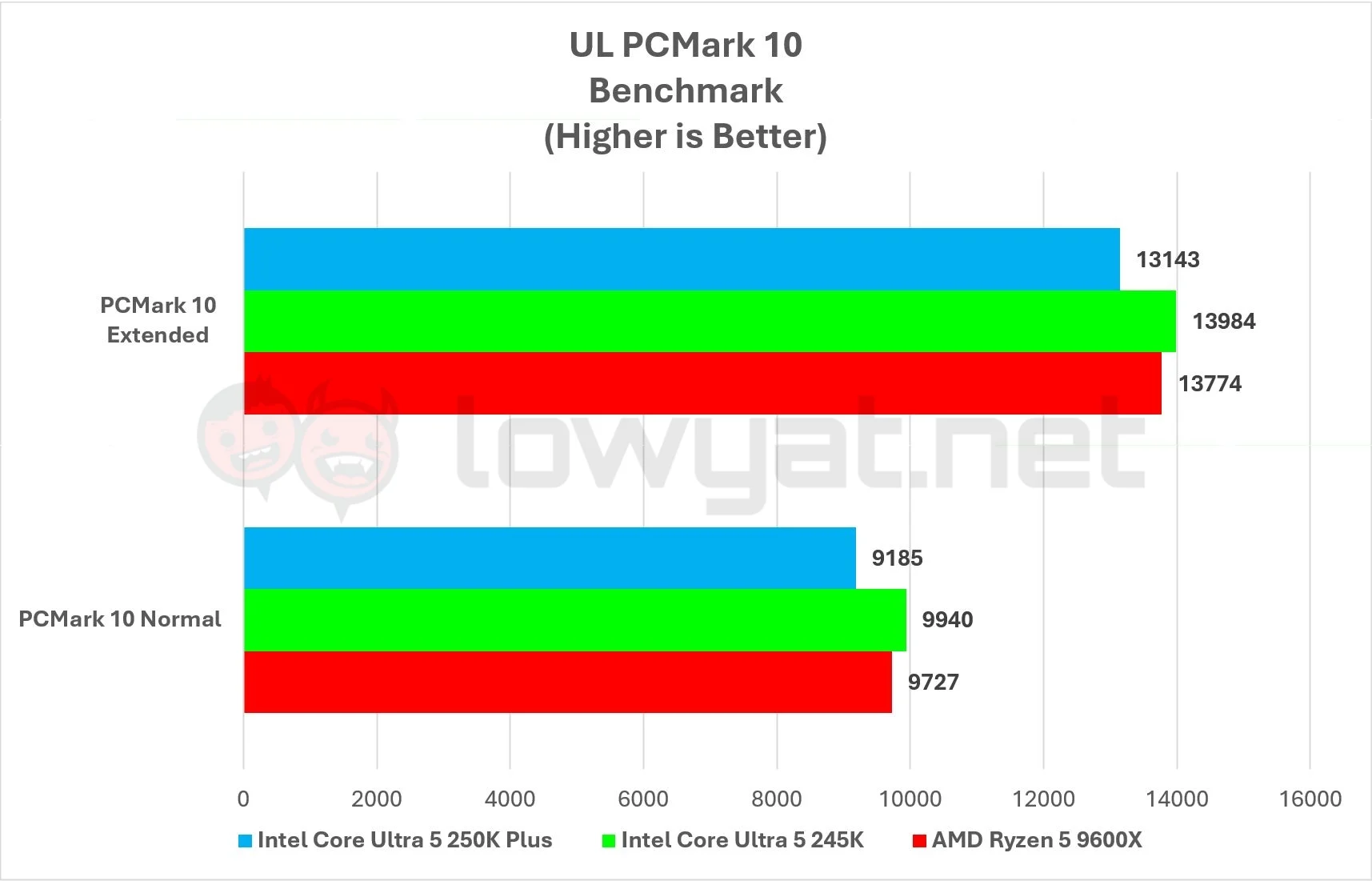
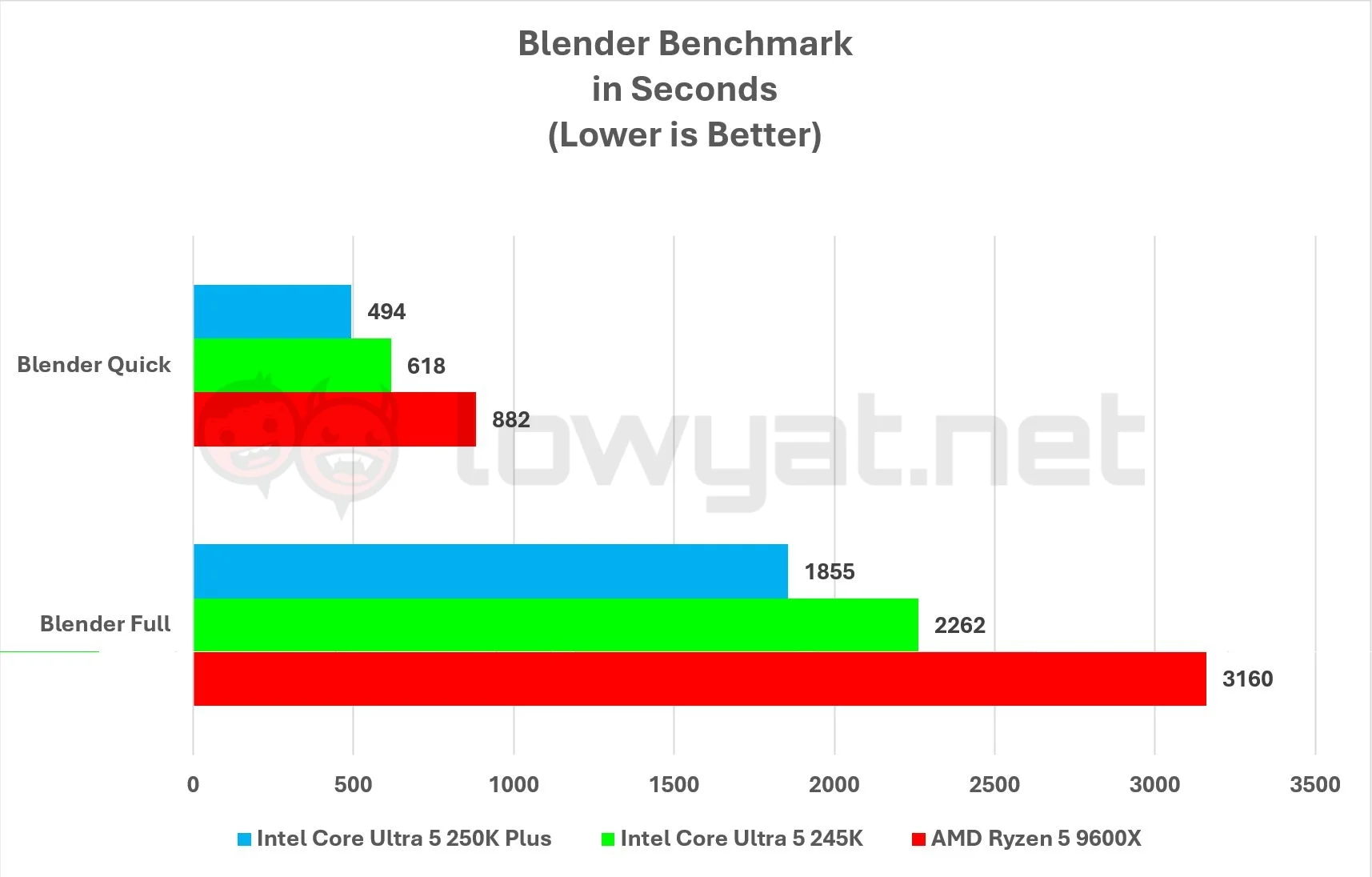
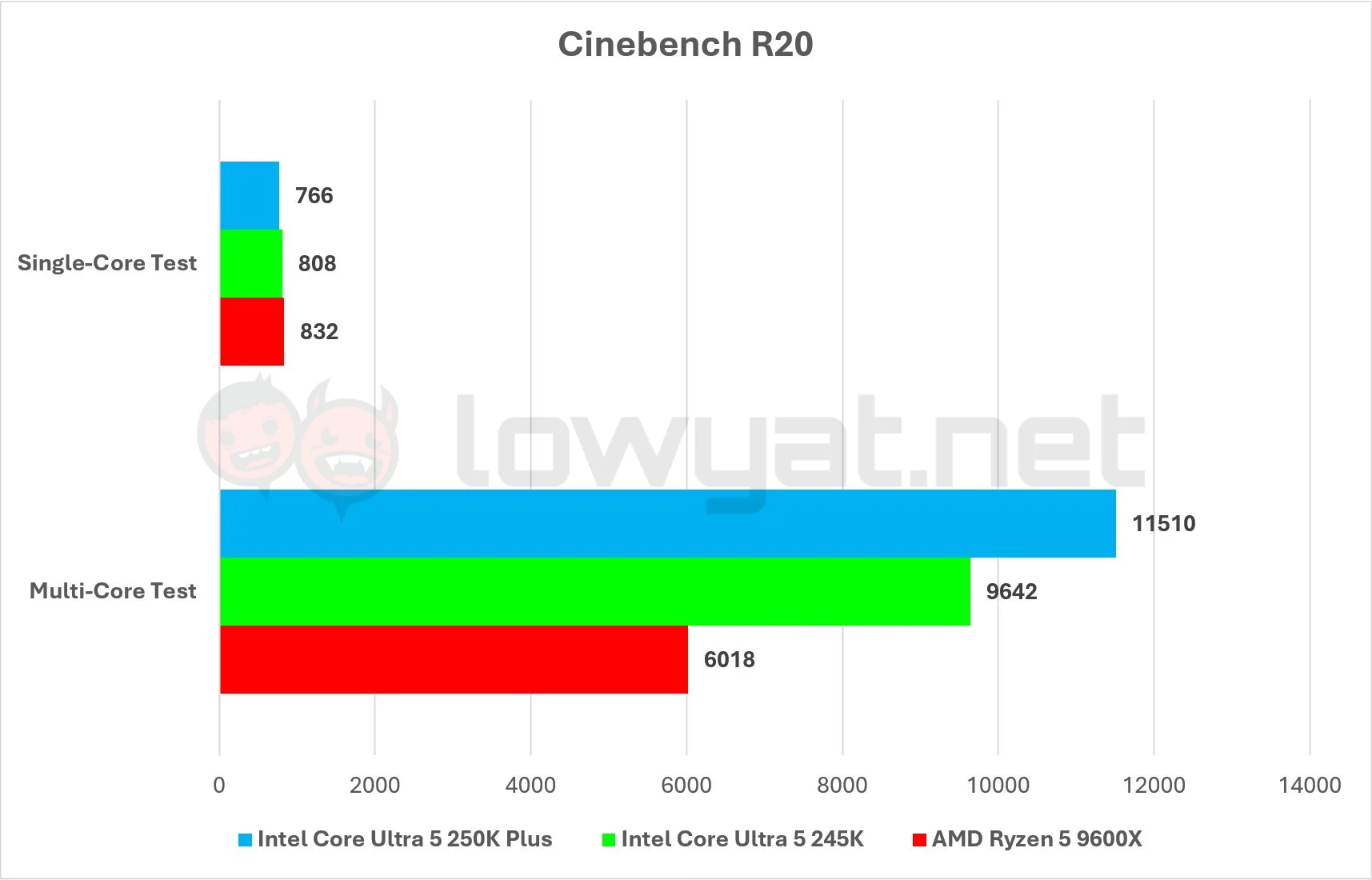
For the most part, the 250K Plus pulls ahead in the synthetic benchmarks, which is expected. The only exception that I saw here was PCMark 10, when it actually performed worse than the 245K and 9600X.
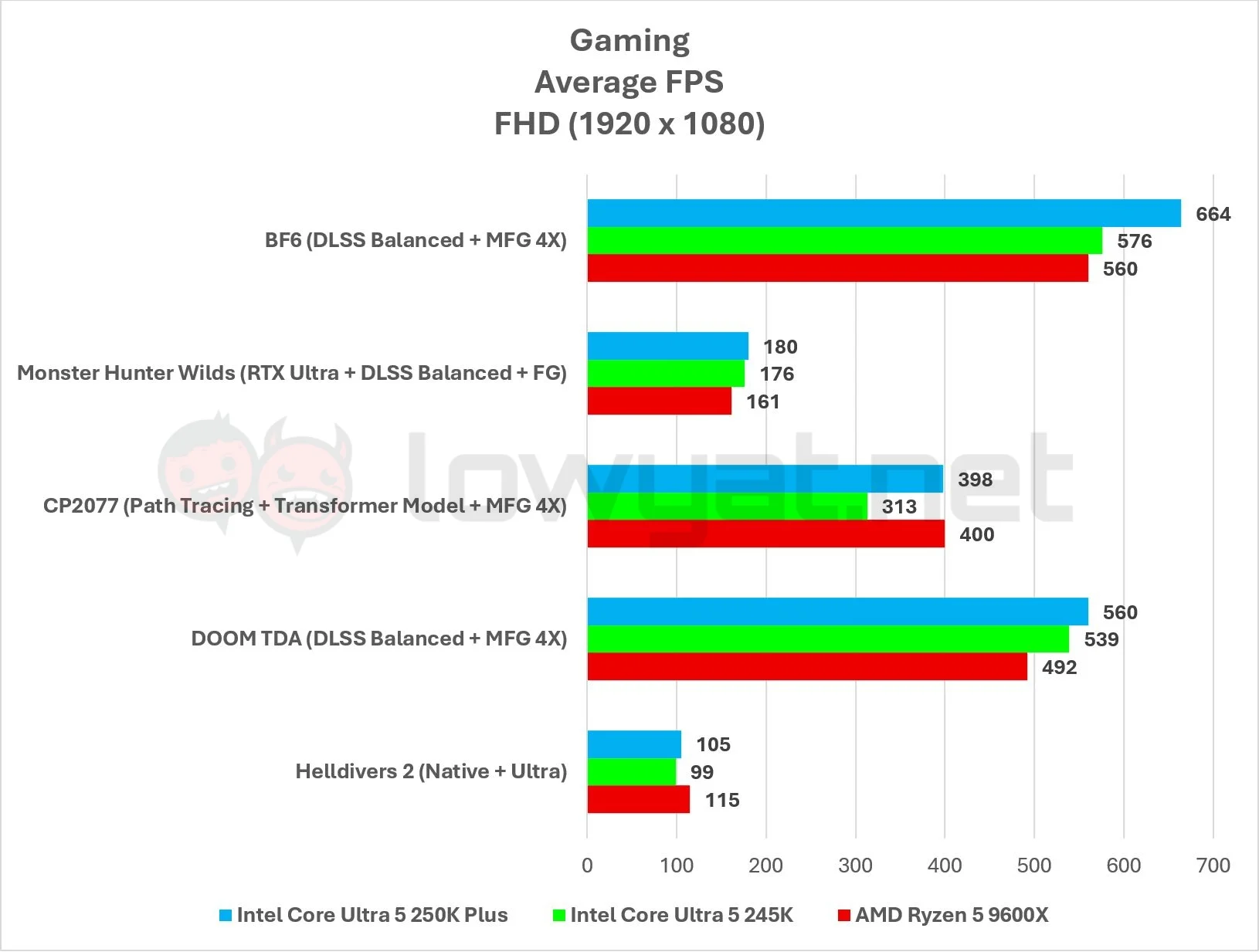
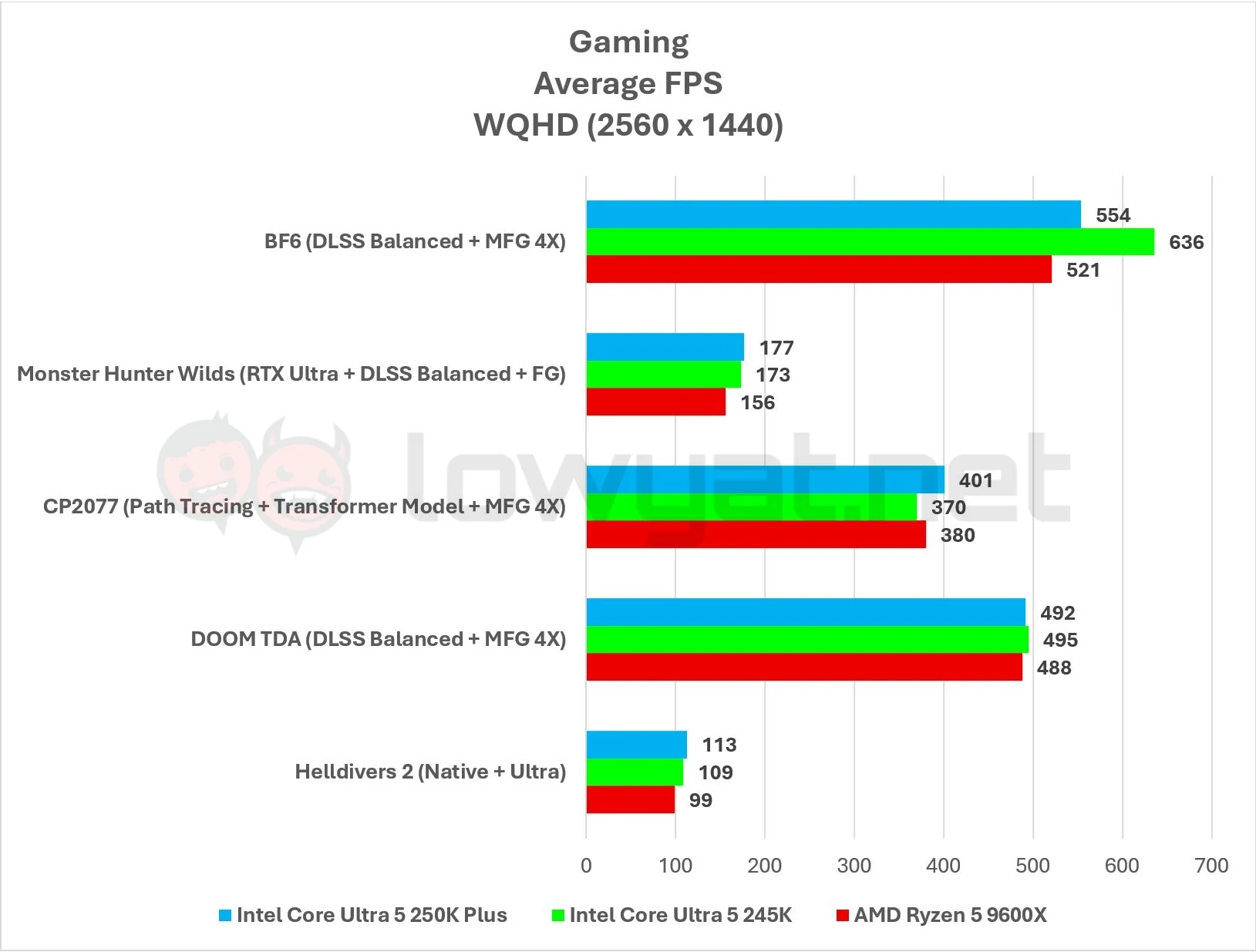
The 250K Plus is certainly and unabashedly no stranger to gaming and, as is usually the case for all consumer-segement CPUs, feels like it is in its element. Like the synthetic benchmark, it pulled ahead of the 245K and even created a significant gap in average frames against the 9600X.
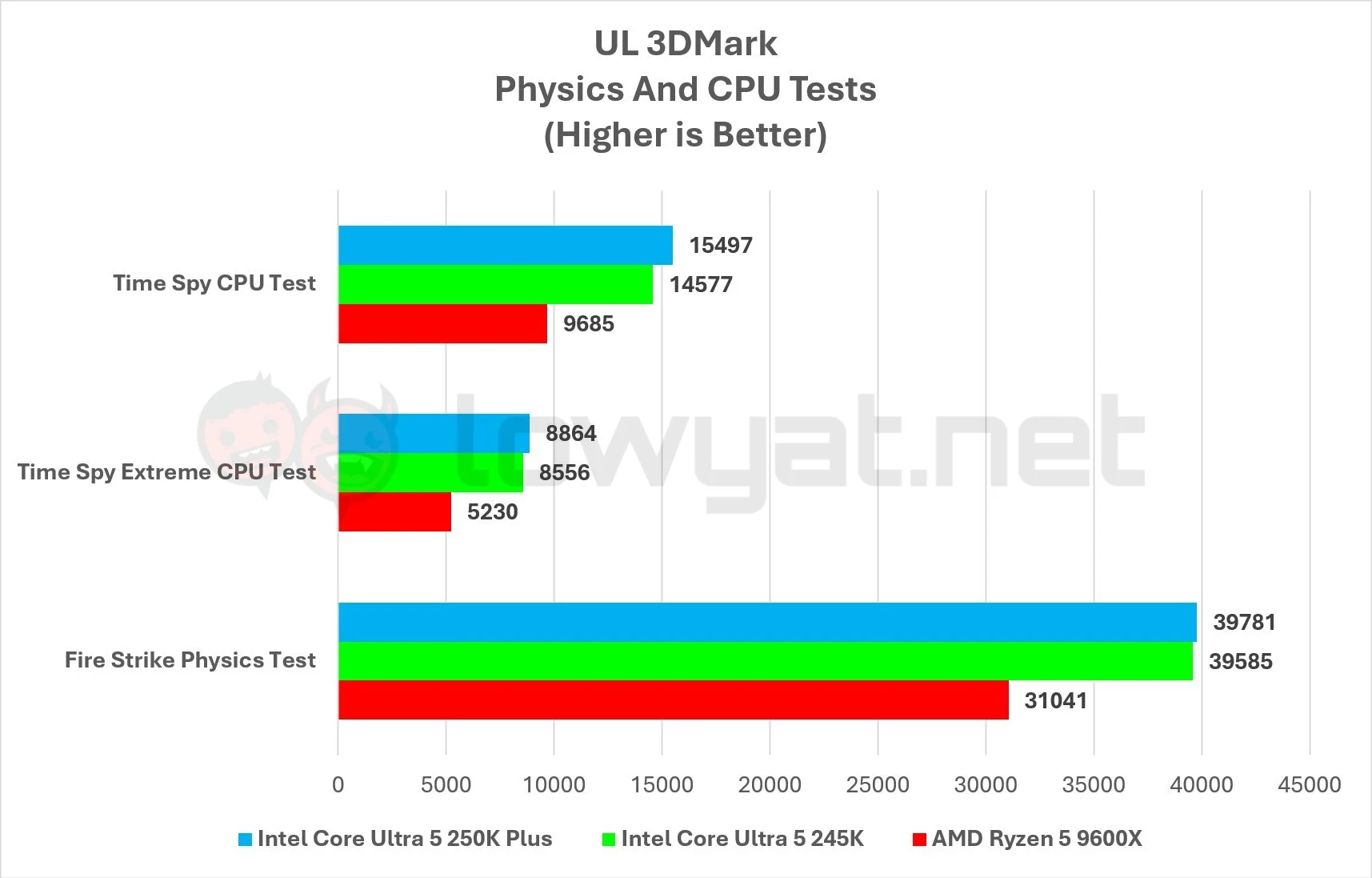
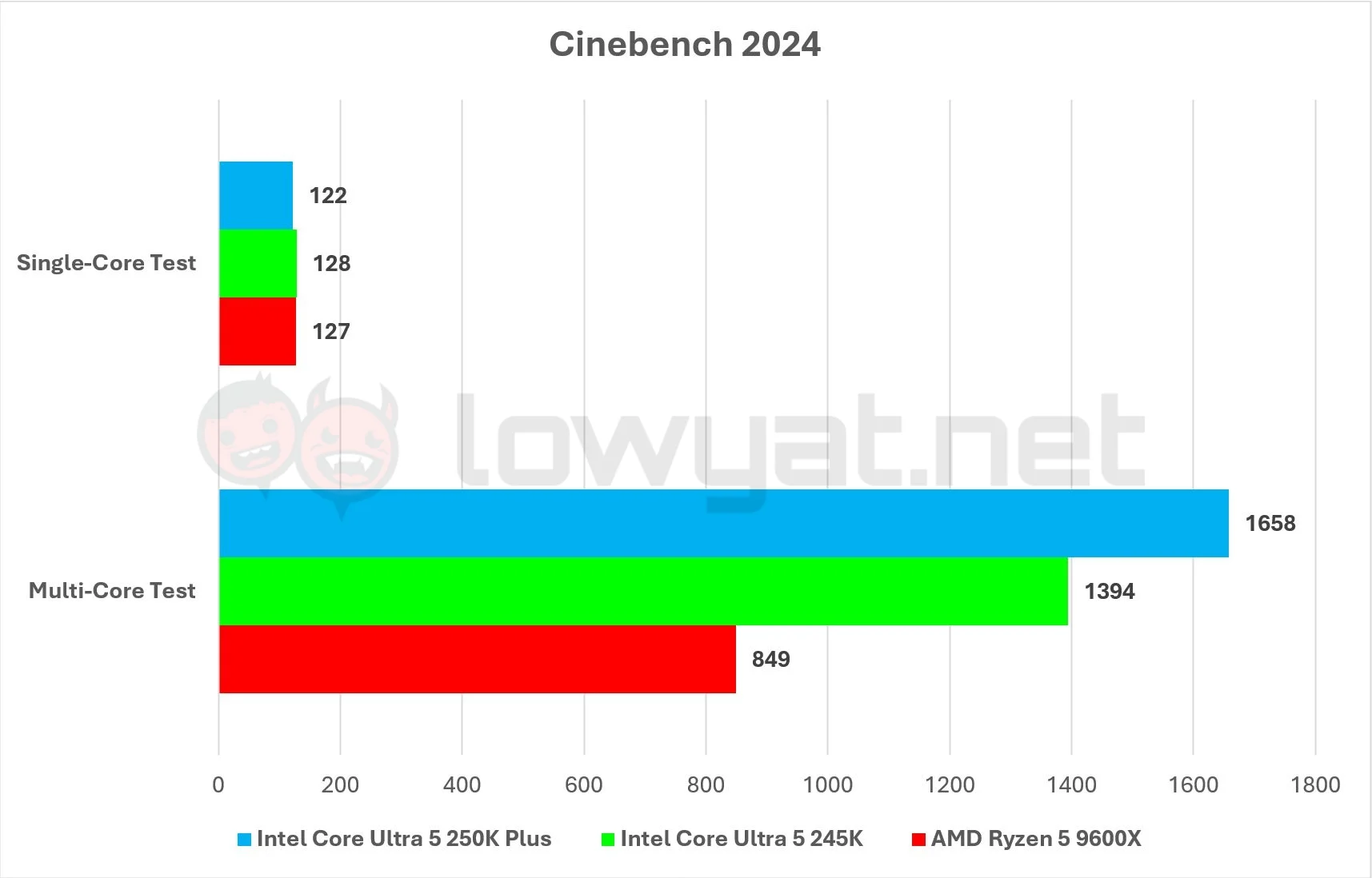
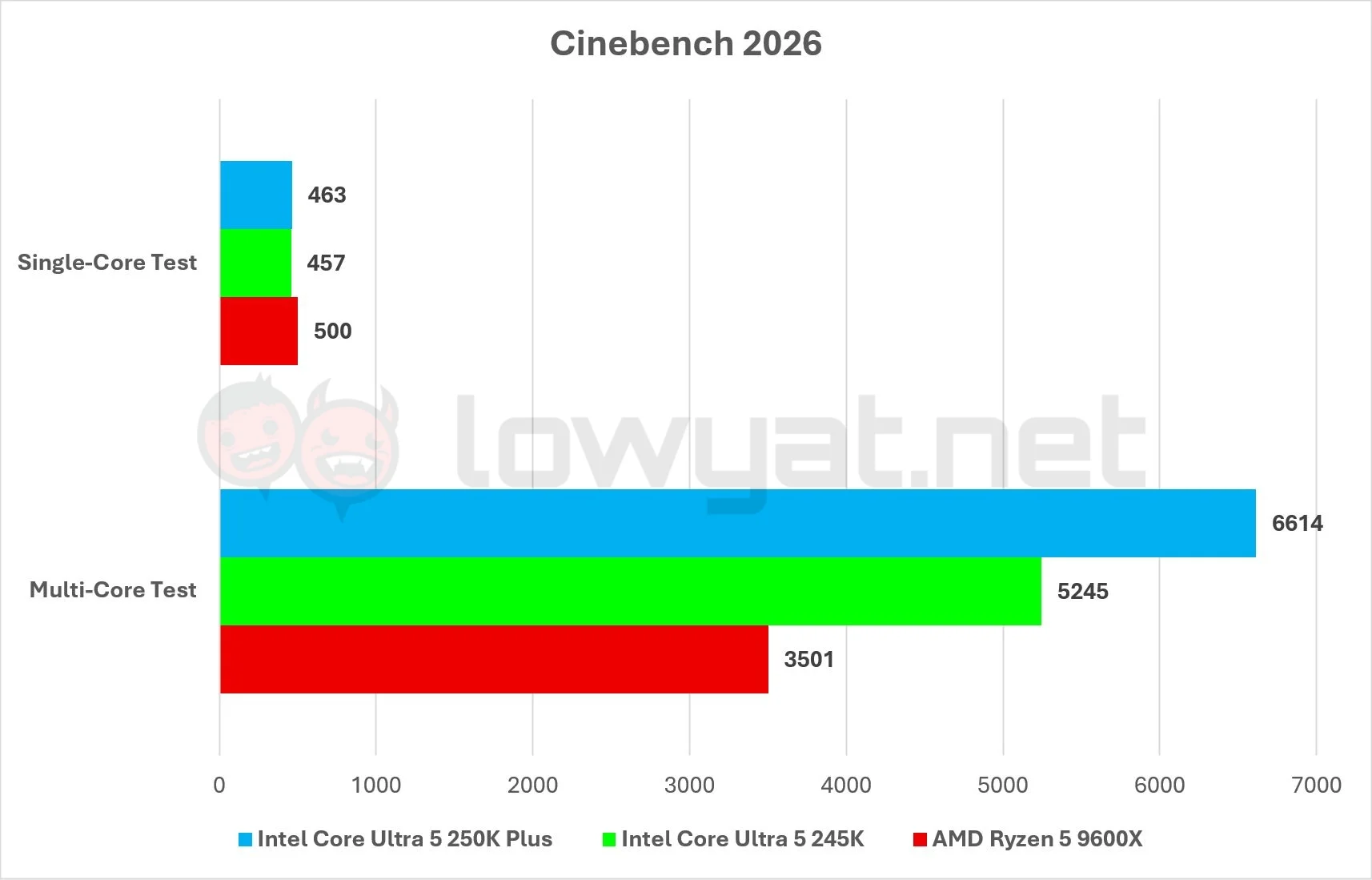
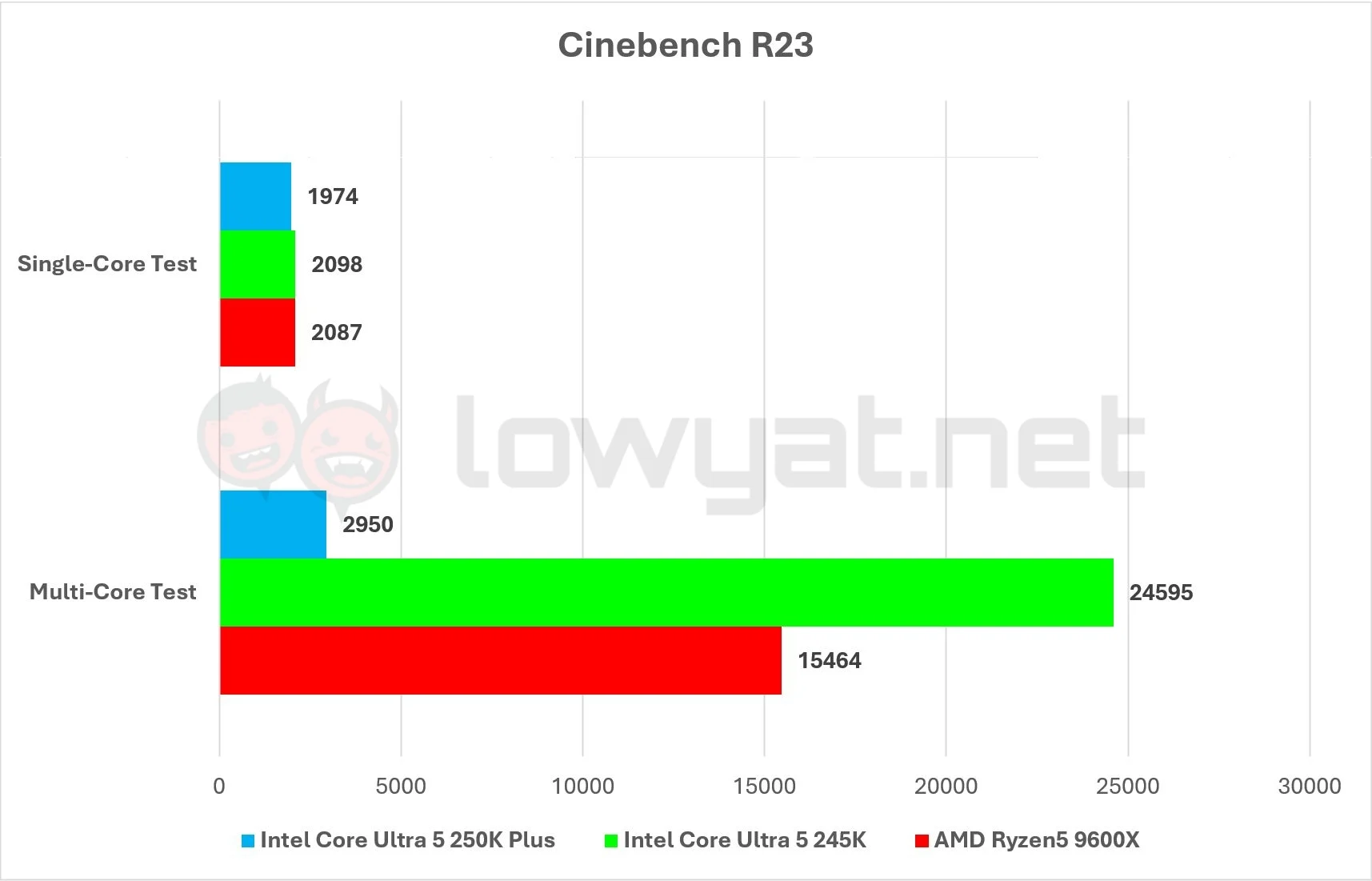
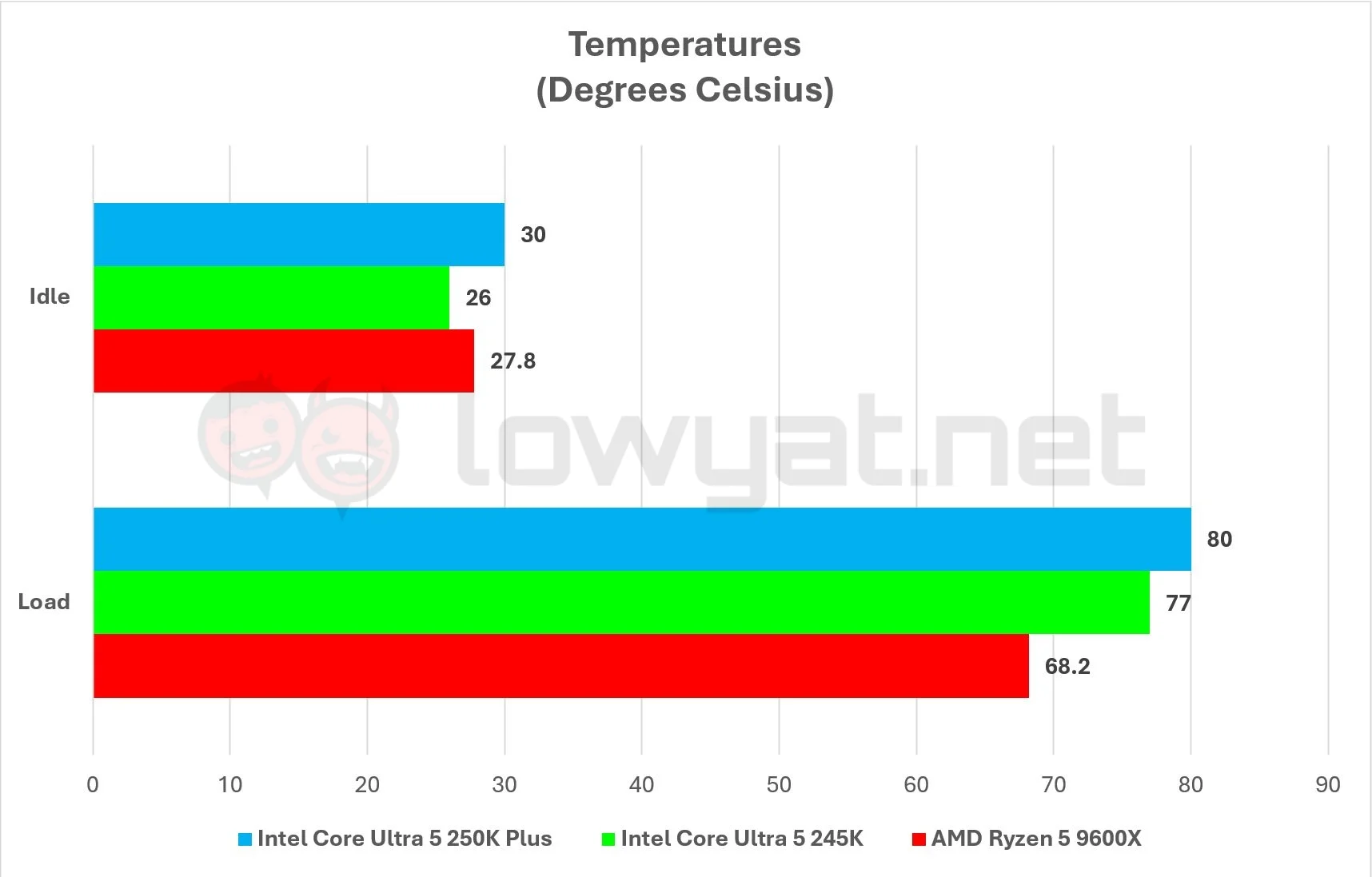
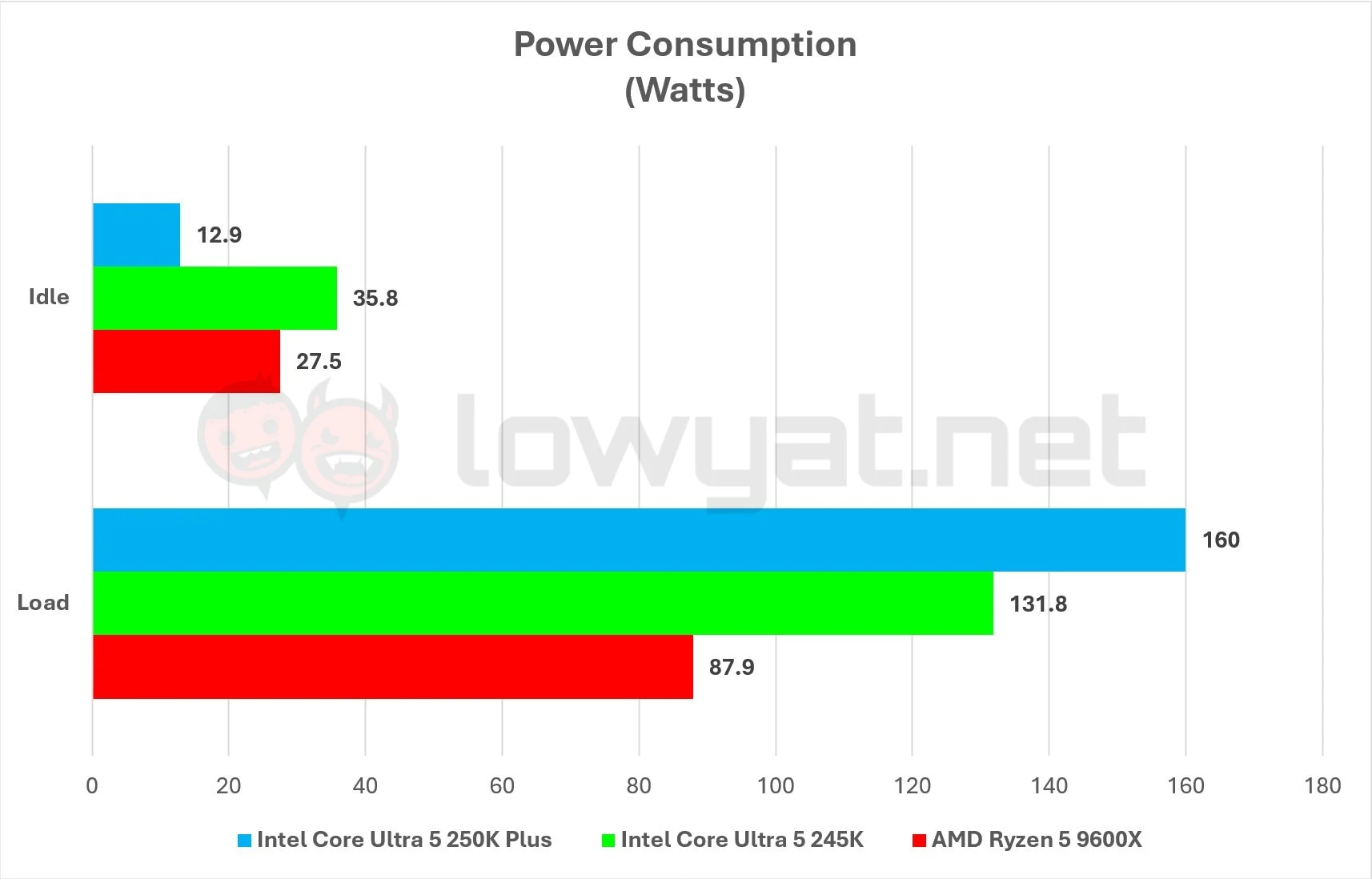
And from what I can see, the small trade-off here is that the 250K Plus tends to be a little toastier than its non-plus Core Ultra 5 counterpart, both when idling and running at full whack. Likewise, it’s the same story with its power consumption, although I am inclined to interpret this as a good thing; at the very least, the CPU is making full use of the power envelope it’s been given.
Oh, and full disclosure, all the metrics obtained in this review, particularly with gaming was done without the use of Intel’s Binary Optimisation Tool, or BOT.
Conclusion
For the first time since the advent of the Ryzen architecture, I dare say that AMD may need to start worrying about planning a clapback against Intel and its 250K Plus and 270K Plus. And with Intel’s new mid-range Plus contender being ever so slightly cheaper than the 9600X, it is a compelling option for DIY PC enthusiasts, more so in these times when the price of memory chips is skyrocketing, and thus driving up the total cost of everything else.
Ultimately, the 250K Plus brings one crucial element back to the table: competition. At RM999, the CPU not only offers another price-to-performance SKU, it also offers more cores, but at the small price of slightly higher temperatures and more than double the power consumption of AMD’s own mid-range champion
