
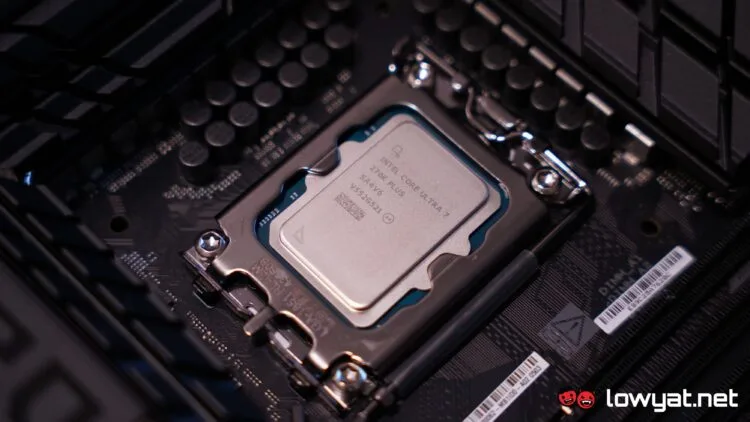
Rumours have it that the upcoming Intel Nova Lake processor, specifically, an alleged SKU with 12 Xe3P graphics cores, will require a 65W TDP in order to run effectively. There’s just one problem: the rumour doesn’t say if this is a base power or peak power, although the latter feels a little on the fence.
As a quick primer, this is the same Nova Lake 12 Xe3P processor that we covered back in April this year. The original leak, which came from popular leakster Jaykihn alleged that the Intel CPU would have a 4+8+4+12 Xe3P configuration. If you’re wondering about the configuration, that’s four P-Cores, eight E-Cores, and four LP E-Cores, in addition to the 12 Xe3P GPU cores.
Also, the Xe3P cores aren’t Intel’s 3rd generation Arc Celestial cores, but rather, the cores are an improved version of its current Battlemage technology. Getting back on point, the same leakster now simply says that the 12 Xe3P SKU will require a 65W-level PD segment in order for the graphics cores to maximise their gaming prowess.
Intel’s Nova Lake desktop CPU lineup is expected to be the blue chipmaker’s next-generation game changer, with the family offering one variant with 52 cores on a single die, DDR5-8000 support, and up to 144MB of L3 cache through what reports say is called big last-level cache (bLLC).
Bringing The Fight To AMD

In the case of the massive Xe3P core count, one cannot dismiss the possibility that Intel seems intent on bumping heads with AMD, and on the red team’s home ground to boot. Rumours of a Nova Lake CPU with 12 Xe3P graphics cores feel more and more like a response to Team Red’s own desktop APUs, which include the Ryzen 8000G series, all of which also share the same 65W TDP. And that is to say nothing of its handheld-focused APUs, the Ryzen Z1 and Z2 Series APUs that currently power the majority of mainstream handhelds like the ASUS ROG Xbox Ally X.
That said, Intel hasn’t been slacking off either. Its Panther Lake architecture and Arc G3 Extreme Series already show how far the blue chipmaker has come with its integrated graphics technology in just a few short years, and that’s just on the mobile side of things.
(Source: Videocardz, X)
