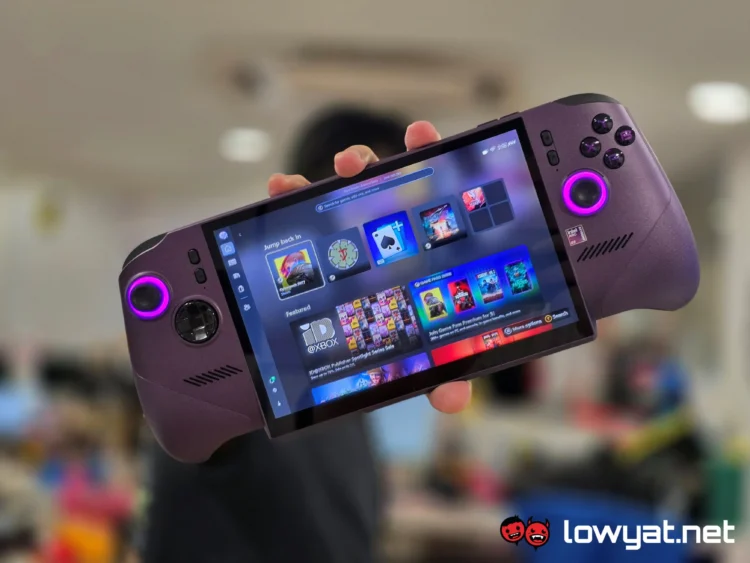
The MSI Claw EX 8 AI+ has been one of my highly anticipated gaming handheld for the year, more so given the chipset that powers it. The formula has been straightforward for MSI: take what already works in terms of chassis design, stick it out with Intel as its partner, something will work out.
The Claw EX 8 AI+ is that fruit borne out of a long, drawn out, sense of patience.
What Am I Looking At?
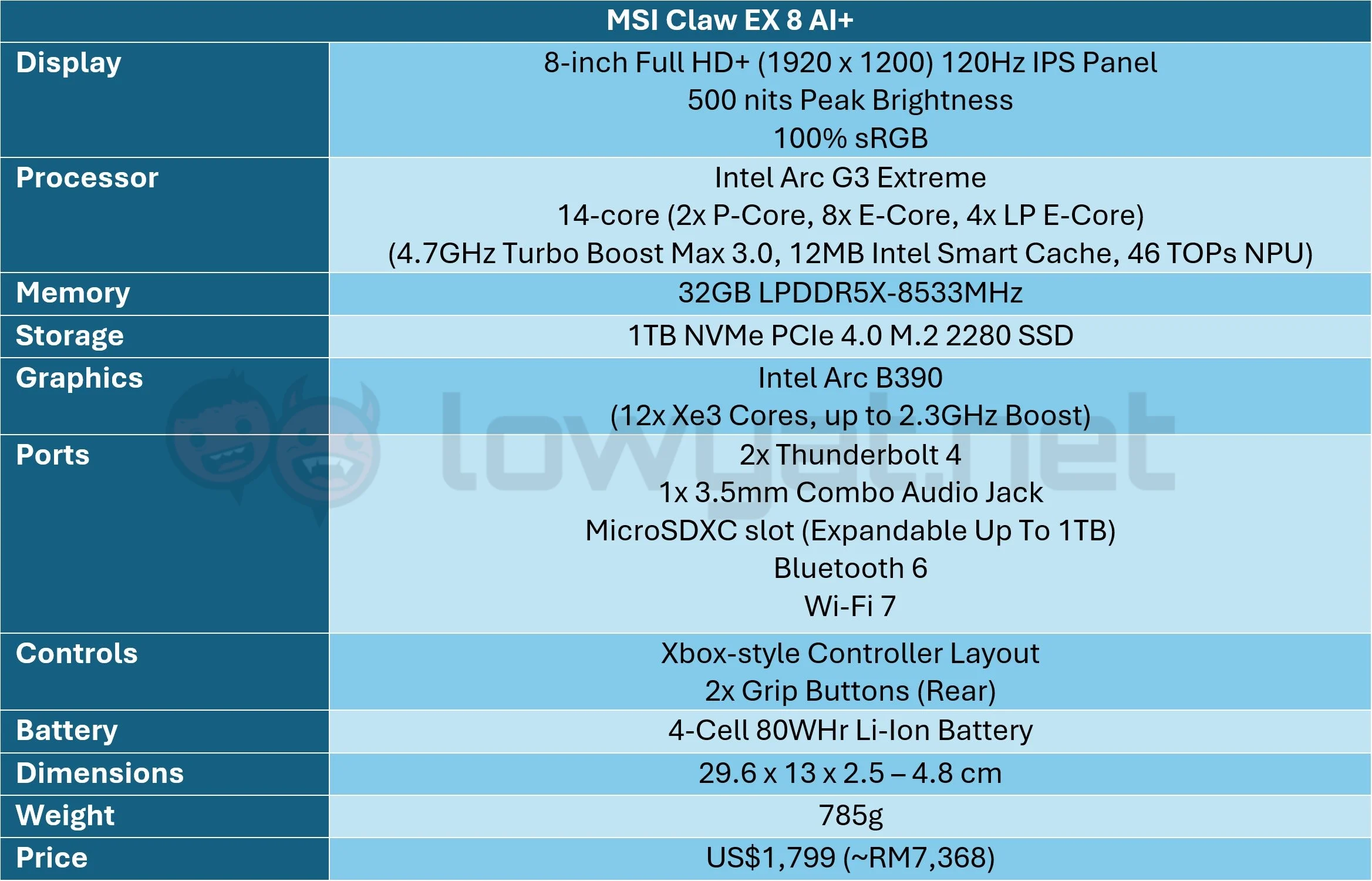
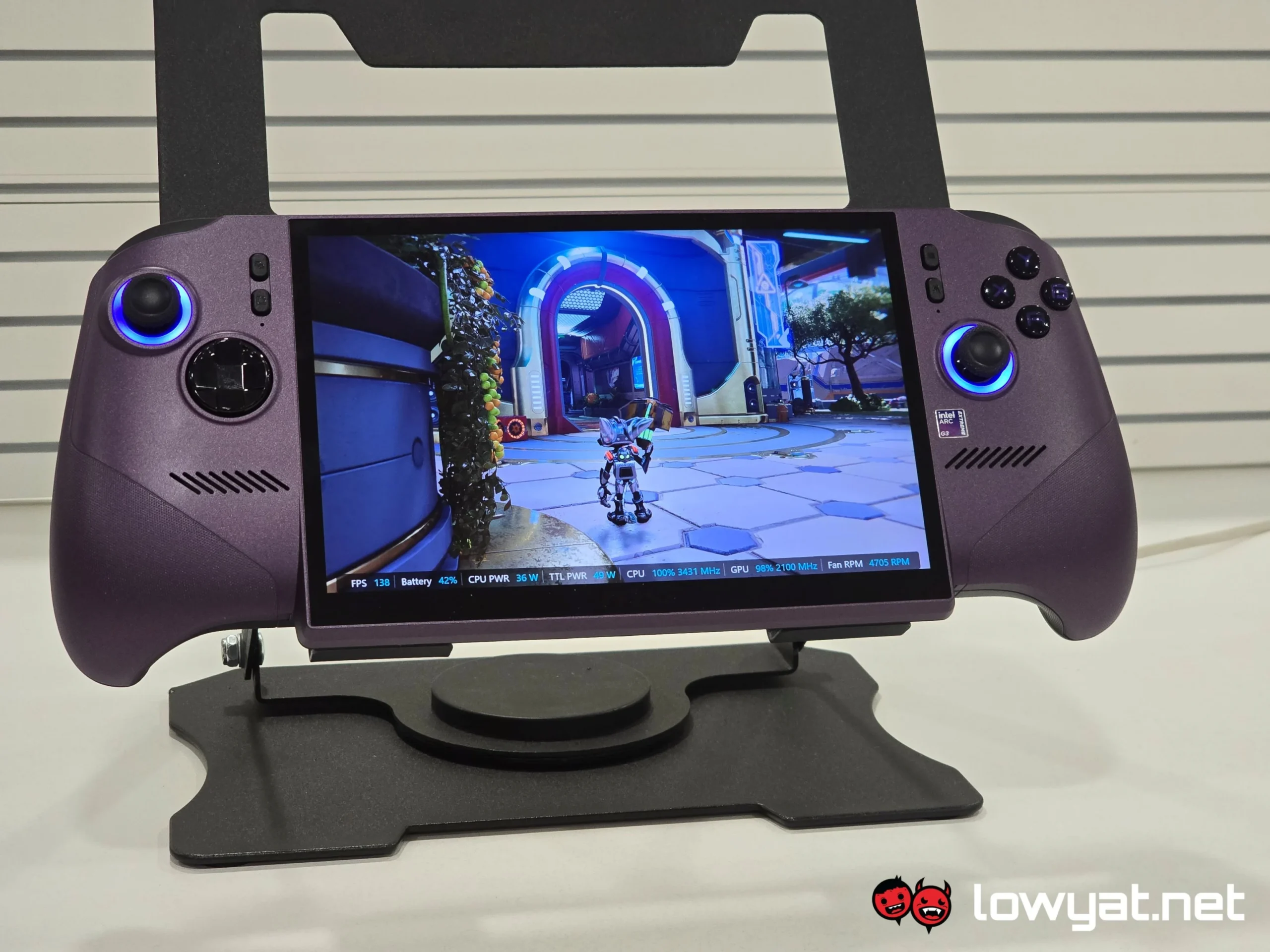
So, let’s talk about the physical aspect of the Claw EX 8 AI+. MSI has recycled parts of the original Lunar Lake-powered Claw 8 AI. Specifically, it’s taken the general design of the chassis and recycled it, but for some reason, the brand decided to extend the 8-inch display beyond the borders of the handheld. A little more on that later.
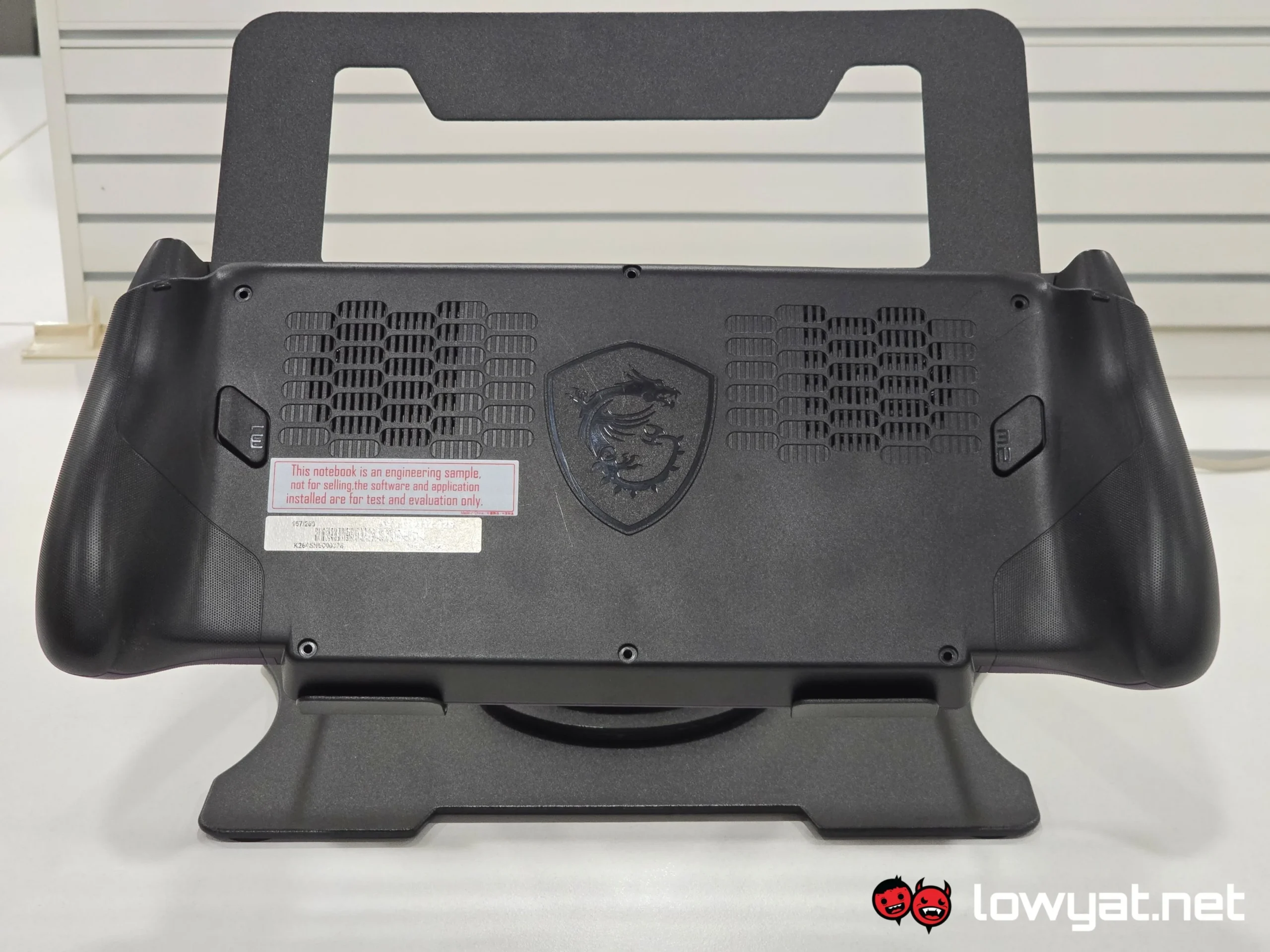
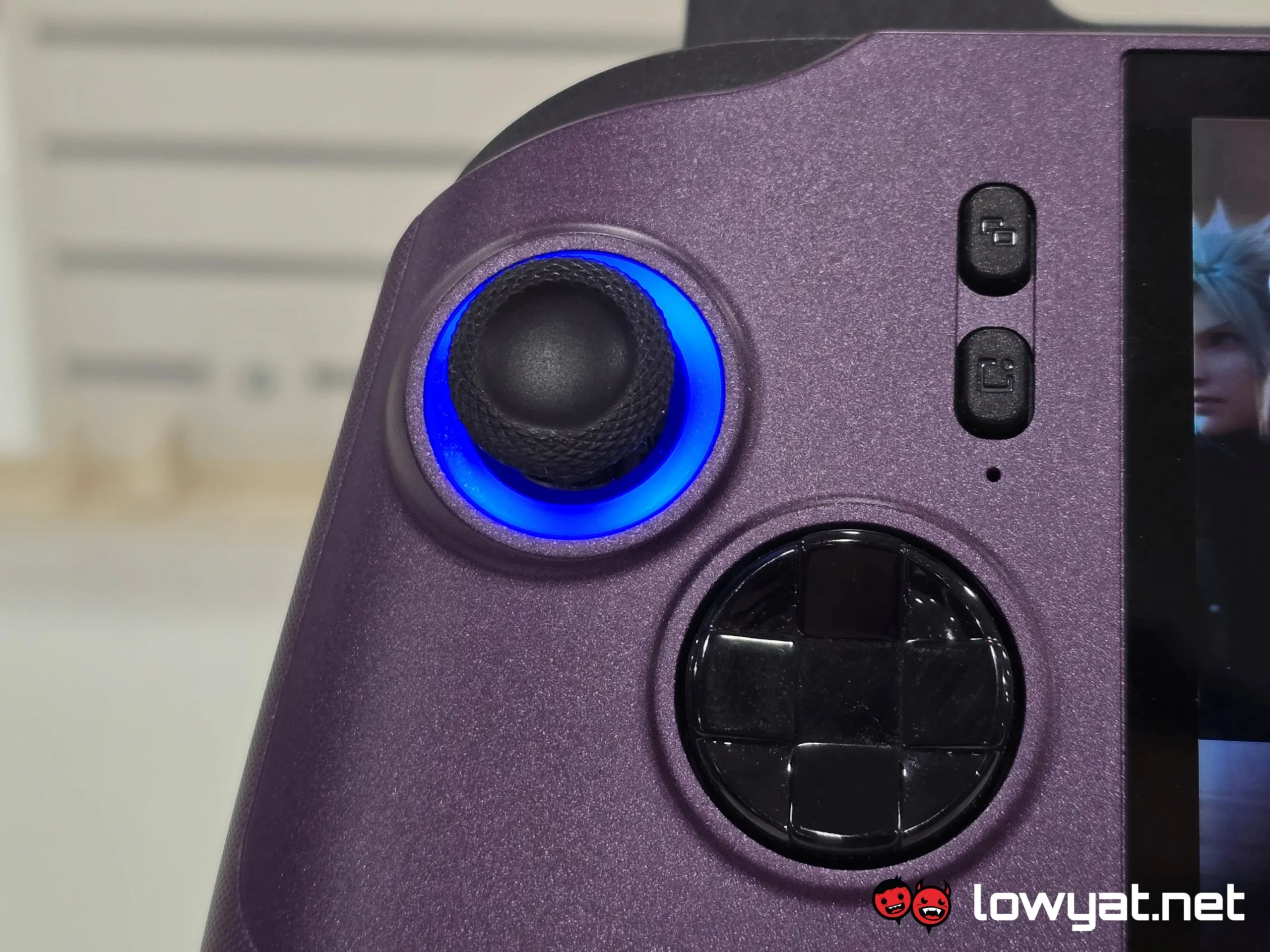
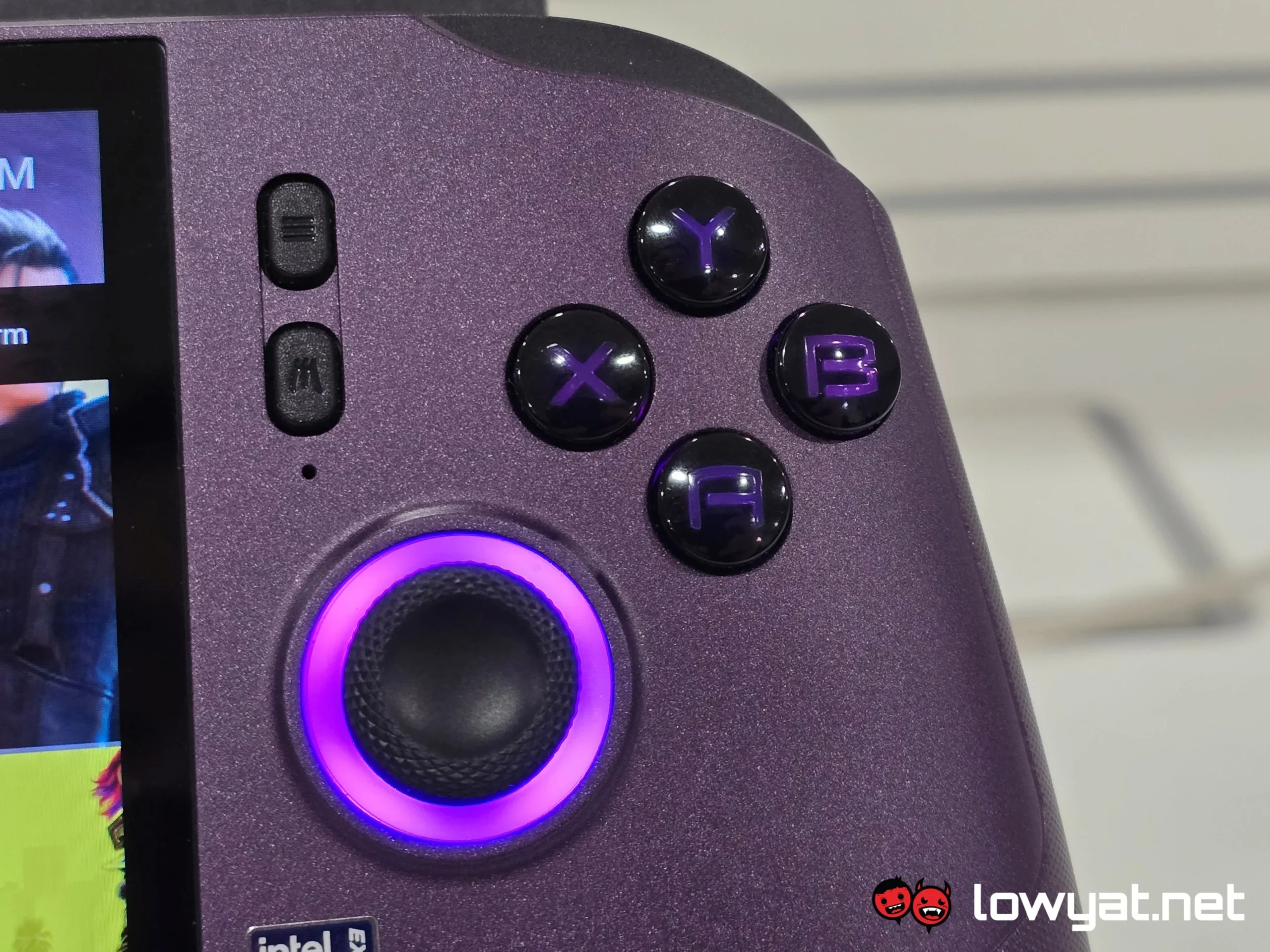
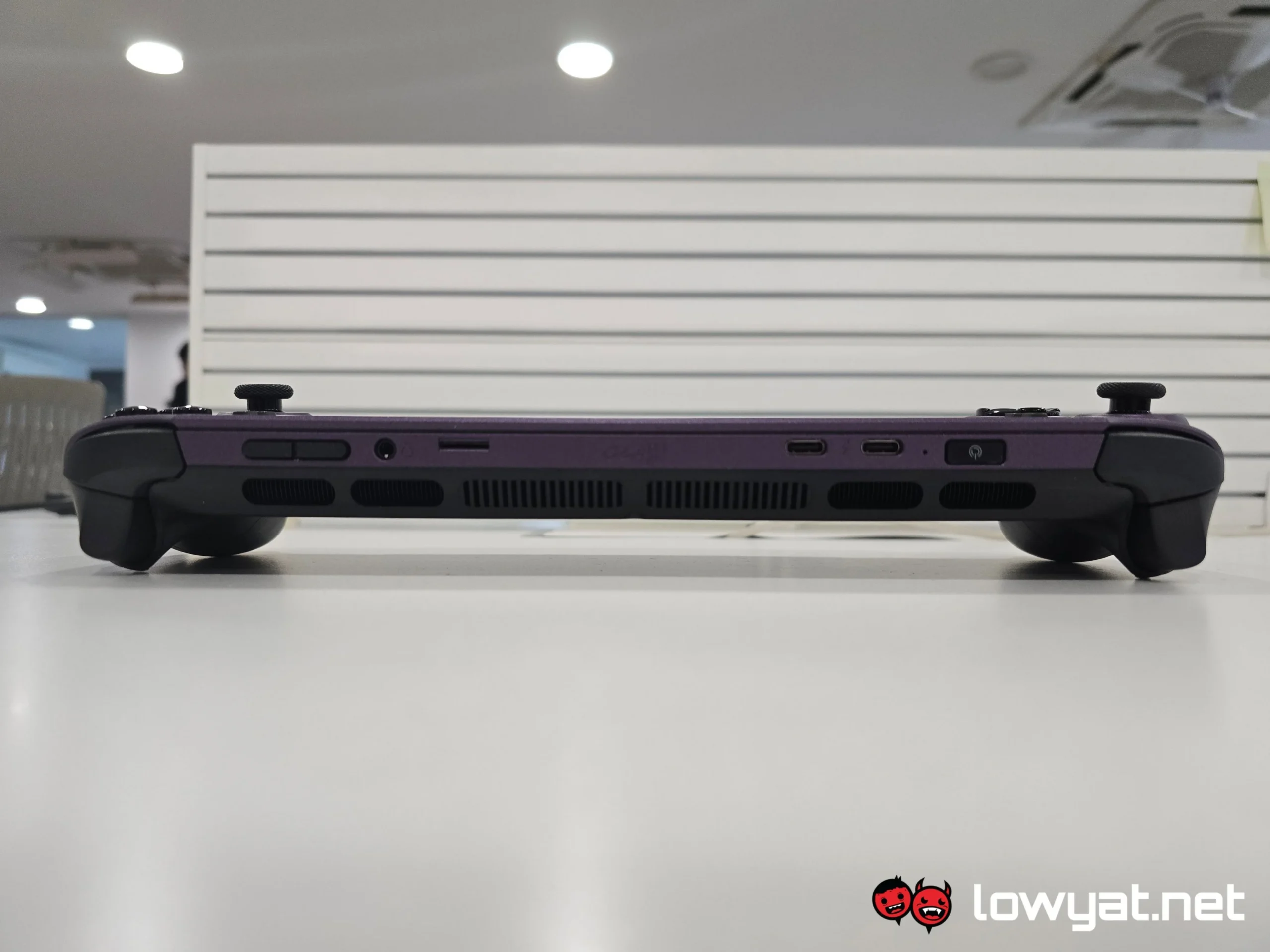
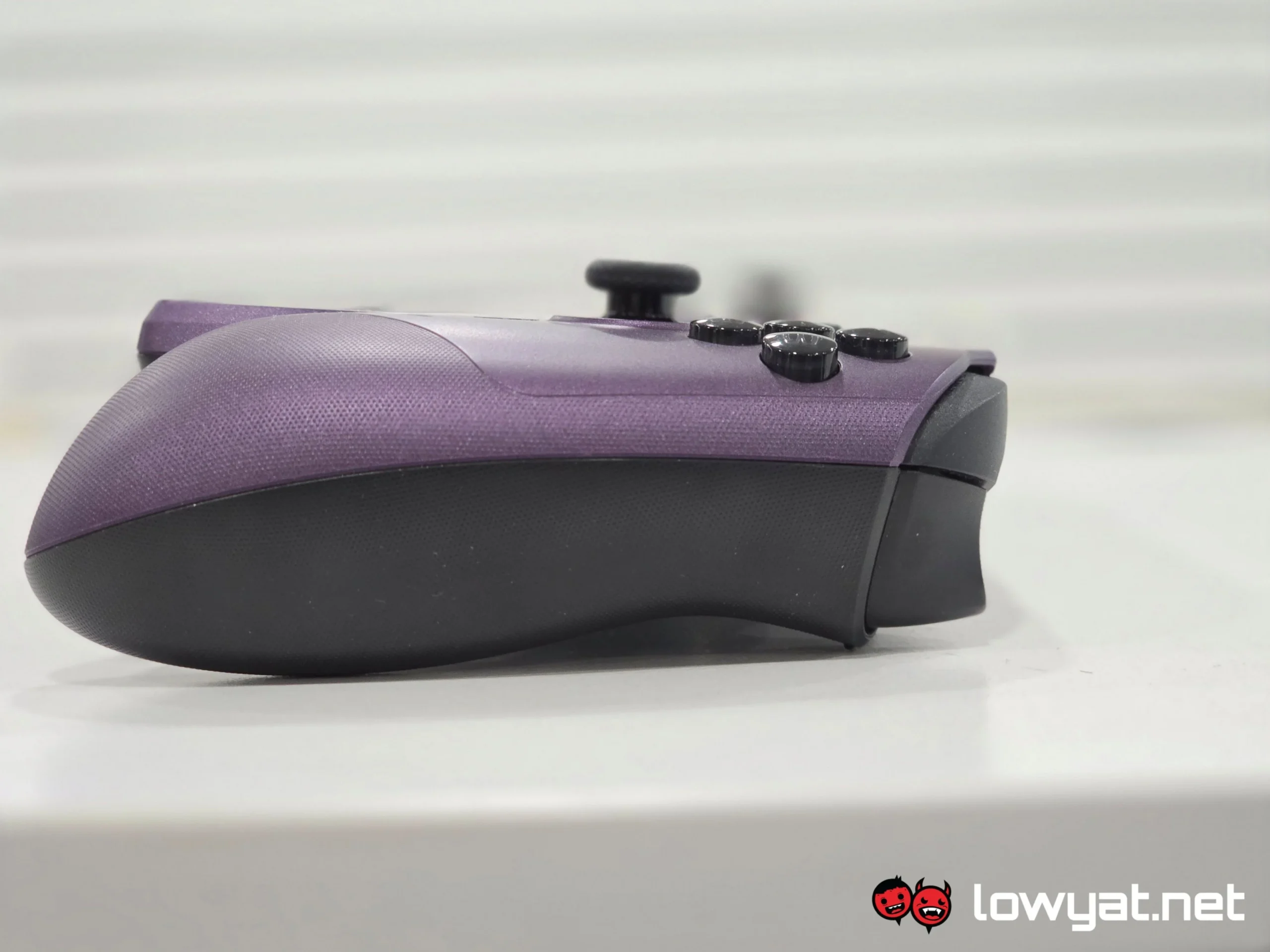
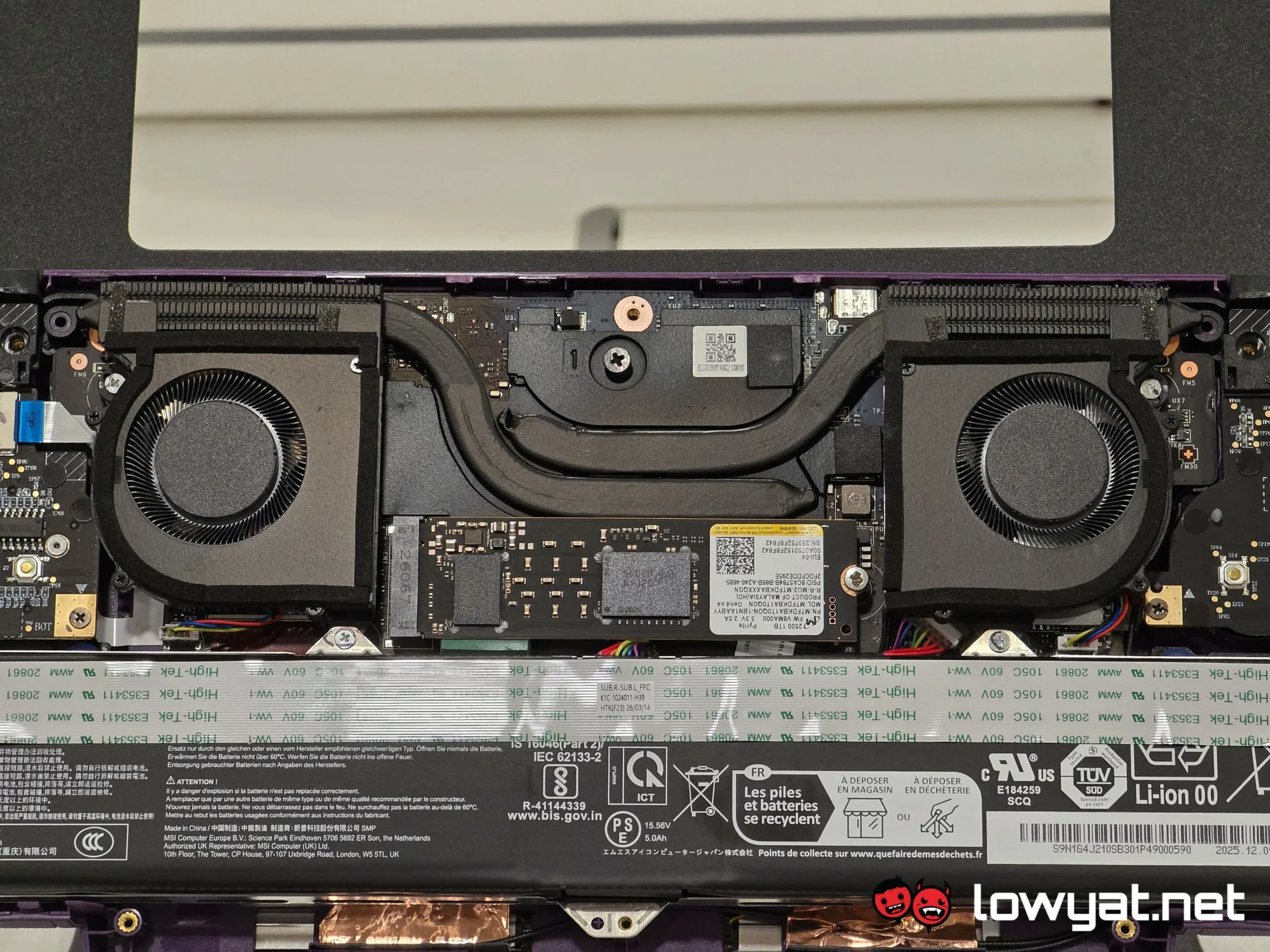
That little niggle aside, the rest of the components are as we mentioned in earlier reports: you get Hall Effect Joysticks and triggers, a massive 4-cell 80Wh battery, Xbox style controller layout with two rear buttons, four quick access and menu buttons, two Thunderbolt 4 ports at the top of the console, plus a microSDXC card slot. And no, the slot is not the same as microSD Express, which is the next generation storage support.
Software-wise, the handheld runs on Windows 11, along with Xbox Mode pre-installed.
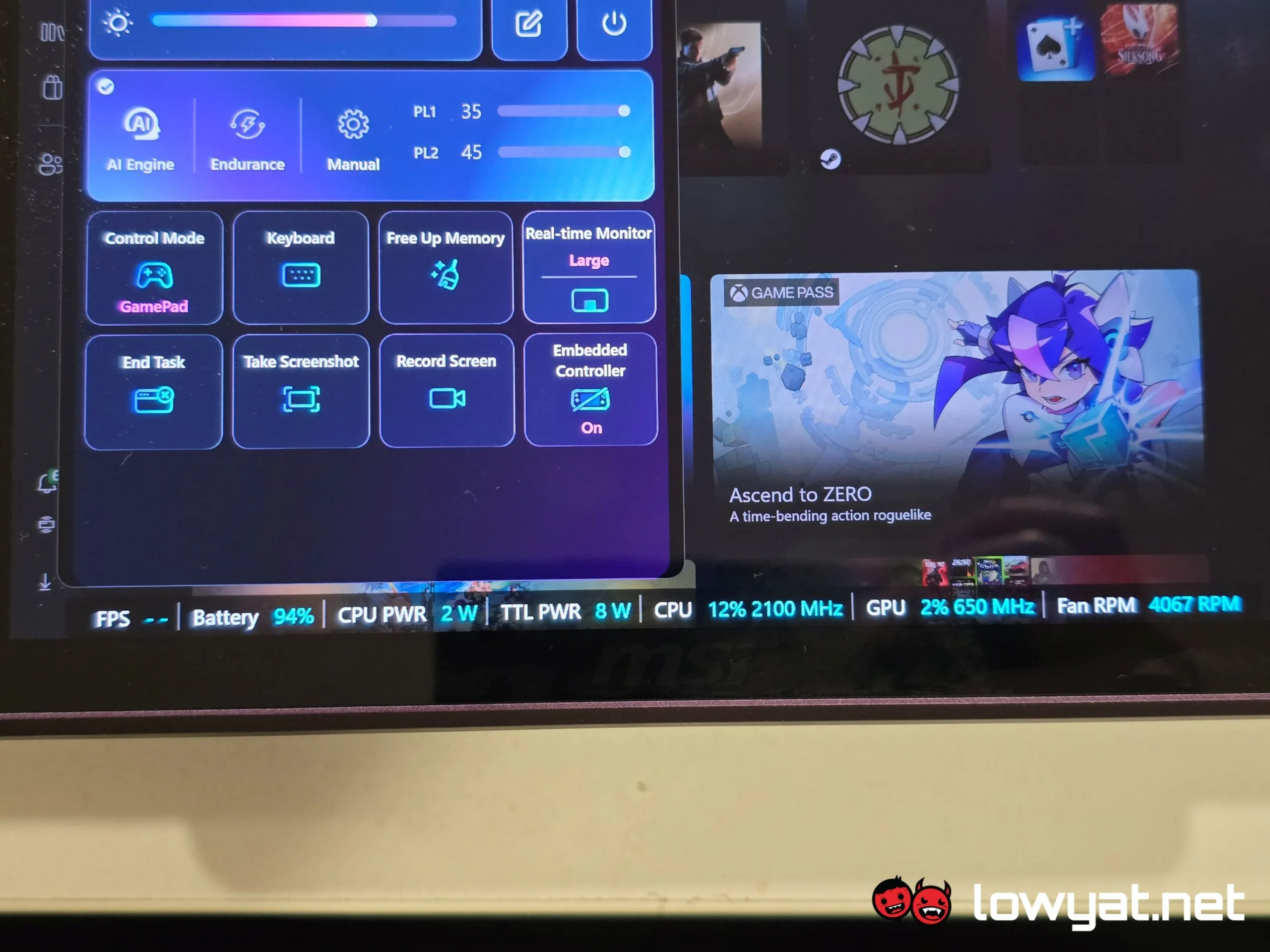
The Claw EX 8 AI+, through the MSI Claw Centre, offers three power modes, or envelopes, if you will: AI, Endurance, and Manual. AI Mode is the Claw EX 8 AI+’s default mode, meaning that this is the mode I would game on throughout the review period.
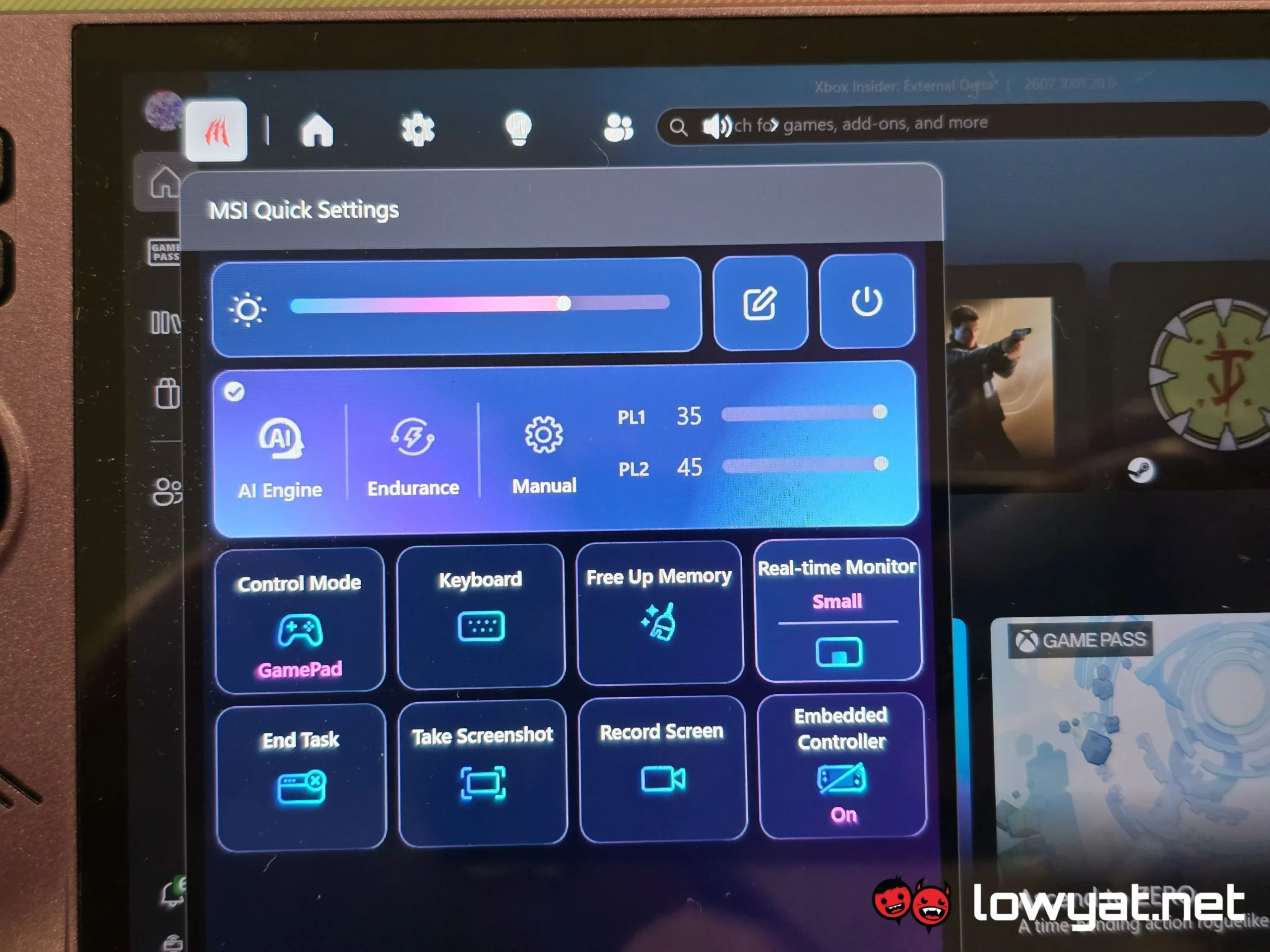
Endurance mode is a game changer on the Claw EX 8 AI+. Once activated, the console basically dials down the CPU’s power consumption and caps the framerate in all games at 30 fps.
This also effectively extends the battery life of the Claw EX 8 AI+. In this mode, I’m looking at nearly four to five hours of gameplay on average, and this was for virtually all the AAA titles that I selected for the purpose of this review.
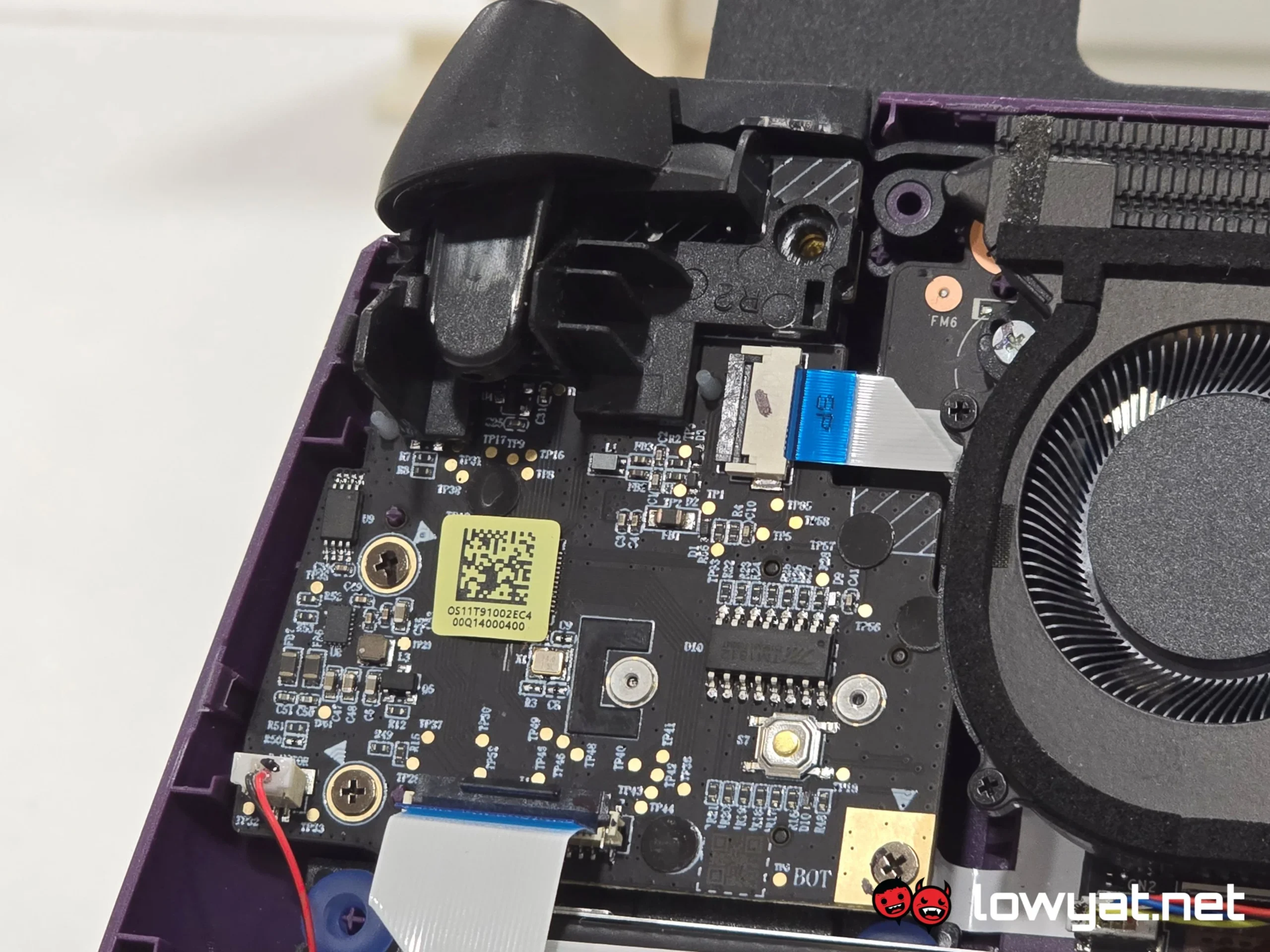
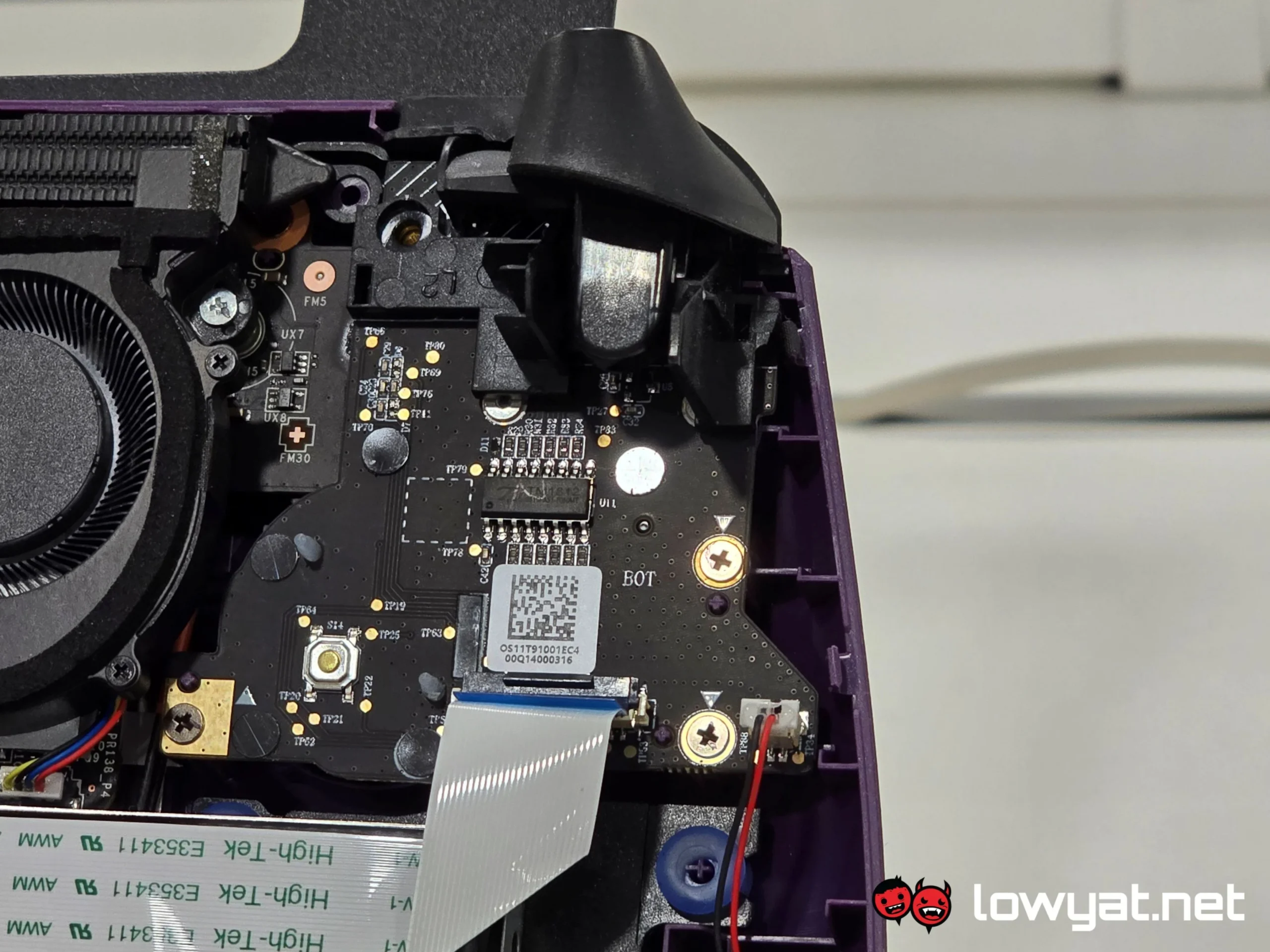
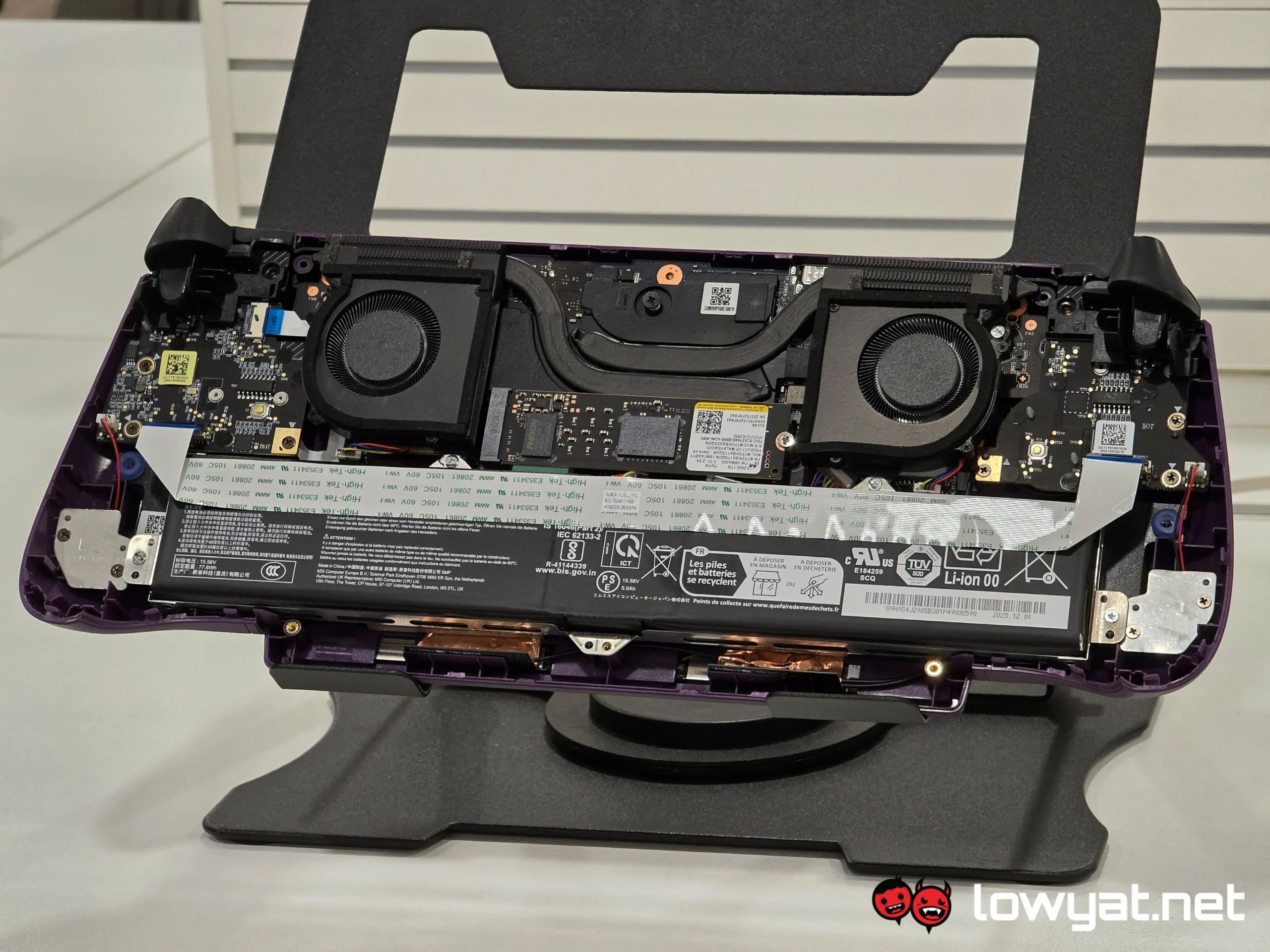
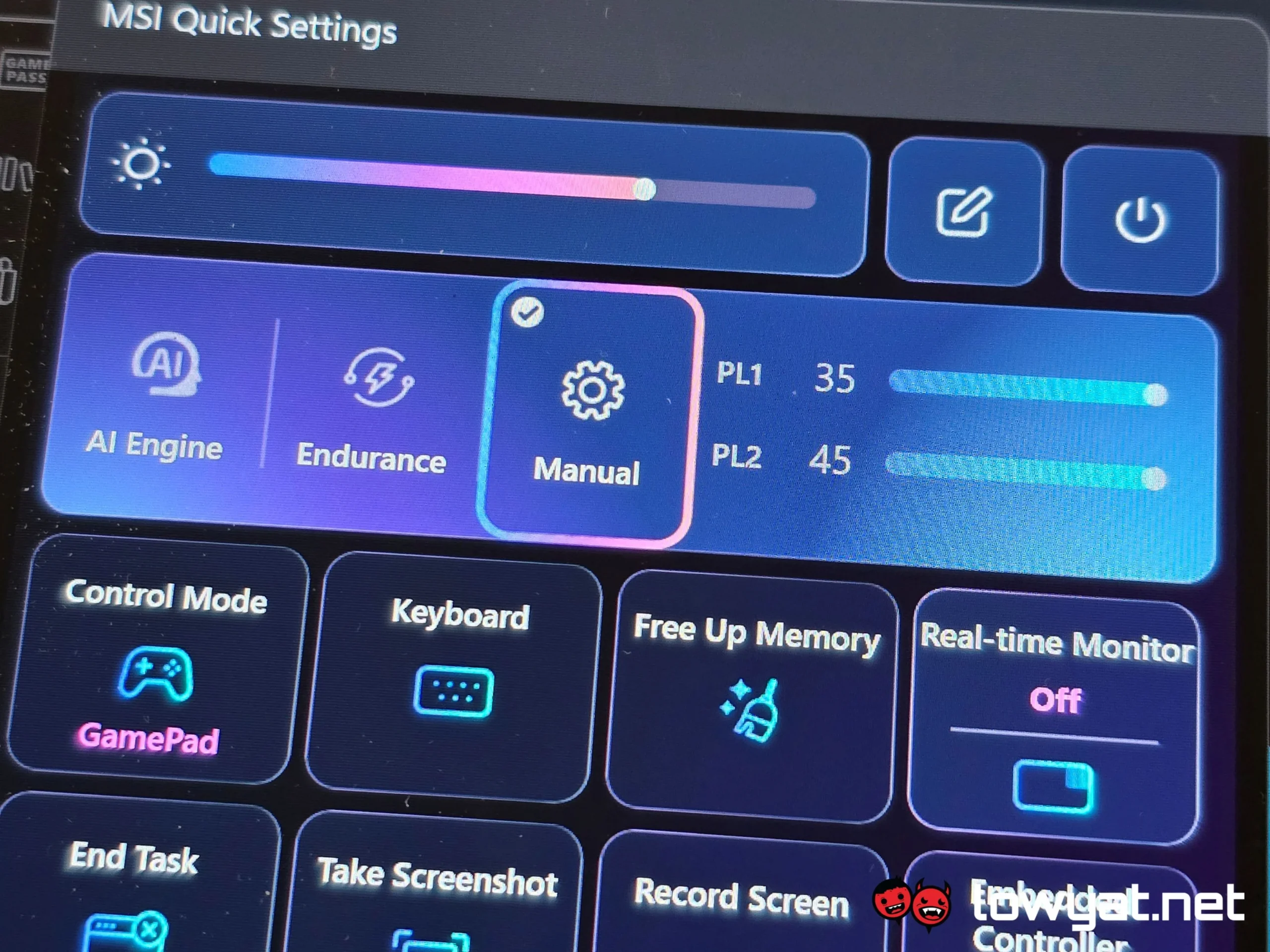
Now, if you want to play around with Manual Mode, you’re going to need a little know-how to play around with the PL1 and PL2 state. Here’s the crash course: PL is short of Power Limit. PL1 is basically the sustained power limit you set the CPU to drain, while PL2 dictates how much power the processor can ramp up to, and usually hits the limit for demanding processes and tasks in games.
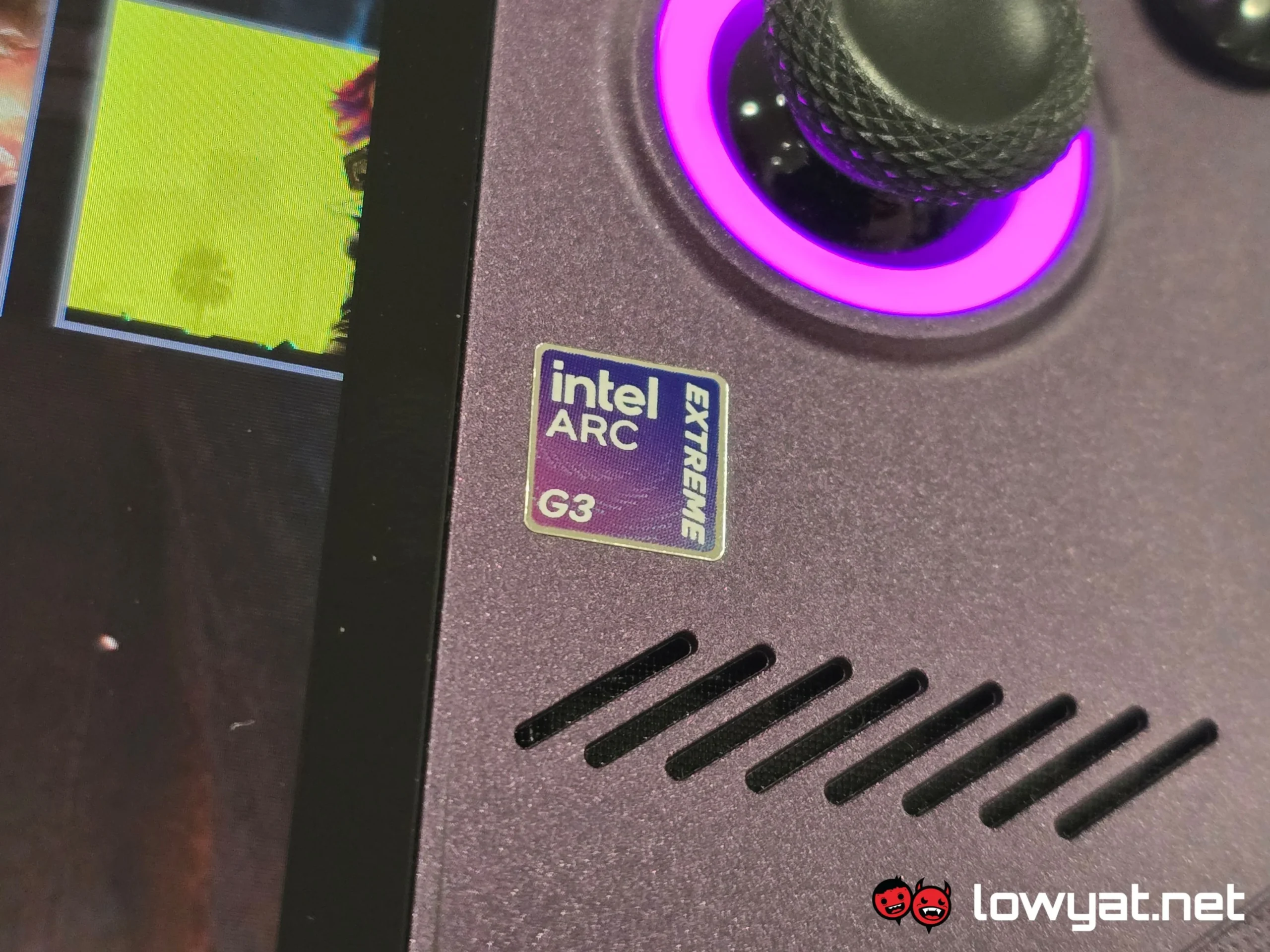
By default, the PL1 and PL2 of the Arc G3 Extreme is set to 17W and 35W, respectively. In my use case, I maxed out the settings, having them run at 25W and 45W, respectively. In this mode, the handheld performed more or less in the same ball park as when it was running in AI mode.
What’s Good About It?
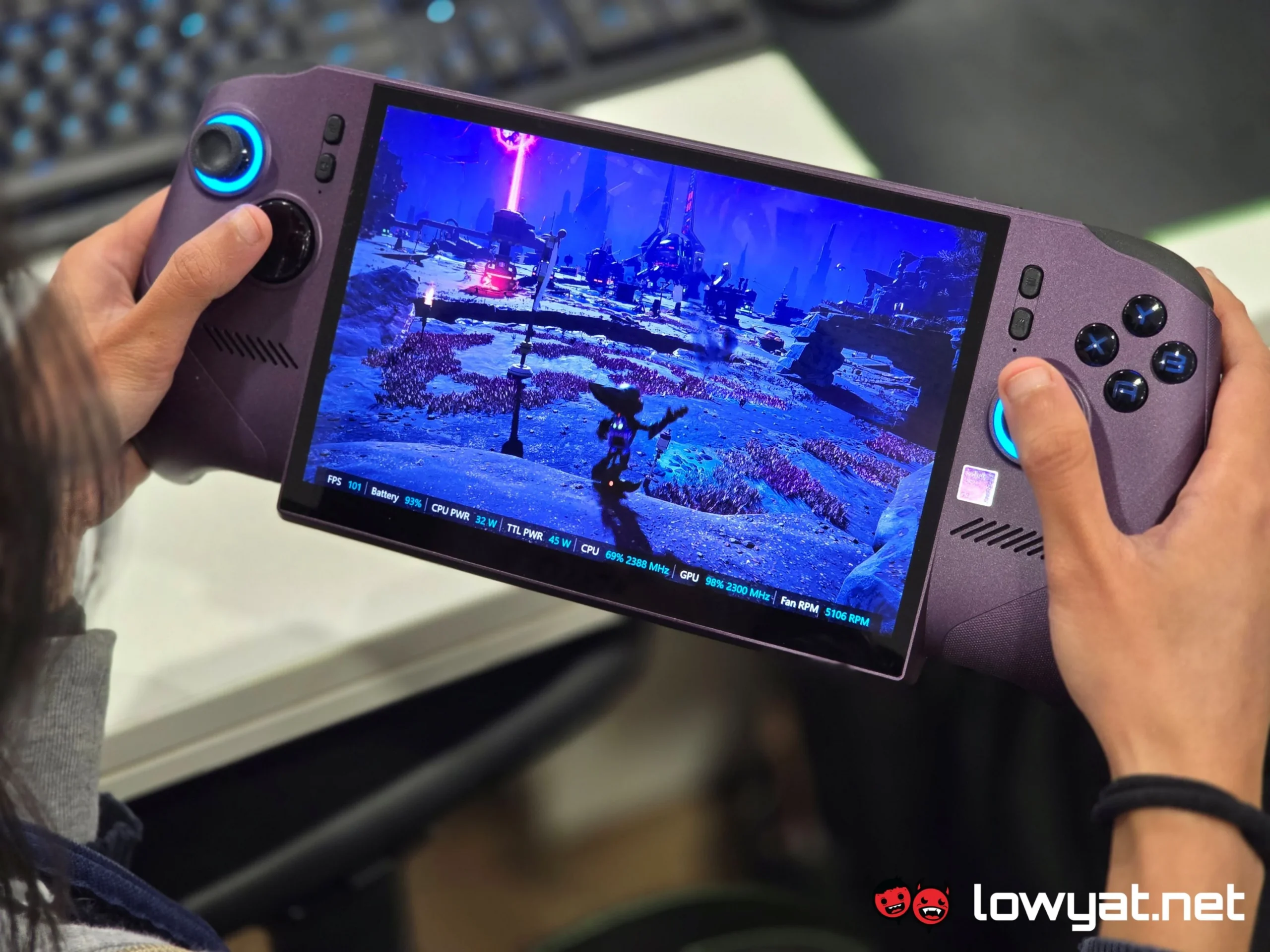
I’ve said it before, I’ll say it again: Panther Lake is a game changer, especially with its integrated graphics cores, and Intel knows it. The Xe3 cores really are the best part of the architecture and as such, which is why the Arc G3 Extreme currently exists powers the Claw EX 8 AI+.
As far as battery life goes, in AI mode, the Arc G3 Extreme in AI Mode yields 2.5 hours of gaming on average. In my test, Cyberpunk 2077 is one of the more power hungry whittling down the 80Wh battery to single digits in just over the two hour mark. To be fair, this is with me running it with ray-tracing lighting turned on and set to medium, along with Intel XeSS and Frame Generation activated.
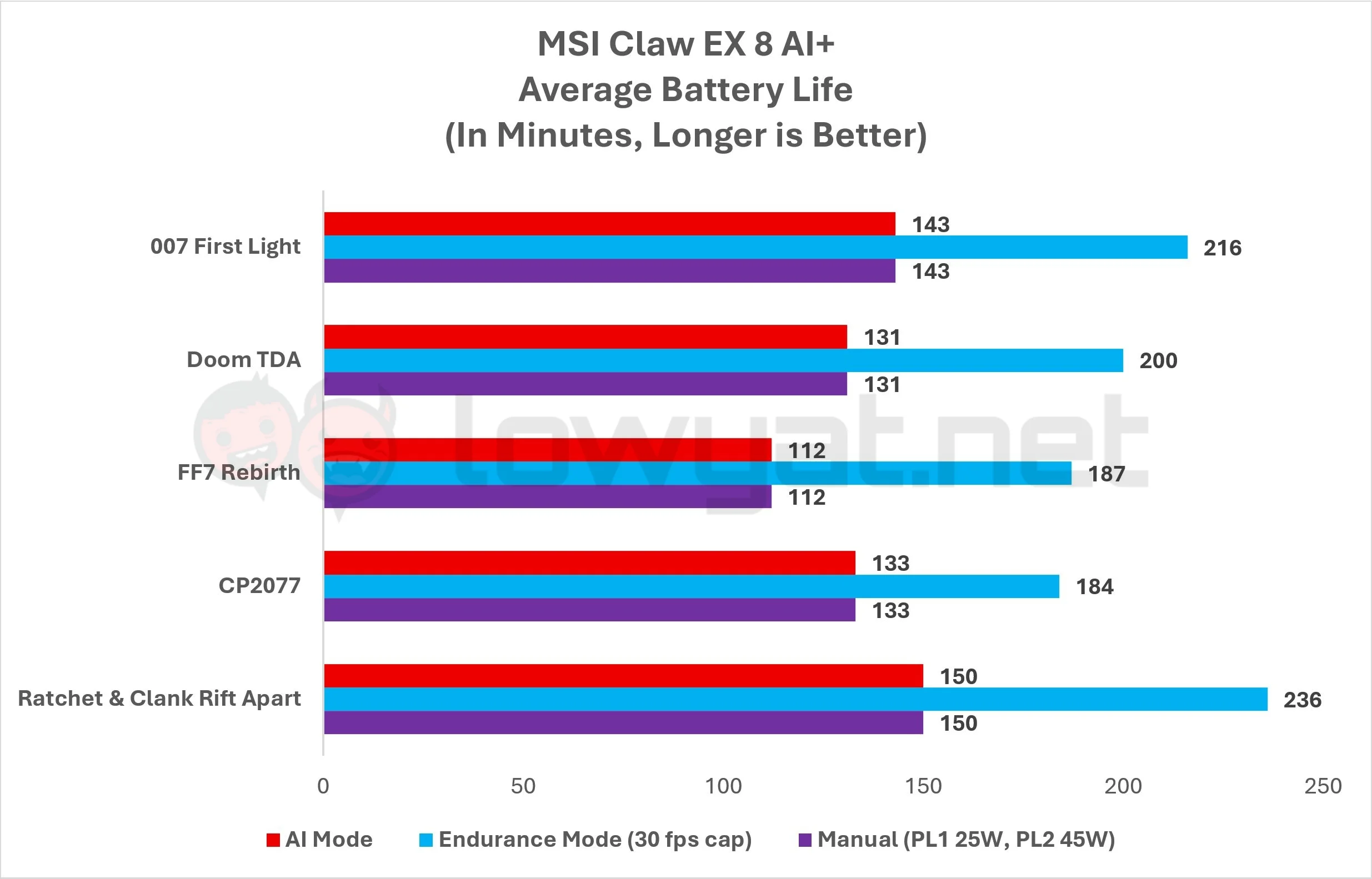
At the same time, the titles that last the longest were Ratchet & Clank: Rift Apart and IO Interactive’s recently launched 007: First Light; both titles reached gave me closer to three hours of gameplay, with visual presets set to medium and with AMD’s FSR and Frame Generation activated. I would turn on Intel XeSS, but as of this review, most games used here do not support Intel’s upscaling technology.
But the real star of the show here is the performance of the Arc G3 Extreme, and boy, it is a trailblazer. Let’s take Cyberpunk 2077 first: with the settings I mentioned earlier and at FHD+, I’m getting 82 fps on average. Drop the resolution down a notch to 1050p – the 8-inch display means that the aspect ratio is slightly larger at 16:10, hence the slightly different resolution standard – and the number jumps up to 91 fps.
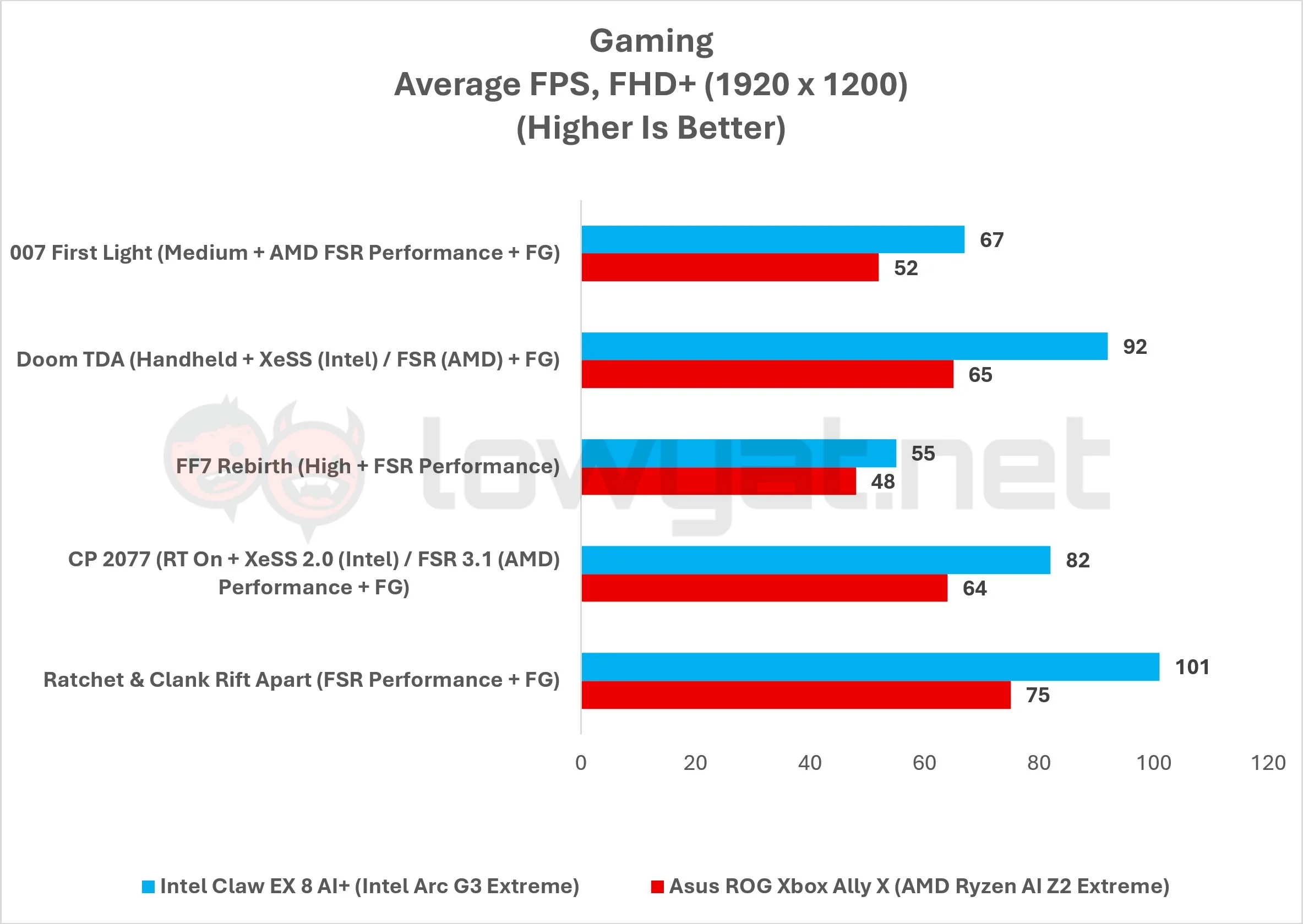
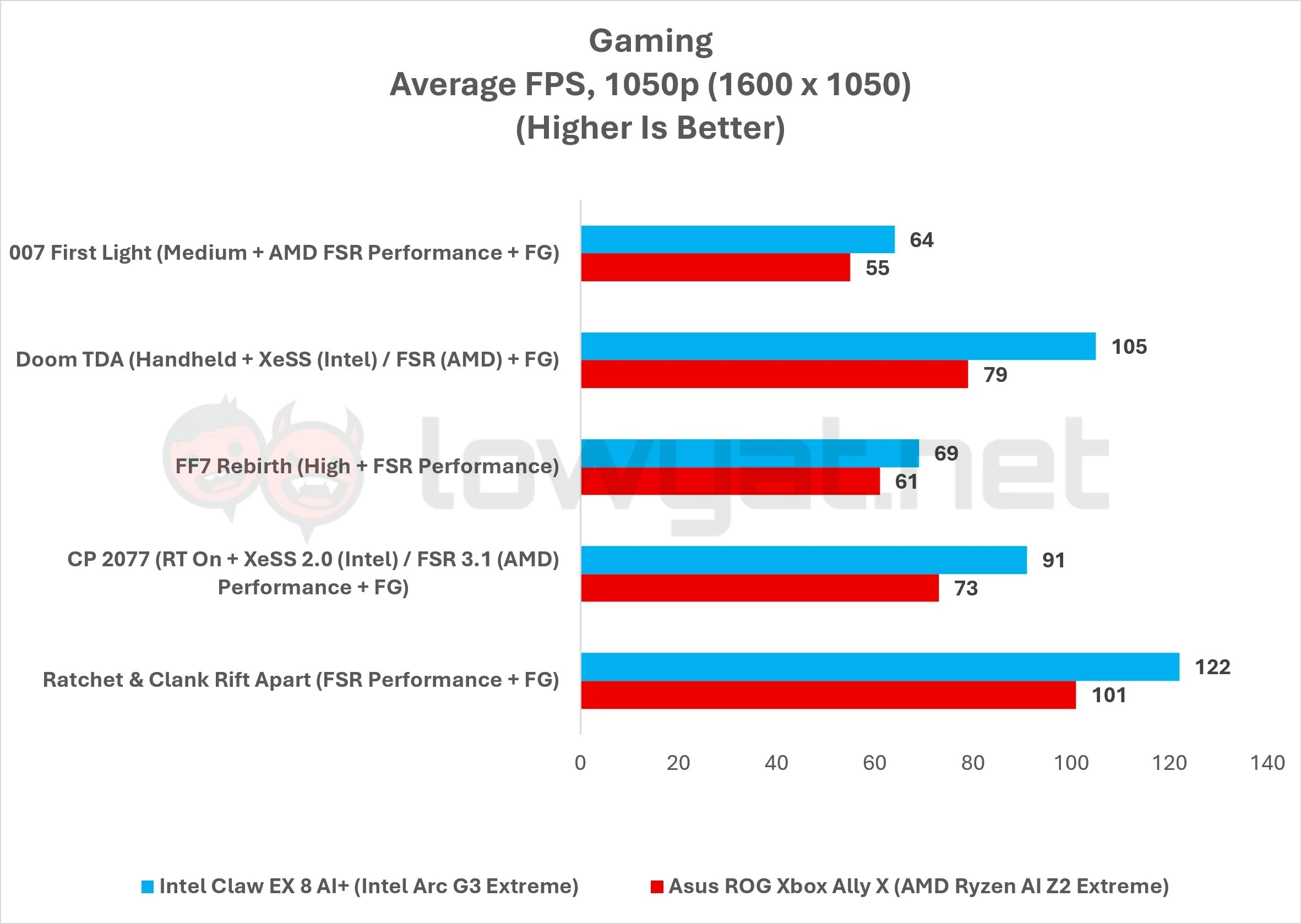
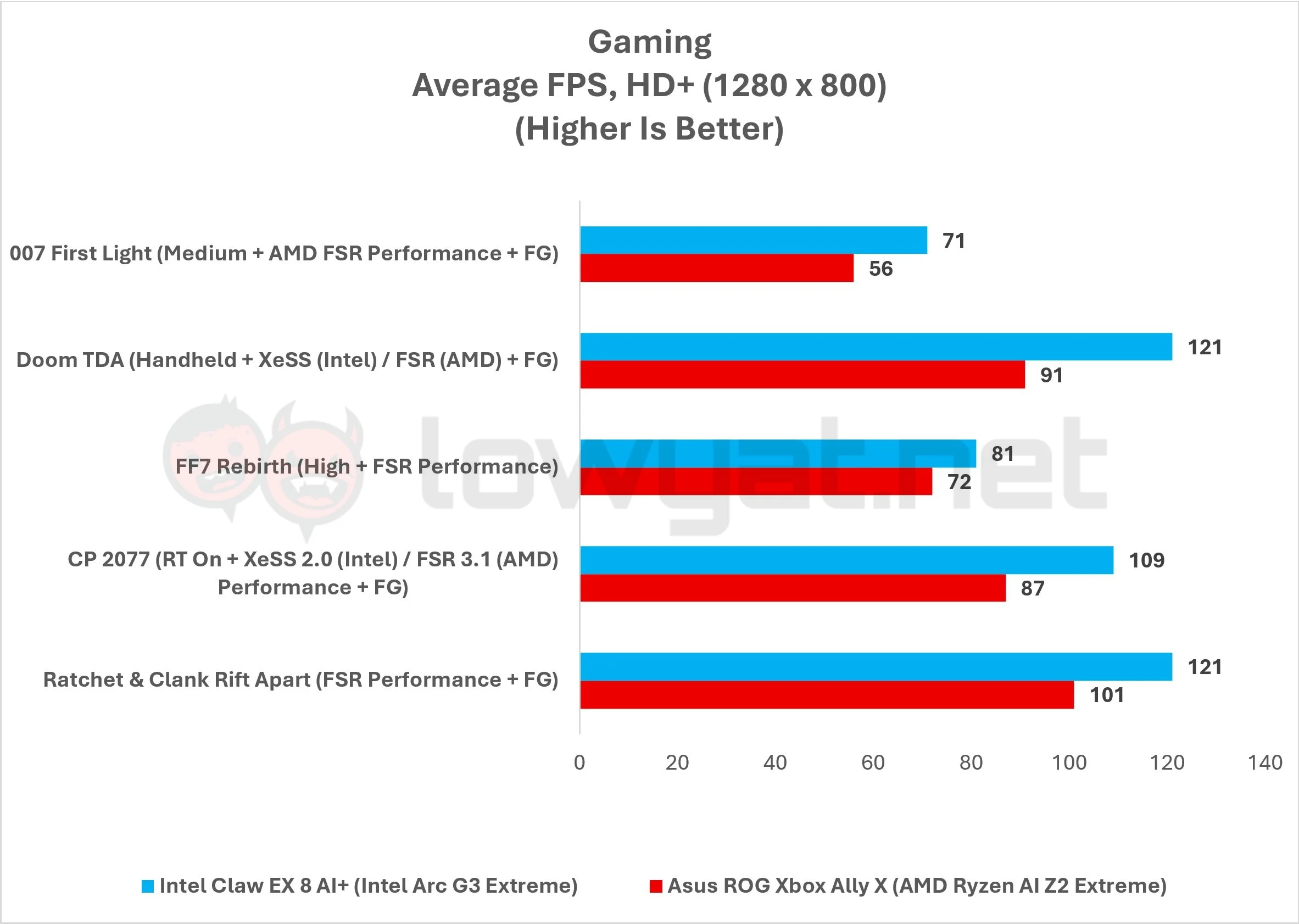
For some titles, though, the average frame count remains the same regardless. Case in point, 007: First Light delivers a steady 60 fps average across three resolutions, and again, this is with the available upscaling and frame generation technology active. Still, to put it simply: it’s nothing short of impressive.
FF7 Rebirth is, perhaps, the only title that had some difficulty with the Claw EX 8 AI+ and the Arc G3 Extreme chipset, delivering just below the 60 fps mark at FHD+, and this is with AMD’s FSR turned on. Sure, it’s note terrible, and if you’re willing to drop the resolution down to 1050p, the average frames actually jump significantly into the 70 fps, but after seeing what the chipset is capable of handling, it’s a little bittersweet seeing it “struggle” with a game that technically isn’t quite as graphically demanding.
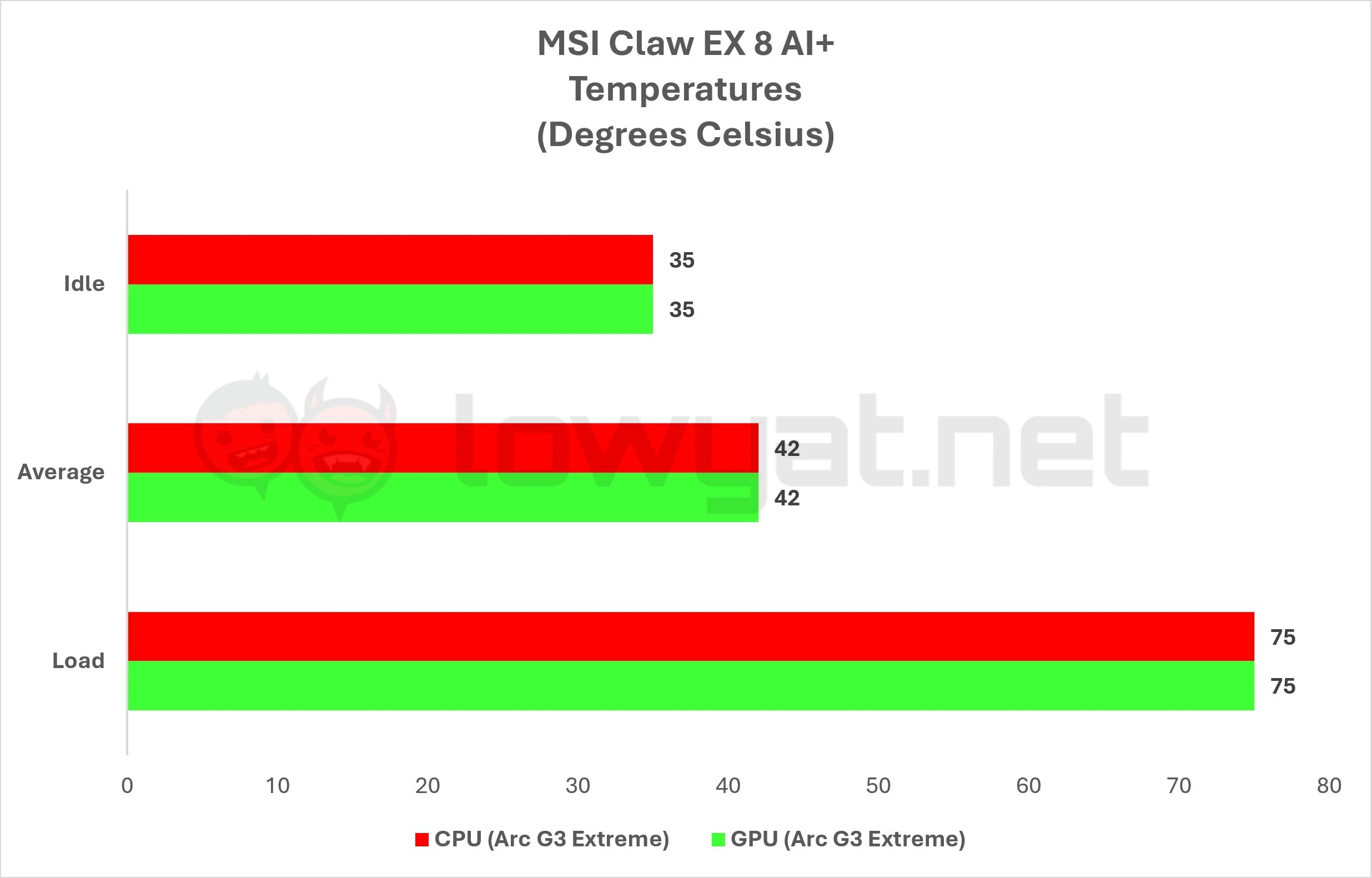
All that being said, Intel’s greatest milestone is the performance difference between the Arc G3 Extreme and AMD’s Ryzen AI Z2 Extreme. The difference in gaming is like the sun and moon, with Intel’s offering virtually trailblazing ahead in my control titles, and with the chipmaker’s own XeSS upscaling tech, no less.
What’s The Catch?
As far as console designs go, I firmly believe that MSI could’ve put a bit more thought in with the Claw EX 8 AI+. As much as I would like not to draw comparisons, the ASUS ROG Xbox Ally X got it right by reversing them on the console, while also creating a dedicated Xbox button, although this was really more a Microsoft demand than an Asus choice. But I digress.
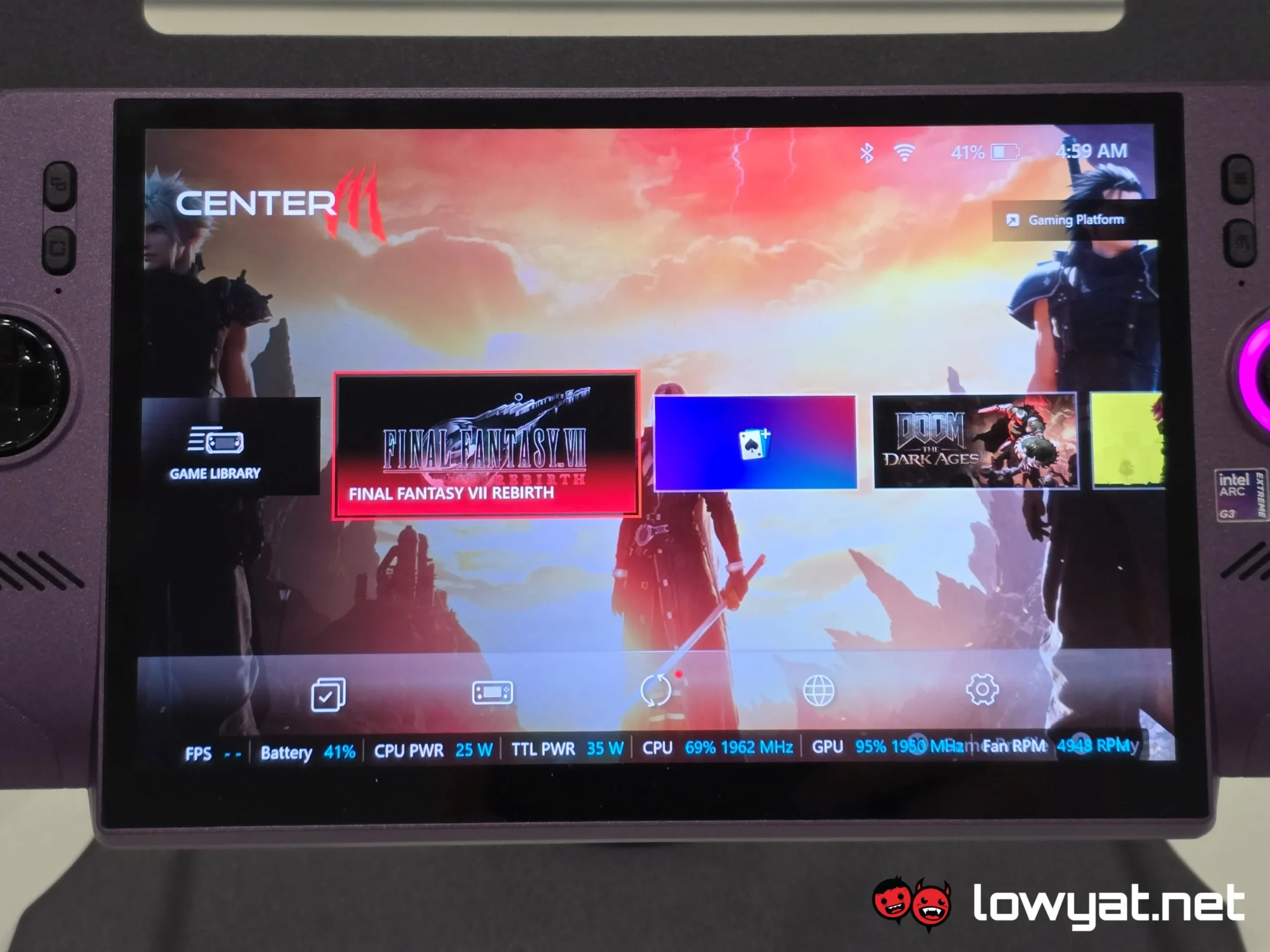
I also can’t say that I’m a fan of how MSI chose to have the display extend, protrude even, beyond the borders of the console. It’s a sticking point for me because it’s a form of asymmetry that I cannot
Endurance Mode does have a drawback, at least, during the time of this review. The tech boffins at Intel said that, because of some technical issues, the mode doesn’t play well with frame generation, and I can attest to this.
In titles like Ratchet and Clank: Rift Apart and Cyberpunk 2077, leaving Frame Generation active causes a slow-motion effect that makes said titles looking like they’re running slower than the capped frames. Intel said that the minute Endurance Mode is chosen, any frame generation would automatically be turned off, which isn’t the case. I have to manually disable the feature in games that support it before the games revert to a playable state.
The MSI Claw Centre also doesn’t play well with the Xbox Mode, with the app persistently switching to the former’s overlay, and I didn’t even prompt it. Honestly, it is mildly irritating: with Asus’ ROG Xbox Ally X, having a dedicated Xbox button that brings up the dedicated overlay and stays there. On the Claw EX 8 AI+, the handheld isn’t as generous and the quick access button doubles as both the Claw overlay and Xbox mode access.
Finally, and there’s no escaping this pain point: the price of the Claw EX 8 AI+. The brand already confirmed that the console retails for US$1,799 (~RM7,368), which is steep. At that price, you could purchase either an Asus ROG Xbox Ally or Xbox Ally X, and still have thousands of ringgit leftover to be spent on other things. Well, those handhelds, or the Lenovo Legion Go 2 at virtually the same price.
Should I Buy It?
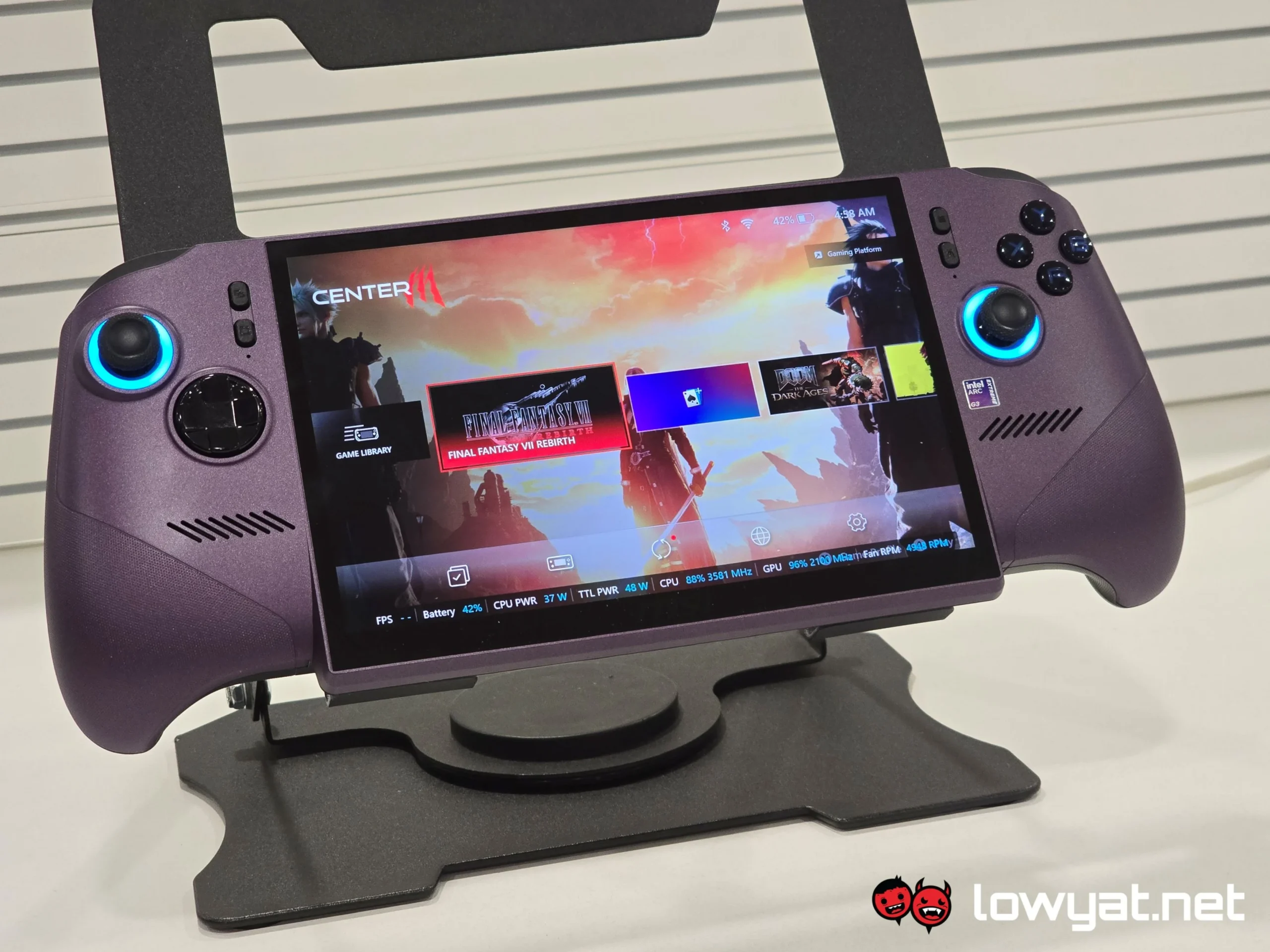
After my first experience with Panther Lake and the Xe3 iGPU with the Asus Zenbook DUO, playing with the GPU portion of it in a handheld is a handheld aficionado’s wet dream. The Claw EX 8 AI+ reaffirms that feeling for me.
Would I recommend it to folks looking to be first adopters of the Arc G3 Extreme experience? Absolutely. Would I recommend the Claw EX 8 AI+ from a economical standpoint? Probably not, as the AMD Ryzen Z2 Extreme is still plenty powerful, if if the Arc G3 Extreme clearly runs rings around it, both in terms of performance and power efficiency.
Whatever the case, though, it is clear that Intel’s Arc G3 Extreme chipset has given MSI the long-awaited victory lap it wanted, especially after its disastrous start with the original Claw 7. I just wish the brand polished up the design of the handheld a little more. That aside, the only thing left for me to say at this point is: point to Intel.
Photography by John Law.