

Digital Nasional Berhad (DNB) has announced that it has begun activating an additional 100MHz of 5G spectrum across its network, effectively restoring its full 200MHz contiguous mid-band spectrum holding. The announcement comes on the same day U Mobile completed its migration away from the company’s infrastructure as part of the country’s transition to a dual 5G network model.
Essentially, the move marks DNB’s next phase as Malaysia’s national 5G infrastructure provider. According to the company, the additional spectrum will significantly boost network capacity while preparing the network for future enterprise and AI-driven applications.
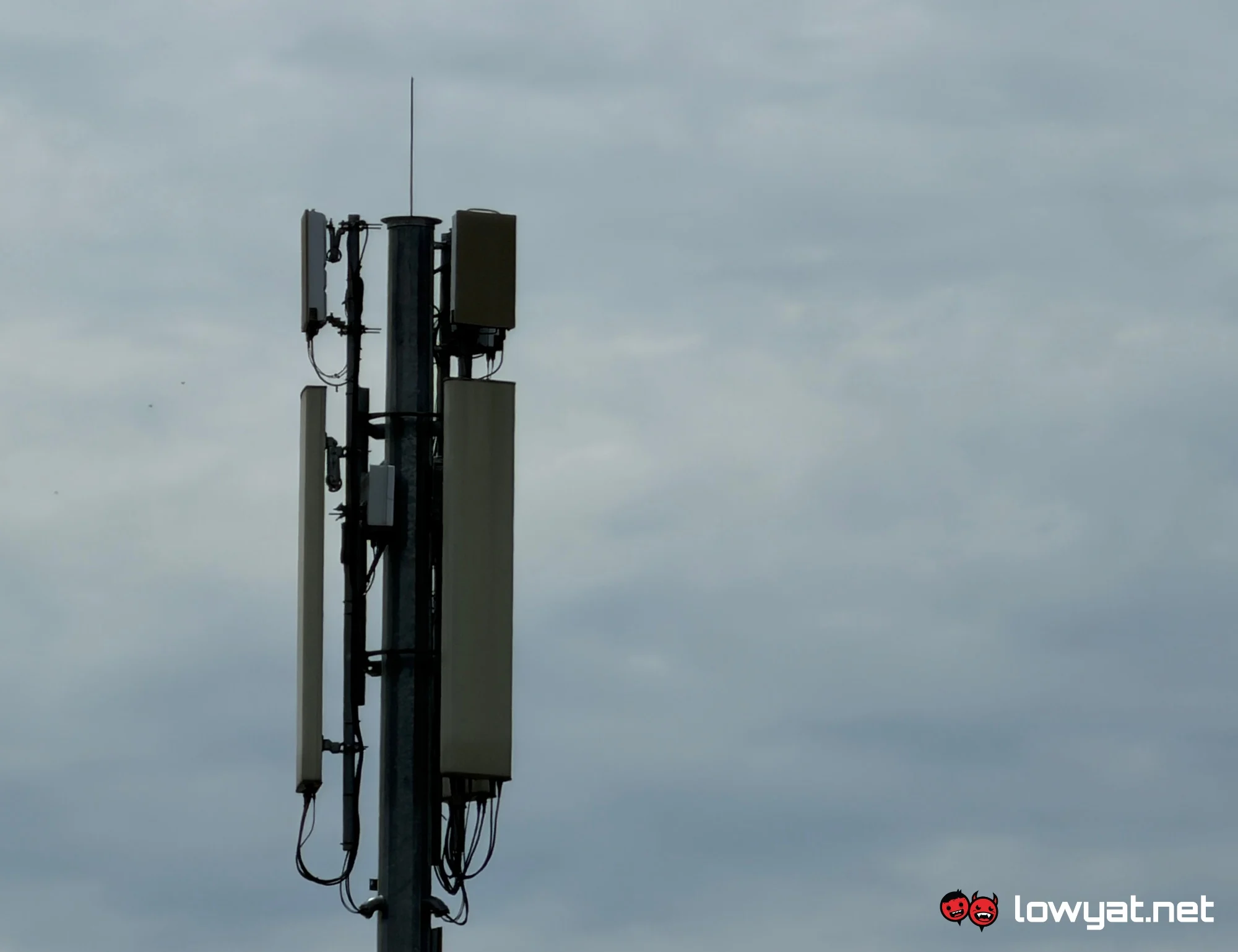
DNB Regains Its Full 200MHz Spectrum Holding
DNB said it is now activating its newly assigned 3.3GHz to 3.4GHz (“F-Zero”) spectrum alongside its existing 3.4GHz to 3.5GHz allocation. Together, the two contiguous blocks provide a total of 200MHz of mid-band spectrum, currently the largest such holding in Malaysia. The company adds that more than 50 sites have already been upgraded with the new spectrum, with additional locations set to follow.
The new allocation also restores the spectrum capacity DNB originally held before the government shifted to a dual-network approach. Under that transition, DNB relinquished its original 3.5GHz to 3.6GHz 100MHz block, which was subsequently assigned to U Mobile for Malaysia’s second 5G network.
This development follows the Ministerial Direction on 5G Network Implementation issued in October last year, which instructed the Malaysian Communications and Multimedia Commission (MCMC) to allocate 100MHz of spectrum in the 3.3GHz to 3.4GHz band to DNB, restoring restore its total contiguous spectrum to 200MHz. The directive also called for DNB’s existing apparatus assignments to be converted into spectrum assignments while ensuring there would be no adverse impact to consumers or continuity of 5G services.

What The Extra Spectrum Means
While the additional 100MHz does not necessarily translate into dramatically faster download speeds for individual users, it significantly increases the network’s overall capacity. This enables DNB to serve more users simultaneously, particularly in congested areas such as city centres, transport hubs, shopping malls, and large public events, helping participating operators like CelcomDigi, Maxis, and YTL Communications (Yes 5G) deliver more consistent 5G performance.
The added capacity also provides greater headroom for enterprise applications, including AI, industrial IoT, automation, and private 5G deployments, while laying the groundwork for future 5G-Advanced features. As mobile data usage and 5G adoption continue to grow, the additional spectrum helps ensure DNB’s network can accommodate increasing demand without compromising service quality.
On that note, the company noted that Malaysia’s mobile data consumption has more than doubled over the past few years, rising from around 19GB per user per month during the COVID-19 pandemic to approximately 40GB today. At the same time, the country’s 5G adoption has exceeded 88%, representing more than 30.3 million 5G subscriptions.

In Regards To U Mobile’s Departure
DNB noted that U Mobile’s departure will not affect its network operations or coverage commitments. It assured that services would continue as normal for its remaining access seekers and shareholders.
Today, the company said it continues to carry the majority of Malaysia’s 5G traffic, with shareholders CelcomDigi, Maxis, and YTL Communications collectively serving around 30 million users. The three companies have also invested more than RM2 billion into DNB to date.
Looking ahead, DNB said it will continue expanding coverage. These include upgrading network capacity, and strengthening support for enterprise digitalisation.
(Source: DNB press release)
