
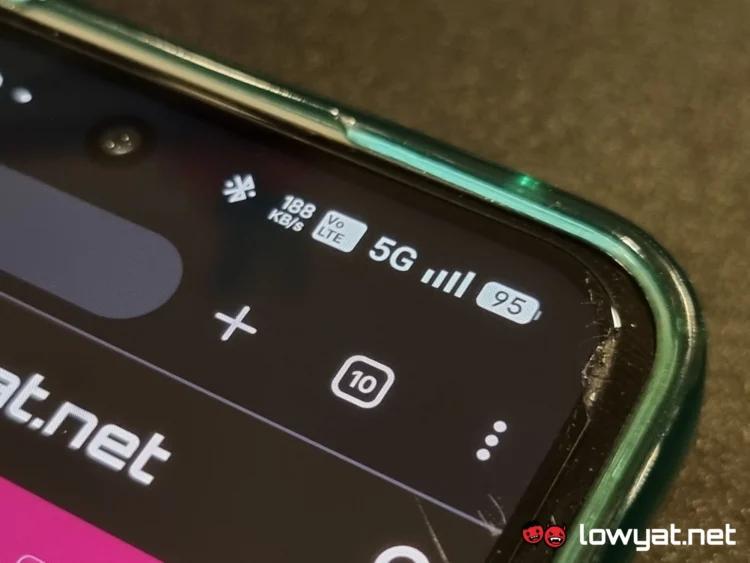
Seeing full signal bars but still having little to no internet access is a frustrating experience that many Malaysians are familiar with. Fortunately, the Malaysian Communications and Multimedia Commission (MCMC) and local telcos are working to address the issue through several network improvements.
Deputy Communications Minister Teo Nie Ching said the government is upgrading transmission networks with higher-capacity optical fibre to reduce disruptions caused by core network failures. The upgrade is one of several measures being undertaken by MCMC and telcos to address the “full signal, no internet” issue.

“The issue of lack of Internet access even though users receive strong telephone signals or full bars can occur due to several factors that affect the quality of service,” she said in the Dewan Rakyat today. She added that one of the measures being implemented involves introducing link redundancy and establishing alternative transmission routes to reduce or eliminate single points of failure.
Why You Can Have Full Signal But No Internet

The deputy minister said several factors can contribute to the issue. Aside from network congestion caused by heavy data traffic, disruptions to transmission lines are another major cause of the problem.
She added that these lines are vulnerable to physical disruptions such as cable theft, vandalism, and interference from wild animals, which can interrupt connectivity. MCMC also noted that factors such as the condition of a user’s device, phone settings, subscription plan, and remaining data quota can affect the overall internet experience.
Improving The Infrastructure

According to Scoop’s report, MCMC is upgrading backup power systems at communications sites to improve network resilience during power disruptions. In addition, telcos continuously monitor these sites through their respective Network Monitoring Centres (NMCs) to detect and respond to network issues around the clock.
Moreover, MCMC, together with service providers, is taking active physical security measures to protect critical infrastructure built under the Jalinan Digital Negara (JENDELA) Plan. Teo said that these measures include installing anti-theft and anti-vandalism infrastructure, such as iron conduit to protect copper cables from being cut or stolen.

These upgrades are also tied to Malaysia’s wider efforts to strengthen its digital infrastructure through initiatives such as the JENDELA Plan. For those unfamiliar with it, JENDELA is an initiative launched in 2020 to improve Malaysia’s digital connectivity infrastructure. One of its early measures was the gradual retirement of 3G networks, allowing spectrum resources to be repurposed to improve 4G network capacity and performance while preparing the groundwork for 5G.
Under the JENDELA Plan, efforts are focused on expanding high-speed fibre connectivity to nine million premises and improving internet access across the country. The initiative also includes deploying fibre infrastructure and satellite connectivity in rural areas, which will help support Malaysia’s future digital infrastructure, including 5G networks.
