



Ever imagined a Perodua Kancil or a Proton Saga being converted into a fully electric vehicle? Well, this can now become a reality as the Automotive Engineering Division of the Road Transport Department (JPJ) has released official guidelines for EV conversions intended for use on Malaysian roads.
This practice is not new, as such conversions have already been carried out widely in other countries. These guidelines cover the technical and legal requirements for such conversions to ensure they are carried out properly without compromising the functionality and safety standards of a vehicle.

In Malaysia, all vehicles are regulated under the Road Transport Act 1987 and the Motor Vehicles (Construction and Use) Rules 1959. Every vehicle model must go through JPJ’s Vehicle Type Approval (VTA) process to ensure it meets safety and environmental standards based on United Nations regulations. Under Rule 94(2), any change to a vehicle’s parts, systems, or accessories that differs from the original manufacturer’s specifications requires prior approval from the JPJ Director and must follow the conditions set by the department.
According to the application flowchart, applicants must first submit a conceptual modification design to JPJ. This document should include full details of the vehicle being converted, the specific modifications planned, and a detailed diagram showing all affected systems.
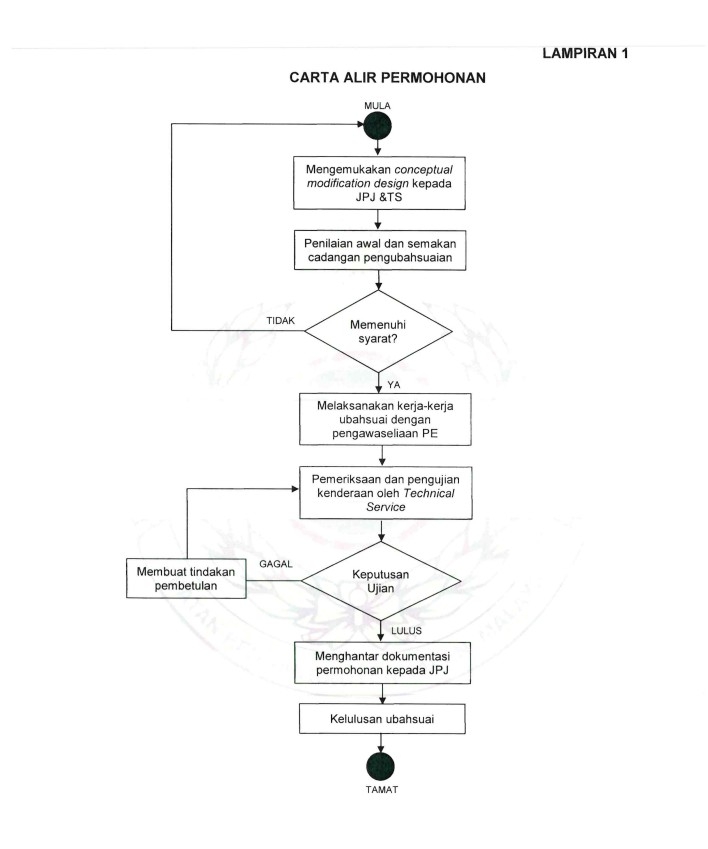
Once submitted, JPJ will review the proposal and provide feedback. Only after the department is satisfied can the conversion work begin. When the modification is completed, the vehicle must undergo JPJ’s inspection and testing to ensure it meets the required standards for technical service assessment.
Furthermore, all conversion work must be carried out by JPJ-approved workshops and supervised by a qualified professional. To obtain final approval, either the vehicle owner or the workshop (with the owner’s consent) must submit an application along with the necessary documents to JPJ.
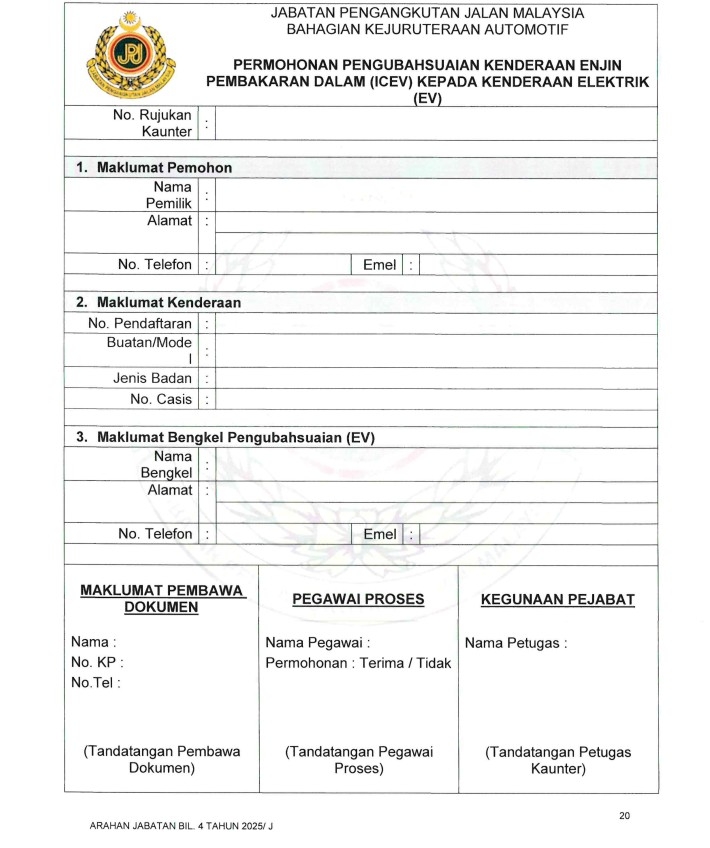
Although the process can be time-consuming and potentially expensive, the availability of this pathway raises interesting questions about which vehicles Malaysians might choose to convert into EVs. To know more about the guidelines, click here.
(Source: JPJ Official Document)
