
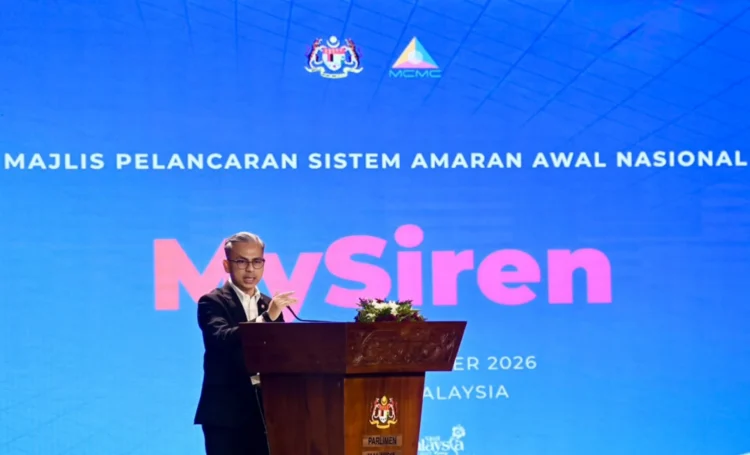
Comms Minister Datuk Seri Fahmi Fadzil has confirmed that Malaysia’s new Early Warning System (EWS) is officially known as “MySiren”, while also revealing that the scheduled nationwide test on 29 November 2026 will commence at 10:10am. The exercise will see compatible smartphones across the country receive a test notification simultaneously, allowing the public to familiarise themselves with the disaster alert system.
According to Fahmi, the exercise will be coordinated from the National Disaster Command Centre at the National Disaster Management Agency’s (NADMA) headquarters. As reported previously, MySiren has been operational since 19 November, with an earlier demonstration held at Parliament to familiarise lawmakers with its functions.
What You Need To Know About MySiren
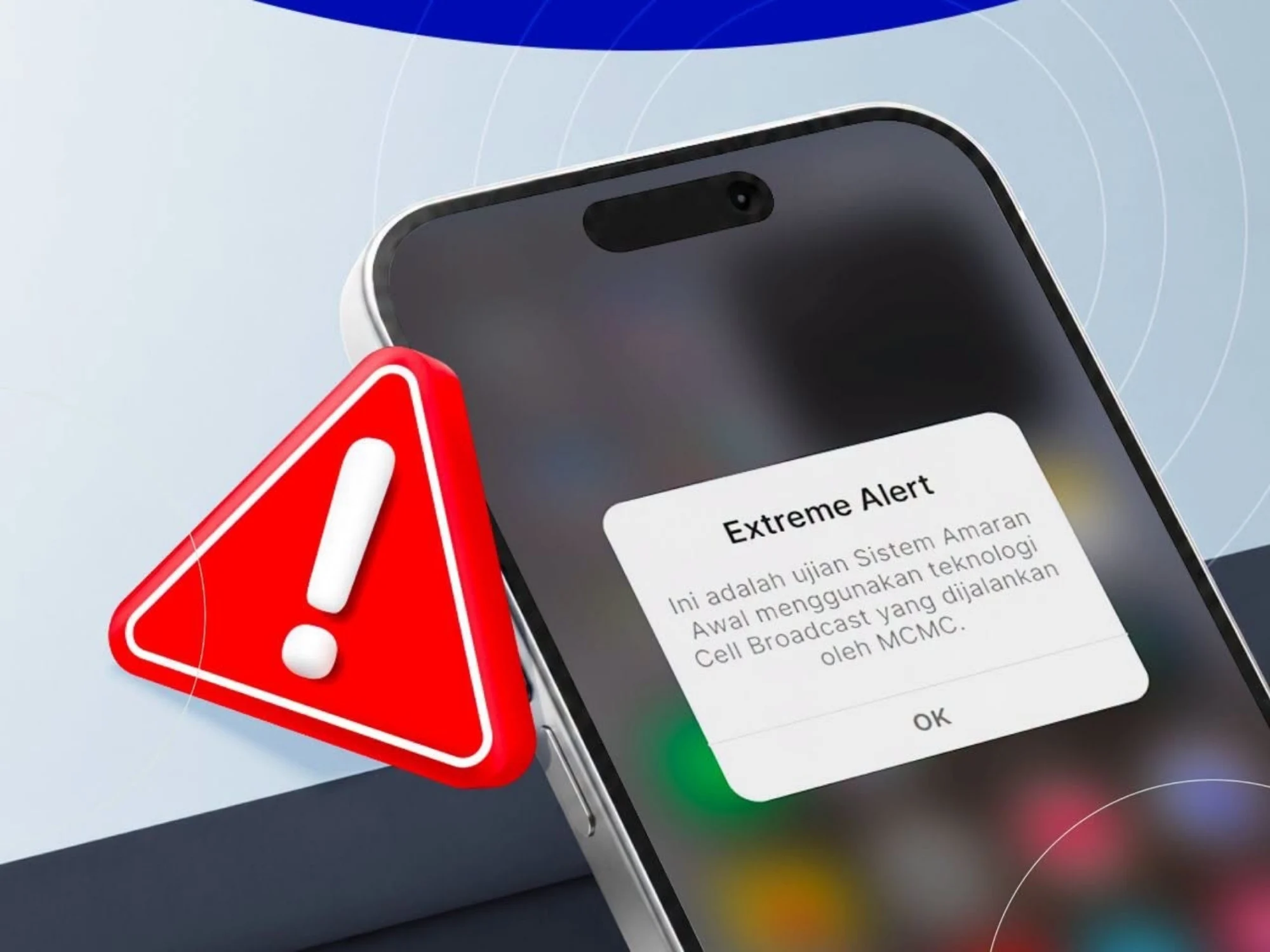
Unlike conventional SMS notifications, MySiren does not require registration, an application download, or an active mobile data connection. Alerts are delivered directly to compatible devices, accompanied by a distinctive sound and vibration to draw the recipient’s attention.
The system uses Cell Broadcast System (CBS) technology to deliver alerts simultaneously to compatible devices within designated geographical areas. Developed at a cost of approximately RM200 million, it is operated by the Malaysian Communications and Multimedia Commission (MCMC), with NADMA, the police, the Fire and Rescue Department, and local authorities also having access to it.
Fahmi also assured the public that MySiren does not collect or access any personal information from users’ devices. Unlike SMS notifications, which require messages to be sent to individual phone numbers, the Cell Broadcast technology simply delivers alerts to compatible devices within a designated coverage area without identifying their owners. As such, users do not need to register or provide any personal information to receive notifications, nor will they be charged for receiving them.
Eight Types Of Alerts Supported
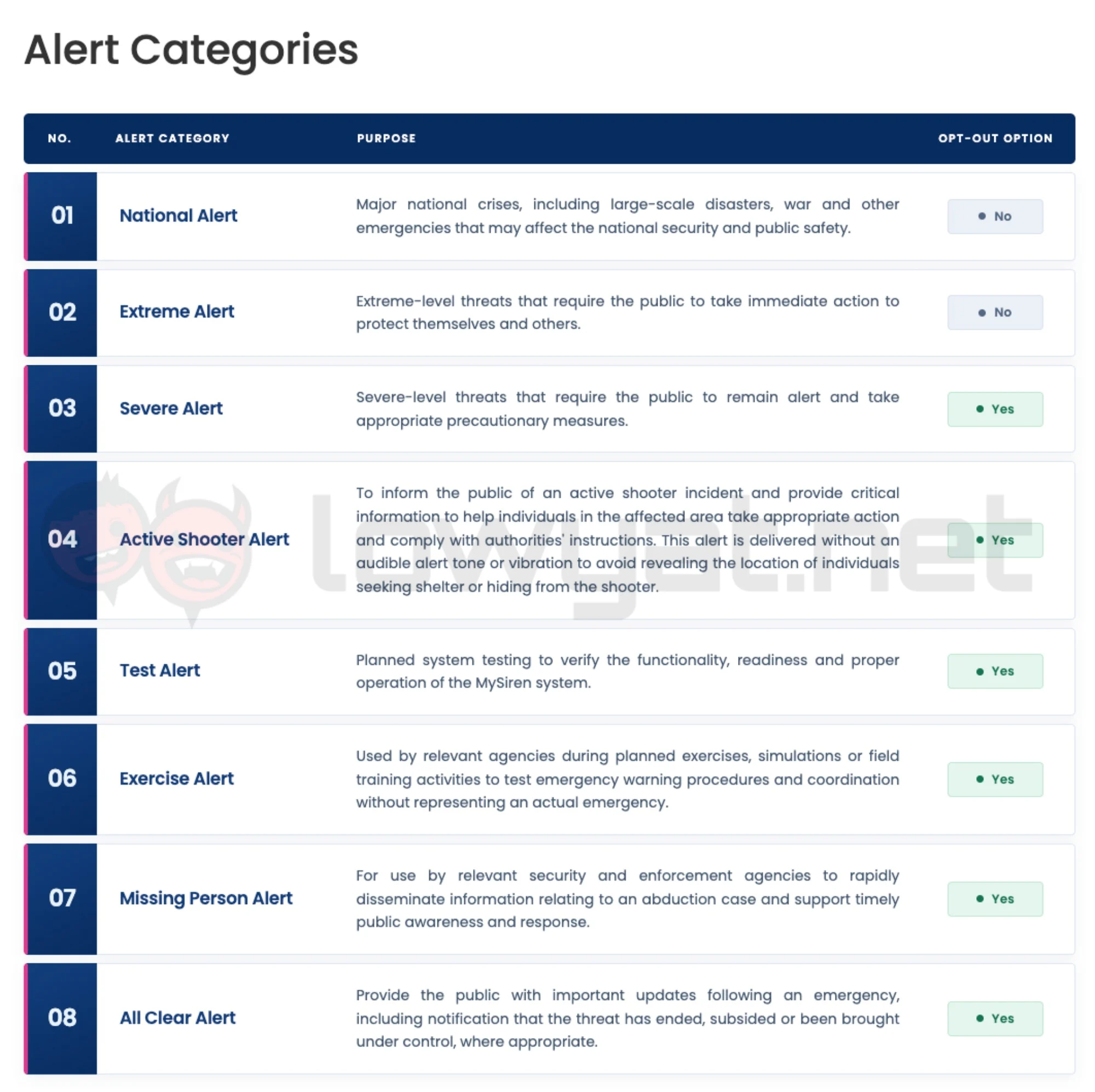
MySiren supports eight alert categories: National Alert, Extreme Alert, Severe Alert, Active Shooter Alert, Test Alert, Exercise Alert, Missing Person Alert, and All Clear Alert. These cover everything from major national crises and emergencies requiring immediate public action to planned system tests, emergency exercises, missing person cases, and updates confirming that a threat has ended.
Of these, only National Alert and Extreme Alert cannot be disabled, while users can opt out of receiving the other six categories. Notably, Active Shooter Alerts are delivered without an audible tone or vibration to avoid revealing the location of people seeking shelter or hiding from the shooter.

Smartphone Updates Encouraged
As previously reported, MCMC has urged smartphone users to update their devices to ensure compatibility with the new system. The minimum requirements include the iPhone 11 or newer running iOS 27.2 or later, Android devices running Android 12 or later, and Huawei devices running EMUI 16 or later.
Users are also advised to install the latest available software updates, restart their devices afterwards, and ensure that emergency alert settings are enabled where applicable. Those using older or incompatible smartphones will not be left out, as existing SMS-based disaster notifications will continue to operate alongside MySiren.
For more information about the system, the public can visit the official MySiren section on MCMC’s website.
(Source: The Vibes / The Edge Malaysia / MCMC)
