
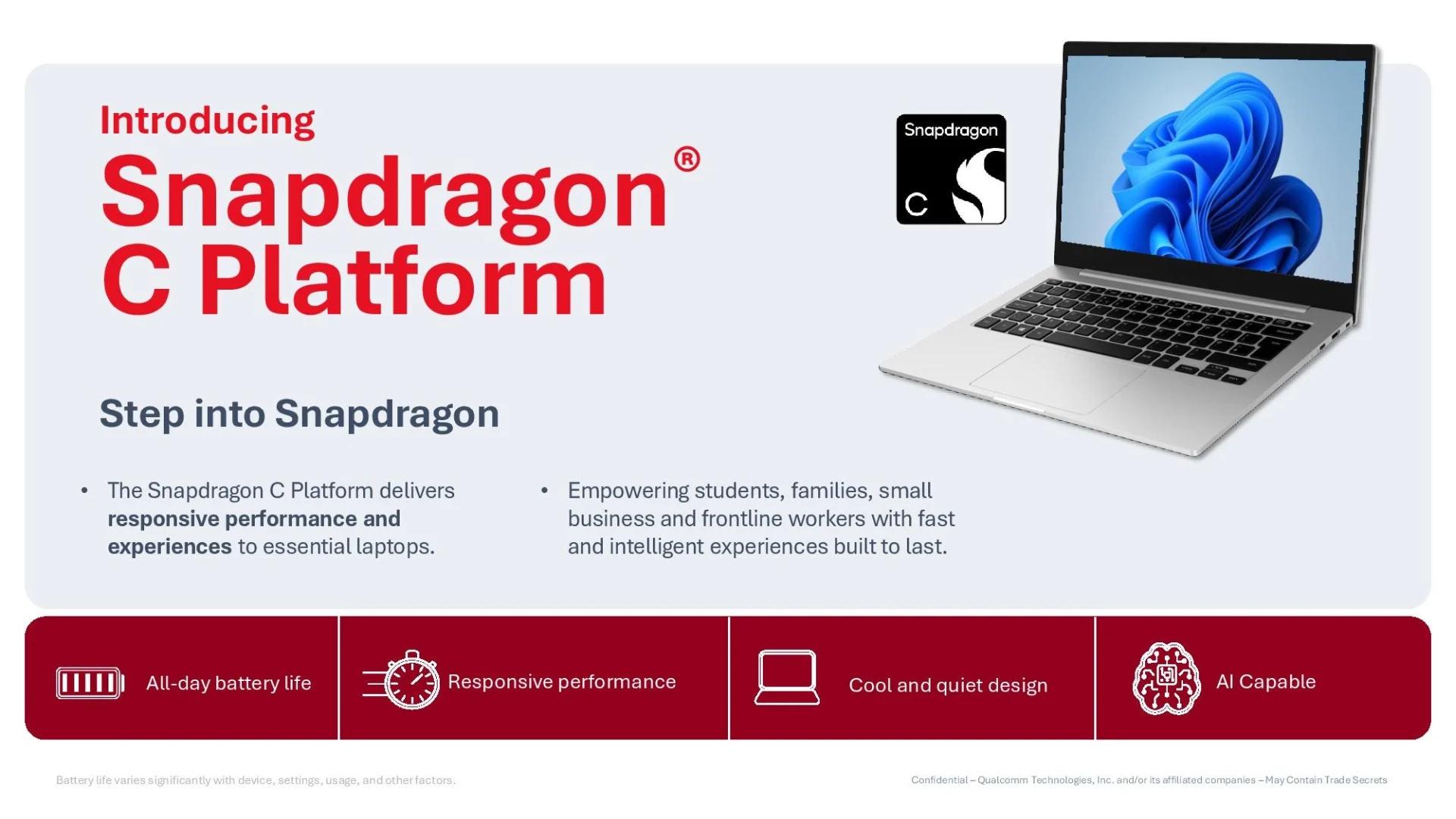
Qualcomm first unveiled the entry-level Snapdragon C platform for laptops meant to be much cheaper than existing alternatives. Little has been revealed about the chip since, but now, the company has finally shown more numbers relating to the platform, including the all-important performance-related ones. The company has also thrown in a comparison to another competing chip within the same presumed price bracket. There’s also a claim of “all-day” battery life, but we’ll get to that in a bit.
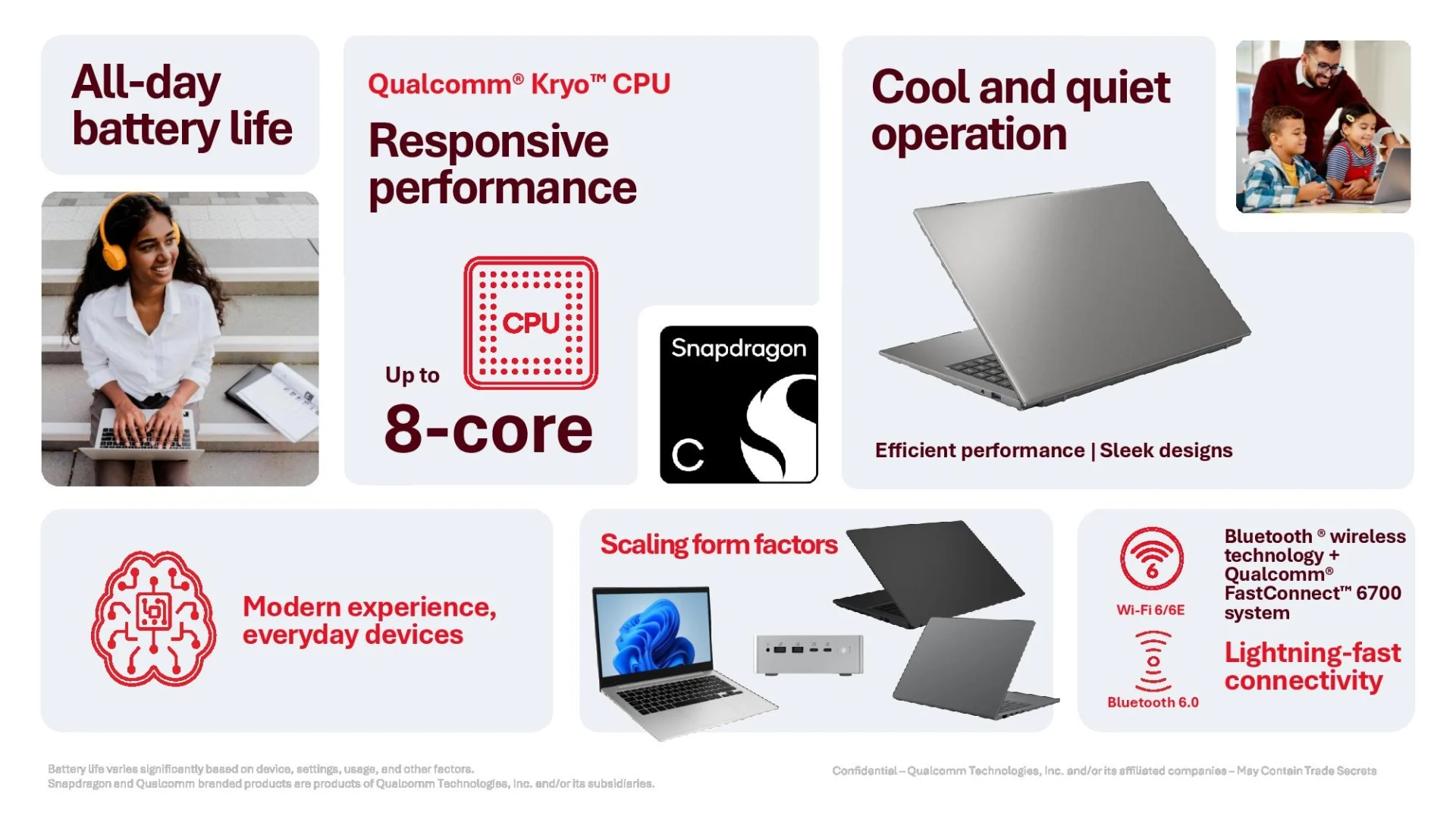
On the company’s website, Qualcomm now shows the spec sheet of Snapdragon C, which includes an eight-core Kryo CPU with a single-core max frequency of 3 GHz and multi-core max frequency of 2 GHz, plus a 2 MB cache. There’s also an integrated Adreno GPU with a 900 MHz clock speed, as well as the Hexagon NPU. Then we get to the battery life part mentioned above, where the company provided the “all-day” claim. This comes with the familiar disclaimer of “varies significantly based on device, settings, usage, and other factors”. The report by Tom’s Hardware chalked this up to leaving the specific number up to OEM partners.
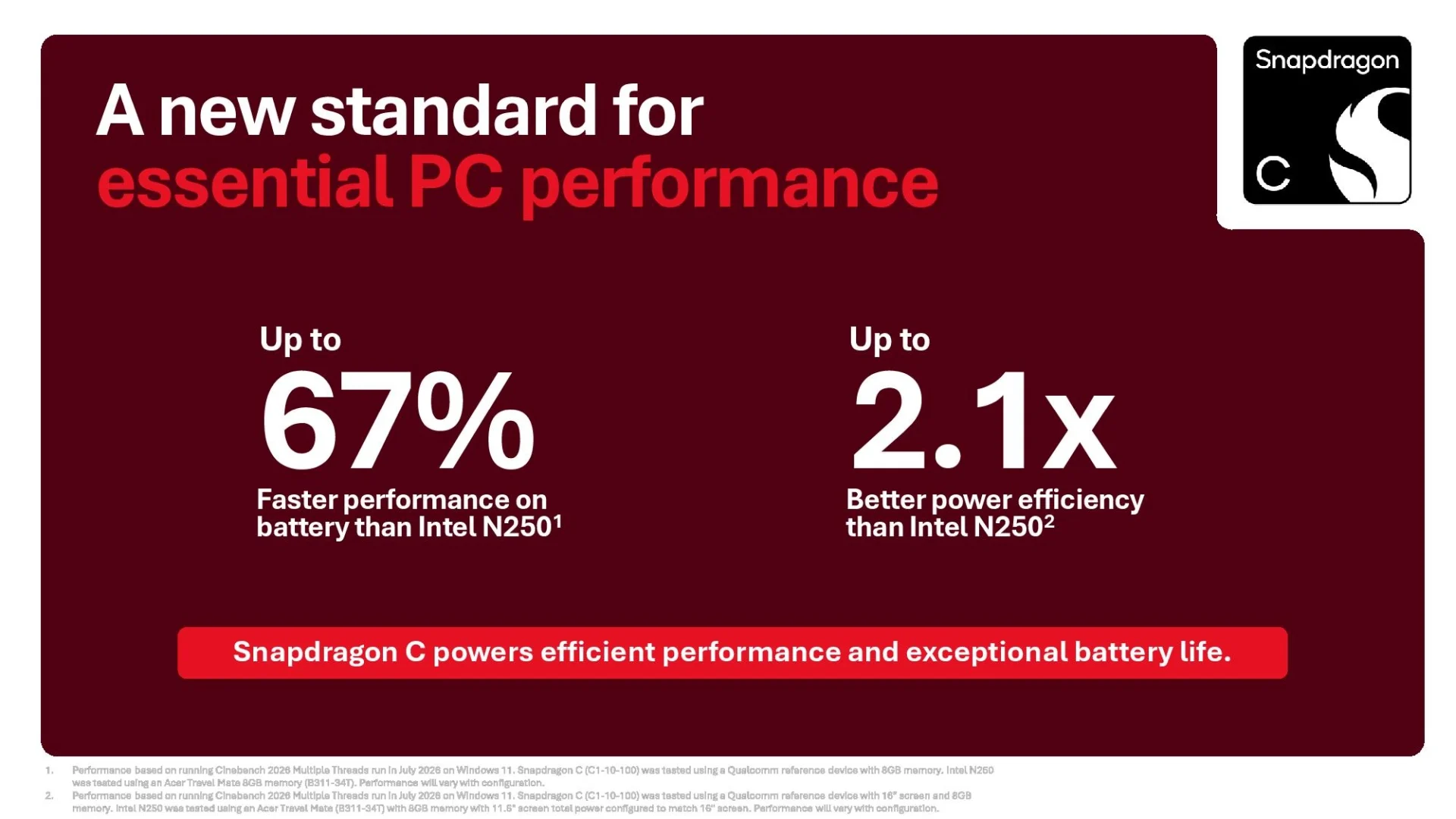
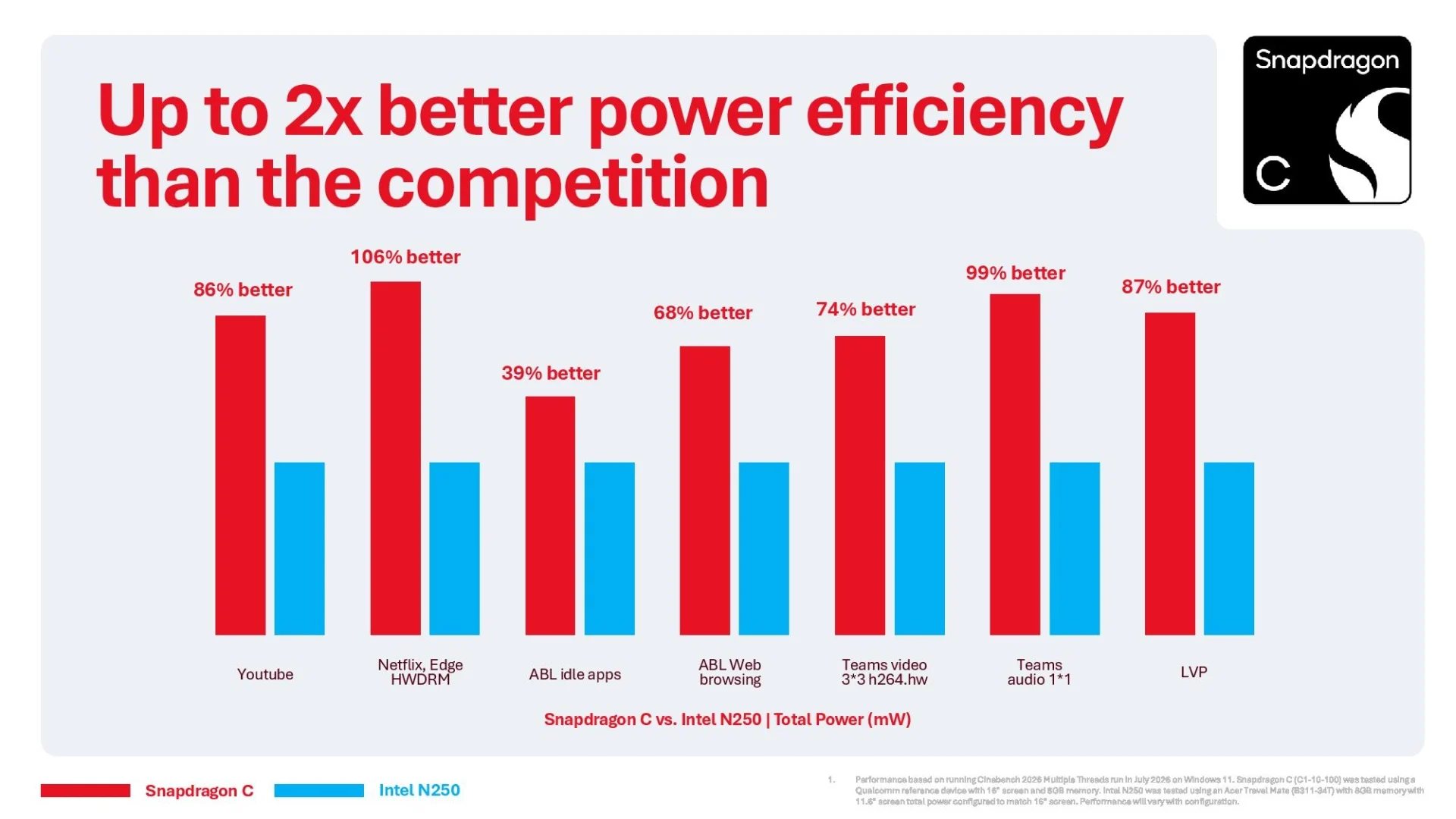
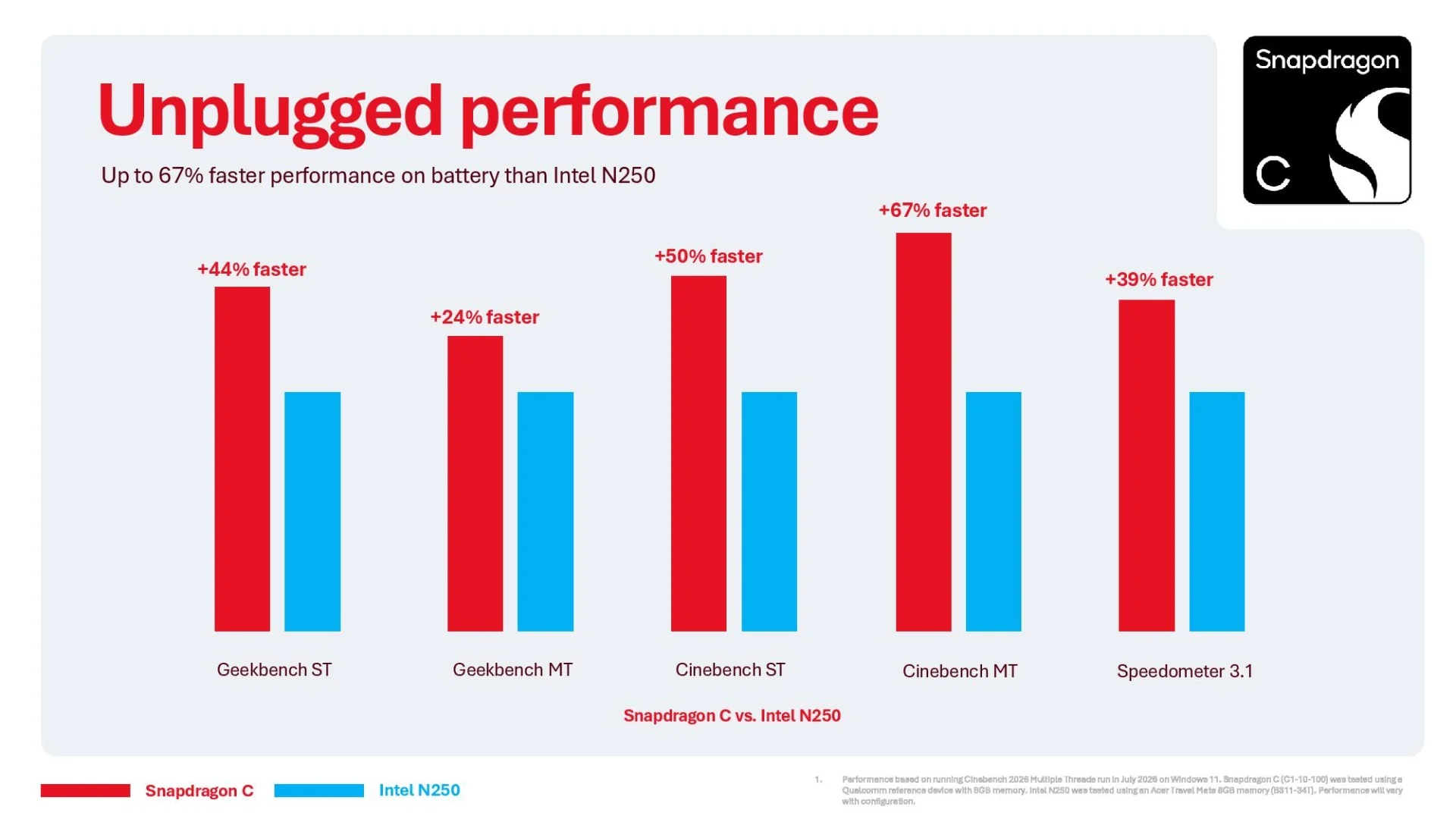
Down to the comparison, Qualcomm is pitting the Snapdragon C in a reference device with a 16-inch screen with 8GB of memory against an Acer TravelMate with an Intel N250, 8GB RAM and an 11.6-inch screen, with the “total power configured to match” a 16-inch screen. Qualcomm says that, in this specific comparison, the Snapdragon C is up to twice as good as the N250 chip. Though to be fair, in the list of tests, the gains are anywhere from 39% to 106% better. Then there’s unplugged performance, which ranges between 24% and 67% faster.
During its initial unveiling, Qualcomm mentioned a target starting price of US$300 (~RM1,226) for the laptops that will make use of the Snapdragon C. With memory prices ever rising thanks to the shortage, it’s unclear if the company will adjust the aforementioned figure. Acer already showcased its upcoming Aspire Go 15 that will be using the chip as part of its Computex 2026 lineup, though its price remains a mystery for now. Other brands that have pledged to release products using the chip include ASUS, HP and Lenovo.
(Source: Qualcomm, Tom’s Hardware)
