
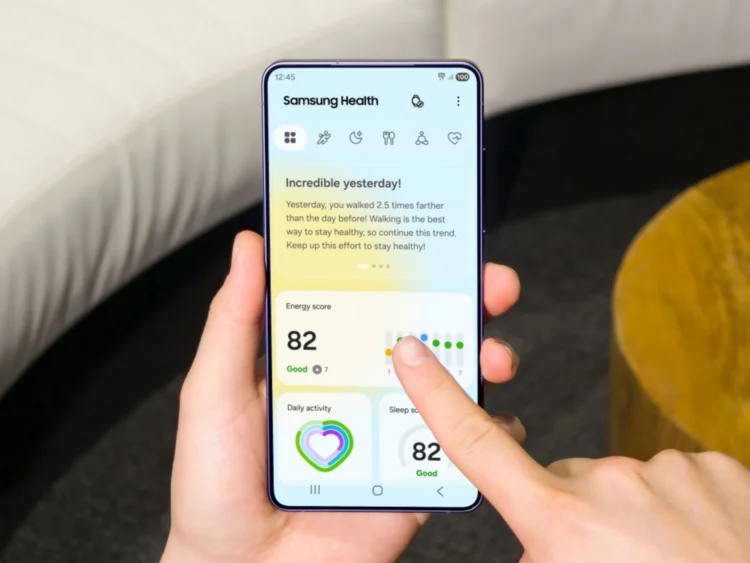
Samsung appears to be introducing a new consent requirement for Samsung Health users, asking them to allow their health data to be used for AI training and modelling. Users who decline the request risk losing access to Samsung Cloud syncing for their health records, with existing synced data also set to be deleted.
The change was first spotted by How-To Geek, with affected users receiving a new prompt when launching the Samsung Health app. The notice is believed to be tied to the company’s latest push to expand AI-powered health features, following the recent announcement of new Galaxy Watch capabilities that leverage AI to deliver more personalised health insights.
Covers Multiple Categories Of Health Data
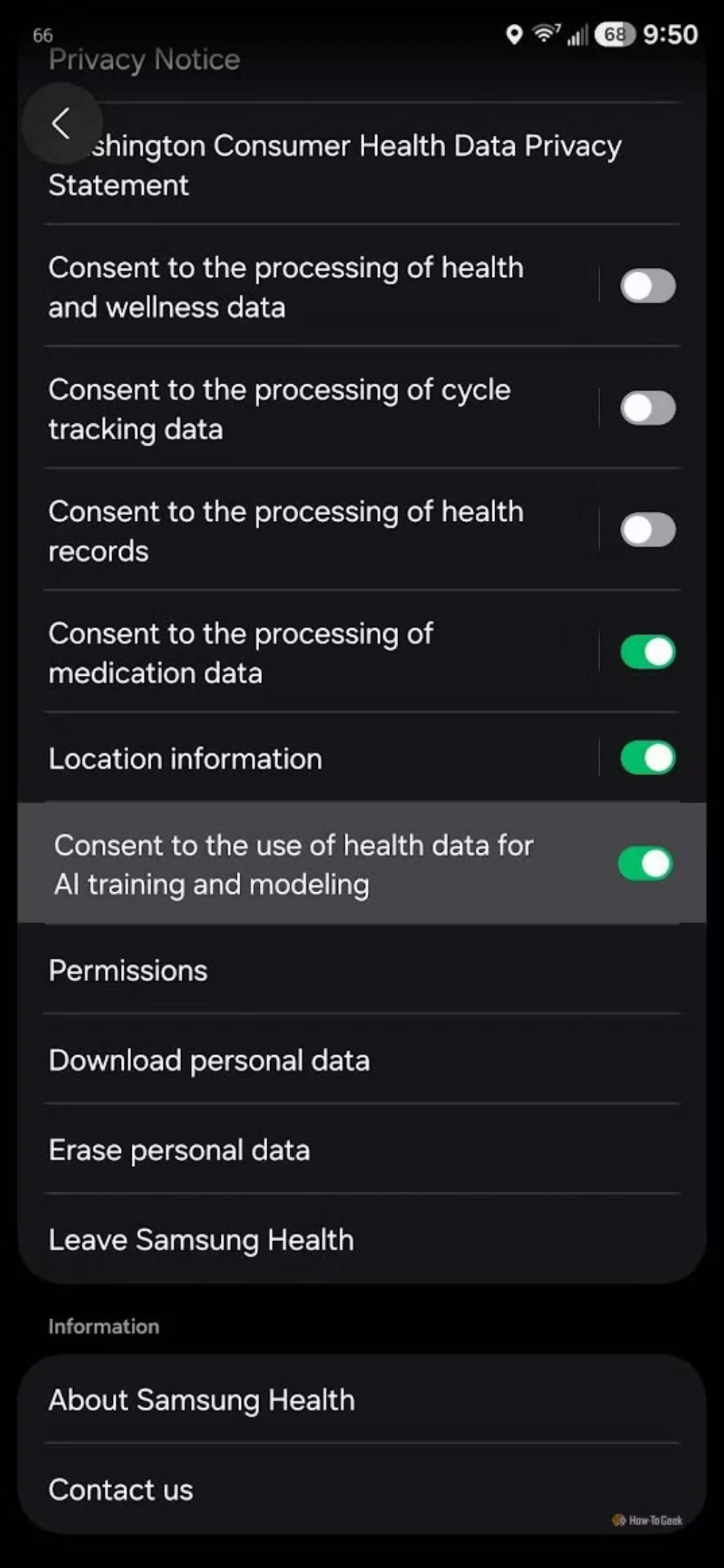
According to the in-app notice, users who agree will allow Samsung to collect and process several categories of information. These include health and wellness, medication, health records, and cycle tracking data.
Samsung says this information will be used for “AI training and modelling, including human review,” to improve Samsung Health. This includes refining algorithms that analyse health conditions as well as enhancing the app’s AI-powered features.
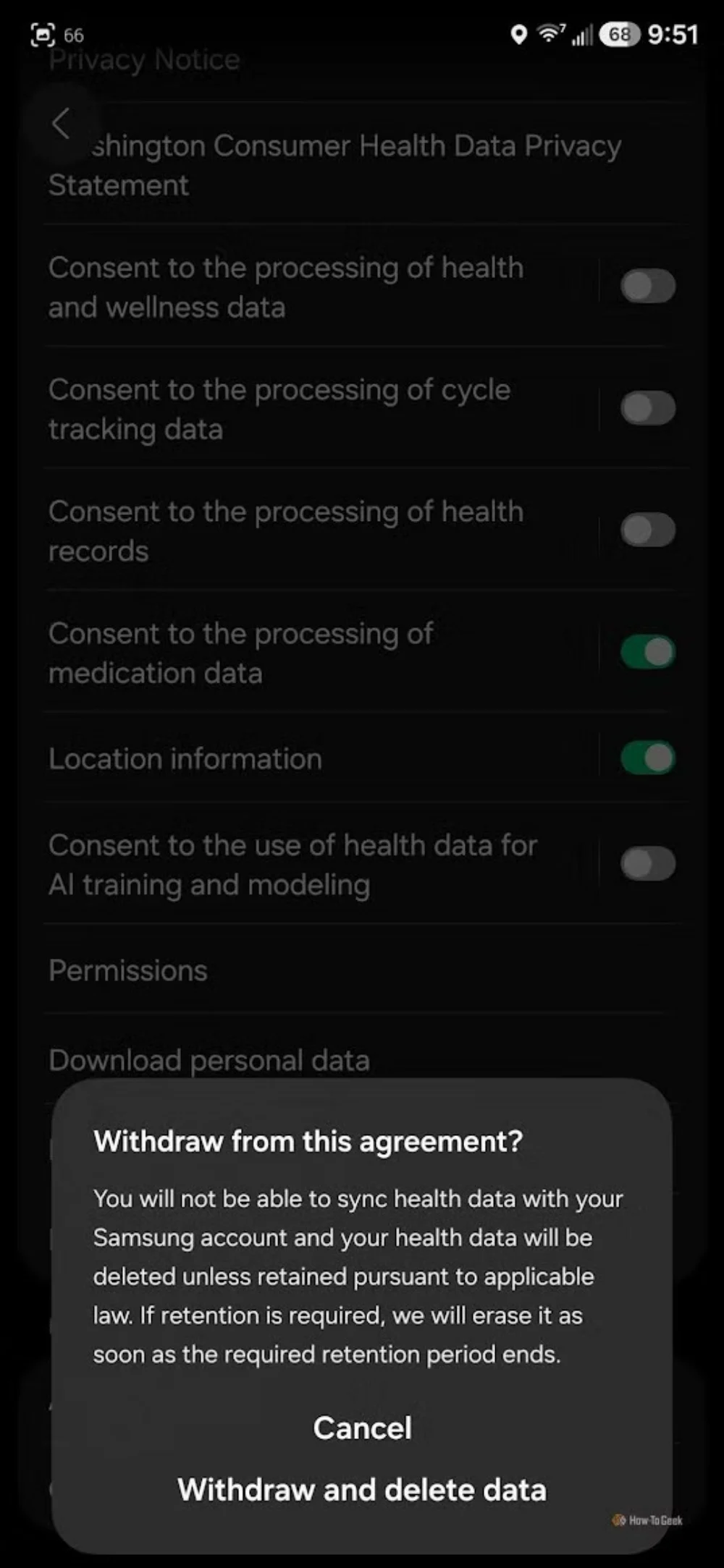
The company also notes that users can withdraw their consent at any time by heading to Samsung Health > Settings > Privacy and disabling the “Consent to the use of health data for AI training and modelling” option. However, users who choose not to provide consent, or later withdraw it, will face a significant limitation.
A Significant Trade-Off
Samsung warns that health data will no longer sync with the user’s Samsung account. Existing synced health data will also be deleted unless the company is legally required to retain it.
While Samsung has not explicitly detailed how the collected data is handled in the consent notice, it is generally expected that information used for AI model development would be anonymised or otherwise processed to reduce the likelihood of identifying individual users.
Nevertheless, the requirement has already drawn criticism, as it effectively makes cloud syncing contingent on agreeing to the use of health data for AI development. Users who prefer not to participate may have to rely solely on locally stored health data instead.
