
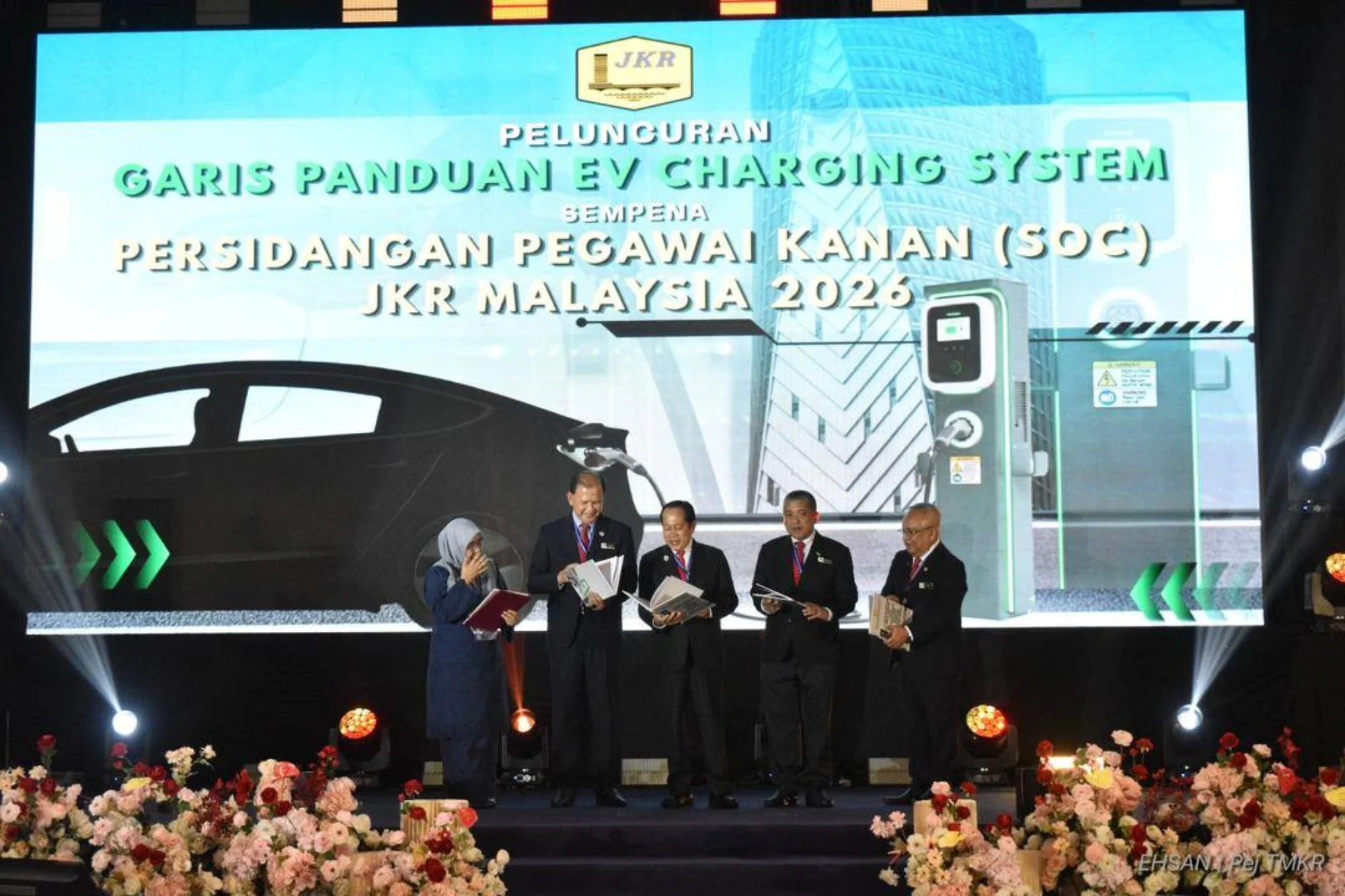
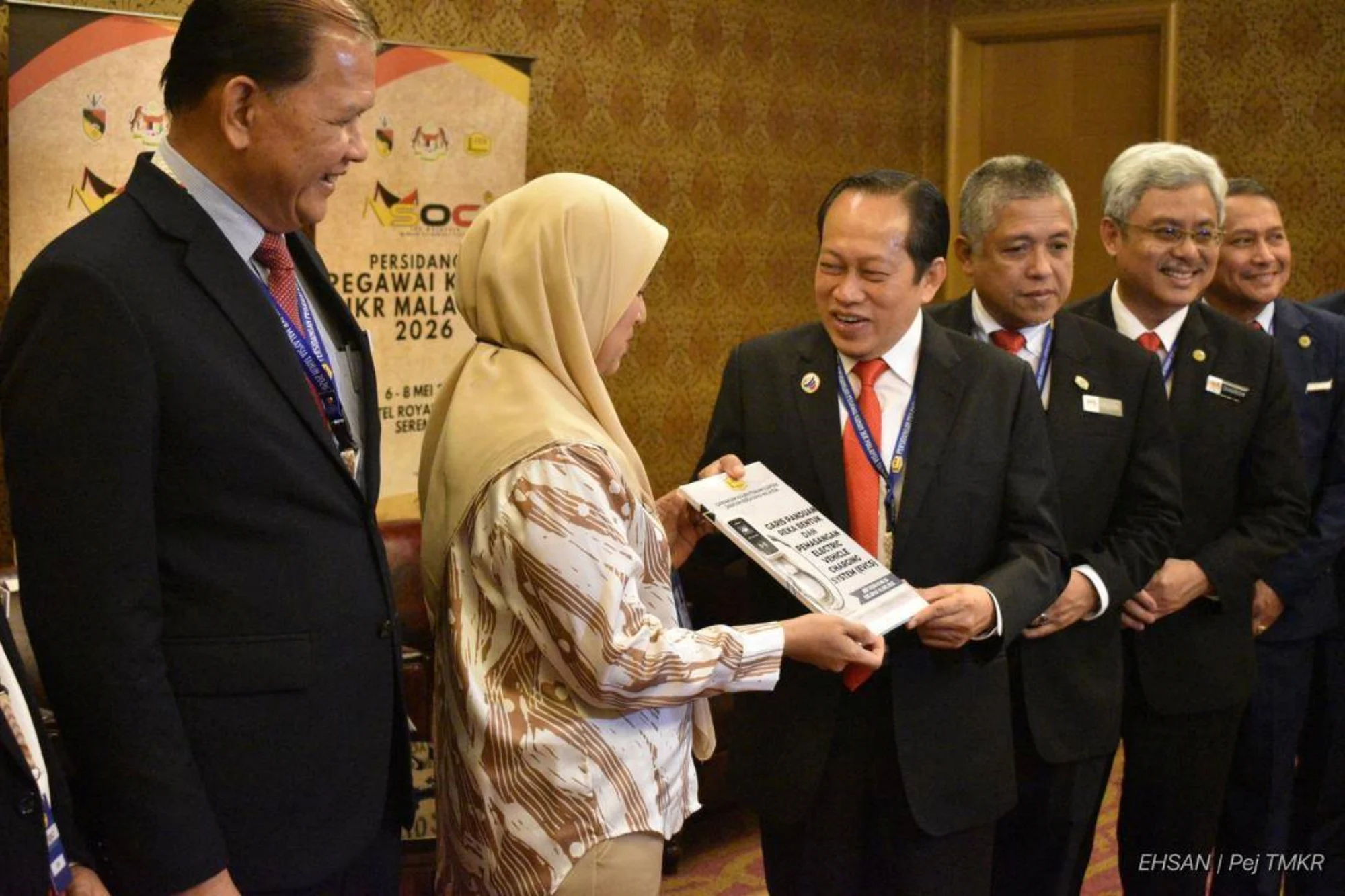
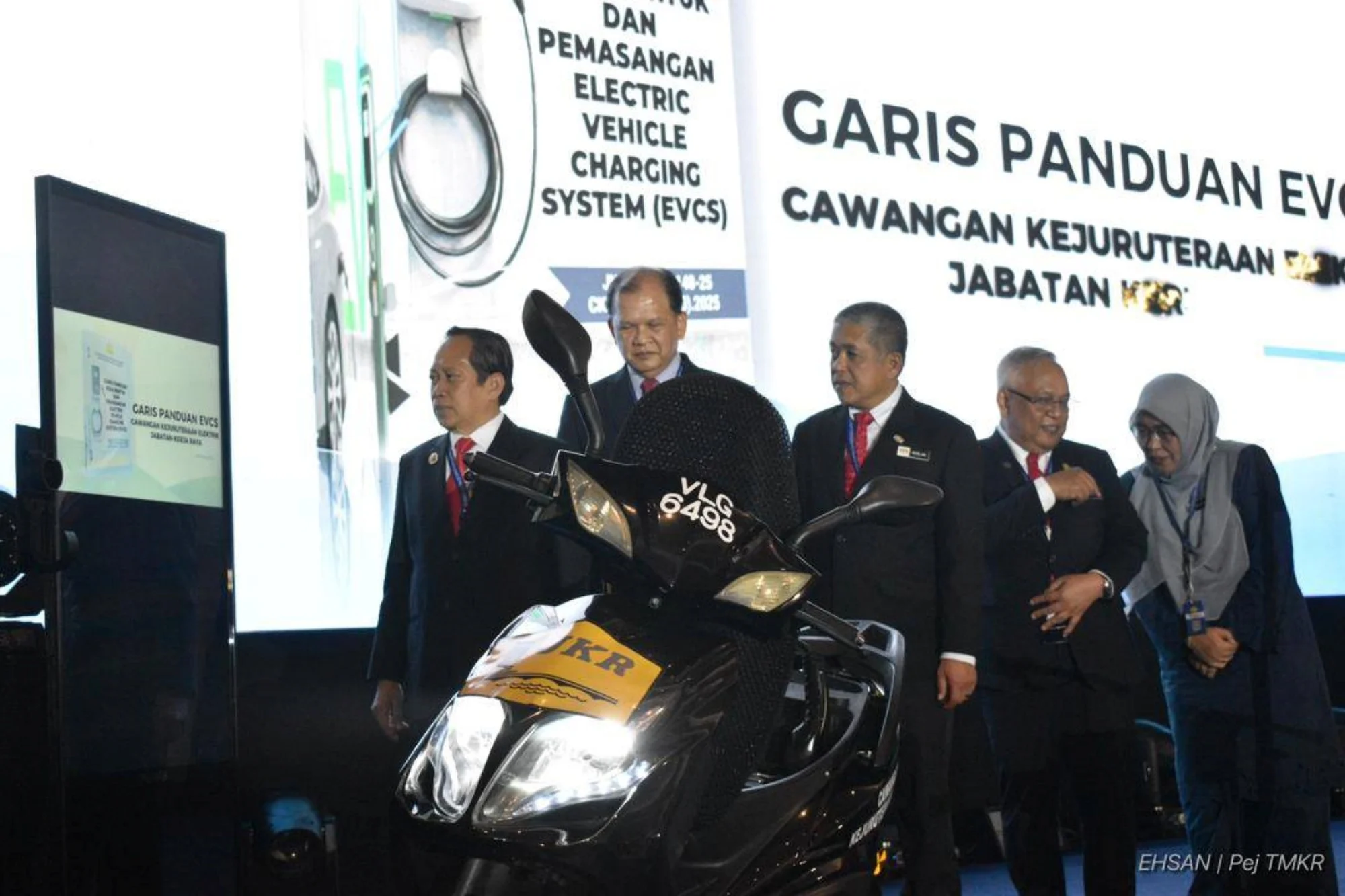
The Works Ministry (KKR) has officially launched Malaysia’s first dedicated guidelines for the design and installation of electric vehicle (EV) charging systems. Introduced in conjunction with the 2026 Senior Officers’ Conference (SOC) of the Public Works Department (JKR), the document is intended to serve as a national reference for EV charging infrastructure development.
Deputy Works Minister Ahmad Maslan described the initiative as part of the government’s efforts to push green mobility and sustainable transportation. He added that the guidelines also align with JKR’s smart reform efforts as Malaysia continues expanding EV adoption nationwide.
“Until now, we have had no specific guidelines regarding the installation of EV charging systems,” he told reporters yesterday. “So this book will serve as a document that will help ensure installations are made in appropriate locations and comply with the specified safety aspects.”
Addressing The Shortage Of Charging Facilities
According to Ahmad Maslan, the newly launched guidelines are the first of their kind in the country and are meant to provide a comprehensive reference for contractors, designers, government agencies, petrol station operators, and individuals planning to install EV charging facilities. He added that the initiative is expected to accelerate the development of EV charging infrastructure not only at Rest and Service (R&R) areas along highways, but also across federal, state, and municipal roads under JKR’s supervision.
The Deputy Works Minister emphasised that JKR must play a proactive role in facilitating EV charging station development, particularly along federal and state road networks. He also noted that the shortage of charging facilities remains one of the key barriers slowing EV adoption in Malaysia.
At present, EV charging infrastructure is still largely concentrated along highways operated by concessionaires, while other public road networks remain underserved. JKR had previously recommended that EV charging stations should not be limited to highway R&R areas and petrol stations, but also expanded to federal and state roads managed by the department, including municipal roads overseen by local authorities.
What This Means
The introduction of a standardised guideline could help streamline EV charger deployment across Malaysia by giving developers and authorities a clearer framework to follow. This includes matters such as installation locations, technical requirements, and safety compliance.
Expanding charger availability to federal, state, and municipal roads could improve accessibility for EV owners, especially in suburban and rural areas where charging options remain limited. The guidelines may also help encourage more businesses and local authorities to participate in EV infrastructure rollout.
(Source: The Star)
