

Apple is preparing to close the chapter on Intel-powered Macs, with macOS 26 (aka “Tahoe”) confirmed as the final major operating system release for the devices. MacRumors reports that Apple will make macOS 27 available only on Macs powered by Apple Silicon starting next year, effectively ending the upgrade path for Intel models – an end of an era, if you may.
The shift does not come as a surprise, as Apple has been signalling this transition for some time. However, the move formalises the company’s full departure from Intel’s x86 architecture, completing a multi-year migration that began in 2020.

Final Intel Macs Reach End Of The Line
macOS Tahoe will still support a small group of Intel-based Macs, including the 16-inch MacBook Pro (2019), 13-inch MacBook Pro (2020), 27-inch iMac (2020), and the 2019 Mac Pro. These models represent the final Intel systems on Apple’s current macOS branch, and none are expected to receive macOS 27.
For users of these machines, macOS 26 effectively becomes the end of the line for new features and platform updates. On the flip side, Apple is not cutting support immediately. MacRumors notes that the company is expected to continue providing security updates for several years, ensuring these systems remain usable in the near term.

Apple Silicon Transition Nears Completion
Apple’s transition to its in-house silicon began with the introduction of the Apple M1 chip in late 2020. Since then, the company has expanded its custom silicon lineup with successive generations, now reaching the M5 family, including higher-end Pro and Max variants.
The shift has allowed Apple to unify performance, efficiency, and software optimisation across its ecosystem. The company has also experimented with alternative chip configurations, such as the A18 Pro-powered MacBook Neo, which brings smartphone-class silicon to a more affordable Mac platform.
Rosetta Support Also Winding Down
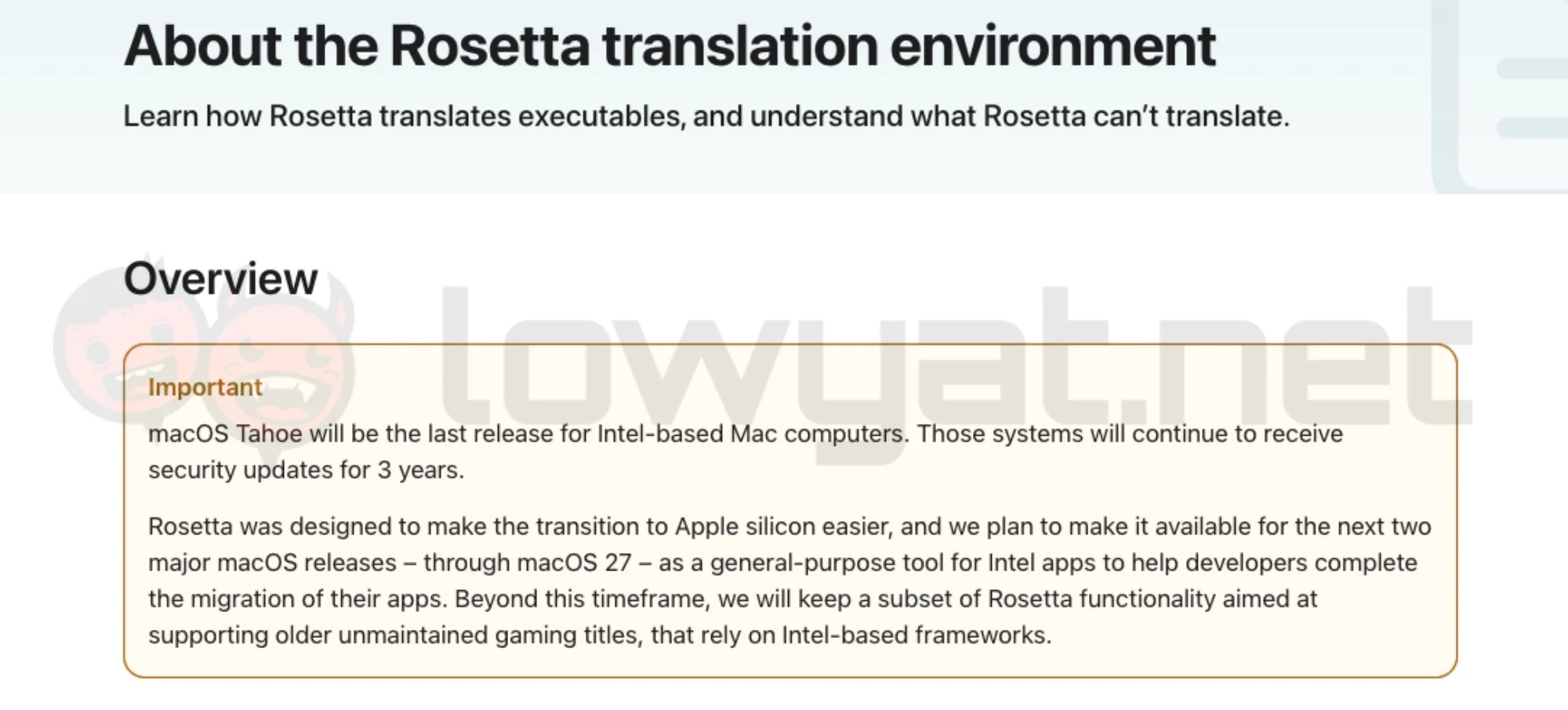
Another key milestone in this transition involves Rosetta, Apple’s translation layer that enables Intel-based apps to run on Apple Silicon. As noted by the company on its website, support for Rosetta is expected to wind down after macOS 27, giving developers a final window to complete the shift to native Apple Silicon applications.
This change reinforces Apple’s push towards a fully optimised software ecosystem. Apps are built specifically for its custom chips rather than relying on compatibility layers.

Details Expected At WWDC 2026
Apple is likely to provide further details during WWDC 2026 in June, where it typically outlines platform changes and developer-focused updates. macOS 27 is expected to enter beta shortly after the event, with a wider release anticipated later in the year.
(Source: MacRumors)
