
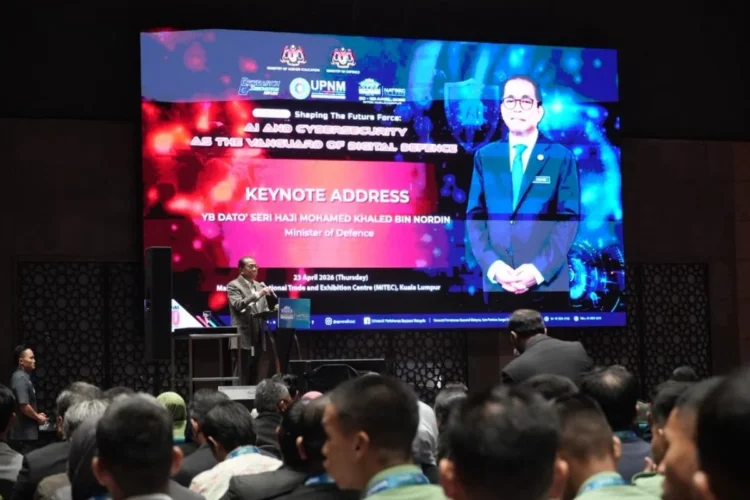
Malaysia is ramping up its cybersecurity efforts to better defend against online threats. As part of a broader push towards modern warfare readiness, Defence Minister Datuk Seri Mohamed Khaled Nordin said the country is strengthening its capabilities through the establishment of a Cyber and Electromagnetic Command (PSEP).
Speaking at a forum at the National Defence University of Malaysia (UPNM) earlier today, the minister said a core pillar of the initiative is the cultivation of high-quality talent through professional military education. He added that this would ensure “the Armed Forces are equipped with the necessary expertise to counter evolving threats in the digital domain”. This keynote took place in conjunction with the Defence Services Asia (DSA) and National Security (NATSEC) 2026 exhibition.
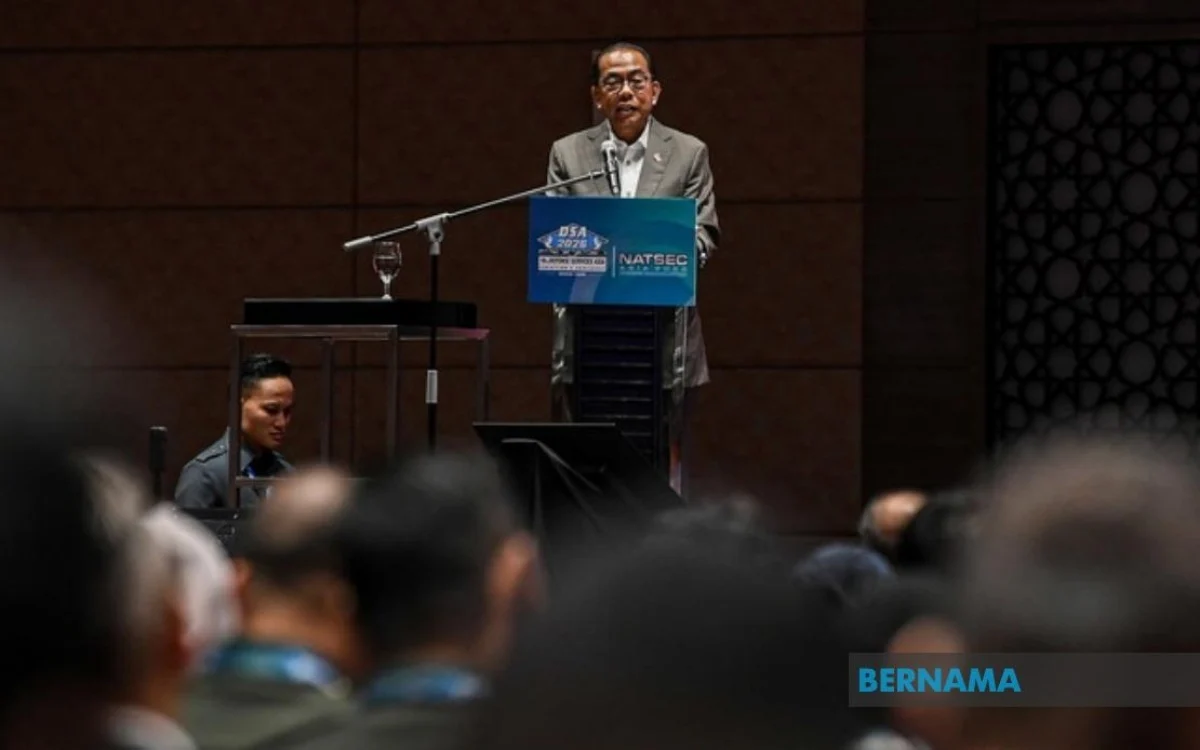
Khaled said the PSEP will work in tandem with the Malaysian Defence Intelligence Organisation (MDIO). He added that this integration will improve intelligence capabilities and overall operational effectiveness, particularly in dealing with modern and asymmetric threats.
He also said the development of PSEP is part of the Defence White Paper’s goal to transform the Malaysian Armed Forces into a Future Force (Angkatan Masa Hadapan). Khaled added that the Ministry of Defence (MINDEF) aims to fully integrate its concepts, systems, and operations to enable every component to operate as one unified, effective force by 2030.
Khaled also said the ministry is considering several universities to establish a Defence Ministry Centre of Excellence focused on rockets, missiles, drones, and unmanned aerial vehicles (UAVs). Meanwhile, MINDEF has offered UPNM a role specialising in artificial intelligence and cybersecurity.
Outside of formal military structures, Khaled said the government is establishing a Cyber Security and Geospatial Specialist Regiment under the Territorial Army. He said the initiative aims to encourage skilled youths and professionals to contribute their expertise in strengthening the nation’s cyber resilience. At the policy level, he added that the recently launched National Defence Industry Policy seeks to drive local innovation in cyber and digital technologies, positioning Malaysia as a competitive player in the defence technology landscape.
Lastly, the defence minister said modern warfare does not always begin with a physical attack, but can involve digital disruptions, information manipulation, and the weaponisation of AI. He said such borderless threats can destabilise societies without warning and stressed that the country cannot afford to remain idle.
