
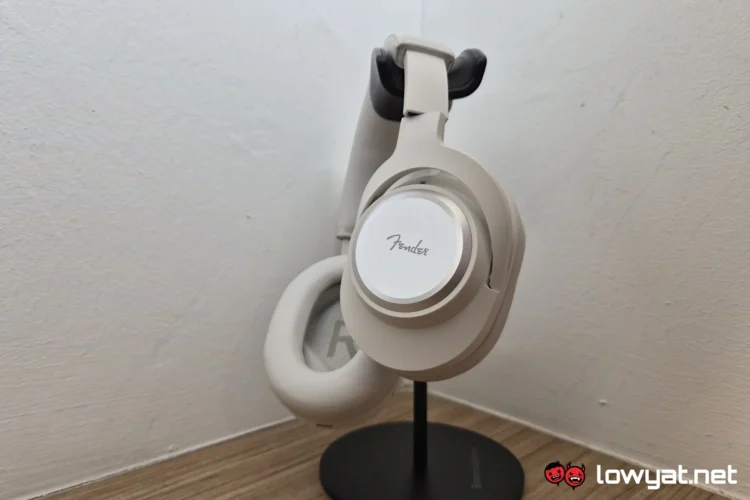
You probably know Fender as the brand that does electric guitars and its amps. But as of earlier this year, they’ve also gone down the speaker and headphones space. Not exactly treading a completely new path, as fellow amp maker Marshall already went down that road. But for Fender, the company has entered the market with the Elie speakers, as well as the Mix headphones.
And that latter one is the subject of our review for today. Overall, it’s a pretty good first attempt, and it’s clear that the company came out swinging for it. Though probably not for the reasons most are expecting, for better or worse. Which begs the question – should you buy it? Let’s find out
What Am I Looking At?
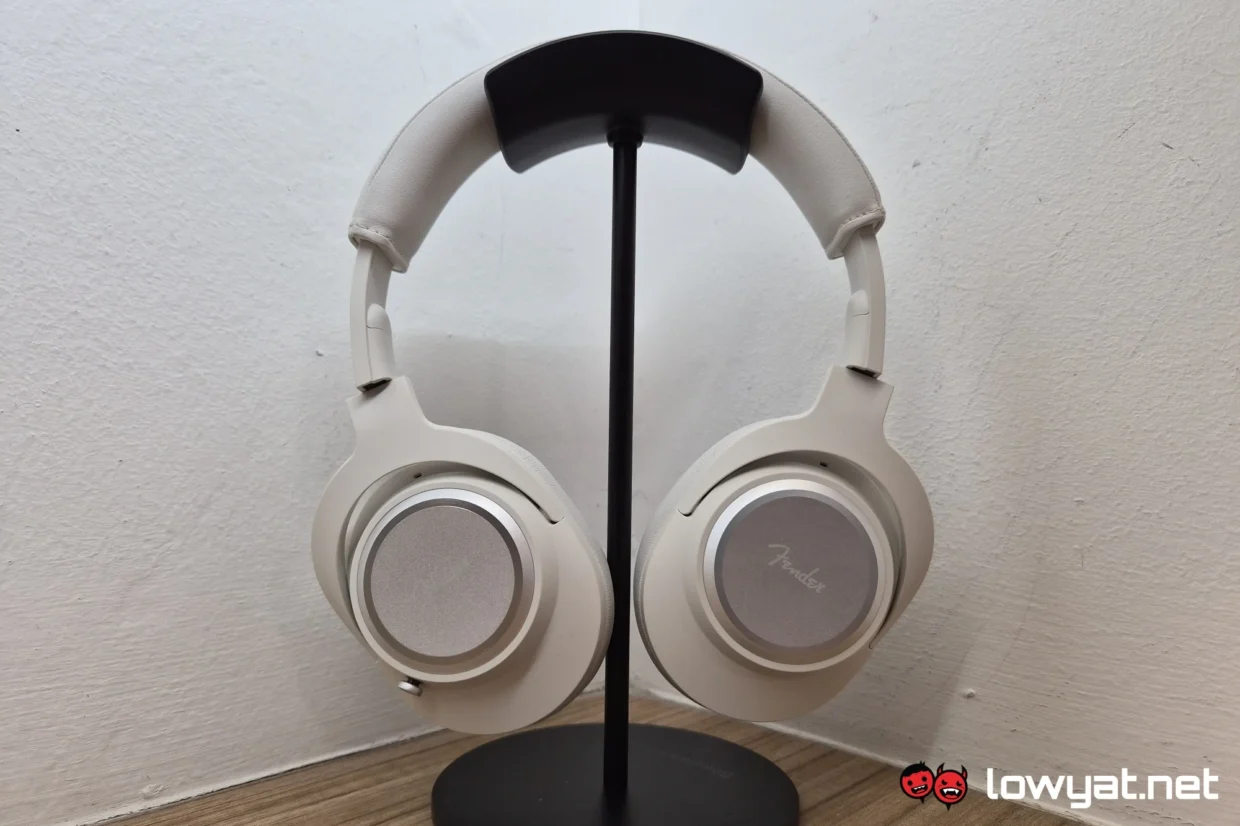
Going through the basics first, the Fender Mix sports 40mm drivers that drive its sound. Supplementing that is a dual-mic setup for calls as well as ANC. Beyond that, there’s also ENC, or environmental noise cancelling. It mostly works the same way, but for someone on the other side of a call rather than for you, the wearer. This means that your voice goes over to the other side very clearly with minimal environmental noise, but we’ll get to that in a bit.
On the surface, you get all of the other basic stuff like faux leather on the ear cups as well as under the headband. You also get the usual telescoping slider, and though you don’t see the notches of each step, you do still feel it. Maybe you can argue that the presence of a button and a joystick is a bit unconventional. And while we’re here, the button is primarily for switching ANC modes or the preset equaliser, while the joystick is for everything else.
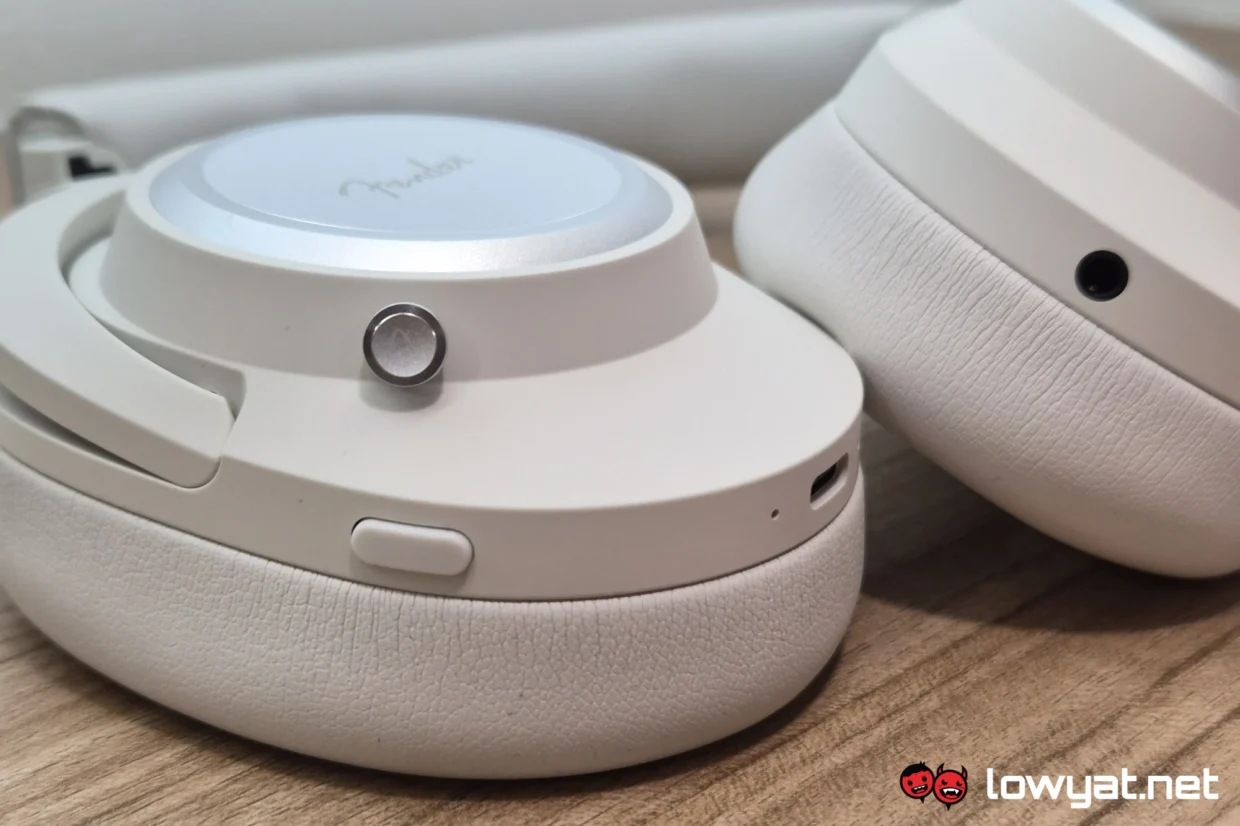
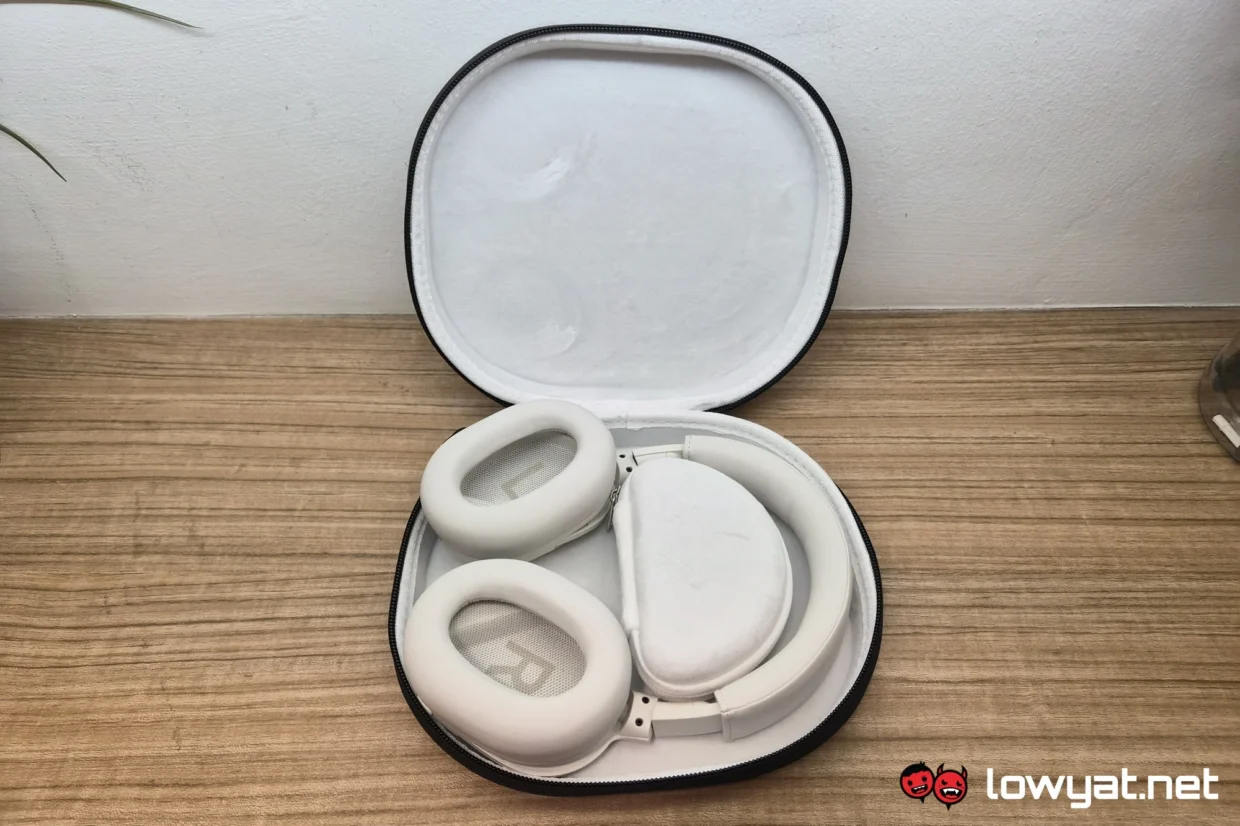
But dig just a little bit further and you can see where Fender has invested in making the Mix special. For one, you can snap off each cup of the headphones. Going further, the ear cups also attach magnetically to the housing, so you can pull that off too.
The reason for this is, at the very least, two fold. Fender named these headphones the Mix likely because of its customisability. This is reminiscent of the Dyson OnTrac. In a similar vein though, you don’t get all those alternative colour pieces with the headphones as the company sells them separately. From another perspective, one can probably argue that this improves repairability as well.
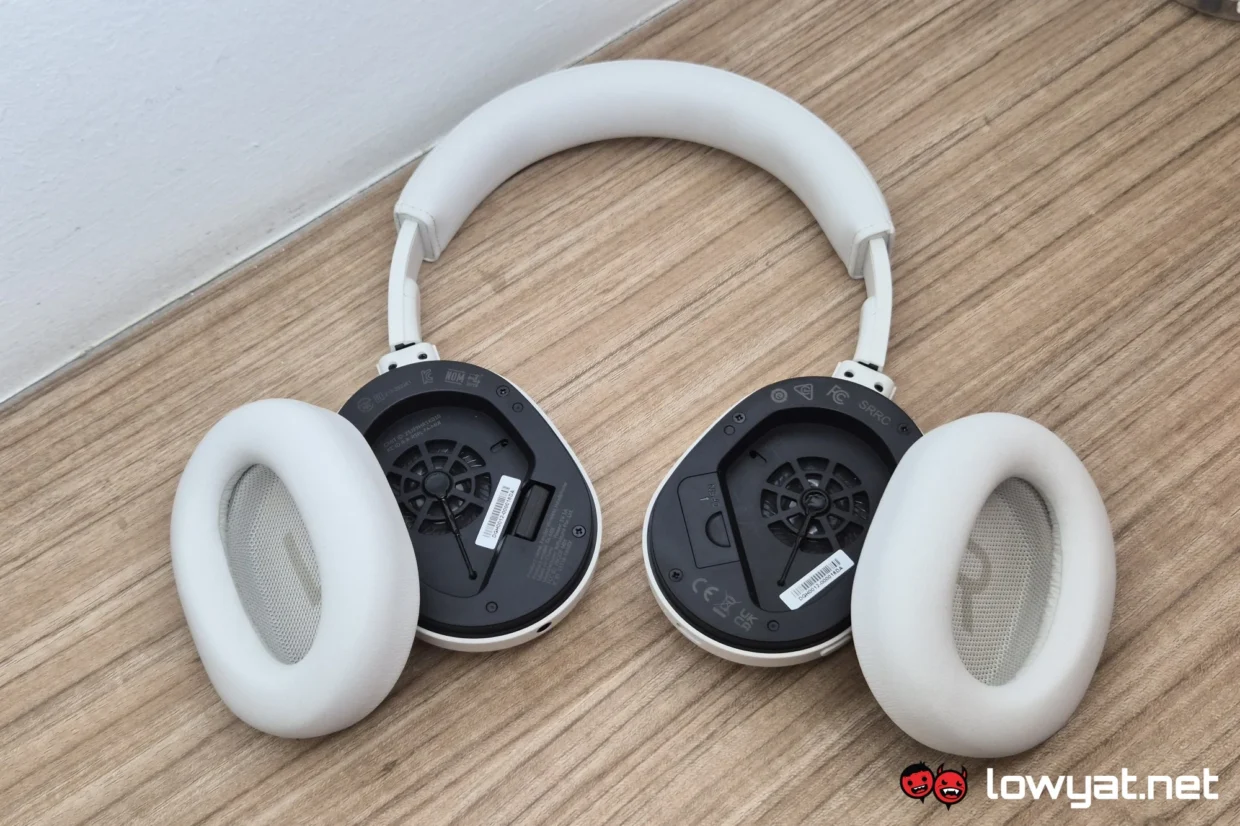
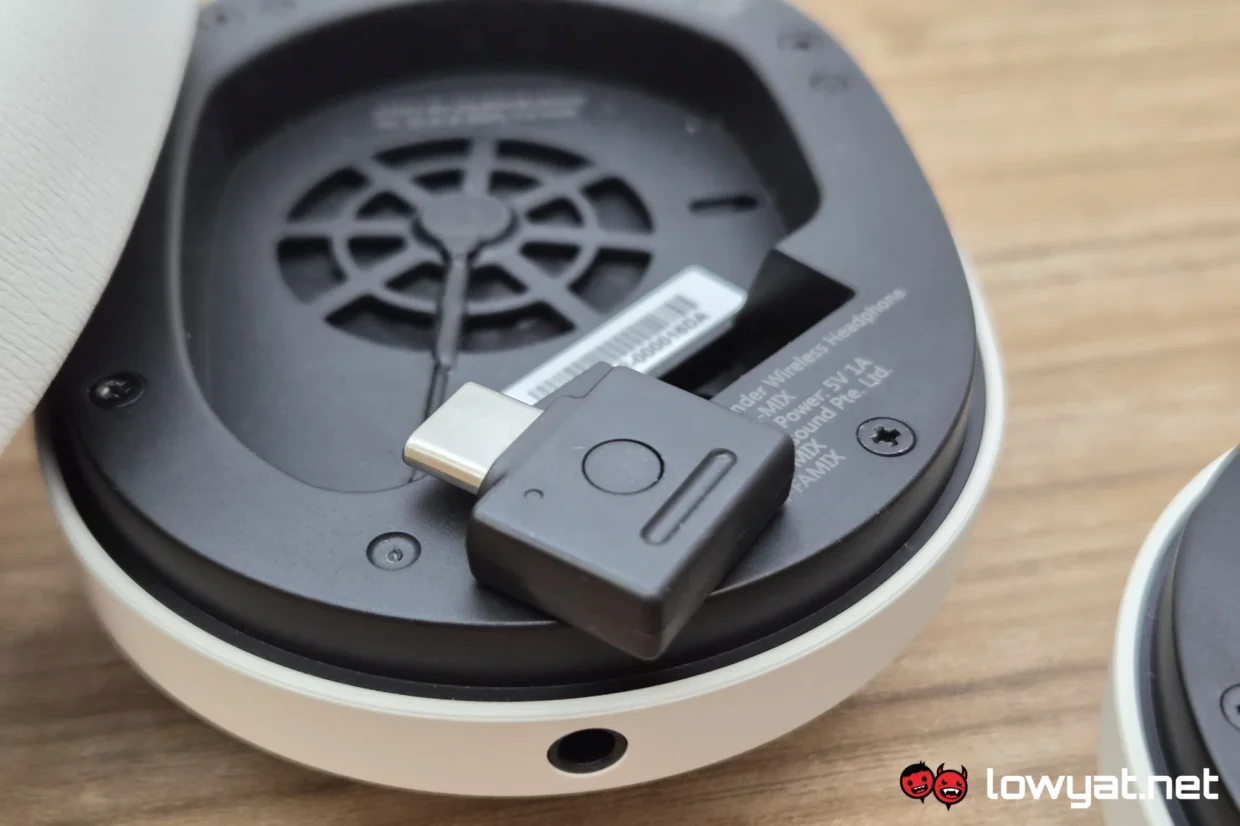
Leaning a bit further into this is the fact that, when you pull off the cushion off of the right ear cup, you get access to its battery. Not much you can do besides look at it, but at least it’s replaceable should that need arise.
A bit more useful sits underneath the cushion of the left cup – the wireless dongle. This is for when the Bluetooth 5.3 just doesn’t cut it, for two primary reasons. One is when you need absolutely low latency, and during such times, you engage Low Latency Mode from the dongle itself. The other is when you want lossless audio, (96kHz/24-bit), during which you switch to the Lossless Mode. Of course, If you’re absolutely old school, the good ol’ 3.5mm audio jack is there. The cable is provided in the box as well.
What’s Good About It?
Most of what I’ve brought up in the previous section could honestly be applied here as well. This is especially true for its customisability, which not only gives you more options than the Dyson OnTrack, but also at a lower asking price. For context, the Dyson costs RM2,599, while the Fender Mix is priced at RM1,399.
Next are the microphones on the Fender Mix. Having reviewed the SteelSeries Alias Pro previously, this is usually what I ultimately compare mic performances to. And with the Mix, during Discord calls my friend tells me that there’s no audible difference between when I was using the Alias Pro and when I was using the mics on the Mix. Granted, this could simply be Discord massively improving its noise cancelling tech. Still, no other headphones’ built-in mics have gotten such a favourable comparison to a dedicated mic.

Then there’s the battery life. Fender says that the Mix can last up to 100 hours without ANC, or up to 52 hours with. These numbers are assuming that the Mix is used at 50% volume. Granted, I did not have these headphones in my possession for very long. But over the course of about two weeks I never got to the point of needing to plug it in.
Finally, we get to the sound of the Fender Mix. There’s nothing much to complain about when it comes to the highs, mids, and vocals. There’s plenty of clarity, and soundstaging is better than average. Layer (or instrument, if you prefer) separation is pretty good, up to a point, unfortunately. And we’ll get more on that in the next section.
What’s The Catch?
I brought up Marshall earlier as a fellow brand that started out making amps, but later also making headphones. And there’s more than just that point of comparison. Like some Marshall headphones and earbuds, though not to the same degree, the Fender Mix has a bias towards rock and its many subgenres and derivatives. Testing it with other genres revealed perhaps the root of the issue – bass.
I should also mention before I go further that the Fender Mix has three preset equaliser settings – entertainment, music and voice. And each of them, due to their characteristics, present some form of problem or another depending on track. Going in sequence, the entertainment EQ, which is the default, is probably best described as balanced. Highs and mids are truly superb here, but bass outside of drums get a very artificial sounding resonance or reverb to them. And especially for tracks with high layer count, sounds start drowning each other out. At times, it’s to the point that really strong bass beats end up silencing everything, including itself.

The next preset is the music EQ, which is flatter than the entertainment EQ. This also suffers on occasion with high layer count music, but definitely not to the same degree. It’s otherwise a tossup between this and the last one, the voice EQ, for the best overall. As you’d expect, the podcast equaliser pulls as much of the highlights away from bass as possible. But while bass-heavy tracks benefit from this, bass in flatter tracks take a noticeable hit.
The three tracks I used during testing that best illustrate this are Namonai Hana -maeshima soshi remix- by Sato Miki, Hana no Tou by the late Sayuri, and Glitter – Starving Trancer Remix by Mayumi Morinaga. For the first song, the voice EQ ended up being the best, as the bass string here has the unnatural resonance in the music EQ. As for the second song, the music EQ ended up being the best, simply by virtue of being very nicely balanced. The last song, with easily the most layers, has each layer fighting to be at the forefront of the soundstage, drowning each other out. The music EQ is probably best here, as the voice EQ dampened the bass way too much.

So while I’m normally a fan of a pair of wireless headphones not needing an app to unlock full functionality, the Fender Mix is one of the few exceptions. An app to at least give it a custom equaliser could have eased the need to cycle through the presets for every other track. This may change in the future, but for now, not having an app has oddly become a catch rather than a bonus.
Should I Buy It?
As I mentioned, Fender truly came into the consumer headphones market swinging with the Mix. It’s not a bad first attempt, and clearly a lot of effort has been put into it. Unfortunately, a lot of that effort has been misplaced.
For instance, the easily removable memory foam pads from the ear cups is a great idea, especially if replacements are easy to find and buy. Doubly so in this case, as you can stash the wireless dongle there. The ear cups themselves being removable, on the other hand, not so much. The dongle supporting Hi-Res audio wirelessly, plus another mode for low latency? Brilliant. At the cost of features like wear detection? Maybe not quite.
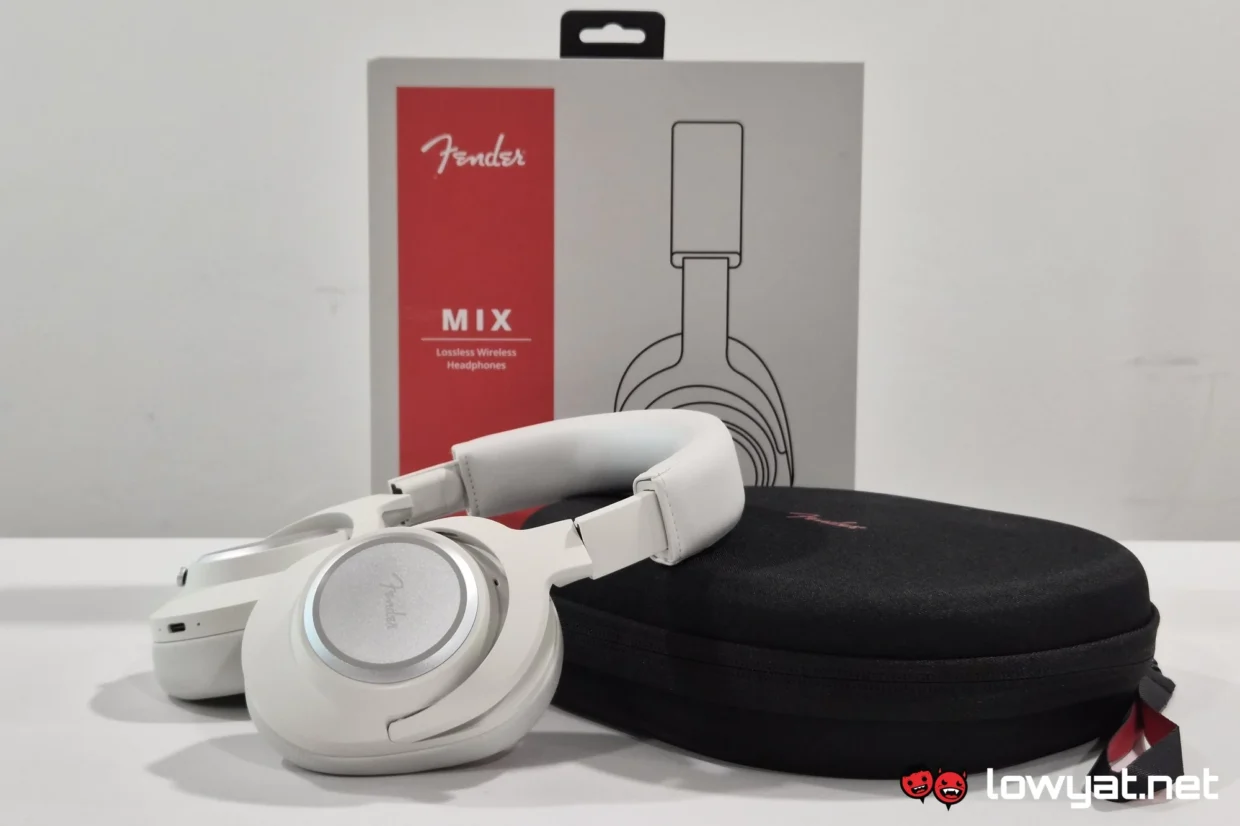
The Fender Mix, then, lands itself in a sort of jack-of-all-trades situation. The customisability allows it to be a fashion statement if you’re so inclined. And at RM1,399 it’s a better deal than the Dyson OnTrac. But this has seemingly come at the cost of sound fidelity. Because at that price point, it’s in that strange spot where it’s pricier than most midrangers.
Premium products have gone up in price, so while the Mix is no longer directly competing with them, it’s competing with their prior iterations that, arguably, do the sound reproduction thing better. Ultimately, you’ll have to decide if you want the jack of all trades Mix, or shell out more for something specialised.
