
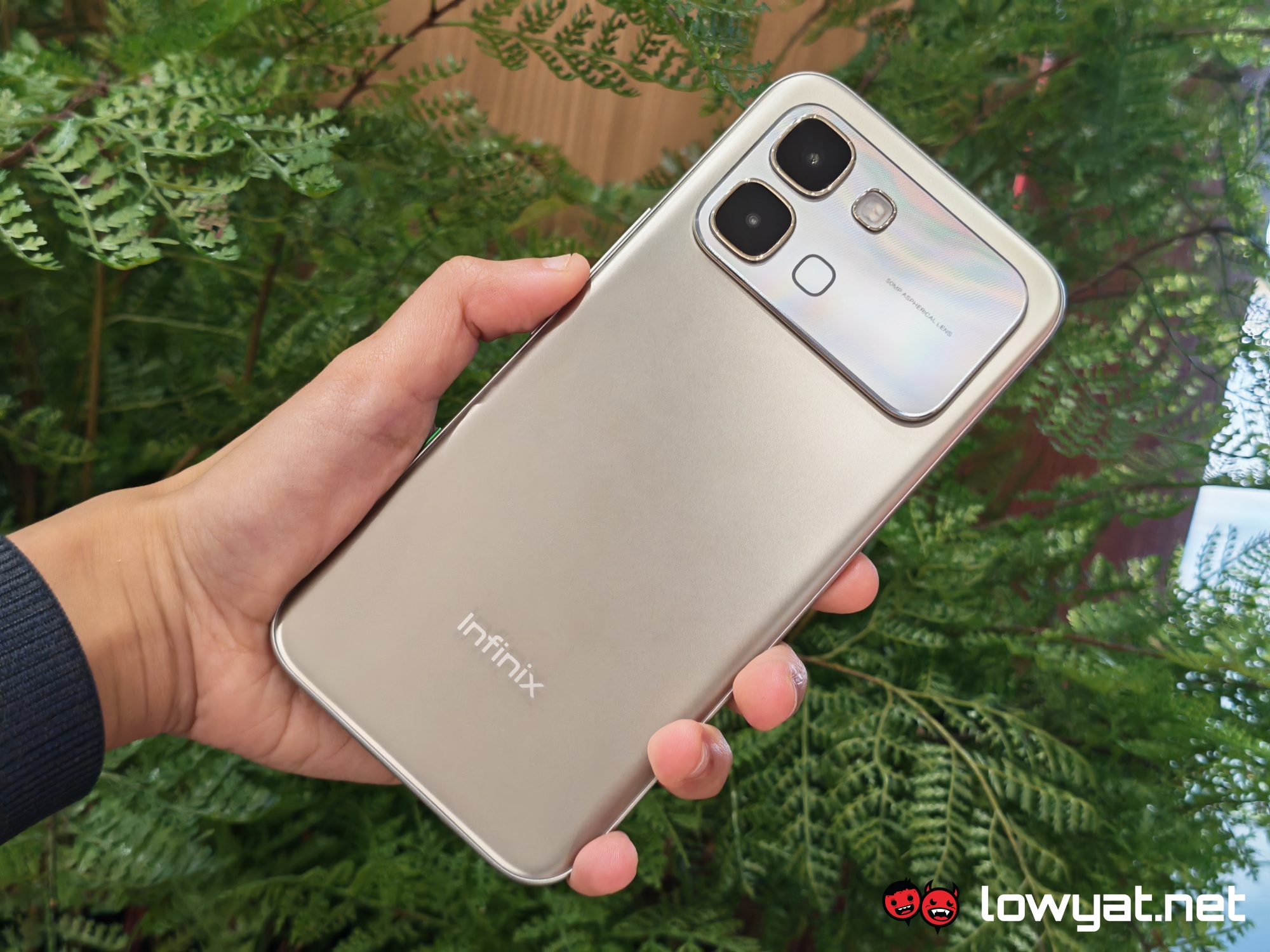
The less-than-enthusiastic response to the iPhone Air did not deter other companies from attempting their own take on a super slim phone. Or at the very least, marketing their devices as such. The Infinix Note Edge is among the newest of the bunch, featuring a comparatively not-so-thin body that also happens to be not so short on audacity.
Positioned as a sleek all-rounder that’s both portable and powerful, the phone promises a balance between performance and aesthetics. As to how that actually works out in practice, this is what we’re here to find out.
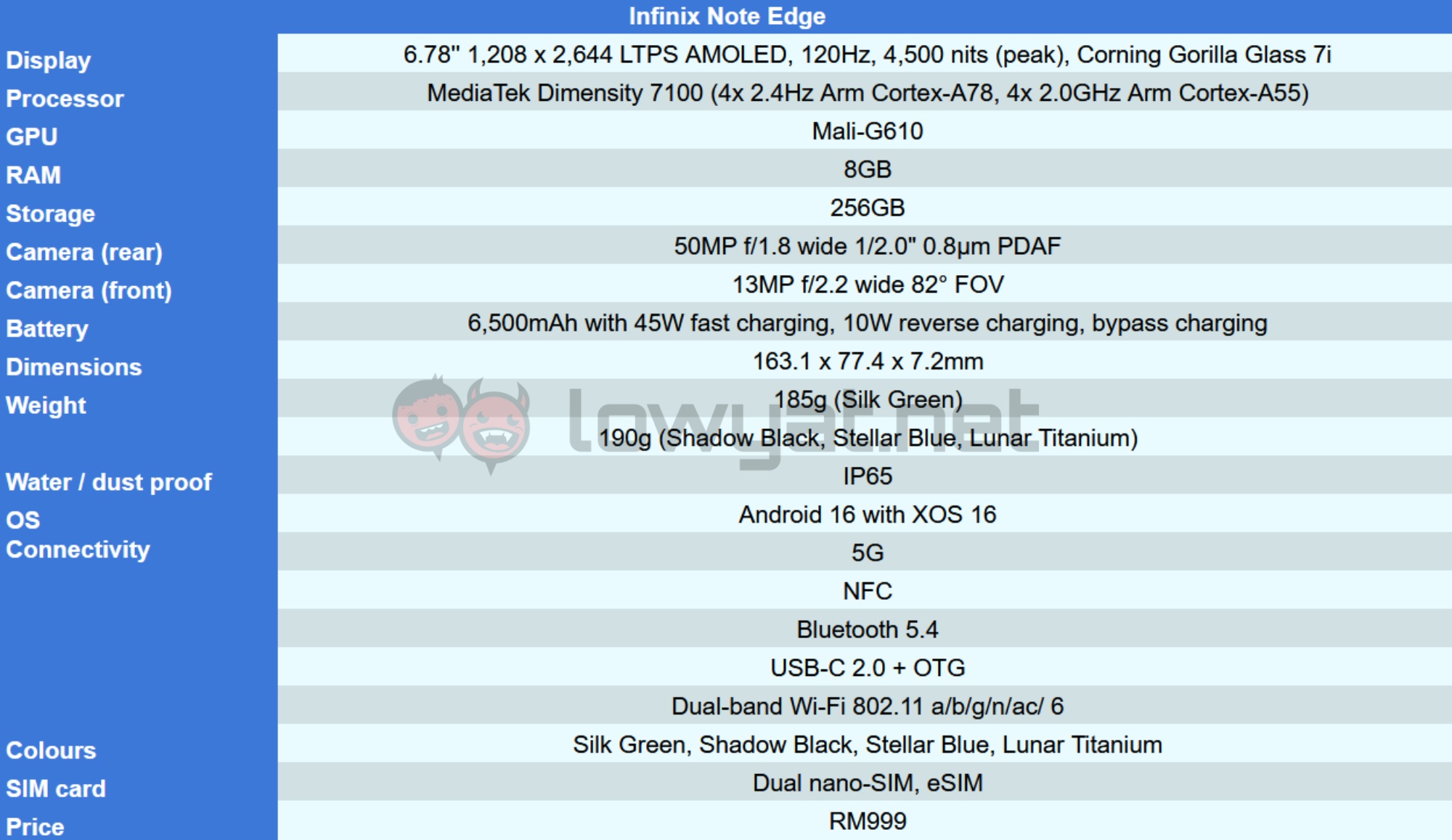
Specifications
Looks and Functionality
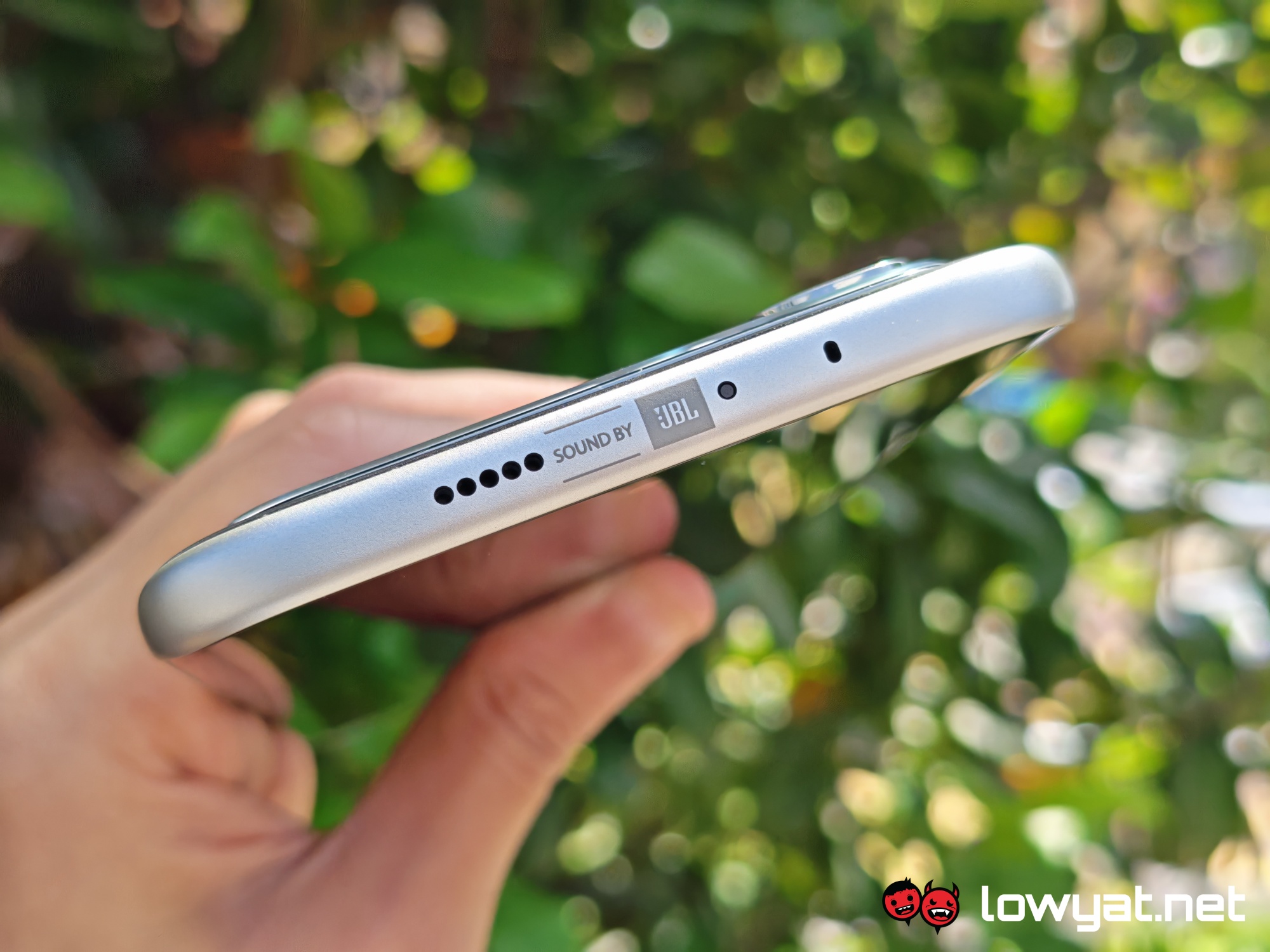
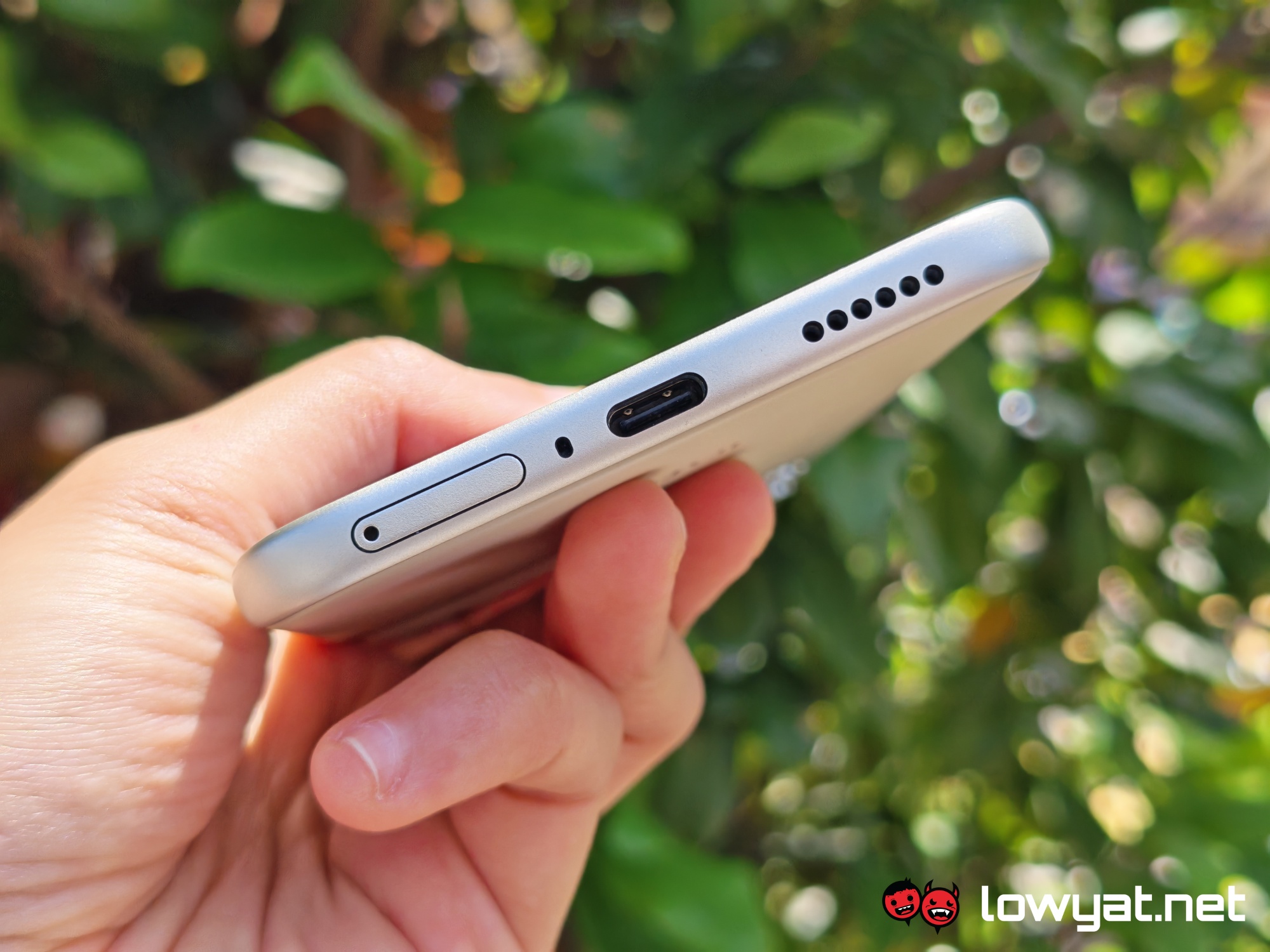
 While most modern phones have moved on from curved displays, the Note Edge aims to resurrect the trend with its sloping sides. There’s some irony in the “Edge” moniker here, since the device is shying away from any angular elements. But more to the point, the curves make it look thinner than it is in reality. Viewing it from either the top or bottom shatters the illusion, though.
If we are judging the device solely by this singular metric, then it doesn’t amount to that much. At 7.2mm, putting it up against the iPhone Air would just be plain unfair. For what it’s worth though, it is thinner than the average phone, just not mindblowingly so.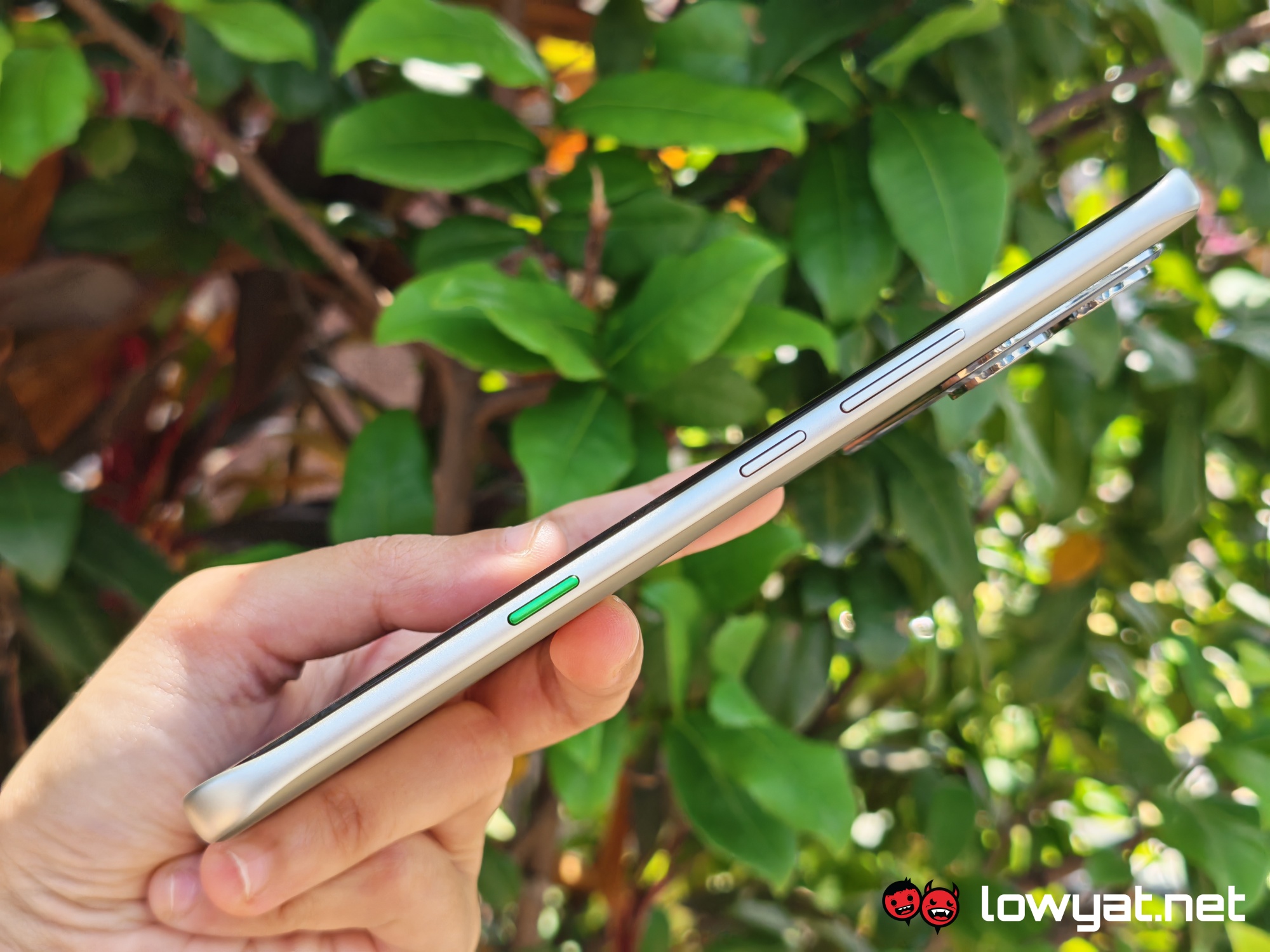
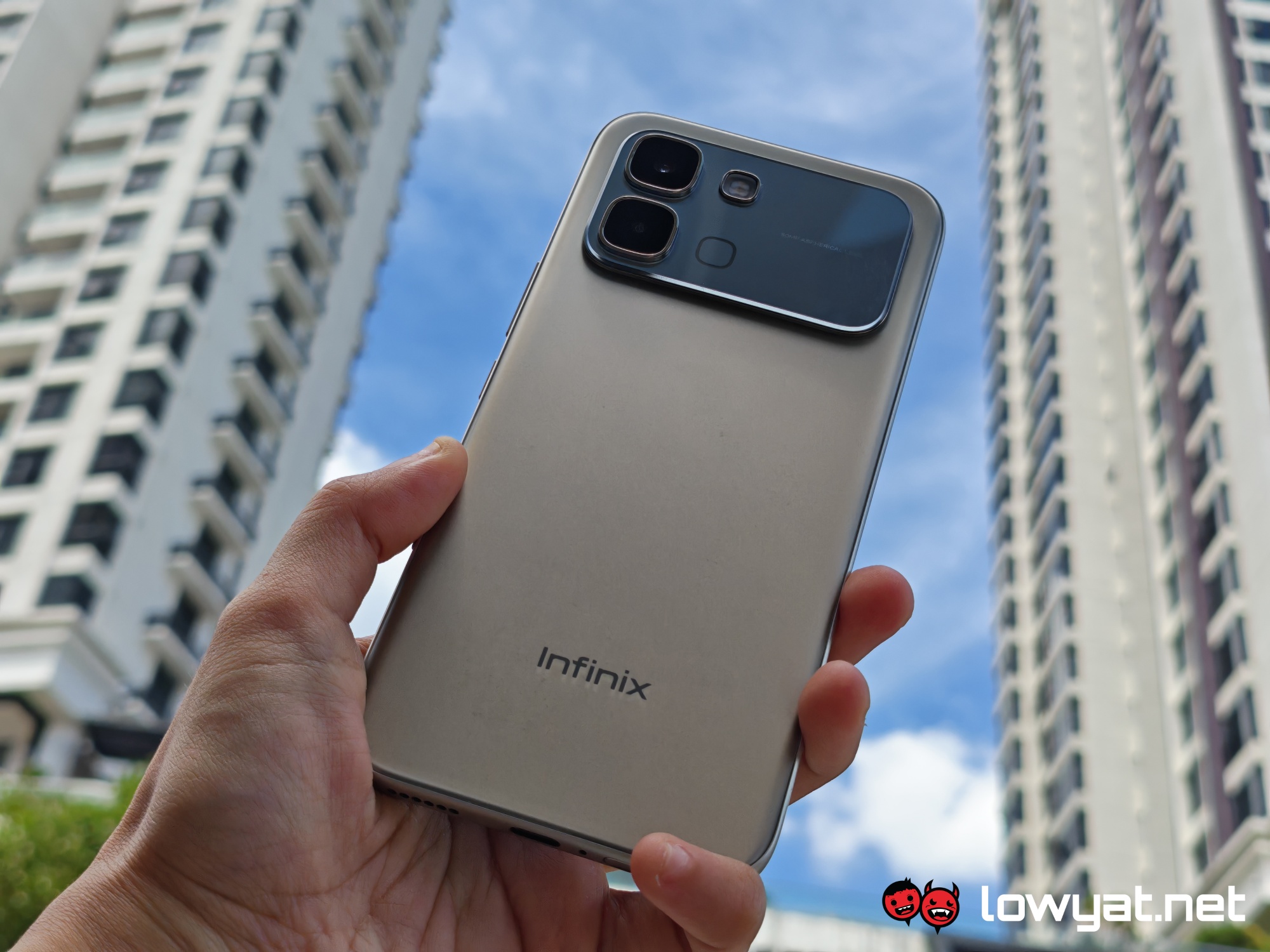
Flipping the phone around, you get a matte but still quite shiny rear. Especially with this Lunar Titanium variant. It’s a warm shade of grey that leans yellow in some situations. If a pseudo-gold hue isn’t to your liking, though, there are other options, including a more traditional Shadow Black. Regardless of colour, you get a bright green “One-Tap” button. This key is customisable, and you can set it to trigger functions like the camera.
The camera module stretches across the top of the device. Nothing particularly exciting here, since that’s what’s in vogue right now. It’s also inexplicably reflective, though not enough to serve as a mirror. So, all it does is amass a collection of smudges and smears. Oh, and house the cameras and lights, of course. The lenses stick out a bit, which means the phone won’t lay flat on a table.
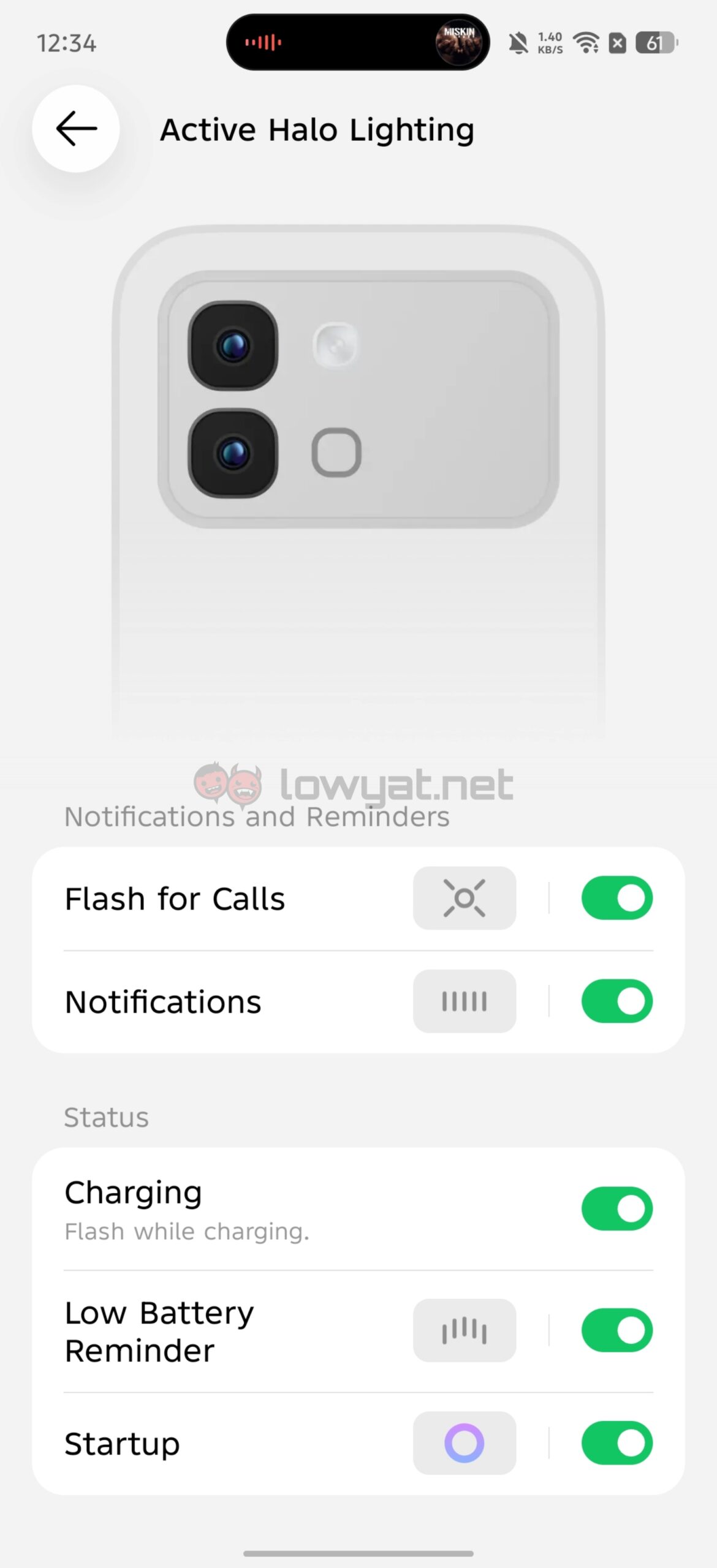
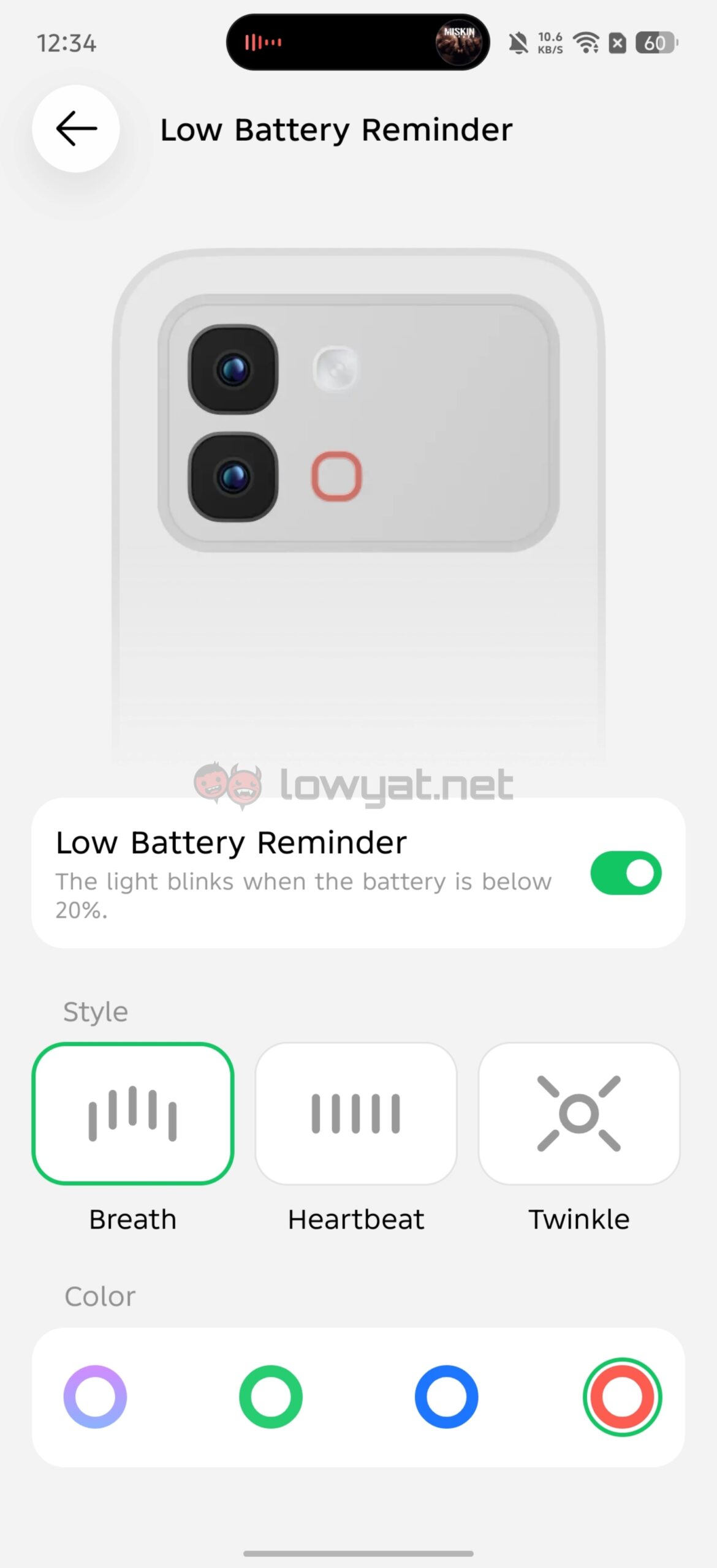
Then there’s the Active Halo ring that lights up when you get notifications. It’s not the flashy, attention-grabbing fare like you’d get on a gaming phone, but it adds some visual interest to an otherwise straightforward design. It also serves a purpose beyond aesthetics. You can set it to light up for calls and notifications, for instance. The style and colour is also customisable to some extent.
Looks aside, the phone is comfortable enough to hold and handle, though the curved display does make swiping a little awkward at times. Still, the day-to-day scrolling is more or less a smooth experience. The screen is just about bright enough for sunny days.
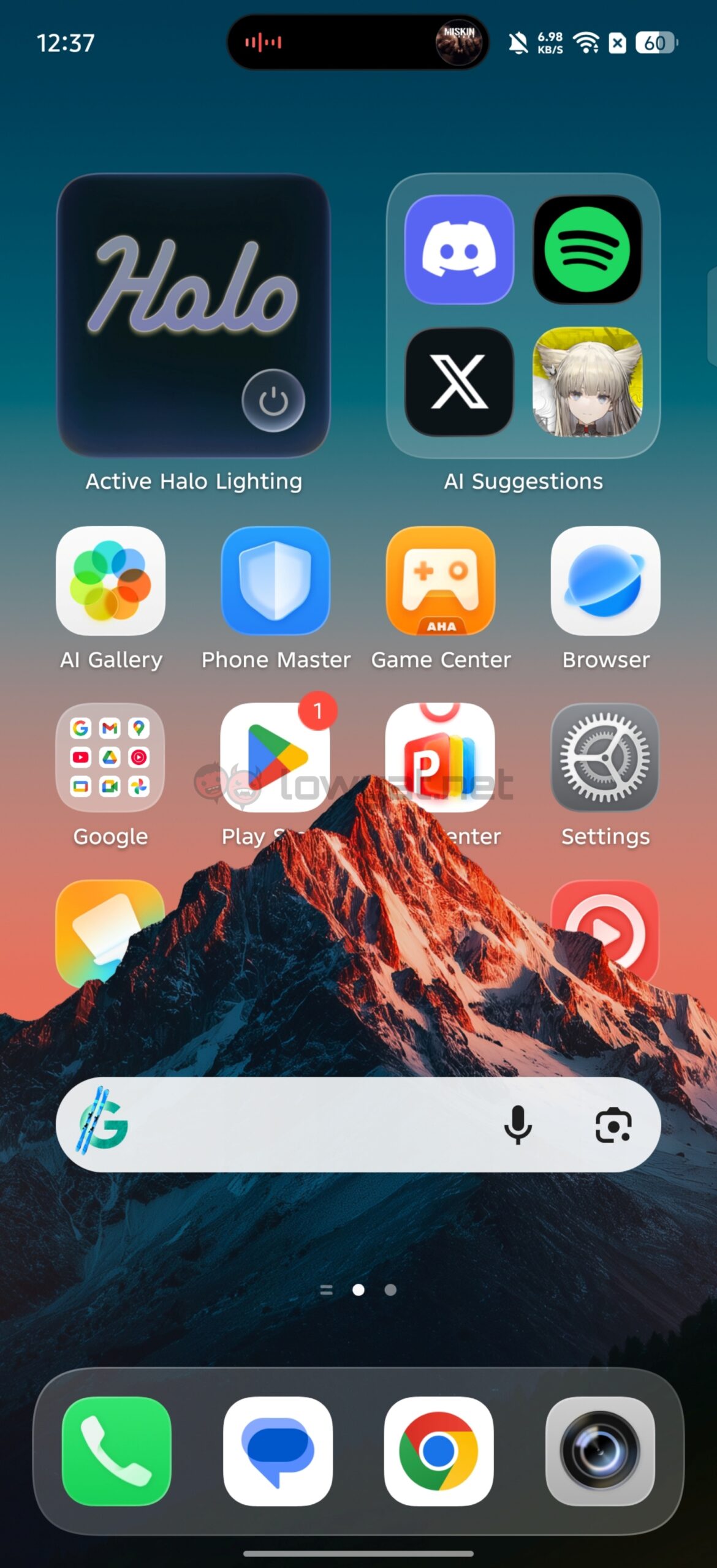 On the software side, it runs on Android 16 via the brand’s XOS 16 skin, which comes with its fair share of bloatware. App Center in particular enjoys sending a bunch of notifications just to, well, be at the centre of your attention. Fortunately, you can silence it in the settings. Besides that, you get Folax as the built-in AI assistant. While it can prove helpful in some situations, it is also pretty quick to clam up at the slightest bit of profanity.
For those who like to personalise their devices, the OS offers some options, including a few depth of field wallpapers. These essentially give off a 3D effect by placing some elements in the foreground, obscuring part of the app icons. It’s an aesthetically pleasing gimmick, but at the cost of some functionality as it takes up space that could otherwise be used for apps or widgets.
Performance and Battery
 The Infinix Note Edge runs on a MediaTek Dimensity 7100 chipset, which sits somewhere in the lower-mid range. As such, one cannot exactly expect top-tier performance here. The raw benchmark numbers say as much, with pretty middling scores across the board. Still, it’s the practical experience that ultimately matters in the end.
For the most part, you won’t really encounter any major hiccups in the usual day-to-day doomscrolling. Switching between apps is a smooth enough affair, even when you have quite a few of them open. I should note that I did encounter an issue where YouTube would randomly close in the middle of playing a video, even with nothing else running in the background. Restarting the phone did put an end to the problem, though.
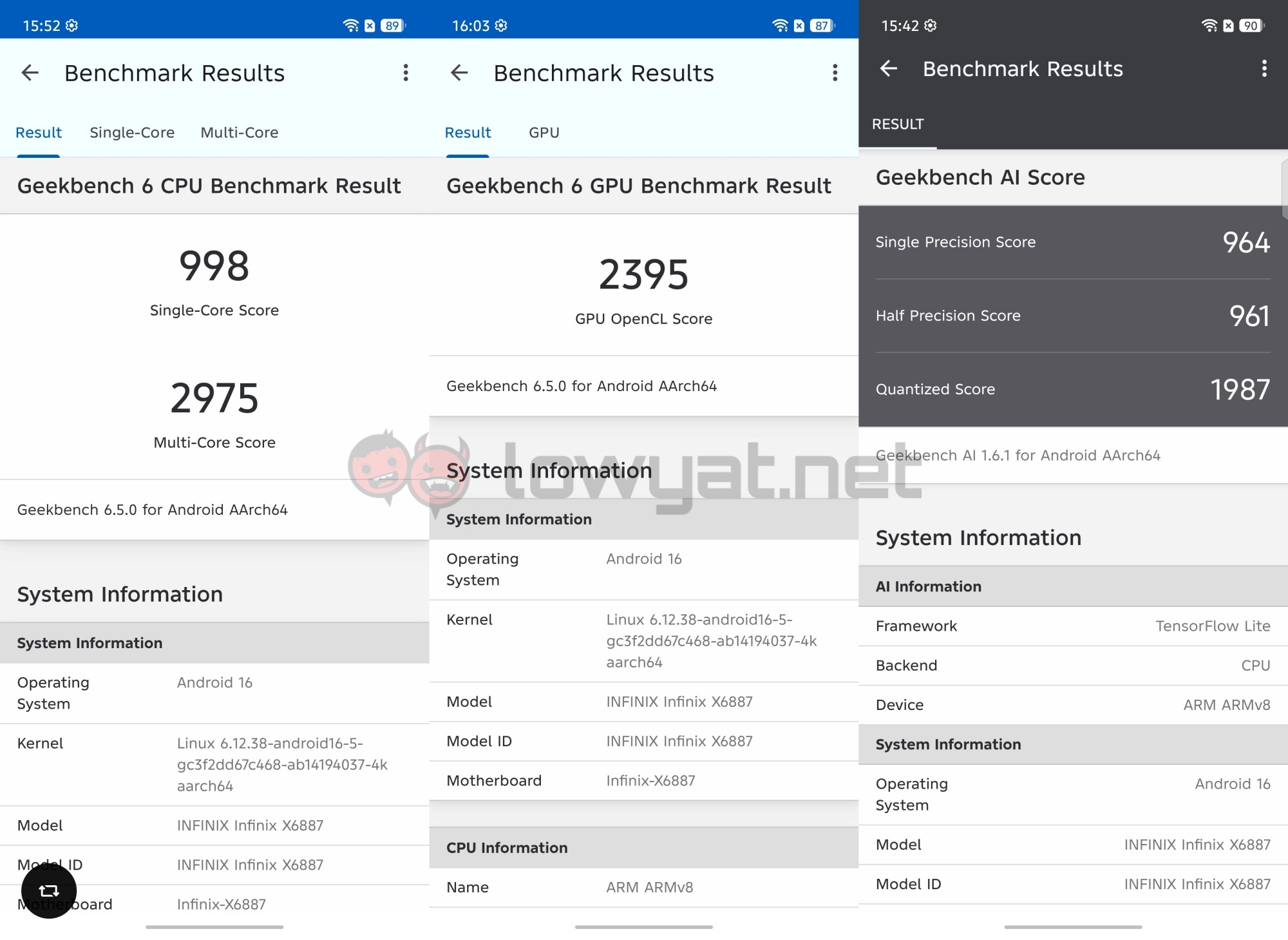
As far as gaming goes, the Note Edge does…fine, I suppose. You could play titles like Arknights: Endfield, but this is not an entirely lag-free experience. This is especially true if you choose to run the game on high graphics settings. You are pretty much limited to Medium as the game won’t let you go any further, and even then, you do get some stuttering. So while you could game on this phone, I do advise you to temper your expectations.
On the plus side, you can get away with playing for hours on end without worrying too much about heat management. While the phone does get warm after some time, it doesn’t get to the point where you have a mini furnace in your hands.
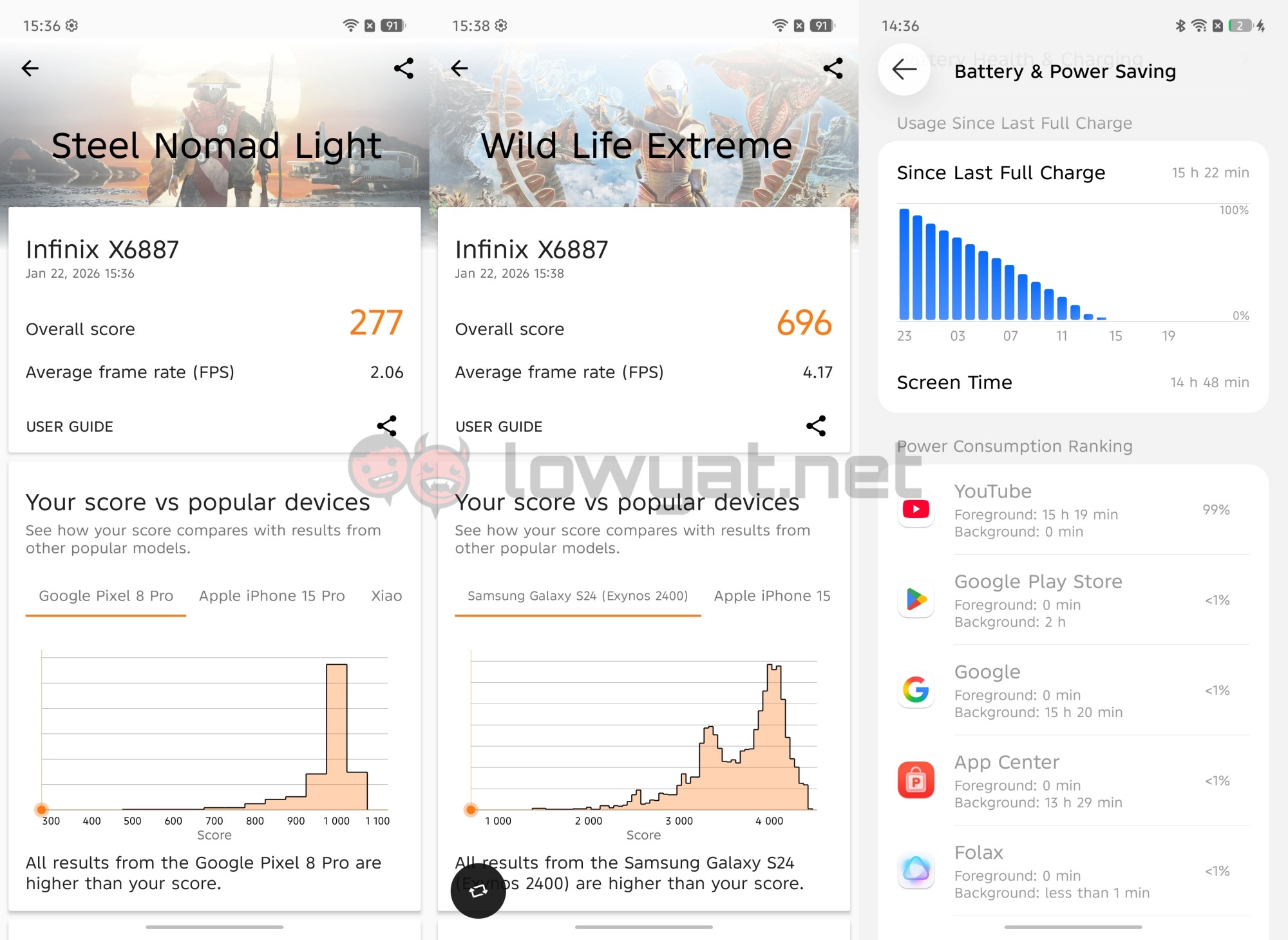
Other than that, the phone packs a sizeable battery. With moderate usage, it can last just about two days. With some casual gaming thrown in, the phone can hang on for a little more than a day. As for the usual video loop test, it gave up the ghost after 15 hours and 22 minutes. It’s also fairly quick to charge, taking about an hour to go from empty to full.
Camera
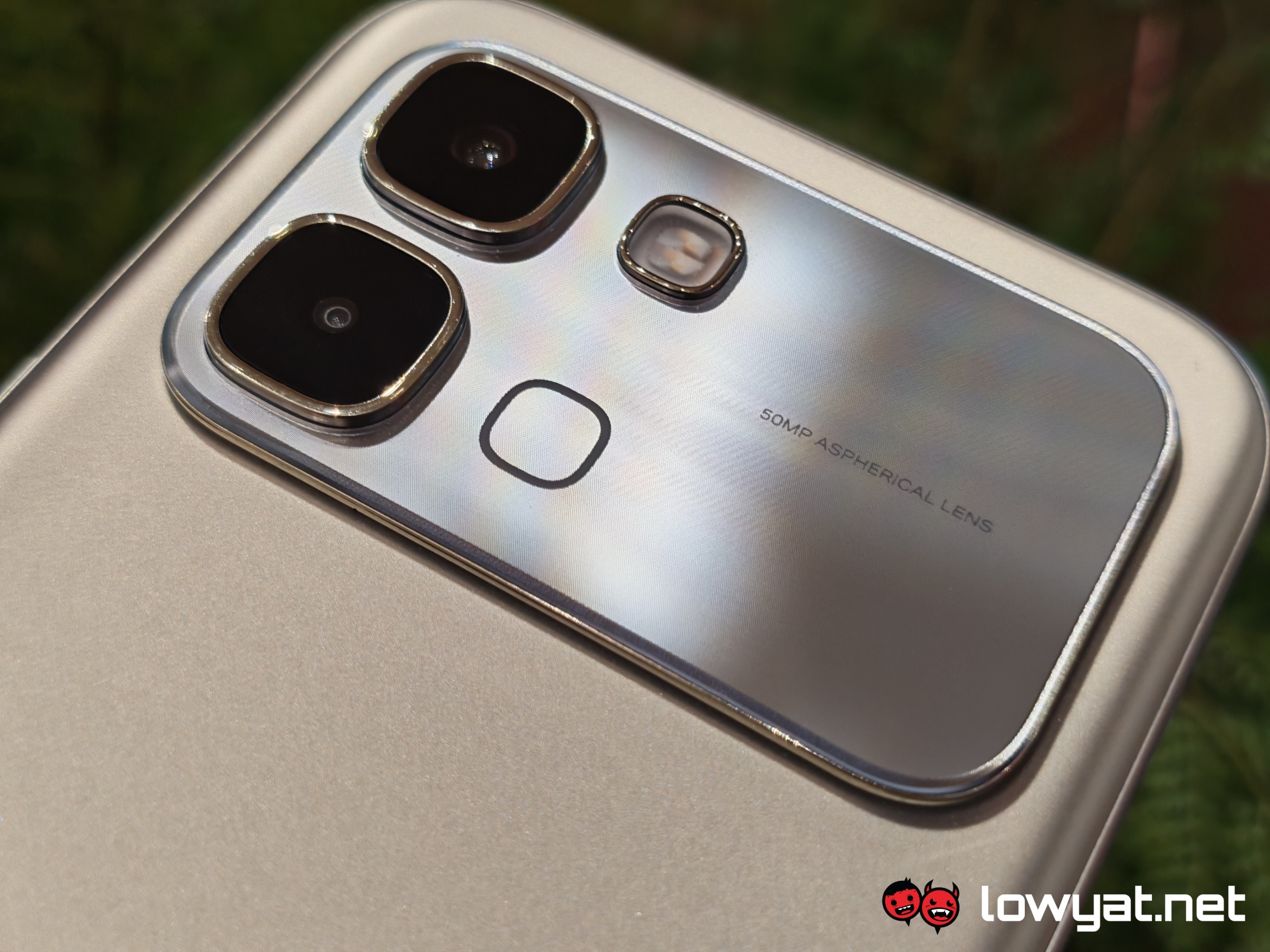 For imaging, Infinix has equipped the Note Edge with a 50MP primary camera. While it is by no means fancy, it does what it needs to do: take pretty pictures. It’s sufficient for your basic point-and-shoot needs, snapping clear and vibrant images. The camera does preserve a bit more detail than one may expect from a phone at this price point. You can easily pick out individual strands of hair or fur, or bits of lint on clothing.
A highlight is the portrait mode, as it makes the subjects really pop. It’s nice for when you want eye-catching, attention-grabbing pictures for your social media profile.


It is worth noting that the camera does rely on AI to compensate for the hardware limitations, though the effect isn’t quite as obvious when compared to some other handsets. So far, I have yet to see any shots turning out particularly uncanny. For the most part, the algorithms serve to sharpen objects, as well as tweak the colours somewhat.
Images do take a noticeably long time to process after hitting the shutter button, particularly when shooting in night mode. Speaking of which, pictures taken in low-light conditions tend to come out noisy, with colours leaning on the muddier end. Zooming in on the images, you’d see the smudged, watery edges that make them look more like paintings than photographs.




I should point out the lack of an ultrawide camera, though. Of course, one could make the argument that most people don’t really zoom out when taking pictures. However, for those who like photographing landscapes, the absence of such a lens is a drawback. Similarly, I wouldn’t really recommend shooting at 2x zoom, as image quality does drop off considerably.
More Sample Images













Competition
nubia Air
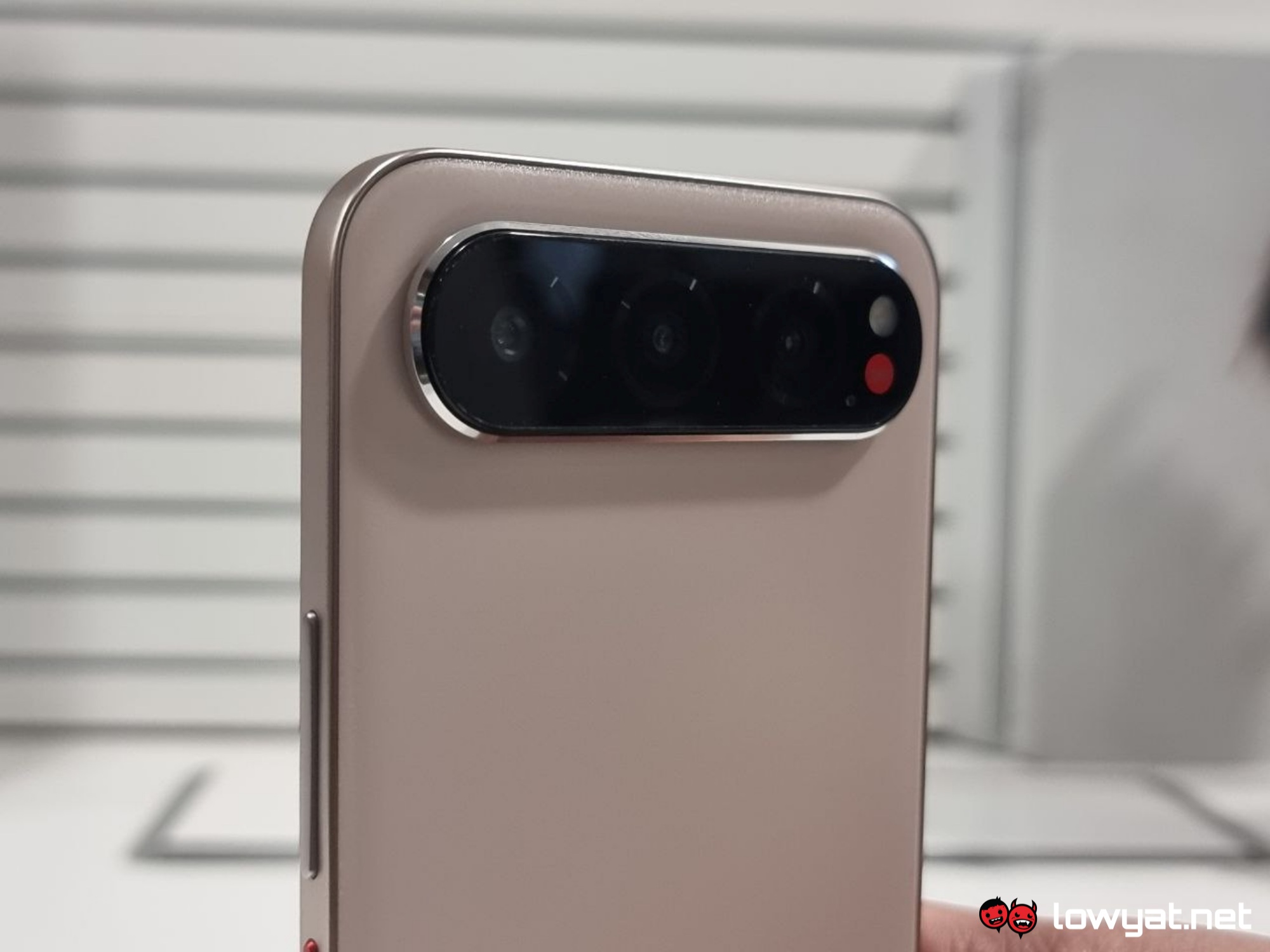 As the other thin option in this price range, the nubia Air features a more conventional flat frame. It sports a 6.78-inch AMOLED display with a 120Hz refresh rate and a peak brightness of 4,500 nits. Other than that, it comes with an under-display fingerprint sensor, as well as IP68 and IP69 ratings. Internally, it runs on a Unisoc T8300 6nm SoC with 8GB of RAM and 256GB of storage. Keeping the lights on is a 5,000mAh battery with support for 33W charging.
On the photography end, it gets a 50MP main camera, as well as a 2MP depth sensor. There is also a third auxiliary lens, although its details are left unspecified. For selfies, the phone is equipped with a 20MP shooter. The entire package gets a RM1,099 price tag.
Conclusion
The Infinix Note Edge is a pretty piece of work, as long as you don’t mind some of the design decisions. From the shiny camera module to the mismatched “One-Tap” button, some elements don’t quite mesh. But appearances aren’t everything, and fortunately, the phone isn’t just coasting on that.
Considering the RM999 price tag, you get a device that can keep up with your everyday needs. It has a capable enough camera, and gaming is entirely possible as long as you’re not forcing it to run on the highest settings.
@lowyatnet Here’s a look at the Infinix Note Edge in Lunar Titanium. The slim phone sports a 3D curved screen and comes in three other colours including Silk Green, Stellar Blue, and Shadow Black. It’s available now for RM999. #InfinixNoteEdge #InfinixMalaysia
With this in mind, though, it does exist in that awkward space where it’s not exactly an entry-level device, but also doesn’t quite pack the punch a proper mid-range phone does. In theory, you could fork out a bit more cash for something a little fancier. Still, it’s a decent option that does offer a good amount of utility.
