
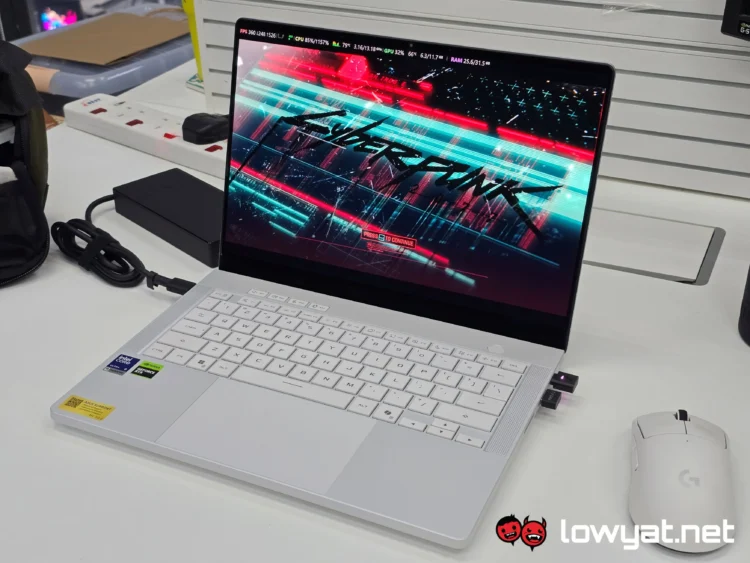
At the risk of sounding biased, I’m going to confess to something here: ever since the first Asus ROG Zephyrus G14, I’ve been hooked on the 14-inch form factor and have remained a loyal fan since.
The latest iteration of the ROG Zephyrus G14 is a little different from the previous iterations, particularly due to the availability of Intel’s coveted Panther Lake platform.
What Am I Looking At?
I feel old whenever I say this, but it is a sign of the times when you think back to just six years ago, when the very first G14 launched; AMD’s Ryzen mobile APUs were the processors of choice, thanks in no small part to their promise of long battery life. These days, Intel has snatched back its crown in that space, thanks to the benefits and performance promised by the blue chipmaker’s Panther Lake architecture.
To be clear, there is an AMD variant of the Zephyrus G14, but Asus clearly isn’t focused on pushing that model, and as such, it has relegated lower-tier hardware to that model.
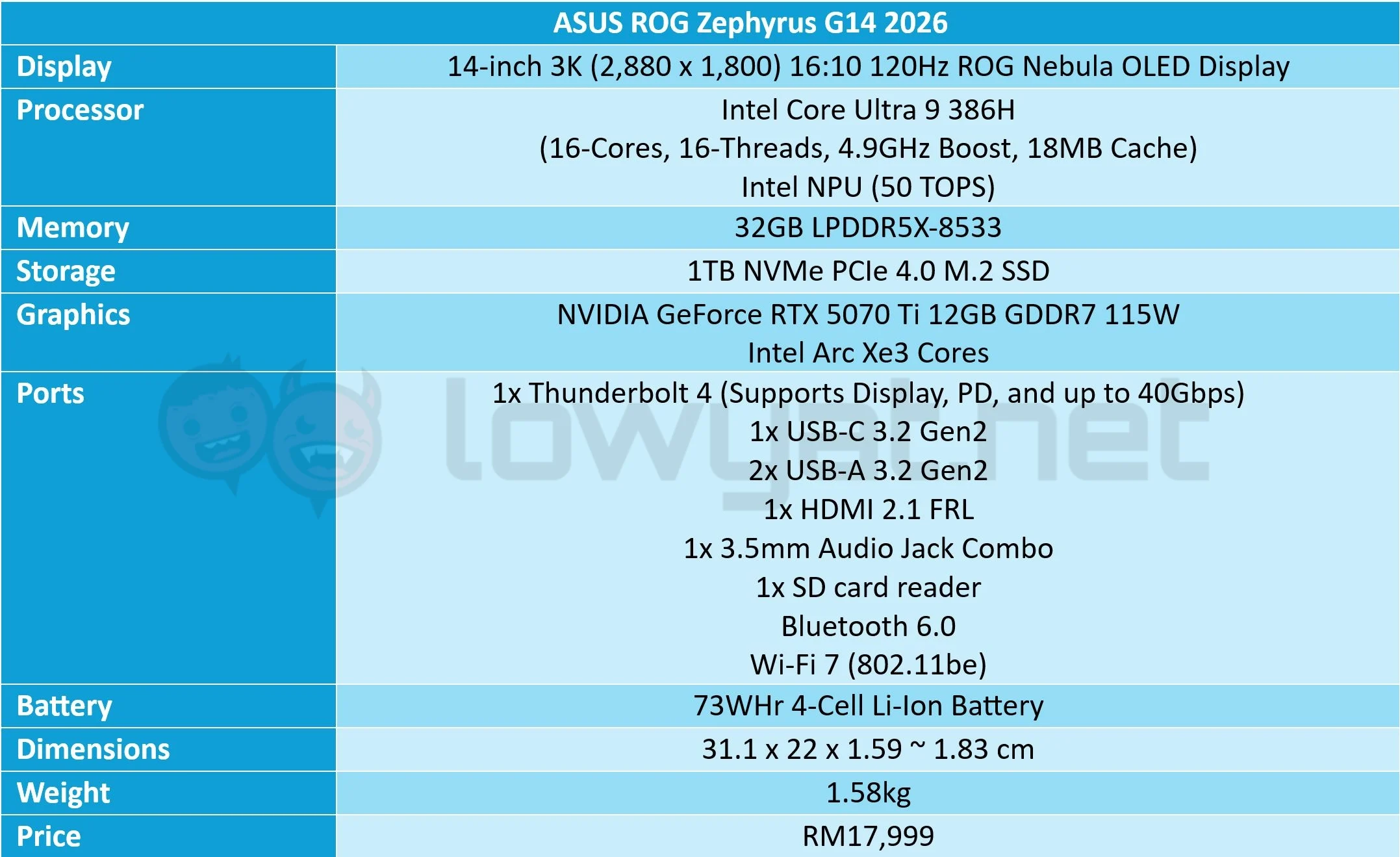
Moving on, the new Zephyrus G14 retains the same 14-inch form factor, along with other creature comfort upgrades to the lineup. The display uses Asus ROG’s Nebula HDR OLED panel with a maximum refresh rate of 120Hz and native resolution of 2.8K (2,880 x 1,800).
The other specs are nothing to scoff at either. Despite this being the base model, you’ve got 32GB LPDDR5X-8533 RAM, an NVIDIA RTX 5070 Ti 12GB discrete GPU, and a 1TB PCIe 4.0 SSD. The battery is a 73Whr 4-Cell unit, which has more or less been the standard with Asus and its 14-inch form factor ROG laptops.
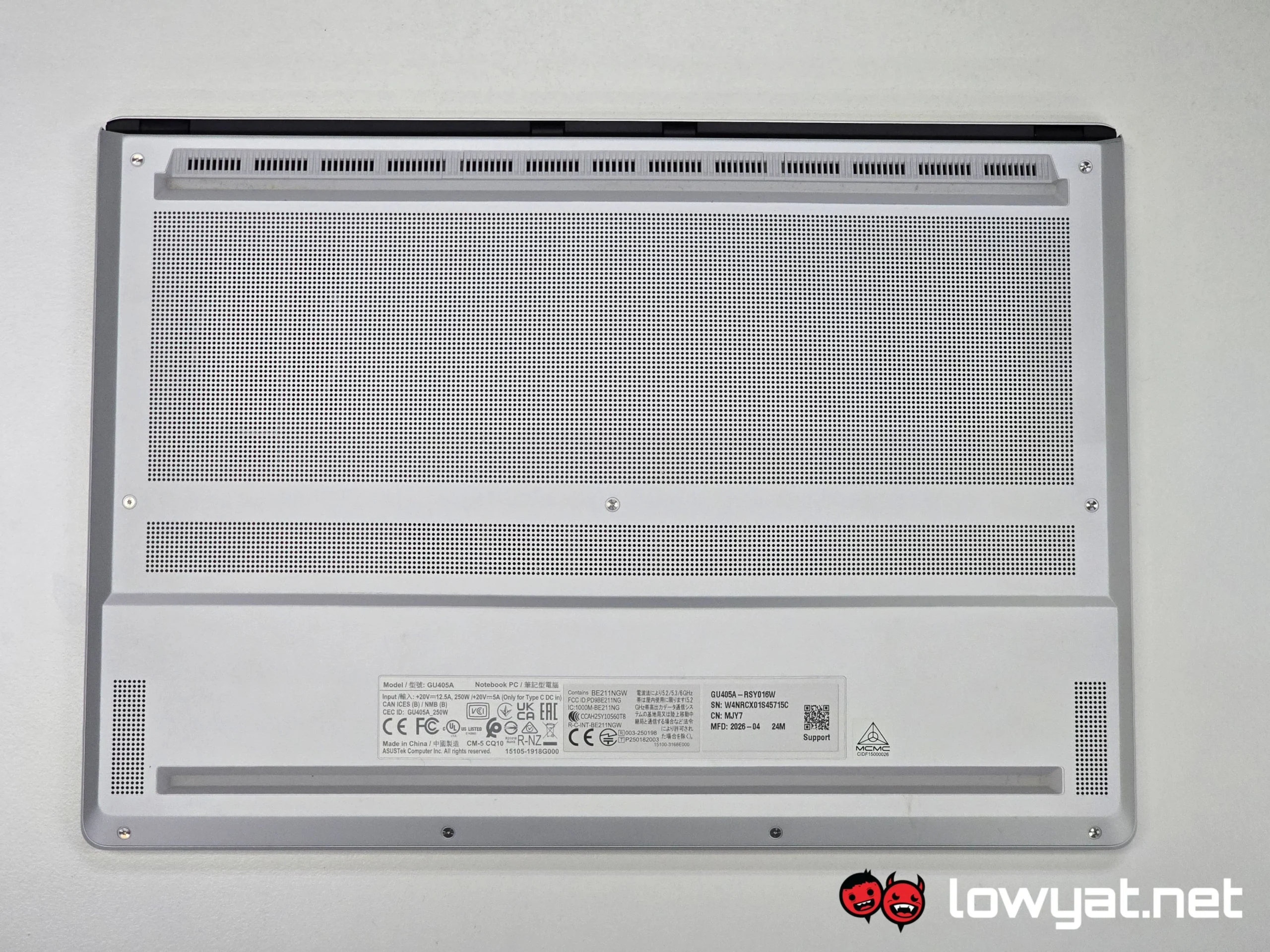
On the subject of form factor, this year’s G14 retains the same chassis shape and design, albeit a little thicker at the base and also ever so slightly heavier. Still, gotta hand it to Asus’ engineering team for being able to maintain its figure while packing it with this much power.
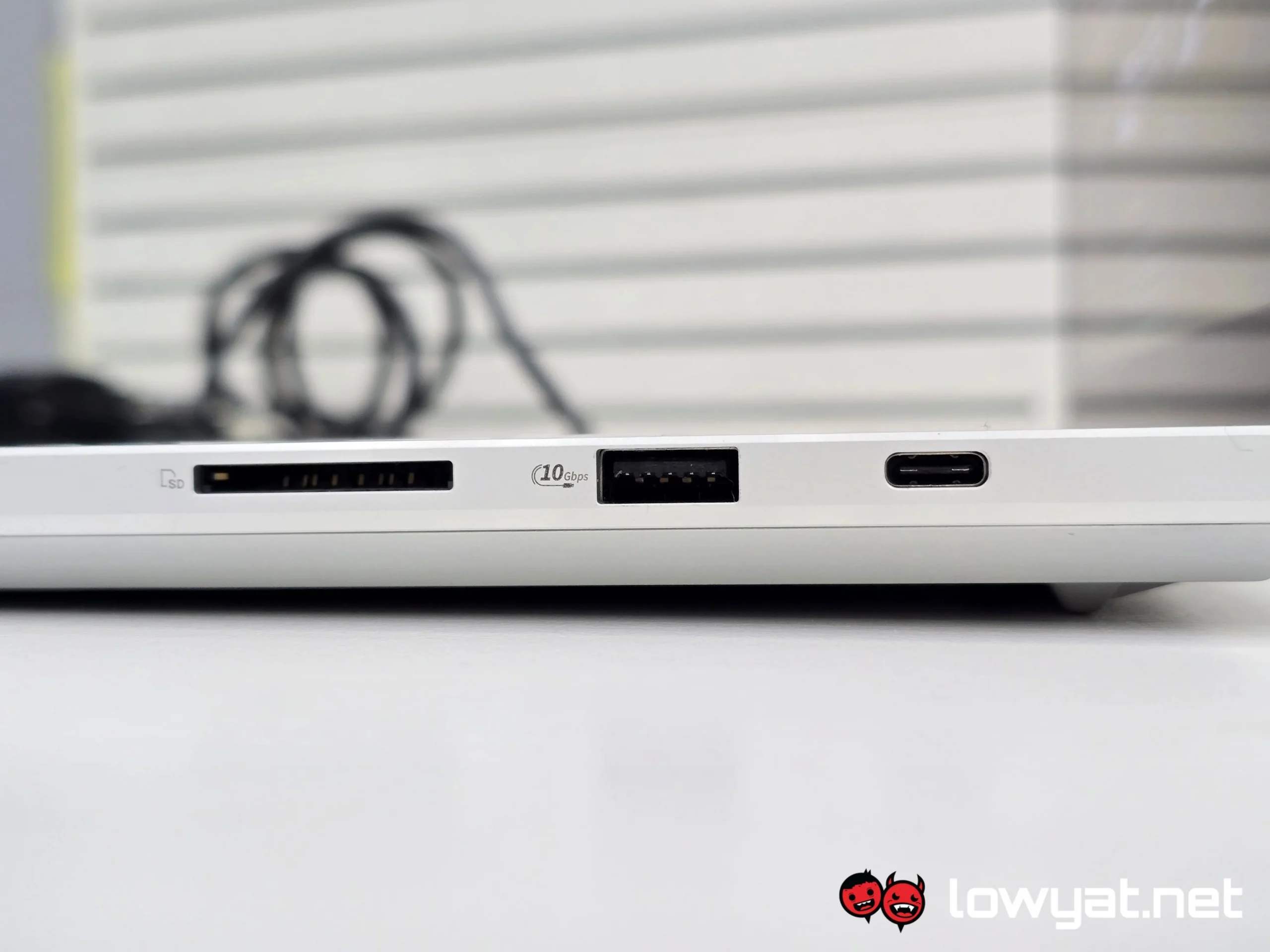
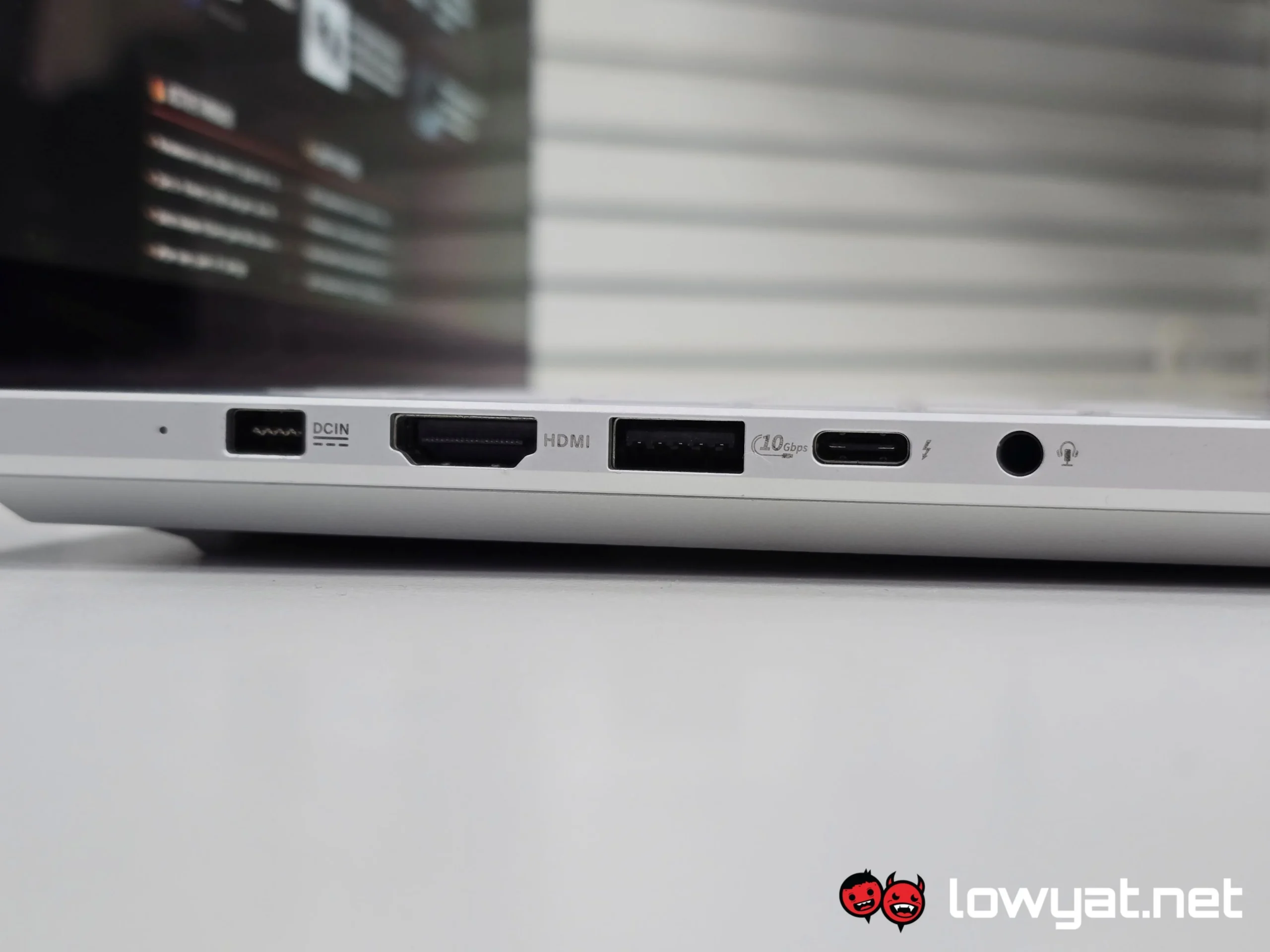
Ports-wise, you get a Thunderbolt 4 port over USB4 because, you know, Intel obviously; a USB-C 3.2 Gen2 port, a couple of USB-A ports of the same calibre, HDMI 2.1 FRL, and a full-sized SD card reader. Because it’s an Intel laptop, it’s also rocking Wi-Fi 7 and Bluetooth 6.0 for wireless connectivity.
What’s Good About It?
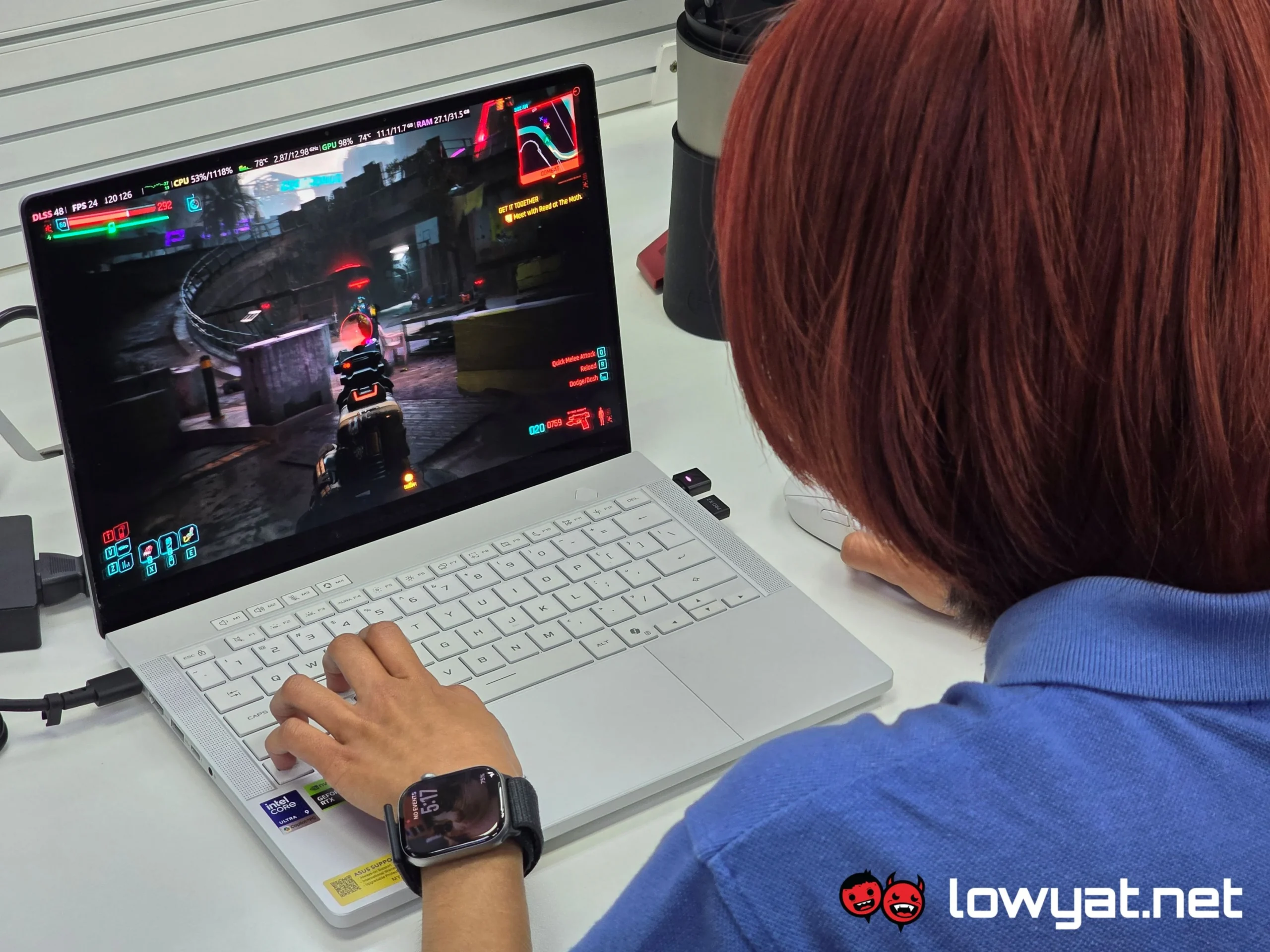
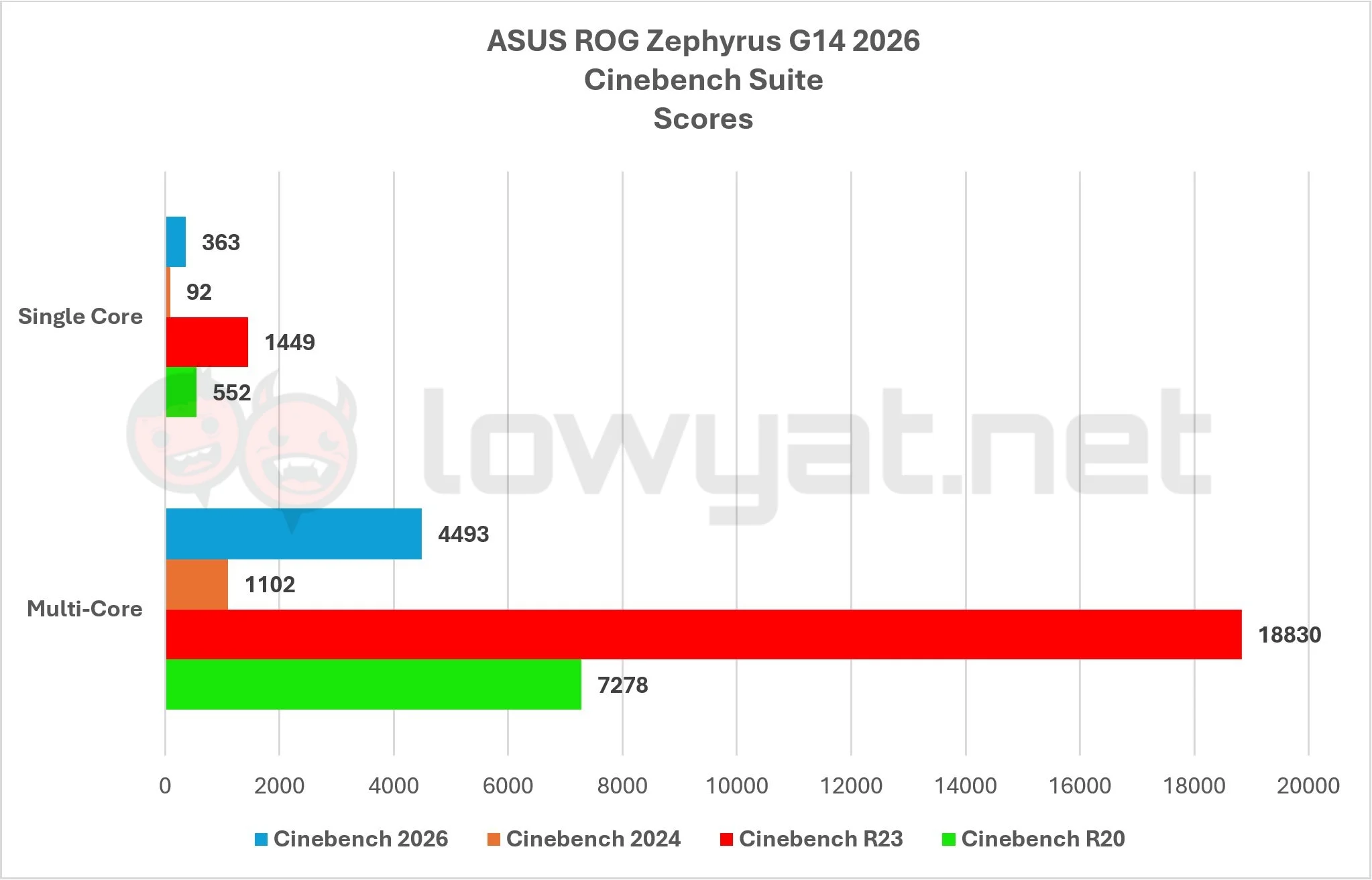
This Core Ultra 9 386H CPU in this laptop is, like its more powerful Panther Lake counterpart I’ve tested before, a solid performer, as is the RTX 5070 Ti laptop GPU inside here. It is honestly one of the better combos I have used in a 14-inch laptop, and one that makes sense.
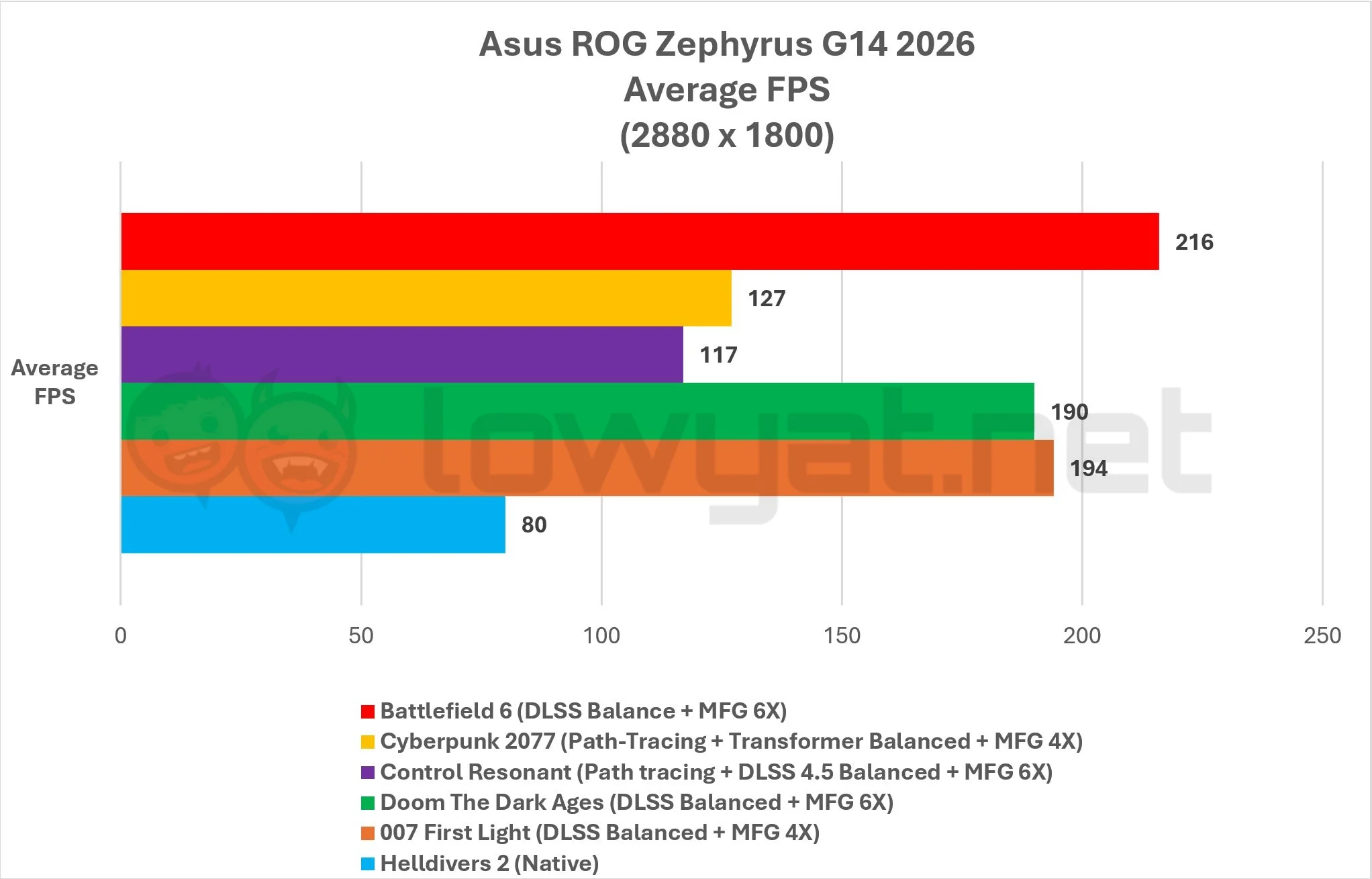
With this power, plus the added benefits of upscaling from NVIDIA’s DLSS and Multiframe Generation, virtually all my game titles are able to hit and maintain average frames above the 100 fps mark, Helldivers 2 being the exception here: even if you lower the resolution and reduce the graphics presets, the game never seems to give me more than 90 fps on average, regardless of how powerful my system is.
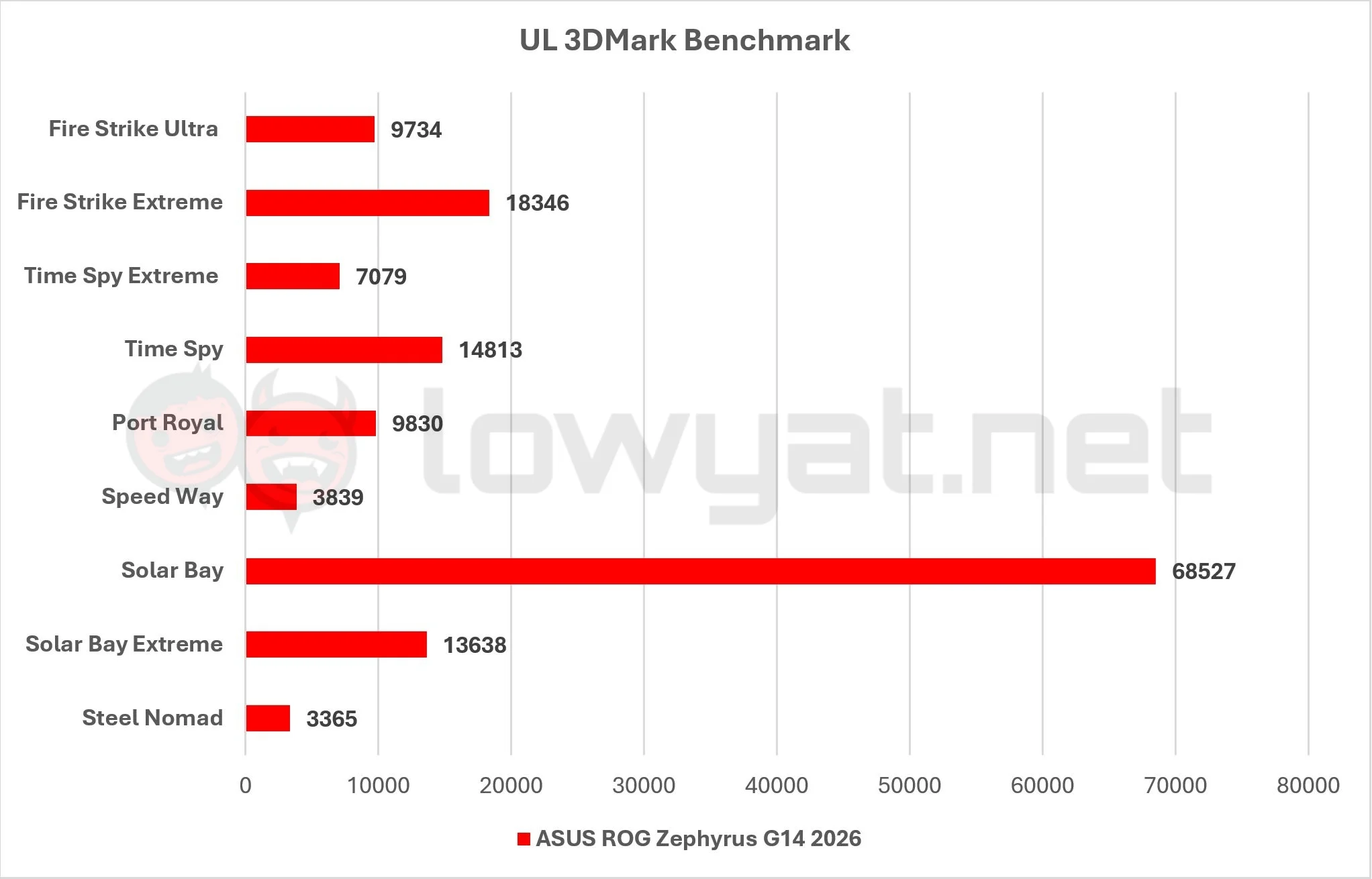
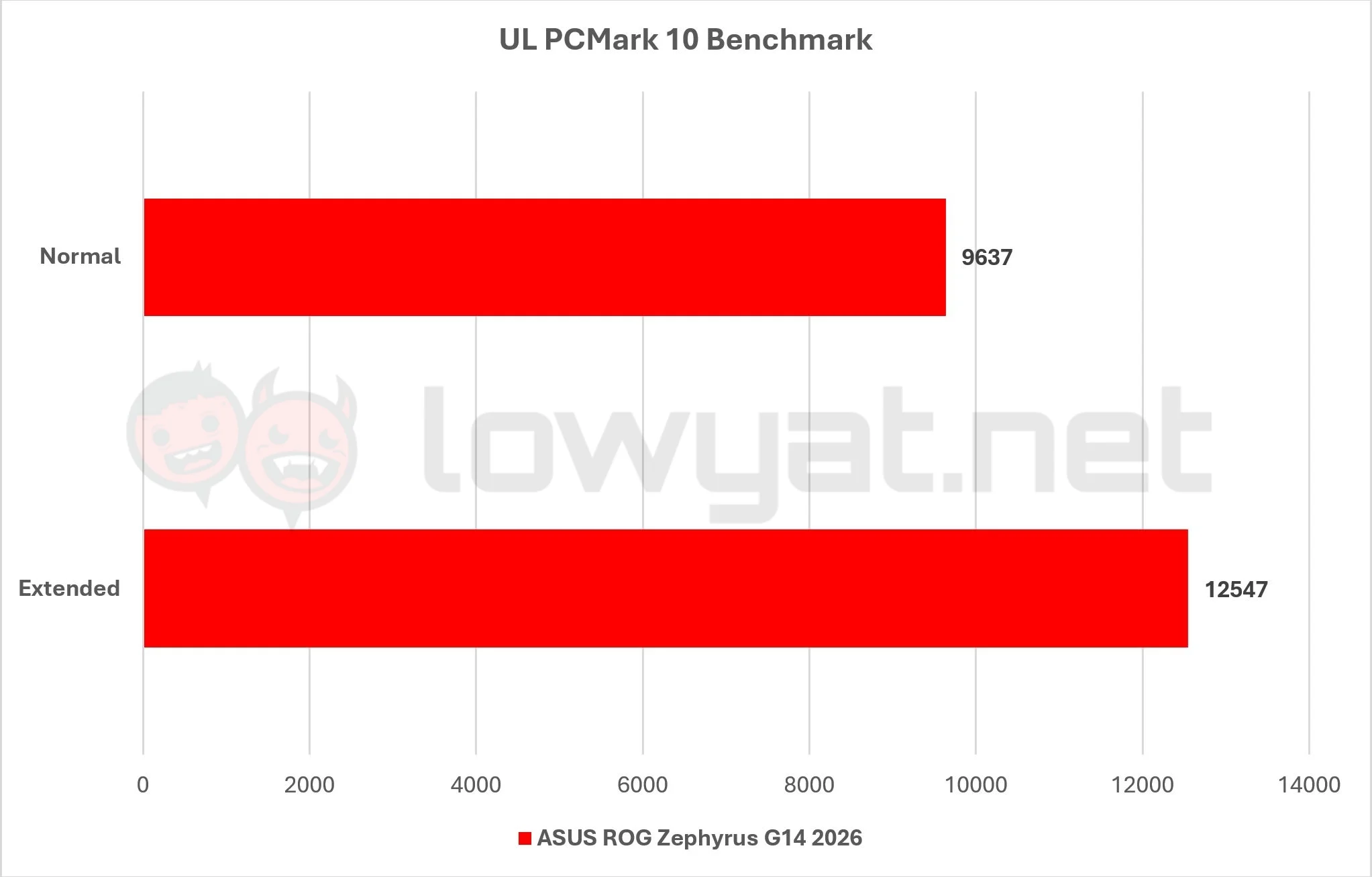
32GB of RAM is a healthy amount of RAM and allows me to multitask with multiple programs and tabs open on a browser, up until a certain point, for reasons that are both obvious and as old as time. On another note, the OLED panel on this still delivers those bright, punchy colours, bright whites, and inky blacks, and that’s before you even flip the switch and turn on HDR.
Battery life with this year’s Zephyrus G14 has improved somewhat. On average, it delivers 10 hours of use through general use: browsing the internet, typing and editing documents, plus the occasional video or two during breaks. If I’m just binging a show on Netflix, however, the LP E-Cores are smart enough to power down everything else while I do so, and it stretches that endurance up to about 14 hours on average. And that’s nothing to scoff at.
What’s The Catch?
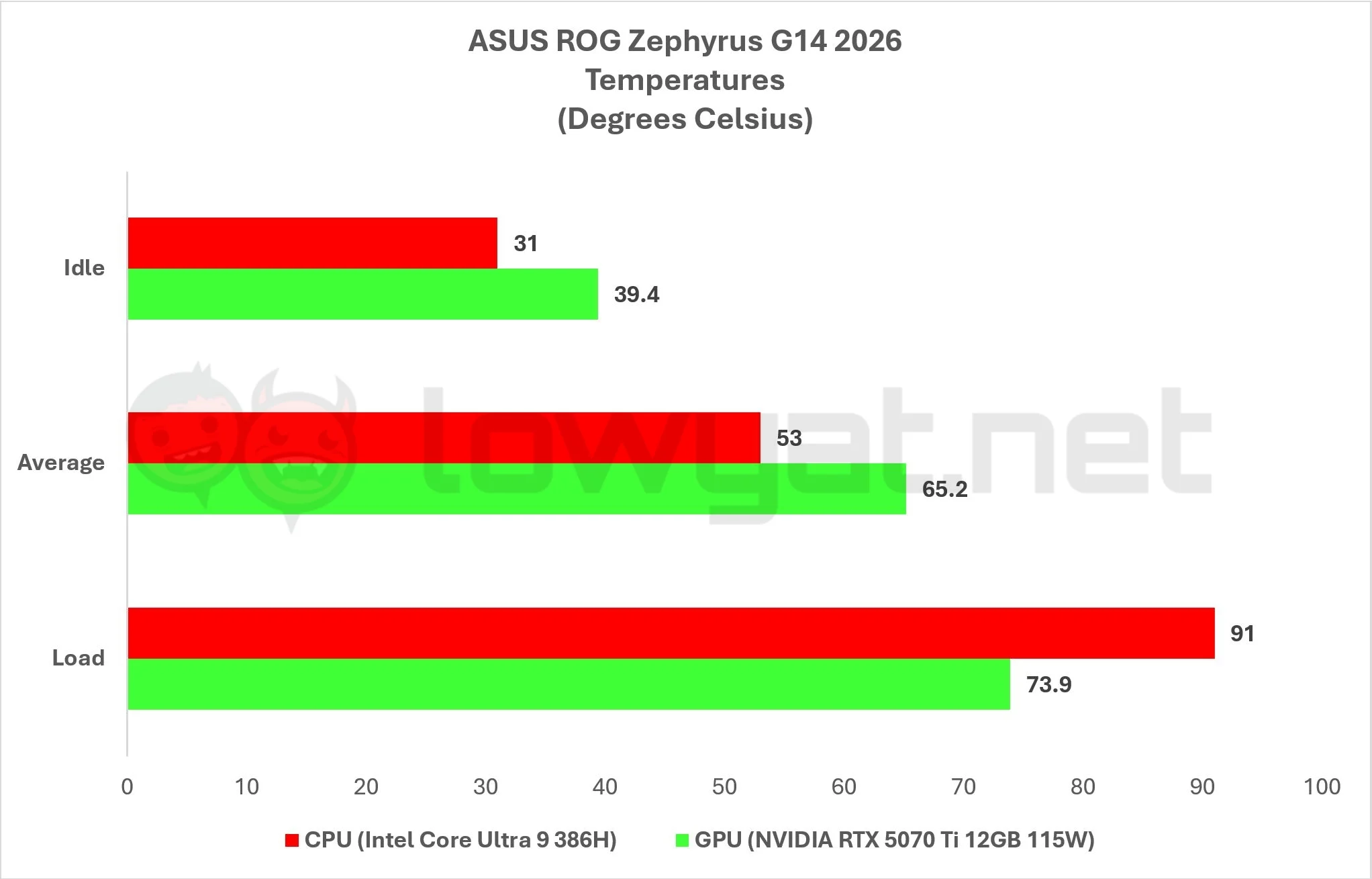
Then, as now, the Zephyrus G14 tends to get a little warm, even while doing something as menial as editing text documents or browsing the internet.
Unfortunately, and unlike previous iterations of the G14, the RAM is soldered directly to the motherboard, with no pathway to expanding beyond what is provided. In this case, 32GB LPDDR5X-8533 is all this laptop gets and, dare I say it, it starts to show the minute I start opening up multiple tabs on Chrome and operating multiple apps and programs simultaneously.
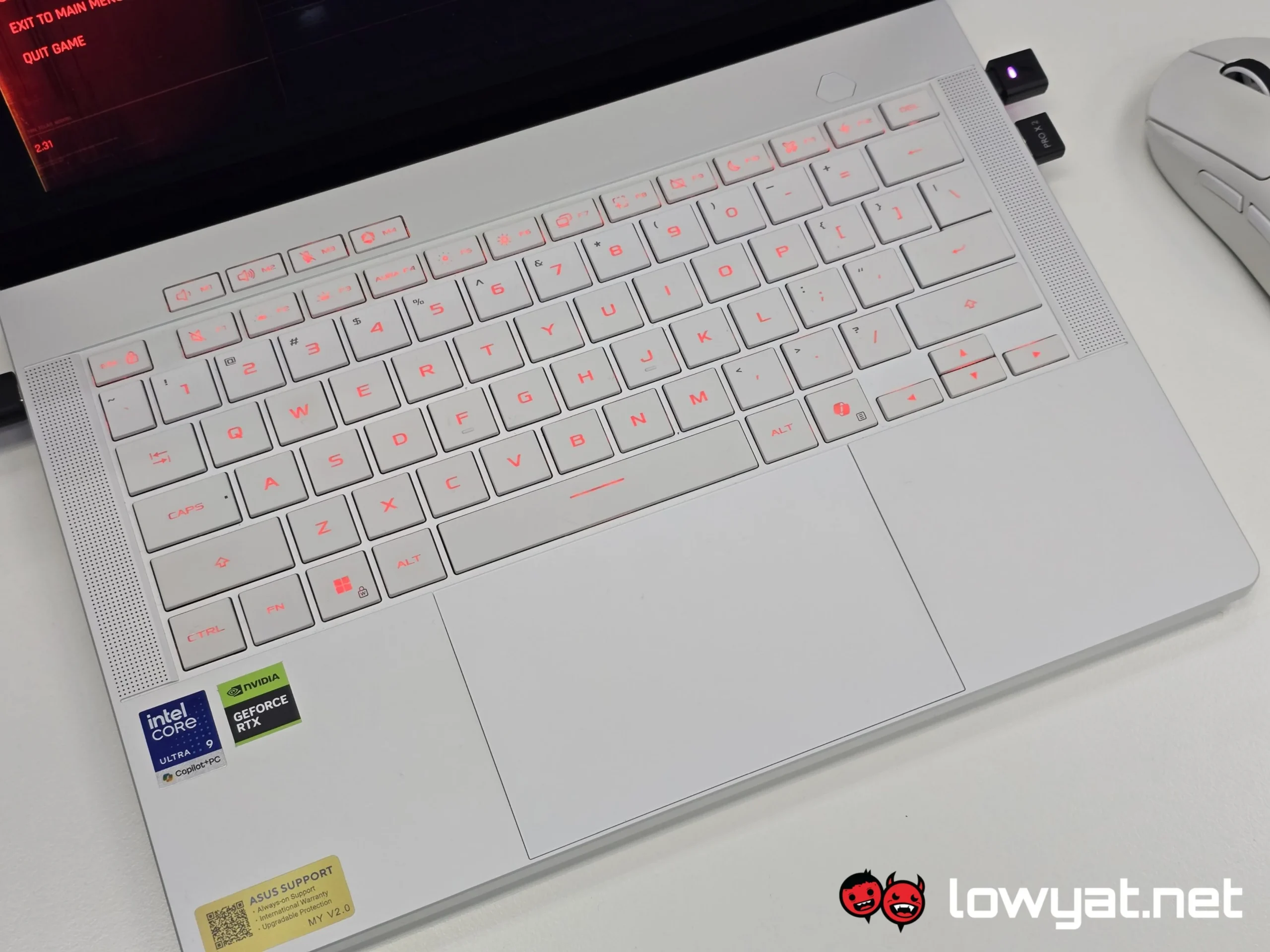
Asus always had a reputation as brand that absolutely loves to overprice its products, and worse still, the ongoing memory crisis isn’t making things any better. This specific configuration of the Zephyrus G14 costs a spit-take-worthy amount of RM17,999. That is, more or less, half the price of the ROG Zephyrus DUO laptop. It’s a far cry from when a gaming laptop of this calibre would still be sold just shy of the RM10,000 mark, but given the ongoing RAM crisis, it is what it is.
Should I Buy It?
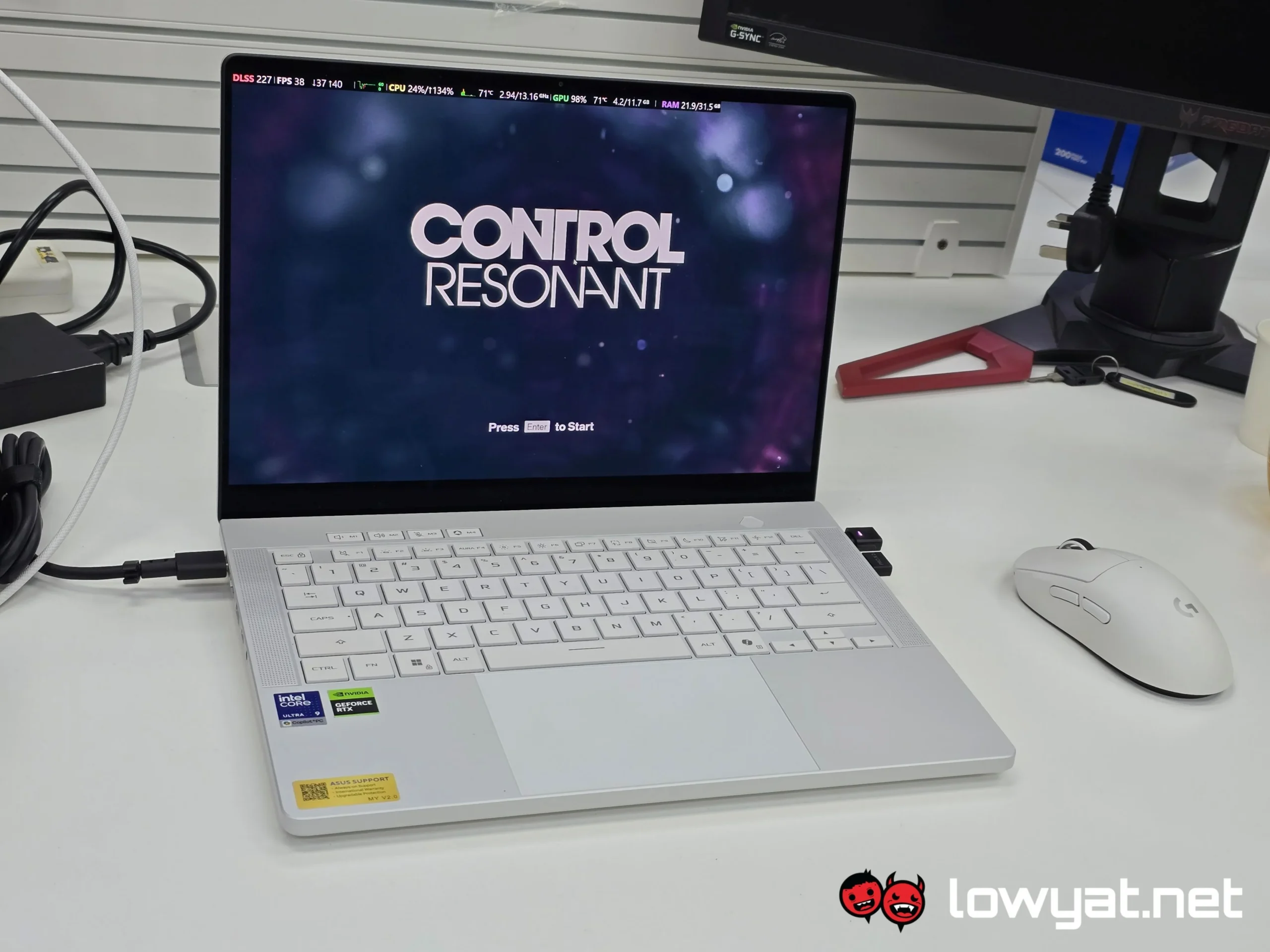
Since its inception, the Asus ROG Zephyrus G14 has been one of the best laptops for the gamer on the go seeking a balance between productivity and play, and this year’s model is no different. As a 14-inch form factor enthusiast, and at the risk of exaggerating, it would fall under my “holy grail” category for machines of this calibre.
A bright, punchy OLED panel. A moderately powerful Blackwell GPU. A CPU from Intel’s powerful Panther Lake Architecture. Put them all together in a sleek, minimalist magnesium alloy chassis, and the Zephyrus G14 is what comes out of the union.
Ultimately, there are two issues that I have with it. The first is the fact that the RAM is soldered, but I suppose that is the price one has to pay for space and weight saving. And that’s the second issue I have with the laptop: its asking price of RM17,999 for the RTX 5070 Ti SKU. And as much as I would like to defend this laptop as being the ideal travel buddy for the PC gamer, that price tag effectively puts it out of reach of most gamers.
Photography John Law.
The 2026 Zephyrus G14 pairs Intel's Panther Lake Core Ultra 9 386H with an RTX 5070 Ti and a gorgeous 2.8K OLED in a slim magnesium alloy chassis, with battery life up to 14 hours. Soldered 32GB RAM and an RM17,999 asking price are the sticking points.
Good
- Strong Panther Lake and RTX 5070 Ti combo
- Bright, punchy 2.8K 120Hz OLED panel
- Up to 14 hours of video playback
- Slim 14-inch magnesium alloy chassis
Bad
- Steep asking price
- Soldered RAM
- Runs warm even on light tasks
Scores
- Design & build9.0
- Display9.0
- Keyboard & trackpad9.0
- Performance8.5
- Battery8.5
- Ports & connectivity9.0
- Value6.0
Review unit on loan from ASUS · tested for 4 Weeks.
