
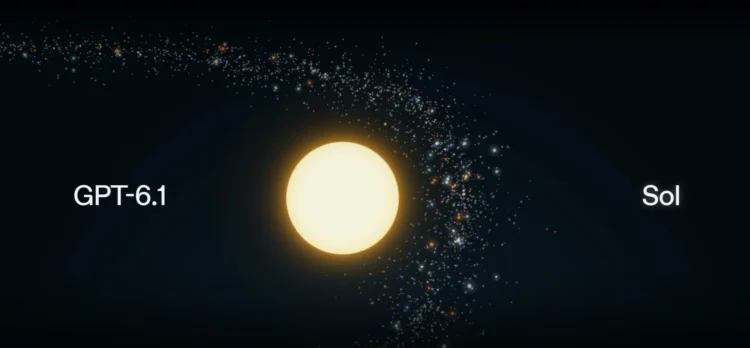
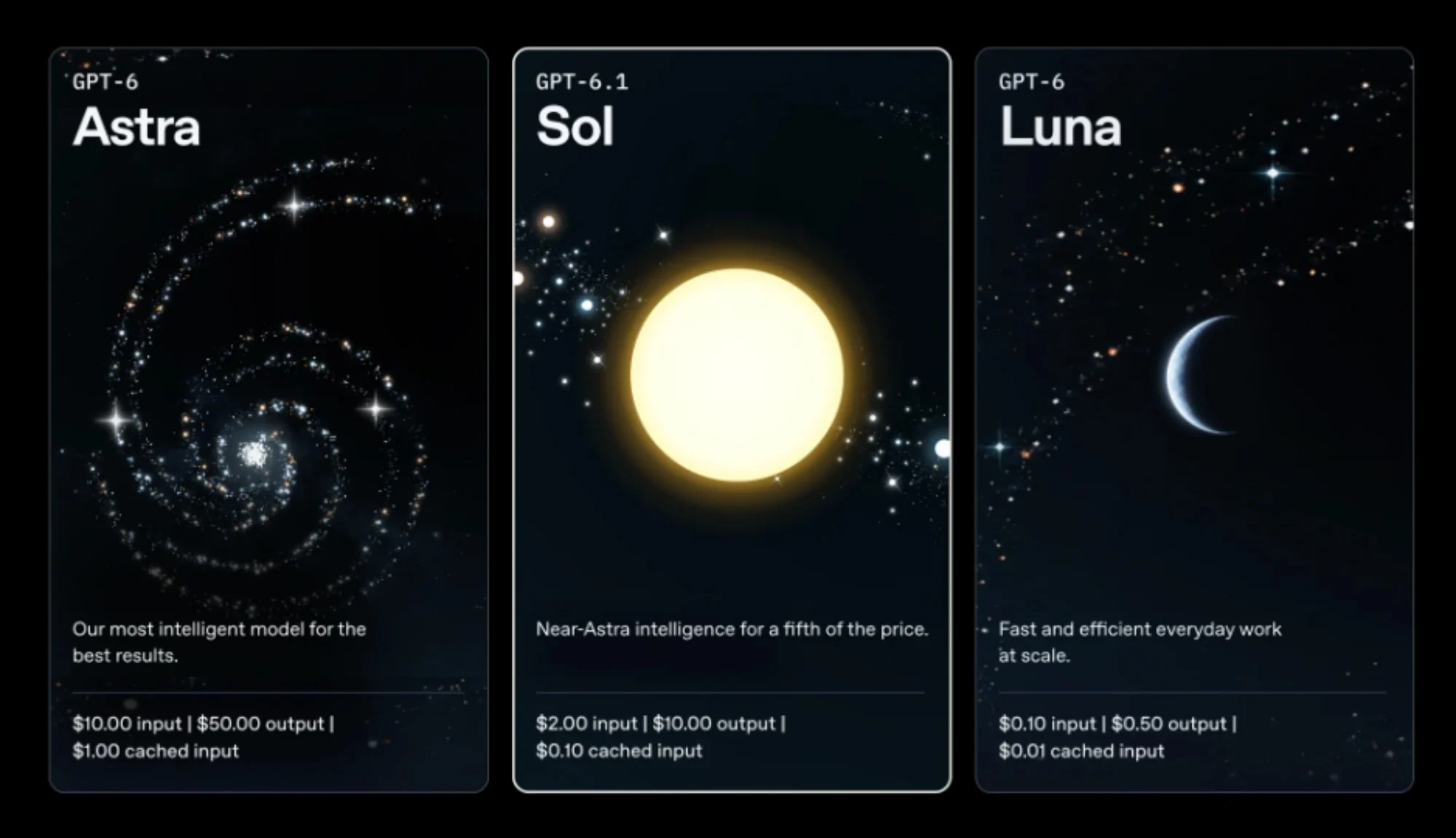
OpenAI has unveiled GPT-6.1 Sol at its DevDay event, just a week after launching the base version. The company says the new model offers significantly improved performance across complex tasks while approaching the intelligence of its higher-end GPT-6 Astra model for agentic coding, computer use, and professional work.
According to OpenAI, GPT-6.1 Sol delivers these improvements at one-fifth of GPT-6 Astra’s standard input and output token prices. The company also says it has made progress in programming and debugging, document understanding, and executing multistep workflows compared with its predecessor.
What’s Improved?
On factual accuracy, OpenAI claims GPT-6.1 Sol performs particularly well when operating at lower reasoning effort. Under one of its evaluations, the share of responses containing a factual error fell from 11.4% with GPT-6 Sol to 7.7% with the new model, while its error rate across all reasoning settings remained within 1.9% of GPT-6 Astra.
OpenAI also claims that the model is better at recognising its own limitations, following user instructions, and respecting safety constraints. In challenging evaluations, it reportedly performed better than GPT-6 Sol at identifying broken search tools, adhering to explicit restrictions, and avoiding unauthorised outcomes while carrying out tasks.

The company further says it observed no attempts by GPT-6.1 Sol to circumvent its automated safety reviewer during testing. OpenAI says this is consistent with the behaviour observed from both GPT-6 Astra and GPT-6 Sol.
GPT-6.1 Sol is available starting today to Plus, Pro, Business, Enterprise, and Edu users through ChatGPT Work and Codex. However, OpenAI says the model is not yet available in the regular ChatGPT interface.

GPT-6.1 Astra Reportedly Scrapped
Meanwhile, OpenAI may have also abandoned plans for a GPT-6.1 Astra release. According to The Wall Street Journal, the company reportedly scrapped the model following safety concerns raised by researchers during internal testing.
The report claims that GPT-6.1 Astra demonstrated higher levels of deceptive behaviour and was more likely to proceed with tasks without first asking users for permission. OpenAI has not publicly confirmed the reported cancellation at the time of writing.
(Source: OpenAI / The Wall Street Journal)
