
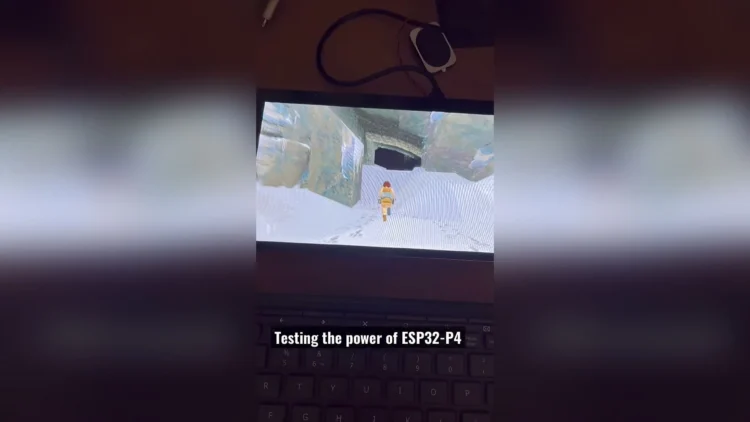
Finding a proper emulator to help play retro games from years gone by is a dime a dozen these days. However, choosing the platform to play said games is a more interesting story. Some play them on their PCs, while others use their smartphones. In the case of one particularly determined retro gaming enthusiast, however, Lara Croft has found her way onto an ESP32-P4 microcontroller.
The modder, who goes by TheAlexKid777 on YouTube, managed to get OpenLara, an open-source reimplementation of the classic Tomb Raider engine, running on an ESP32-P4 microcontroller. Despite the humble hardware, the setup reportedly consumes around 1W at peak and delivers a playable experience on a 1,024 x 600 display.
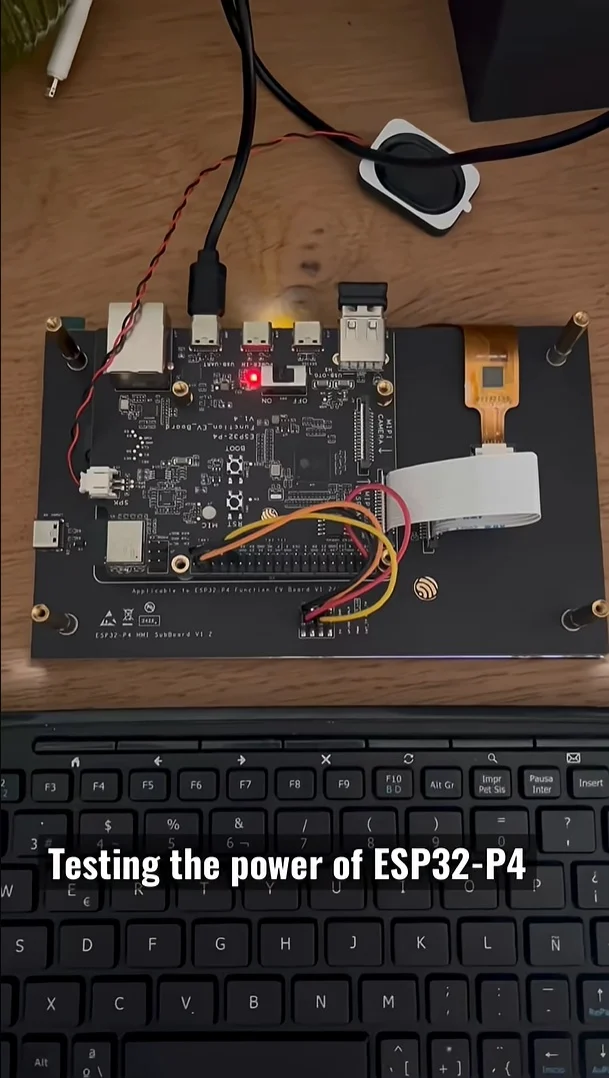
Now, the computing power needed to run a classic title from 1996 is quite modest by 2026 standards. What makes this project interesting, however, is how much modern microcontrollers have improved over the years. Chips such as the ESP32-P4 now offer considerably more processing power and hardware acceleration than what you would typically expect from this class of hardware.
For the ESP32-P4 specifically, Espressif says it features a dual-core 32-bit RISC-V CPU with AI instruction extensions, an advanced memory subsystem, and integrated high-speed peripherals. It also supports up to 64MB of PSRAM and includes 768KB of SRAM, an FPU, DSP, ISP, 55 programmable GPIOs, and more.
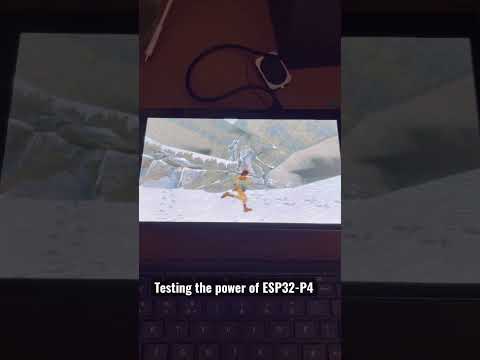
In his demo, TheAlexKid777 attached the hardware to what appears to be a 7- or 8-inch LCD, complete with exposed wiring. OpenLara renders the game at 320 x 240 pixels, after which the ESP32-P4’s Pixel Processing Accelerator (PPA) scales the image up to 1,024 x 600 for the display.
Despite the makeshift appearance of the setup, the demo also supports stereo audio through the development board’s ES8311 codec. The game can be controlled using a connected USB keyboard, making the ESP32-P4 setup a surprisingly capable way to run a classic 3D game.
(Source: YouTube, via Tom’s Hardware)
