
• Hype
  • Murai
  • Lipstiq
  • Varnam
  • Hangat
  • Autofreaks
Lowyat.NET
  • News
    • Lifestyle
    • Computing
    • Hardware
    • Internet
    • Rumours & Leaks
    • Software
  • Forums
    • Kopitiam
    • Tradezone
    • Property Talk
    • Finance & Business
    • Fast and Furious
  • Gaming
    • PC Gaming
    • Console
    • Mobile Gaming
    • Esports
  • Mobile
    • Apps
    • OS
    • Tablets
    • Phones
    • Telco
      • Celcom
      • DiGi
      • Maxis
      • Tune Talk
      • U Mobile
      • Buzzme
  • Pricelists
    • Compu-zoneUpdated
    • ViewnetUpdated
    • Sri ComputersUpdated
    • StartecUpdated
  • More
    • Artificial Intelligence
    • Automotive Tech
    • Drone
    • Enterprise
    • Entertainment
    • Fashion
    • E-Hailing
    • Wearables
    • Contact Us
No Result
View All Result
Lowyat.NET
  • News
    • Lifestyle
    • Computing
    • Hardware
    • Internet
    • Rumours & Leaks
    • Software
  • Forums
    • Kopitiam
    • Tradezone
    • Property Talk
    • Finance & Business
    • Fast and Furious
  • Gaming
    • PC Gaming
    • Console
    • Mobile Gaming
    • Esports
  • Mobile
    • Apps
    • OS
    • Tablets
    • Phones
    • Telco
      • Celcom
      • DiGi
      • Maxis
      • Tune Talk
      • U Mobile
      • Buzzme
  • Pricelists
    • Compu-zoneUpdated
    • ViewnetUpdated
    • Sri ComputersUpdated
    • StartecUpdated
  • More
    • Artificial Intelligence
    • Automotive Tech
    • Drone
    • Enterprise
    • Entertainment
    • Fashion
    • E-Hailing
    • Wearables
    • Contact Us
No Result
View All Result
Lowyat.NET
No Result
View All Result

AI Models Made Real Life Viruses That Spread By Infecting Bacteria

Resident Evil 10?

by Ian Chee
August 7, 2026
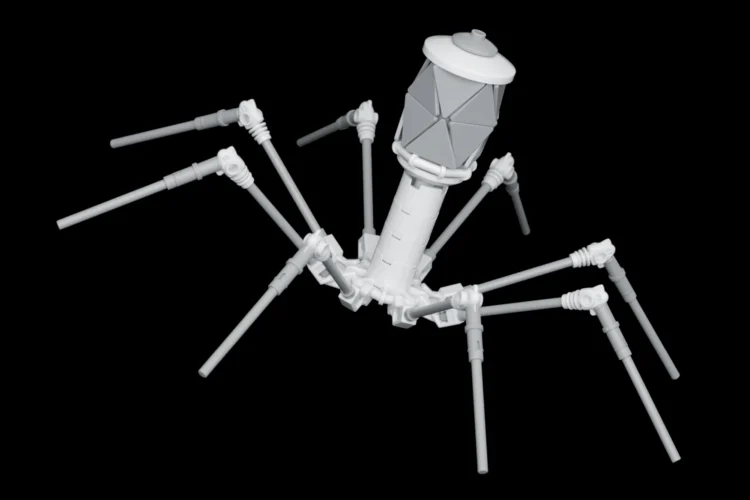
LEGO model of bacteriophage virus

Image: pasukaru76 / Flickr

108
SHARES
Share on WhatsappShare on TelegramThreads

In less than a month, we’ve seen reports of AI models by different companies going too far, breaking containment, and doing things the layperson would associate with a computer virus. Now, there’s a report of another generative AI model making another virus, but this one is making real-life ones, not virtual ones. And since it’s an AI model making a real-life virus, this one’s obviously happening in a lab, if any conspiracy enthusiasts were wondering.

In a study published in Science, researchers at Palo Alto’s Arc Institute and Stanford University created bacteriophages – viruses that infect bacteria and multiply that way – with the genome model language Evo 1 and Evo 2. Imagine large language models (LLMs) like ChatGPT, but trained on genetic sequences instead of books or websites. This way, the models are trained to understand the “grammar” of genetic code.

Artificial Intelligence AI stock
Image: mikemacmarketing / Flickr

The Evo models were first used to generate blueprints for new genes by encoding proteins that could do specific things. This was then pushed to generate an entire genome, and the scientists started with the smallest ones – viruses. What followed was another round of training, this time on the 11 genes of the single-stranded DNA virus known as phi X 174 (or ΦX174) and around 15,000 of its closest relatives. This one only infects E.coli, and the model generated 700,000 potential synthetic versions of it. Of these, 285 were chosen as the most likely to be successful, and introduced to the bacteria.

Even among the smaller number, most of the synthetic viruses failed to infect and multiply. But one had not only successfully infected the bacteria but multiplied before bursting out of them. The researchers then tested more genomes, with a total of 16 new viruses being created. Some of them even multiplied faster than the natural virus they were based on.

Biotherapy vs. Biohazard

model of bacteriophage virus
Image: Aida Zuriñe / Wikimedia Commons

On one hand, the scientists were very careful with the virus they chose to synthesise. They made sure not to provide the model with data about viruses that could infect humans, and they even avoided those that infected other animals, plants, and fungi. Depending on where the team goes next in terms of the direction for their next study, this could benefit fields like gene therapy, or serve as a tool to keep harmful bacteria in control.

But on the flip side, considering the proliferation of generative AI models, it’s obviously not ideal if less ethical scientists replicate this experiment with viruses that infect more complex lifeforms. We’ve only had one global viral scare just over half a decade ago, and the world could really use less of that in the next century, never mind the near future.

(Source: Science via NY Times)

Filed Under AI-generatedvirus
Updated 7:54 pm, Fri, 7 August 26
SendShareShareShare43Tweet27

Follow us on Instagram, Facebook, Twitter or Telegram for more updates and breaking news. 

No Result
View All Result

TRENDING THIS WEEK

  1. 1
    Tablets

    Apple Code Leak Reveals iPad 12, iPad mini 8 Details

  2. 2
    Gaming

    Konami Releases Original Castlevania Game For Free On Android, iOS

  3. 3
    Mouse / Mouse Pad

    Lenovo Unveils A Transparent Mouse With 90-Day Battery Life (Updated)

  4. 4
    Telco

    BeONE Mobile Officially Launches As Maxis-Powered MVNO

  5. 5
    Tablets

    iQOO Launches Pad Ultra In China; Features Custom Q4 Chip

NETWORK

  • Hype
  • Murai
  • Lipstiq
  • Varnam
  • Hangat
  • Autofreaks

ABOUT

  • Advertise
  • Careers
  • Privacy Statement
  • Editorial Policy
  • Terms of Use
  • Contact Us

©2026 VIJANDREN RAMADASS. ALL RIGHTS RESERVED.

No Result
View All Result
  • News
  • Forums
  • Laptops
  • Telco
  • Mobile
  • Gaming
  • Artificial Intelligence
  • Fintech
  • Cryptocurrency
  • Cyber Security
  • Hybrid Vehicles
  • Advertise with Us

©2026 VIJANDREN RAMADASS. ALL RIGHTS RESERVED.

No Result
View All Result
  • News
  • Forums
  • Laptops
  • Telco
  • Mobile
  • Gaming
  • Artificial Intelligence
  • Fintech
  • Cryptocurrency
  • Cyber Security
  • Hybrid Vehicles
  • Advertise with Us

©2026 VIJANDREN RAMADASS. ALL RIGHTS RESERVED.