

The Inland Revenue Board of Malaysia (LHDN) has expanded its e-Assessment Appeal (e-Rayuan Taksiran) facility on the MyTax portal. Previously available for Additional Assessments, the online platform now also supports appeals against Estimated Assessments, Deemed Assessments and Reduced Assessments.
For context, the e-Assessment Appeal facility was first introduced on the MyTax portal in June 2026, allowing taxpayers to submit appeals and applications for extensions of time online instead of relying entirely on physical forms and in-person submissions. According to LHDN, the latest enhancement gives taxpayers a more convenient way to challenge eligible tax decisions through a digital platform.

Types Of Assessments That Can Be Appealed
Speaking on Bernama Radio’s Klinik Cukai programme, LHDN Dispute Resolution Department Policy and Monitoring Division director Zanariah Ahmad stressed that understanding the meaning of an assessment appeal is important to ensure taxpayers are aware of their rights and the available channels before taking action against an assessment. She explained that an Estimated Assessment (also known as a best judgement assessment) is typically issued when a taxpayer fails to submit their Income Tax Return Form or files it after the prescribed deadline.
Deemed Assessments, meanwhile, are generally not appealable. However, taxpayers may still file an appeal if they disagree with the tax treatment applied based on Public Rulings or the prevailing interpretation, rulings or practices of the Director-General of Inland Revenue (DGIR) at the time the assessment was issued.
Likewise, Reduced Assessments are generally not subject to appeal as they do not fall within the definition of an assessment under the Income Tax Act 1967. That said, appeals are still permitted if they involve new issues that were not raised previously.

Notification of Non-Taxability
Besides assessment notices, Zanariah said taxpayers may also challenge a Notification of Non-Taxability (NPTKC) issued following an audit or investigation, even though it is not technically an assessment notice. Appeals are also allowed for withholding tax, provided the tax has first been paid to the Director-General of Inland Revenue.
Taxpayers who dispute the amount of a tax refund can likewise submit an appeal, which must be filed within 30 days of receiving the refund notice under Section 111(1) of the Income Tax Act 1967. In addition, individuals appointed as tax agents under Section 68(1) of the same Act may appeal against their appointment within 30 days if they disagree with the decision.
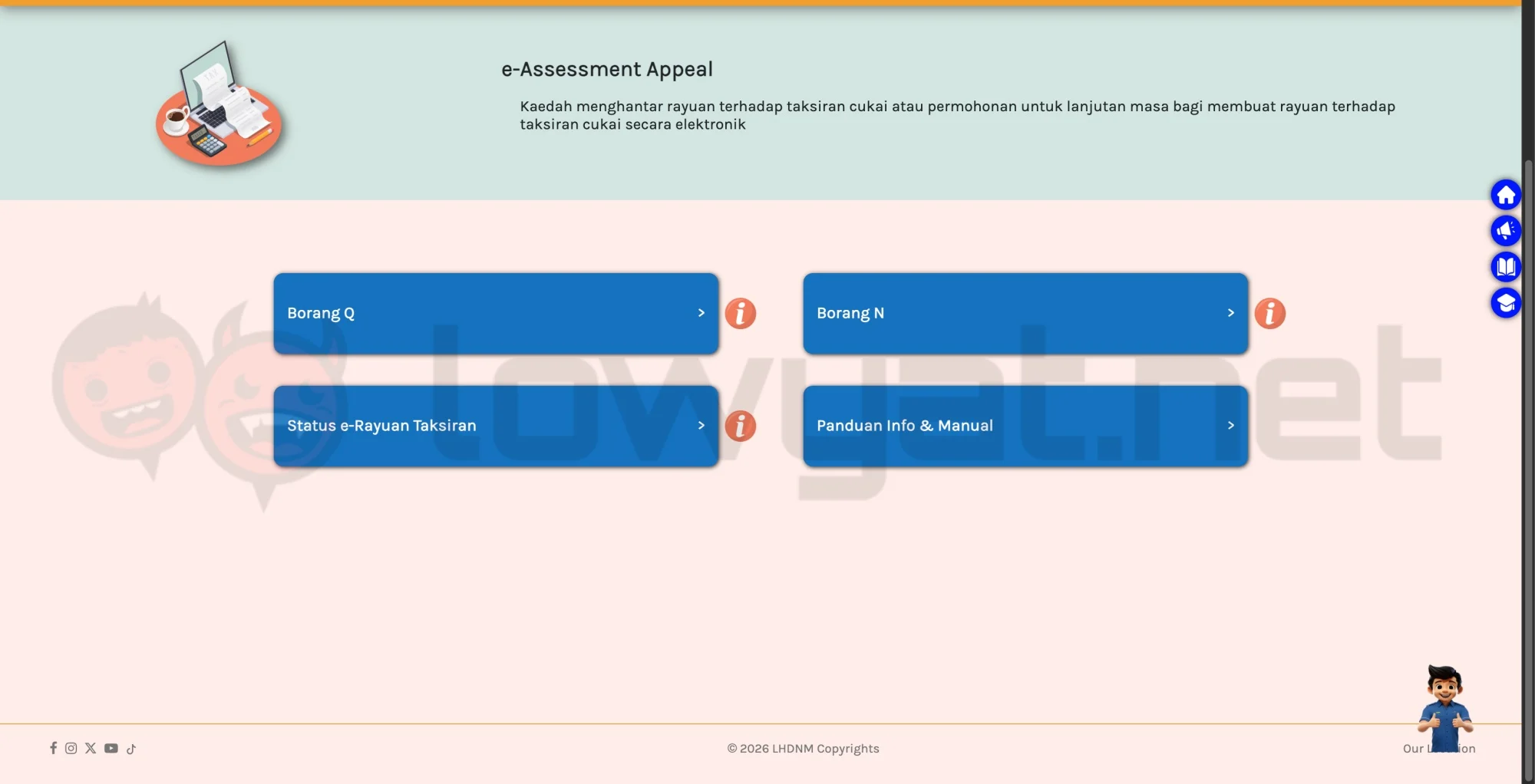
Manual Submission Still Available
Although the e-Assessment Appeal facility is now available, Zanariah noted that its implementation is still ongoing. As such, the existing manual submission process using Form Q and Form N remains available.
Taxpayers may choose either the online or manual submission method, but not both. Those filing manually must use Form Q to lodge a tax assessment appeal within 30 days of receiving the assessment, while Form N is used to apply for an extension of time if the appeal deadline has already passed under Subsection 100(1) of the Income Tax Act 1967.
To help ensure appeals are processed smoothly, LHDN advises taxpayers to submit their appeals within the stipulated timeframe, use the correct form, clearly state the grounds for appeal and attach all supporting documents. For online submissions, taxpayers should also complete their application in a single session.
(Source: The Edge Malaysia)
