
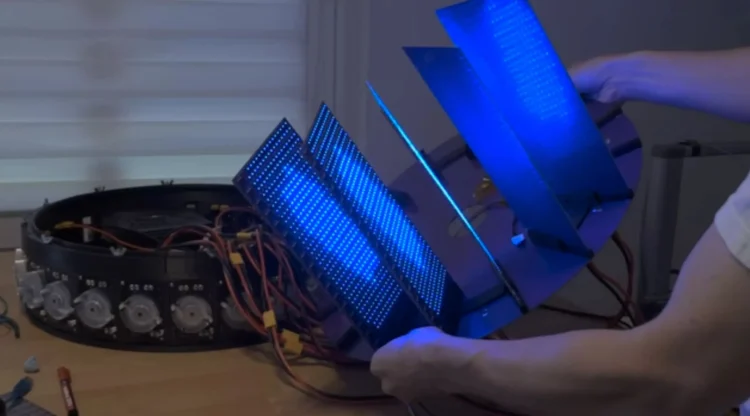
Matthias Balwierz, otherwise known as Bitluni, isn’t a household name. However, they may have cast themselves into the limelight, intentionally or otherwise, when they posted a video on YouTube of their plan to build a GPU using nothing but thousands of RISC-V chips.
Okay, to be clear and absolutely precise, Bitluni is in the throes of building a GPU, and it will require around 64,000 RISC-V chips, which, to put it simply, is a lot of chips. Additionally, each chip would double as a pixel that, when combined, would form a massive display. Mind you, this number is part of a scaled-down compromise of 320 x 200 resolution, as forming a Full HD-capable display would require, by their calculations, no less than two million RISC-V chips.
The “GPU”, as it were, in Bitluni’s video isn’t the full monty, just in case you were wondering. Rather, it’s a smaller prototype, built using 8,192 chips, arranged all around a custom circuit board. Specs-wise, each board handles a 16 x 32 block of pixels, arranged in a circular layout that Bitluni says was loosely inspired by the Cray-1 supercomputer.
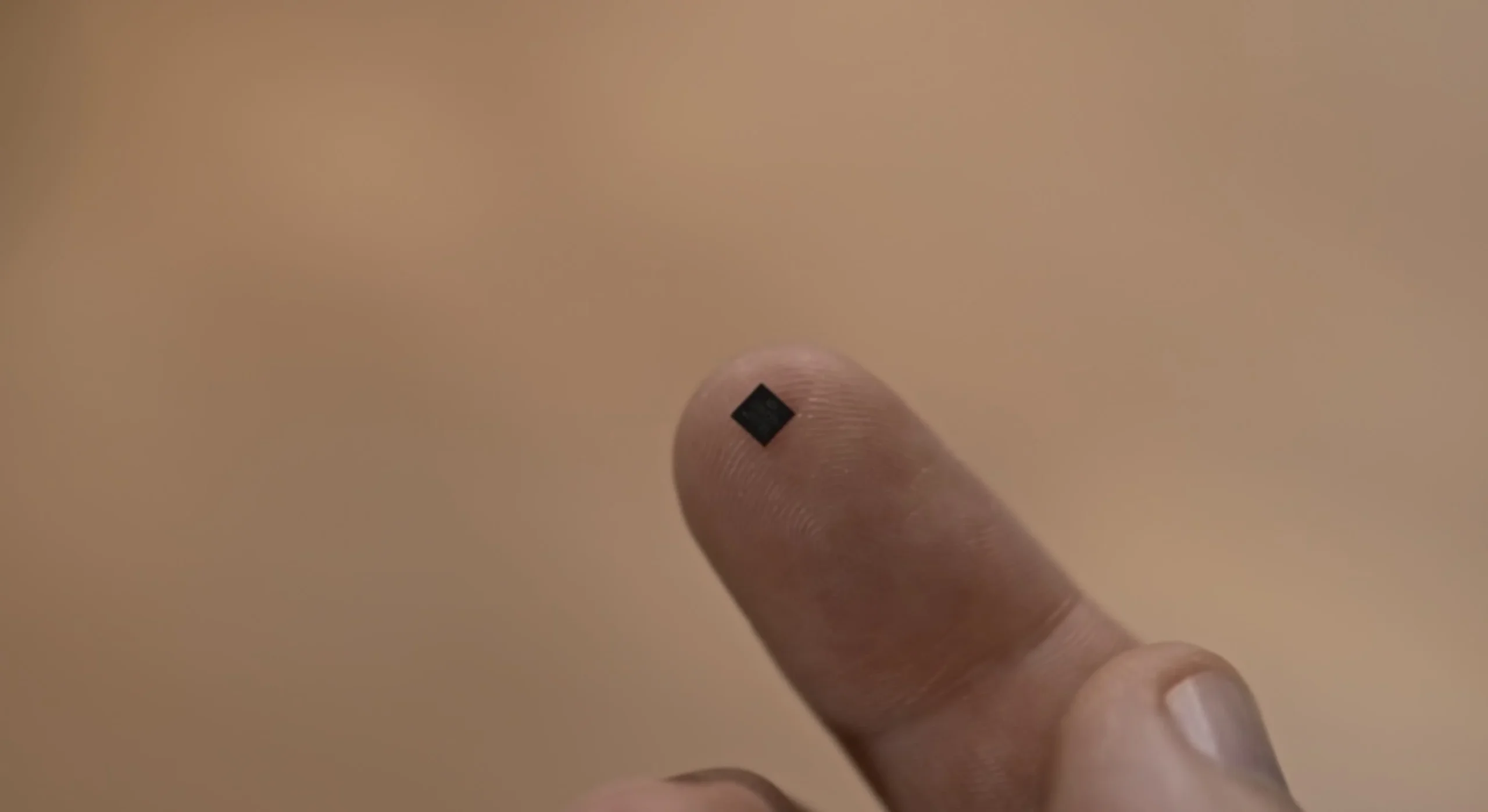
The RISC-V chips Bitluni acquired, by the by, are QingKe CH570 microcontrollers. These chips cost around US$0.13 (~RM0.50) each, with each one packing a 32-bit RISC-V CPU running at 100MHz, and come with a USB controller, 2.4GHz transceiver, and support for Bluetooth 5.0 LE. For his prototype, that’s a total of US$1,064 (~RM4,339). For him to make the 64,000-chip monstrosity a reality, that would cost him US$8,320 (~RM33,933) alone.
And to say nothing of the power consumption of the RISC-V controller. They only draw 10 milliamps a piece, but tally it all up, and Bitluni says that his prototype currently draws 2,161W, roughly 655 amps or 3.3V. To deal with that, they are using a Corsair WS3000 ATX PSU, along with custom converters that step 12V down to 3.3V at high current.
Ultimately, what Bitluni is trying to show off here is a proof-of-concept; it’s an alternative approach to purchasing a commercially available GPU, as well as a showcase of how far one can push low-cost hardware, provided they have the technical know-how for it. Whether or not it can run games, though, that’s a different story altogether.
