
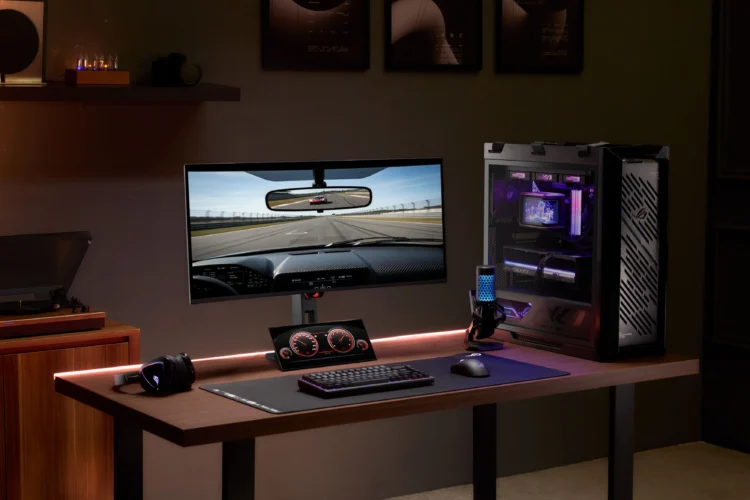
ASUS recently announced two new ROG Strix gaming displays. Technically speaking, though, it’s one display for the desktop and one panel that’s for the desk. Those models are the ROG Strix OLED XG34WCDMS and the XG129C.
ROG Strix OLED XG34WCDMS
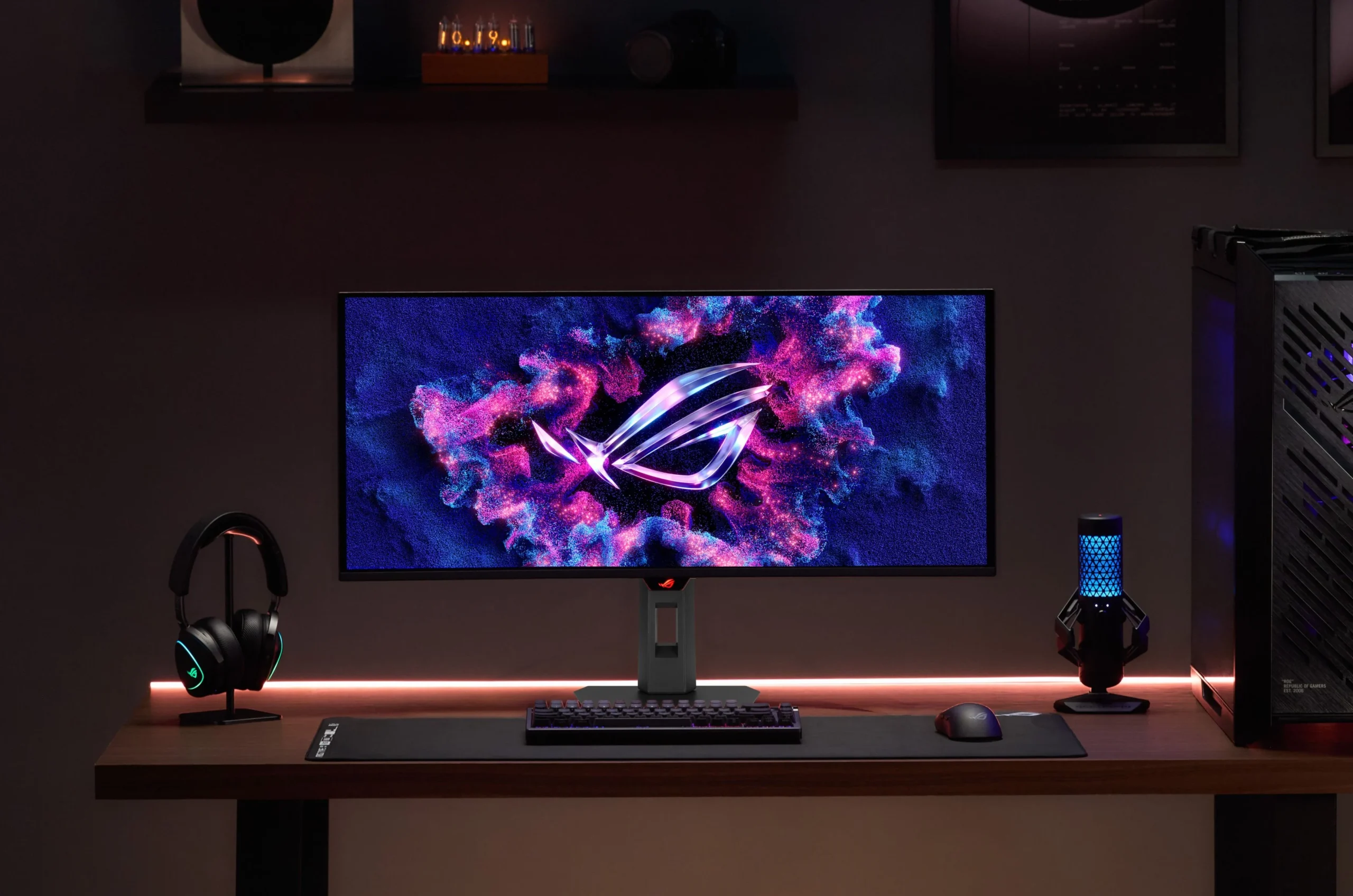
Starting with the ROG Strix OLED XG34WCDMS, and per its namesake, the new peripheral is an ultrawide gaming display. It sports a 34-inch panel with WQHD (3,440 x 1,440) resolution, a curvature level of 1800R, but more importantly, it uses an RGB Tandem QD-OLED panel, which isn’t all that common in curved displays.
But that’s not all the XG34WCDMS offers: it has a 280Hz refresh rate and 0.03ms GTG response time. Further, it has an integrated BlackShield Film that increases the panel’s hardness for what ASUS says is 2.5x better scratch resistance, while boosting the perceived black levels by up to 40%, compared to its previous generation QD-OLED monitors.
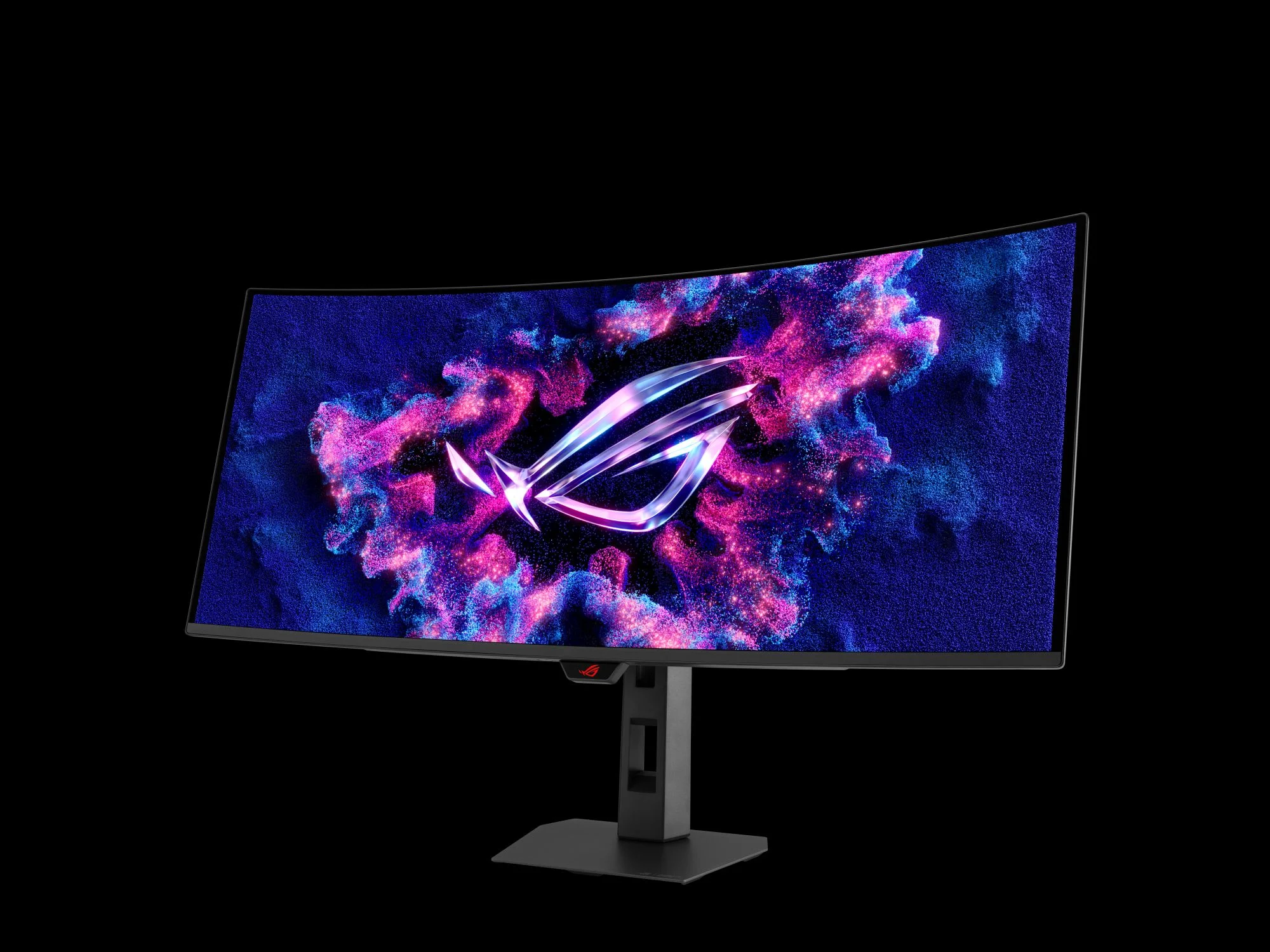
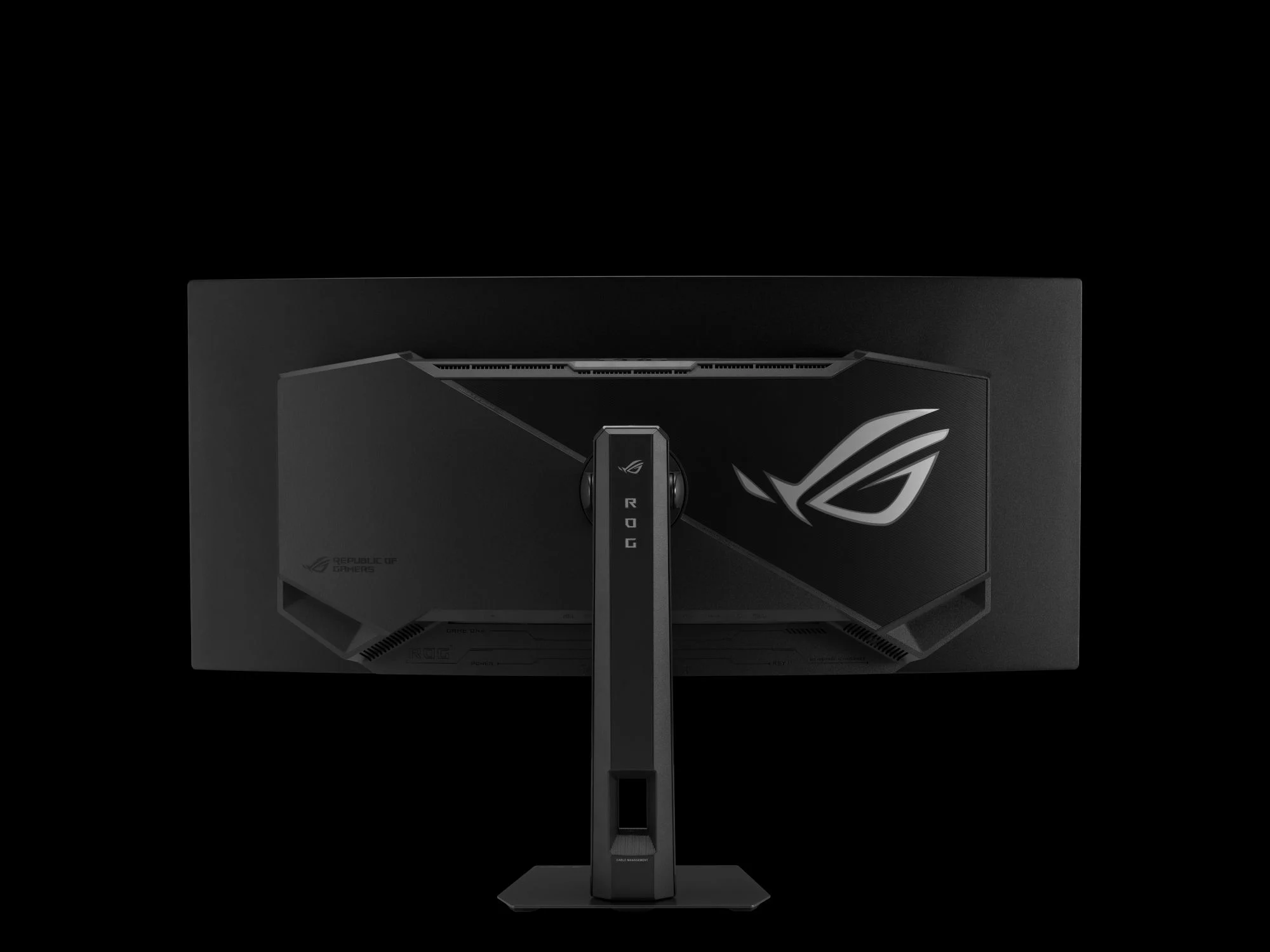
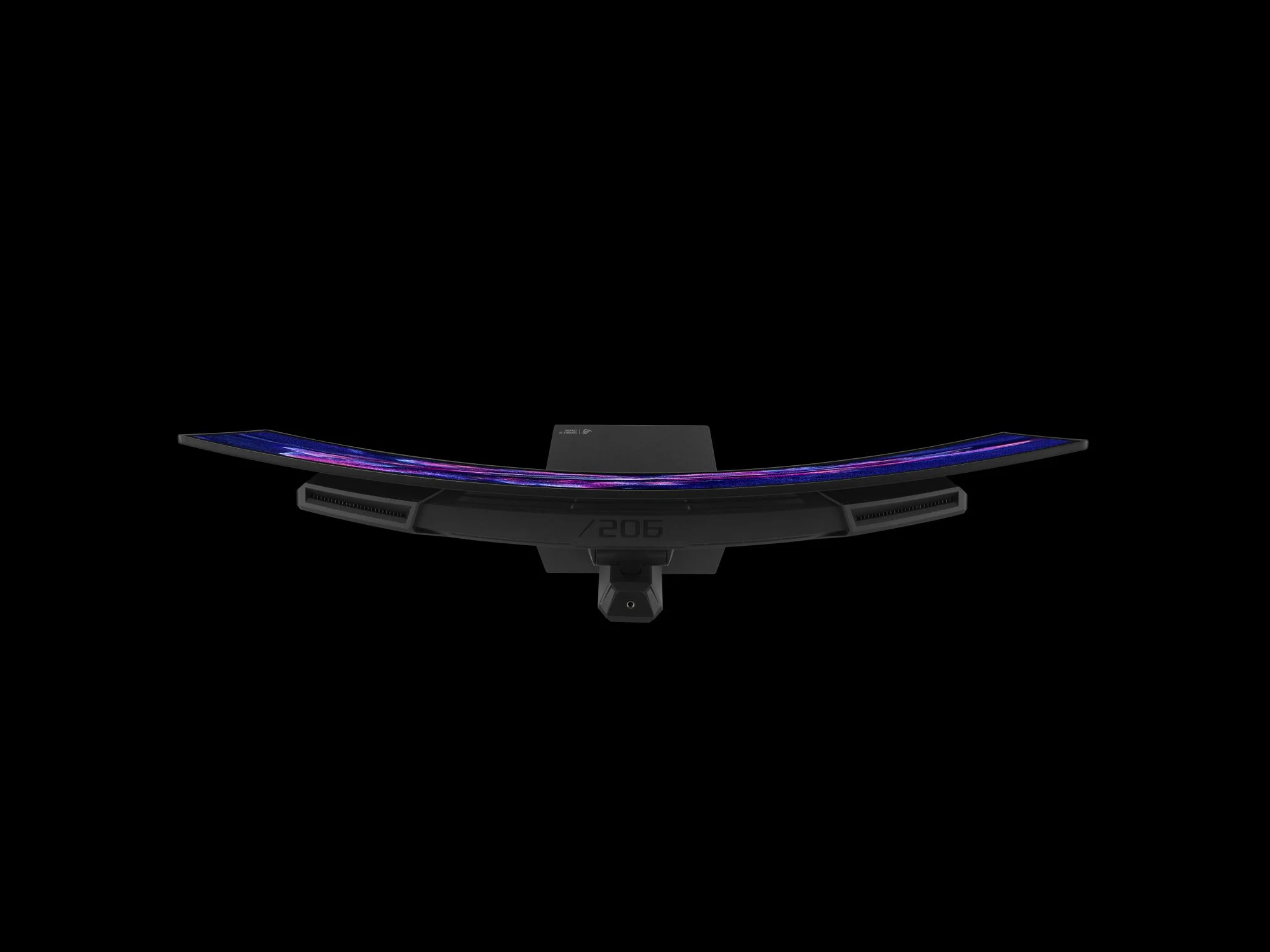
Additionally, the XG34WCDMS has a VESA DisplayHDR 500 True Black rating, along with a 99% DCI-P3 colour gamut, true 10-bit colour depth, and a Delta EX2 colour difference. Ports-wise, the monitor features DisplayPort 1.4 with DSC, two HDMI 2.1, two USB-A 3.2 Gen1, one US-C with 14W PD charging, and a built-in earphone jack.
ROG Strix XG129C
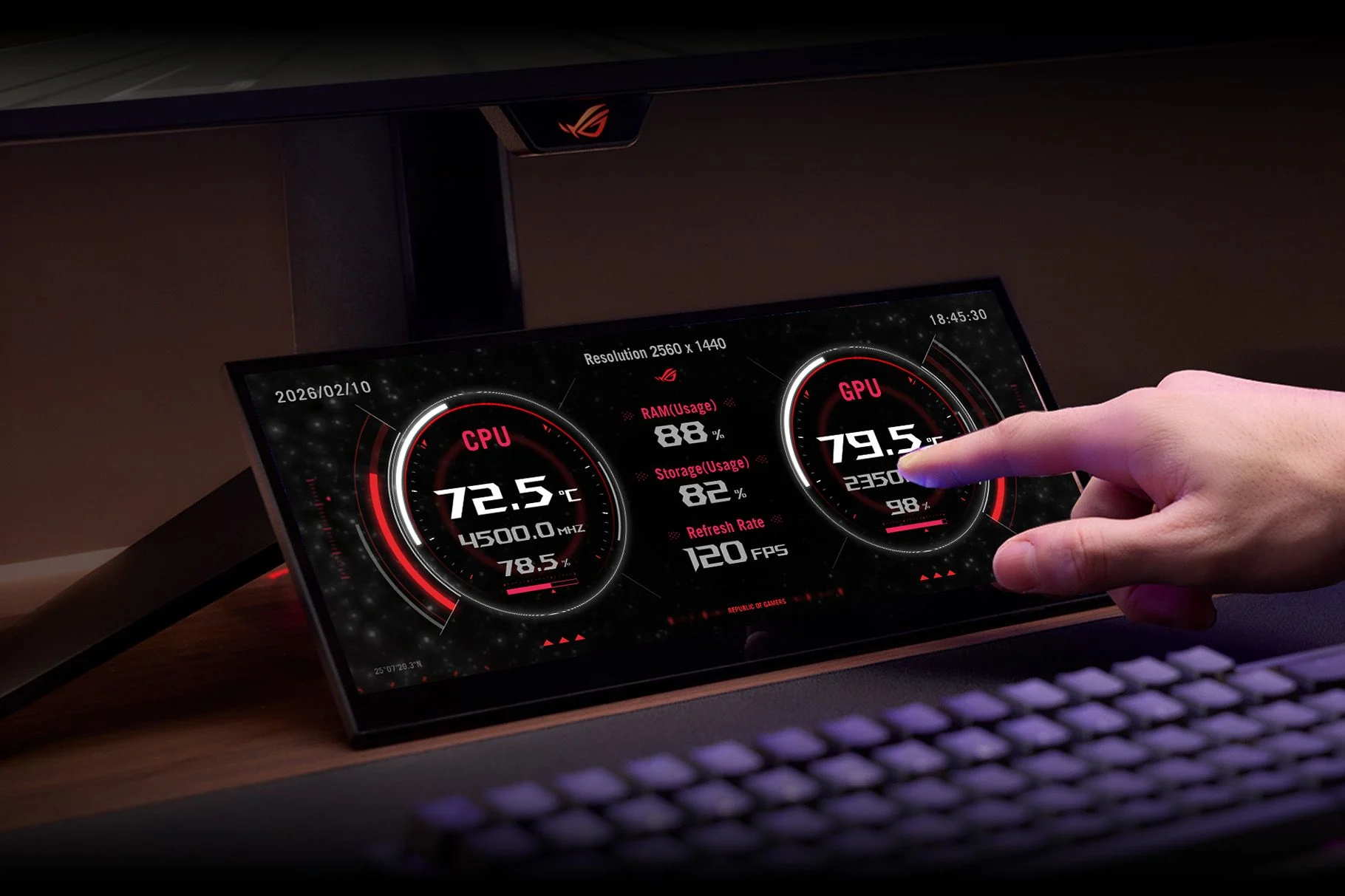
More a companion tool than a conventional display, the ROG Strix XG129C is a touch-enabled secondary display, measuring 12.3-inches. It uses an IPS panel and has a 24:9 aspect ratio, along with a 1,920 x 720 resolution. ASUS says this aspect ratio is so that the black bars along the top and bottom of the panel are minimised.
Again, it’s a touchscreen, and supports 10-point touch controls. To that end, it also supports multi-finger input, primarily for quick OSD interaction, hotkey execution, and app management. To put it in another way, it’s basically a streamer’s tool.
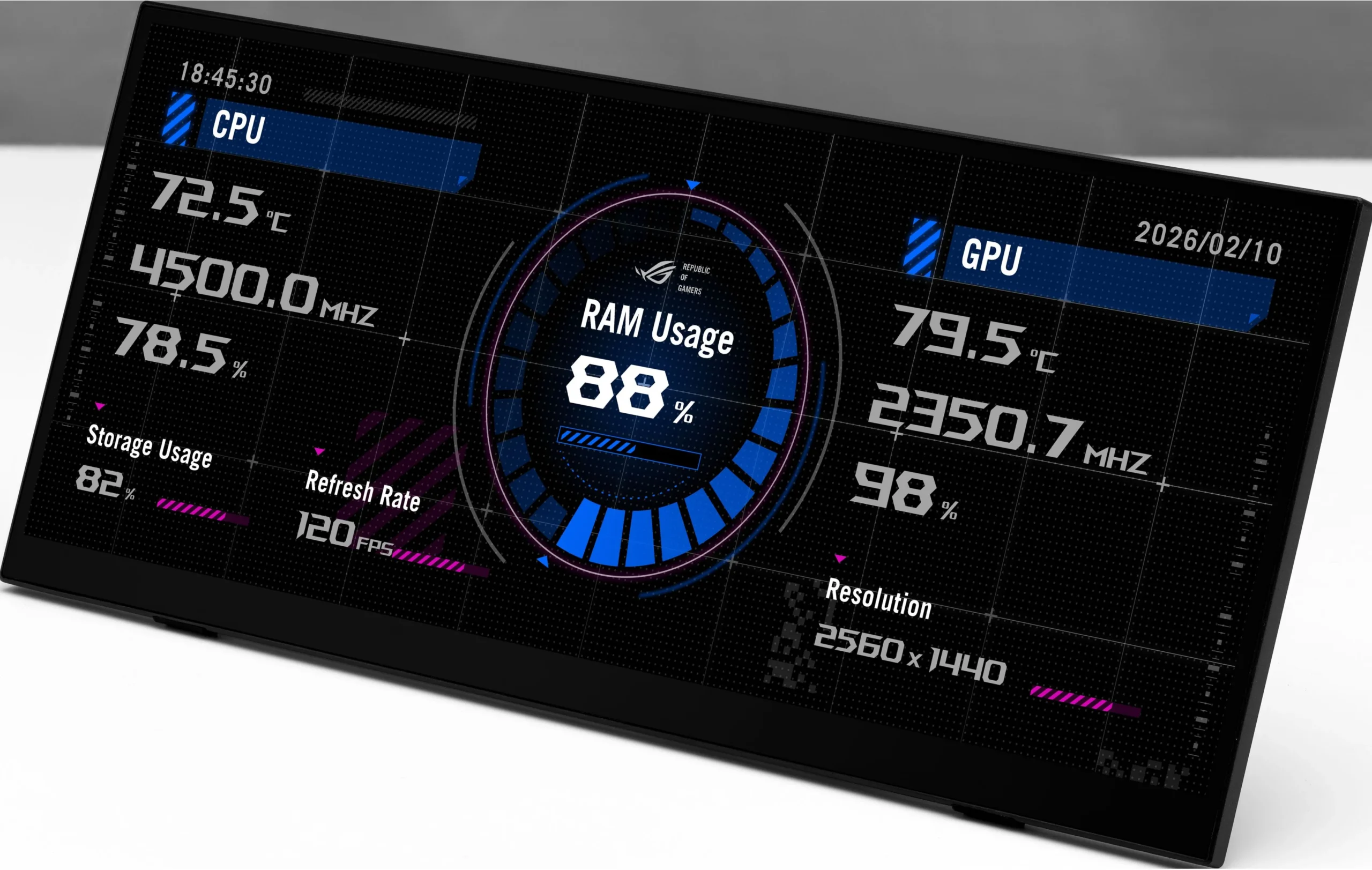
Connectivity-wise, the ROG Strix XG129C connects to the PC via HDMI 1.2, but it also comes equipped with two USB-C ports, both capable of DisplayPort (DP) Alt Mode, but only one supports 20W PD, while the other supports DC in. Oh, and there’s an adjustable kickstand built into its chassis.
At the time of writing, ASUS Malaysia did not provide local pricing or availability for both displays.
(Source: ASUS PR)
