

With the launch of the MacBook Neo, Apple has potentially started a new naming convention for its entry-level devices. But being entry level doesn’t have to mean loads of downsides to make up for its affordability. In fact, it could also mean that, if something goes wrong, it would be easier to fix. Well, according to the specialists of such things, iFixit, anyway.
Before we go further, it’s probably important to set some expectations. Being the most repairable among Apple laptops isn’t particularly a high bar, considering the 6/10 score of the MacBook Neo. That being said, there are some noteworthy differences, one of which being that the battery is screwed on rather than glued.
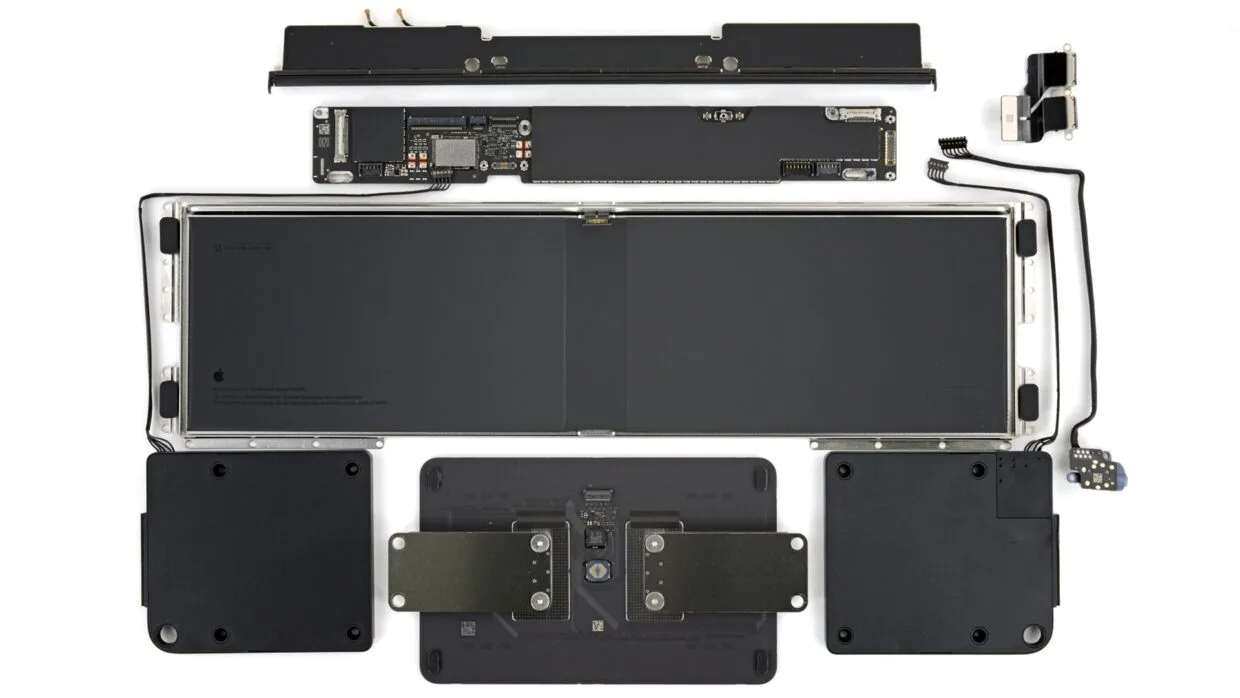
Beyond that, the MacBook Neo is noted to have a flat disassembly tree, meaning parts don’t overlap each other too much. This in turn means the battery, speakers, ports and trackpad are all accessible after opening the back case. Said ports, including the 3.5mm audio jack, are also modular, requiring no “logic board work”. Similarly, the keyboard is screwed on rather than riveted, but the 41 screws plus tape still makes it a massive chore.
More Screws, Less Rivets And Glue
On the other side, Apple has simplified the antenna assembly, which helps the screen be removed without needing much fiddling. Of course, it’s not all sunshine and roses, as the RAM and storage are still soldered in. Not surprising for the former, as that’s the way the A18 Pro chipset works, even when it was stuffed into iPhones.

While we’re on that note, the MacBook Neo is noted to be able to run Windows apps “stably”. So claims Parallels, the brand behind the virtualisation software letting Macs run Windows. Though notably, “stably” is the key word here, as it would struggle with anything that’s resource-intensive. Which is understandable, considering the A18 Pro only has 8GB of RAM. And Windows 11 requires 4GB just to run.
(Source: iFixit, Parallels)
