

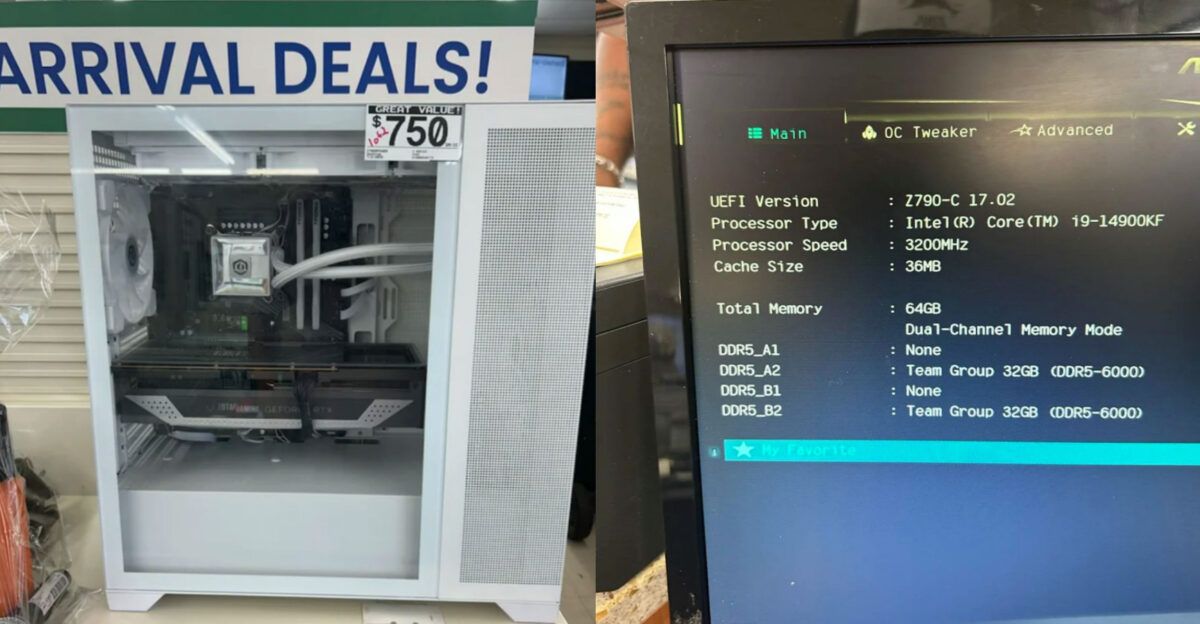
A lucky PC gamer in Portugal recently received a stroke of good luck when they managed to pick up a desktop PC, practically for a song, at US$600 (~RM2,455). The good luck part of this story? The whole system was worth at least RM10,000.
Redditor uneektnt posted on the /pcmasterrace subreddit that the RM10,000 system contained some relatively beastly hardware: an Intel Core i9-14900KF CPU and accompanying Z790 motherboard, an NVIDIA RTX 4070 Ti, and a heaping 64GB DDR5-6000 RAM kit of the T-Force Delta brand, comprising dual 32GB sticks. The shop was letting go of the entire system for US$750 (~RM3,069), but they say that they managed to haggle the price down to US$600.
Got this beast at the pawnshop today
byu/uneektnt inpcmasterrace
Hopefully, uneektnt took the time to update the BIOS on the motherboard and CPU; last year, both Intel’s 13th and 14th generation desktop CPUs suffered from a microcode issue that could cause irreversible damage to both CPU and motherboard. The blue chipmaker says it has resolved the issue with the aforementioned BIOS update.
For that matter, it is possible that the reason the shop was letting go of the system for so “cheap” was probably because the damage was already done, but that’s merely speculation on our part.
The Impact Of The Rising Cost Of Memory
The soaring memory and storage prices are currently serving as a deterrent against PC gamers, both for those looking to upgrade their system and those looking to build a new one from scratch. To put it in another way: uneetknt basically paid the cost of that 64GB kit for the entire system. That’s how much of a steal it is, and it is stirring up a little bit of jealousy with this writer.
A two-piece set of 64GB DDR5-6000 RAM goes for RM2,499, tops, with the cheapest currently being RM2,199 on average. Again, that’s just for RAM. At those prices, the component is almost as costly as an RTX 5070 or, as it has so often been compared to, a Sony PlayStation 5 console.
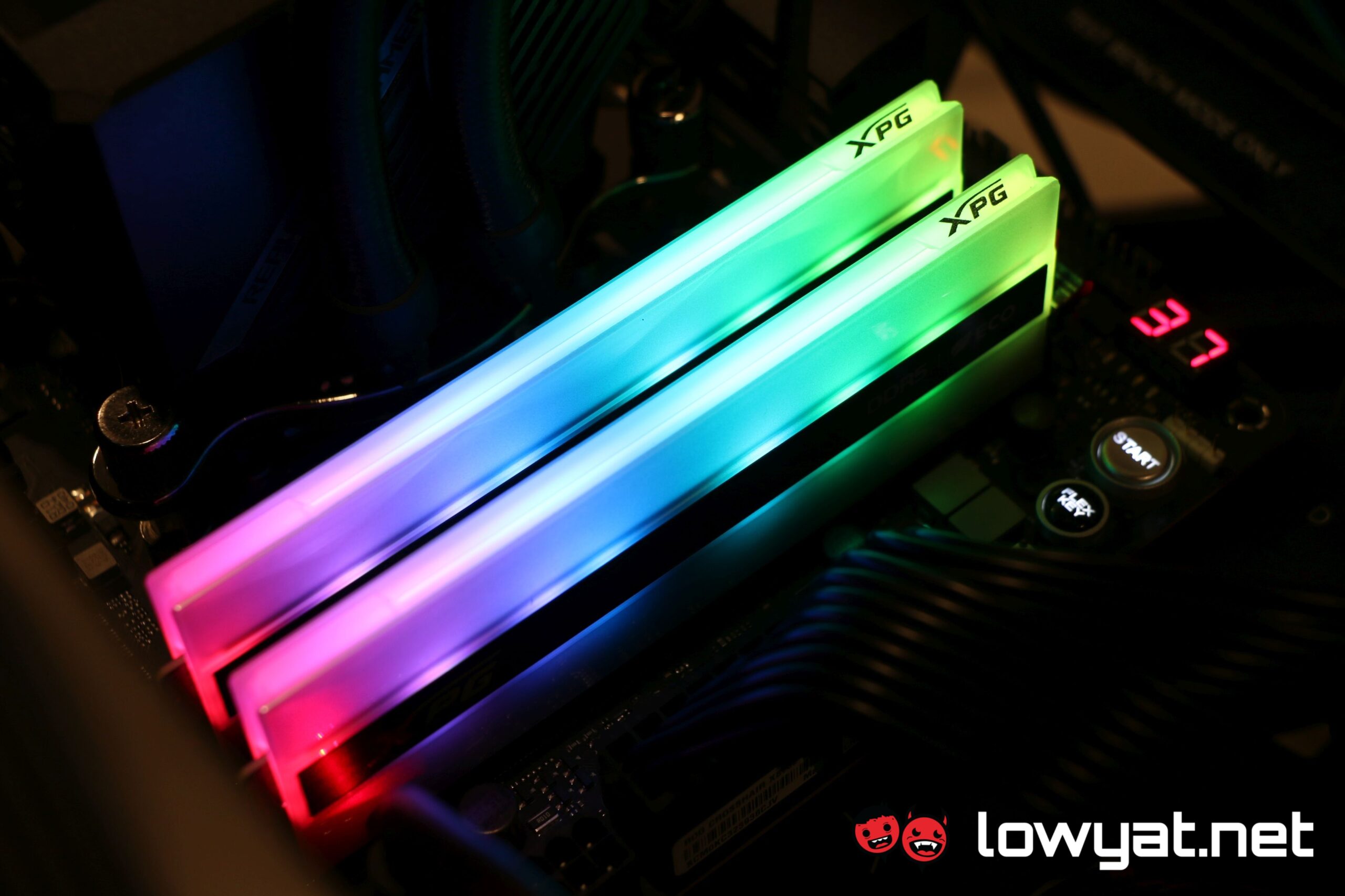
The reason prices are skyrocketing is, unsurprisingly, due to the inflated demand from AI servers. This affects the consumers greatly, because memory manufacturers would simply choose to sell their products to datacentres and companies that require copious amounts of memory in order to build more powerful and complex machines to train their AI systems on LLMs.
(Source: Tom’s Hardware, Reddit)
