

Thanks to the very controversial announcement that PlayStation made to kick off July, we’ve had a lot of data making it to the surface. As you’d expect, these are used to make sense of, or even justify, the decision to kill physical discs for videogames from 2028 onwards. And because the data indicates as such, gamers should accept the fact of the matter, as it were, even if it is a really bitter pill to swallow. On one hand, that’s the logical thing to do, but on the other, it’s pretty clear that gamers aren’t exactly the kind of people to just bend over and take it.
Either way though, one has to wonder – is the trend that we’re seeing today truly something of our doing, or have we been shepherded into this direction unbeknownst to us? Have we truly rejected physical videogames as the data suggests in favour of the convenience of digital media, or is this a self-fulfilling prophecy by the companies producing said media? Did we really choose digital media with all other considerations being completely equal, or are there a lot of other considerations beyond sheer convenience? Like, say, price?

If we go strictly by the numbers, gamers overwhelmingly prefer digital games over physical ones, at least on PlayStation. That was the sticking point that Chet Faliszek, writer for Left 4 Dead and former Valve employee, pointed out in a YouTube video over the weekend. He even uses himself as an example – that he, too, prefers digital because of its convenience.
Sure, on the point of convenience, digital beats physical every single time. Unless you’re an insider, there’s no pre-loading with physical games, so you can’t start playing the exact moment they launch. Of course, if you are one, then you can even play games before they get officially released, but that’s beside the point. You don’t even have to leave home for it. But for the gamers who are principled enough in wanting to physically hold the things that they pay money for, these are not obstacles to going out to their local game store and picking up a copy. They even place pre-orders for said physical copies.
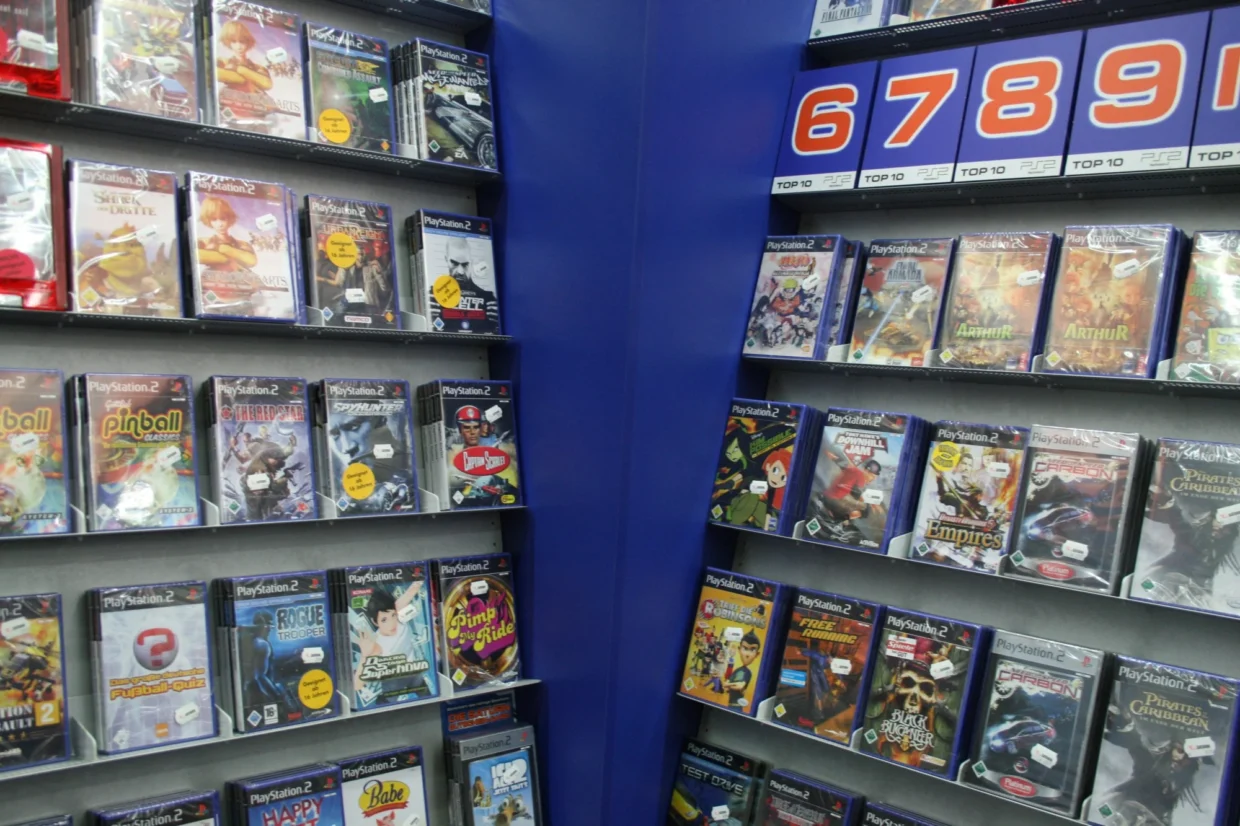
So, with all else being equal, those who value convenience will go digital, and those who want a physical collection will go physical. But clearly, the two are not equal, because beyond just convenience, some gamers can be convinced to go digital simply because it’s cheaper than buying a physical copy. Can you blame them? In this economy? Games are already expensive as it is, and there’s always the looming threat of them becoming even more so. And if you’ve been paying attention to when sales happen, chances are you’ll notice that digital discounts are more substantial.
With PlayStation specifically, it gets even worse if you’re a PS Plus subscriber. During discount seasons, you’ll see on occasion that, if you’re a subscriber, you get further discounts on top of the already stated discount for select titles. This obviously won’t fly at physical stores, never mind those that are not directly Sony-affiliated. And even these combined discounts still pale in comparison to Steam Sales, but I digress. Then there’s the sheer number of titles that are on discount digitally compared to their physical counterparts.

Of course, there’s the whole second-hand market and other resellers where you may get games for cheaper, but these are naturally not going to be counted to the official stats that PlayStation keeps track of. More on that in a bit. But as far as official retail sources go, you won’t be getting physical games for lower prices unless they are really old stock. And at that point, wait for the next sale and chances are you’ll find the digital equivalent being even more steeply discounted.
I’m not saying this is some grand conspiracy that Sony and PlayStation cooked up to beef up its digital game sales ratio to justify killing physical games. I’m not even saying the disparity in discounts between physical and digital was deliberate, and it may very well be an inadvertent effect of the physical supply chain just costing more. But with intent or otherwise, that’s immaterial; this is still one finger on the scale in favour of digital.
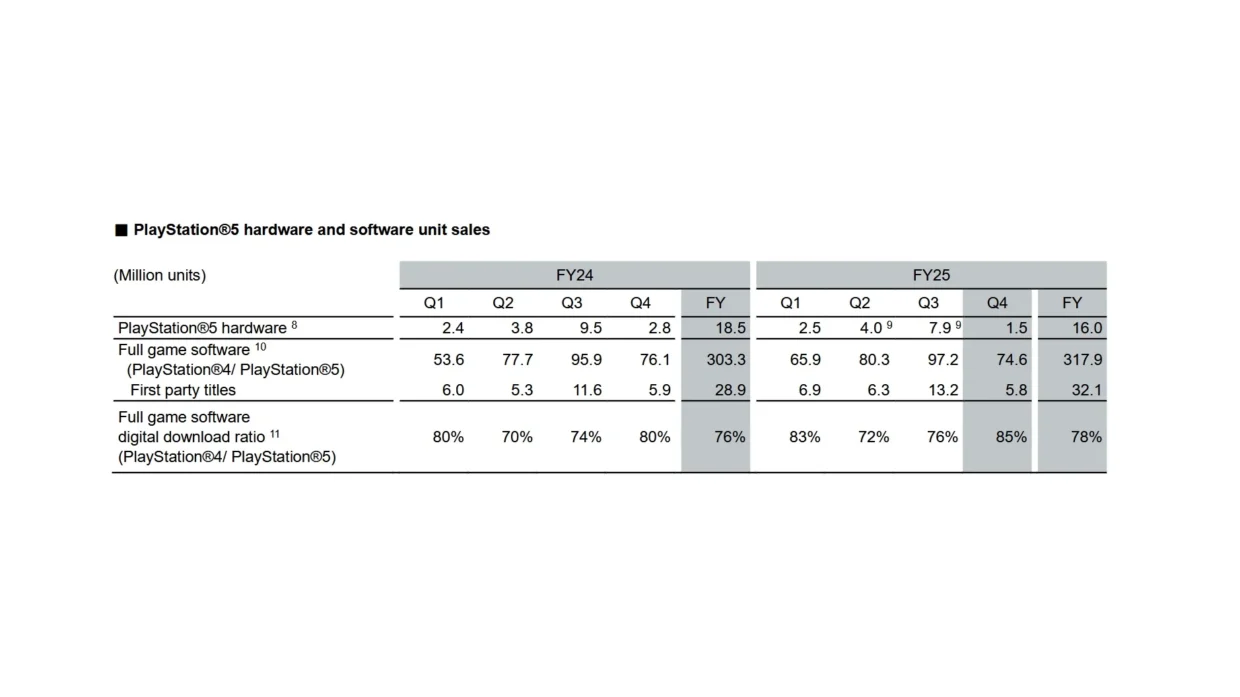
Then we get to the statistics themselves. 85% digital-to-physical ratio, and it’s all for “full game software” digital downloads at that. That’s unnaturally high, isn’t it? Or is it because this data also includes things like free-to-play games which don’t exist in the material plane? Does it also include games which just don’t have physical counterparts, either because it’s made by self-published indie devs that can’t afford the additional costs that it entails, or from larger publishers that can, but choose not to as a cost-cutting measure?
The specific numbers for these, PlayStation is very unlikely to publicly publish, so we will probably never know for certain if digital games with no physical counterparts are being included to count against physical game sales. On one hand, if the company has not counted these non-physical games in the ratio, there’s still the price argument to be made for the apparent dominance of digital games. But if those games were indeed included in said ratio, well, you know what they say about lies and statistics.

Ultimately, those will likely never see the light of day, and we’re stuck with taking the facts as they are at face value. And only slightly below the surface, one can see that the odds are so immensely stacked against physical games that the resulting data is a foregone conclusion.
Consequently, there are two ways to look at this situation. If you were inclined to be charitable, then it looks like the videogames industry has, intentionally or otherwise, been shepherding the gamer base down the digital route, leading to the obvious data point of digital being way more popular, then using that as a reason to kill game discs. On the flip side, you could consider this as gamers refusing to be passed the buck called supply chain logistics, and being punished for it.
And on that bombshell…
