

The Unreal Fest Chicago 2026 happened earlier this week, and as you’d expect, Epic Games took the opportunity to properly reveal the upcoming Unreal Engine 6. Despite the announcement, the engine itself is far from ready. In fact, early access to it will only be available at the end of next year. The full release will be even longer, coming between 12 and 18 months after that.
There’s also quite a bit going on with the new engine besides improving graphics for end users. For the end user, there’s probably more that’s good than bad in the mix, though depending on perspective, the same probably can’t be said for devs. But Epic Games has itself broken the changes down to a few key points. These are using the Verse programming language, which leads to enabling some degree of interoperability across games – particularly its own Fortnite – and, for better or worse, AI integration with a Model Context Protocol (MCP) built in.
Verse Programming
There’s no easy way to break down a programming language, but Verse was designed for the metaverse, according to an Epic Games tech talk during GDC 2023. The condensed version of this is that it was meant to allow for interoperability between game components by different creators, even across engines. This will be made possible when Epic Games opens up Unreal Engine’s systems and specifications with the Verse APIs. And as mentioned, Fortnite will be the testing ground for this, allowing for assets like costumes or outfits to work in the aforementioned game.

It’s the whole NFT pipe dream from earlier in the decade, but one can hope that it doesn’t get monetised to the grave as a result. But if nothing else, It would probably further cement Fortnite as the ultimate crossover game, where every other IP eventually makes an appearance there.
Another key advantage of using Verse, per Epic Games, is the way it handles glitches. Rather than crashing your game outright, the company claims that Verse allows for games to roll back to a state before the glitch, and tries again until it is successful. I think every gamer will understand the significance of this claim, assuming it’s truly as good as it is claimed.
AI Inclusion
The contentious part is, of course, this one. Epic Games says that it is integrating generative AI models like Claude to help devs “build faster” by cutting down time spent on “time-consuming manual tasks”. Though that list includes “manual setup of levels, character rigs, particle systems, skinning bone weights, as well as adjusting lighting, etc.”. Make of that what you will, I suppose.
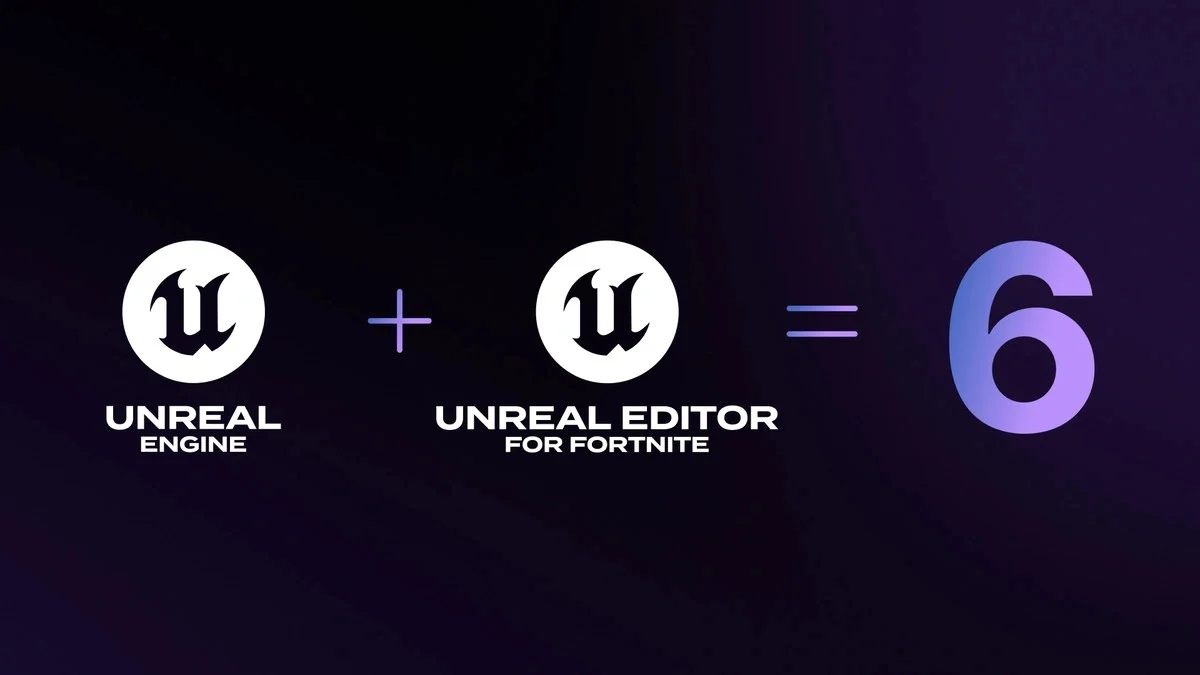
Epic Games sums the Unreal Engine 6 up as the result of combining Unreal Engine 5 and the Unreal Editor for Fortnite (UEFN) into one. Or, in other words, the combination of what is usually a standalone game and content development stream and the live environment that tests the new programming model. But either way, it’s still a long way away before we see all of these claims in action.
(Source: Epic Games)
