

Two things which on the surface have nothing to do with each other happened this week. One is Blizzard going on the offensive against another World of Warcraft private server. The other is the latest development in the Stop Killing Games (SKG) initiative in the EU. Of the two, the former is a tale as old as private servers, so we’ll quickly move past that one. Then there’s the latter that’s arguably the much more important conversation to be having. But ultimately, and I’m not the first to be bringing this up, the former may very much be the answer to solving the latter.
In case you missed it, the European Commission has shot down the possibility of legislation that would stop the killing of games. The reasoning for the rejection is the familiar old industry talking points about the way companies have rights and consumers don’t, with that oversimplified description only being a mild exaggeration. In turn, the SKG initiative is looking to have another upcoming law amended to include provisions to keep videogames alive after publishers have devices to pull the plug.
Tangentially, SKG is making inroads in the US state of California, in the form of the Assembly Bill 1921, the Protect Our Games Act, or POG Act, because of course. It has passed the State Assembly, and has been moved to the State Senate for committee hearings. There, the bill could still be shot down, but it’s probably better to not speculate on which will end up being the outcome.
So what do private servers have to do with SKG? Legality aside since they run concurrently with the official versions, the way they work is essentially the solution to the problem that SKG is looking to solve. It’s an existing test case, with multiple examples, at least on the MMO front. This could also apply to other online multiplayer games, though more changes may be necessary to change things from requiring a central server to using P2P connections instead.
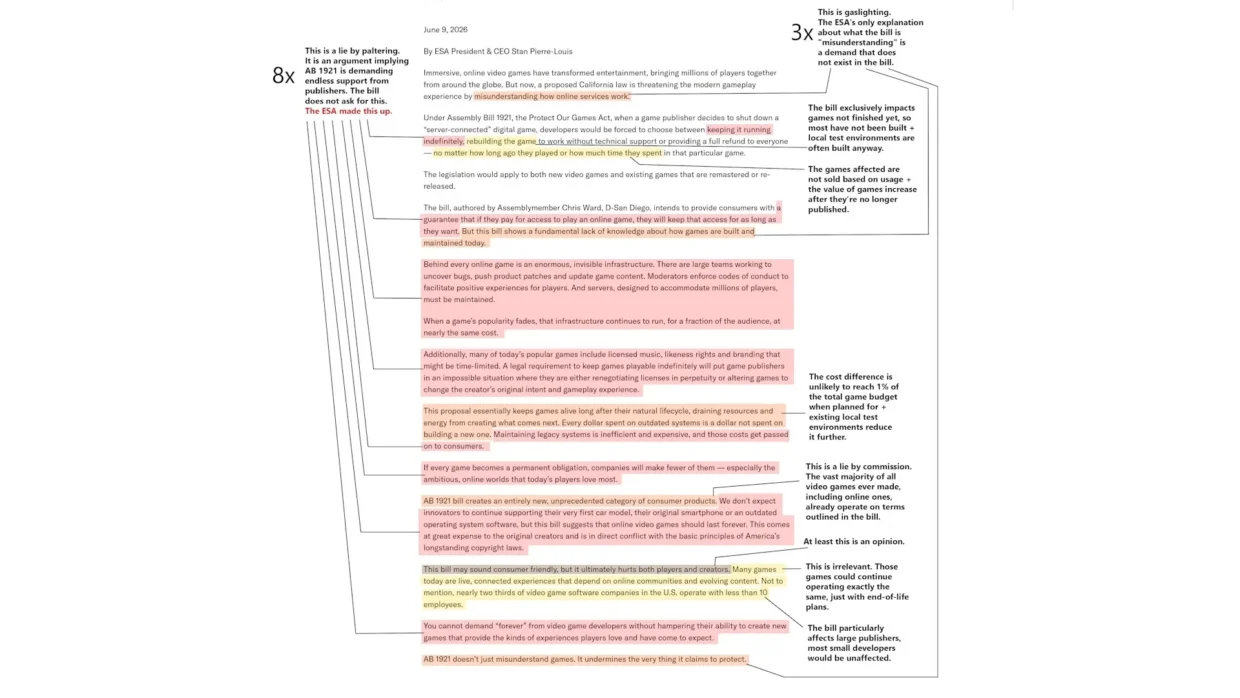
Ross Scott, the founder and face of the SKG initiative, has repeatedly debunked talking points that misrepresent what the initiative is fighting for. Time and again, one of the points being brought up ad nauseam, is that SKG-related laws would require publishers to keep games online indefinitely, despite private servers showing that it’s not necessary at all. All that’s needed is the skipping of the reverse-engineering step, with publishers providing the necessary details to whoever is interested in preserving the game for that to happen.
For better or worse, SKG isn’t even asking for publishers to do this for existing games, only new games that release after the relevant laws have been passed in each market. Either way though, private servers simply serve as a template for what to do next. But there will likely come a point in the future when the legality of private servers will be used as another talking point against SKG. Though I’m pretty sure the counterargument is simply to provide the necessary information for a customer-supported copy, rather than making reverse-engineering a necessity.
Of course, if you’ve been following SKG religiously, especially since it first passed the one million signatures it needed in the EU, you know all this already. By extension, you’ll also be aware of the way expiring licenses should not cause existing copies of a game to be killed outright, even if its sale becomes complicated. This is just me taking advantage of the developments in the week to talk about it, as the use of debunked talking points being used repeatedly – and legislators either buying it or falling for it – is getting a bit irritating. Also, it’s good to know that SKG has more than just a single avenue in its fight to, well, stop killing games, in the EU.
For what it’s worth, things actually look a lot brighter in California. And with the California Effect potentially taking effect if the law gets passed, it may end up benefitting the rest of the US. And change affecting the whole of the US, being the largest economy in the world, may as well affect the rest of the world as well. Unless that process ends up with another non-solution like AB 2426 was, then we’re all quite boned as gamers.
And on that bombshell…
