

Intel recently announced an initiative called Project Firefly during a Core Series 3 launch event in China. According to multiple reports, the initiative is a direct response to the critical and successful launch of the Apple MacBook Neo.
The idea behind Project Firefly is for Intel to leverage China’s steady and mature mobile phone supply chain. Basically, the blue chipmaker wants to manufacture more affordable Wildcat Lake laptops by using components used in the manufacturing of smartphones. Just to be clear, we’re not talking about using the same mobile SoCs, but rather, components like the adapter boards, while still retaining their own CPU, for obvious reasons.
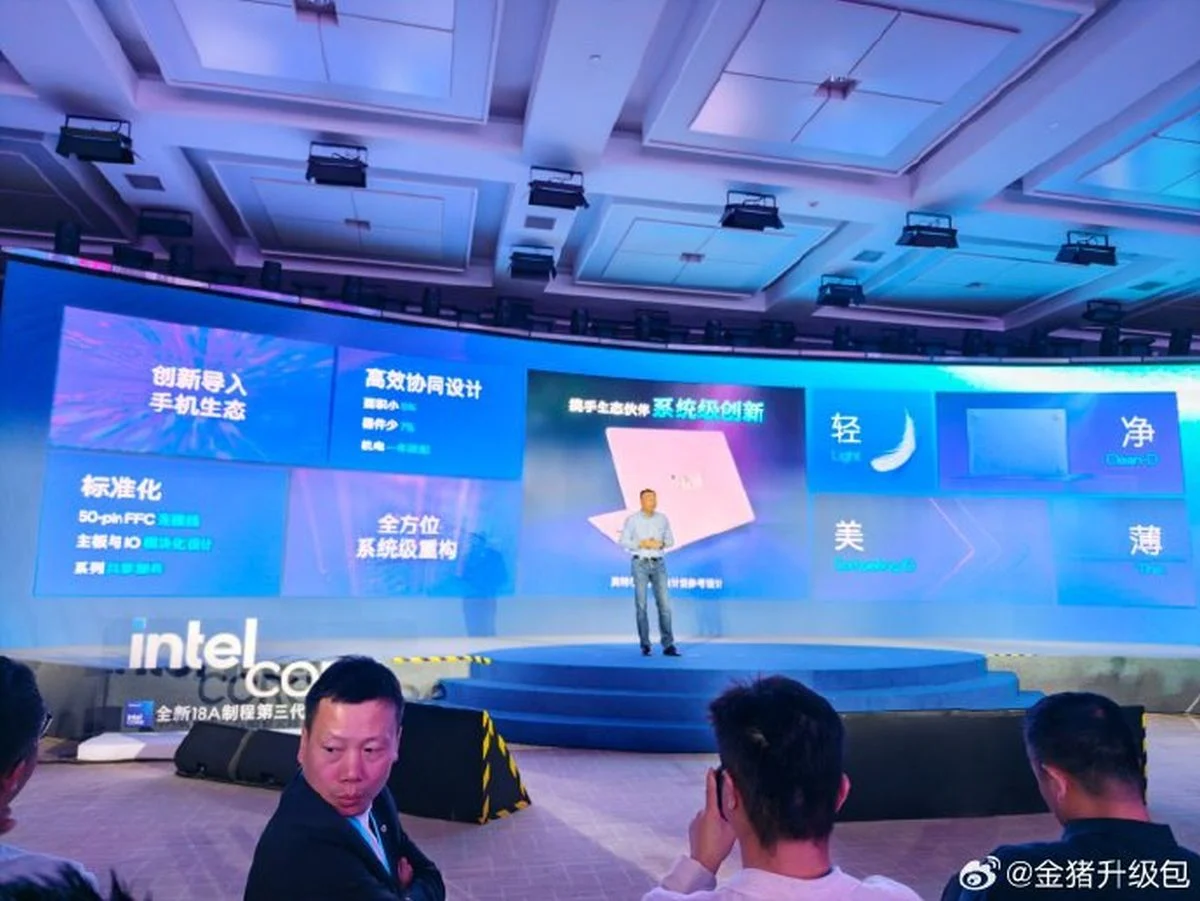
By doing this, Intel believes that this will effectively drive the manufacturing cost of Wildcat Lake laptops down further. Not only that, but it thinks that this could help its brand partners in standardising a barebones design that said laptop makers could then adopt.
Intel did produce a working A+ reference design, based on Project Firefly. Based on Golden Pig’s post, the laptop has a “Clean D” design with an 11.x mm chassis, meaning that it’s classified as a thin and light, and not just a basic low-cost laptop.


As a quick primer, Wildcat Lake officially launched back in April this year and houses the non-Ultra Core Series 3 laptop CPUs. Basically, they’re the less powerful version of Panther Lake. That said, it’s still built around Intel’s 18A die lithography and can use the faster LPDDR5X-7467 memory, with capacities of up to 48GB.
As we mentioned at the start of this article, Project Firefly is likely a response to Apple’s own MacBook Neo. While a MacBook is typically known for commanding a premium price and hardware, the Neo defies the fruit company’s norm by coming in at a relatively affordable starting price of RM2,499. At that price, you get a laptop with a 13-inch Liquid Retina display, and a laptop powered by the A18 Pro, the same chipset powering the current generation iPhone 17 Pro models.
(Source: Golden Pig Upgrade, Videocardz)
