
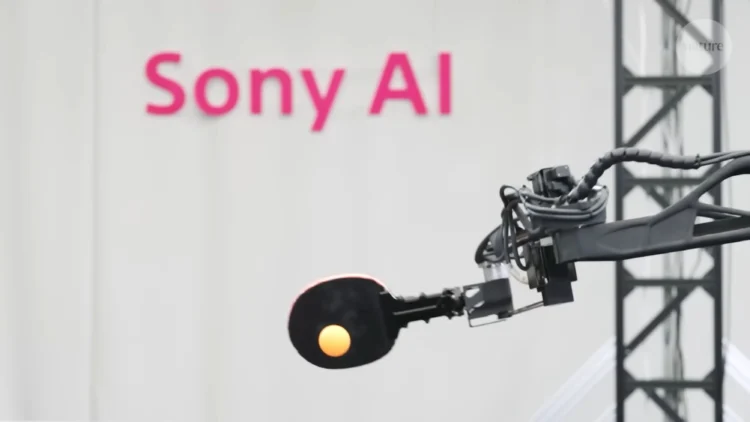
The concept of a robot athlete, designed to be good at a specific sport, is nothing new and has been around for years. That being said, all those years of innovation and technology has given companies like Sony AI the means to create a robot that plays ping pong, or table tennis, far better than even the top human players in the field.
Overseen, supervised, and spearheaded by Peter Dürr, Director of Sony AI Zurich and leader of the Ace project, Dürr and his team created the ping pong playing robot using (you guessed it) AI, nine cameras, and low-latency controls to create a machine that, rather than copy humans playing, develops its own response.

This, in turn, led to an AI machine capable of developing its own unconventional shot timing and selection, which then allows it to create unpredictable rallies between it and the human player.
For a bit more specifics about the robot, it has eight joints: three for paddle position, two for orientation, and three for swing speed and force. Coupled with the nine cameras we mentioned, and the result is basically a machine that’s approximately 10x faster than a human, or so Dürr says.
“Ace has a superhuman ability to read the spin of incoming balls and superhuman reaction time,” Dürr said. “At the same time, professional human athletes are very good at adapting to their opponent and finding weaknesses, which is an area that we are working on.”
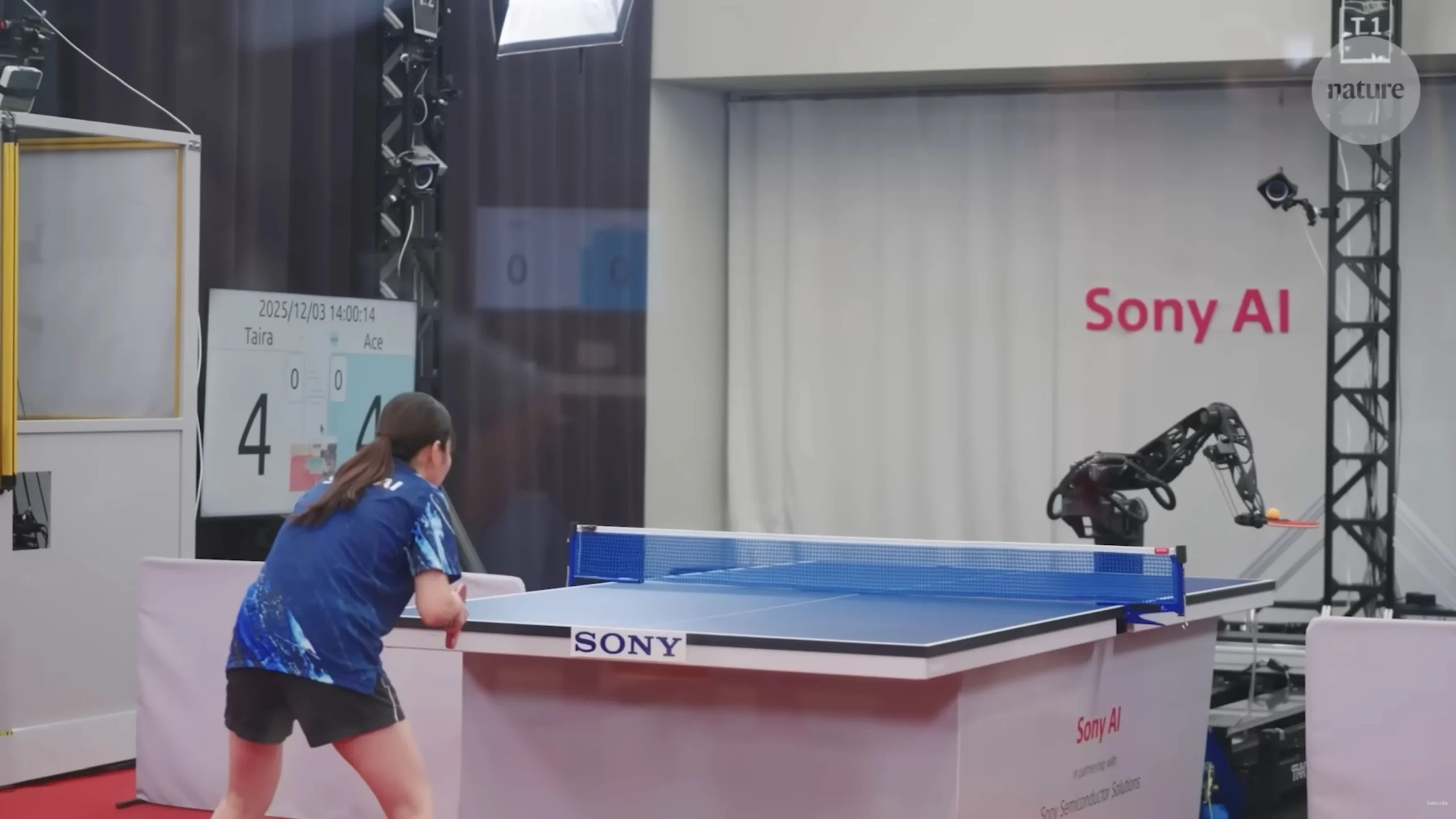
Of course, the question here is whether Sony AI has been successful. The answer is a moderate yes: a study published by Nature in April 2025 says that, out of five ping pong matches against human players in the initial stage, the Ace robot won three of them. Specifically, the three players it won against were elite players, while the two it lost to were professionals.
