

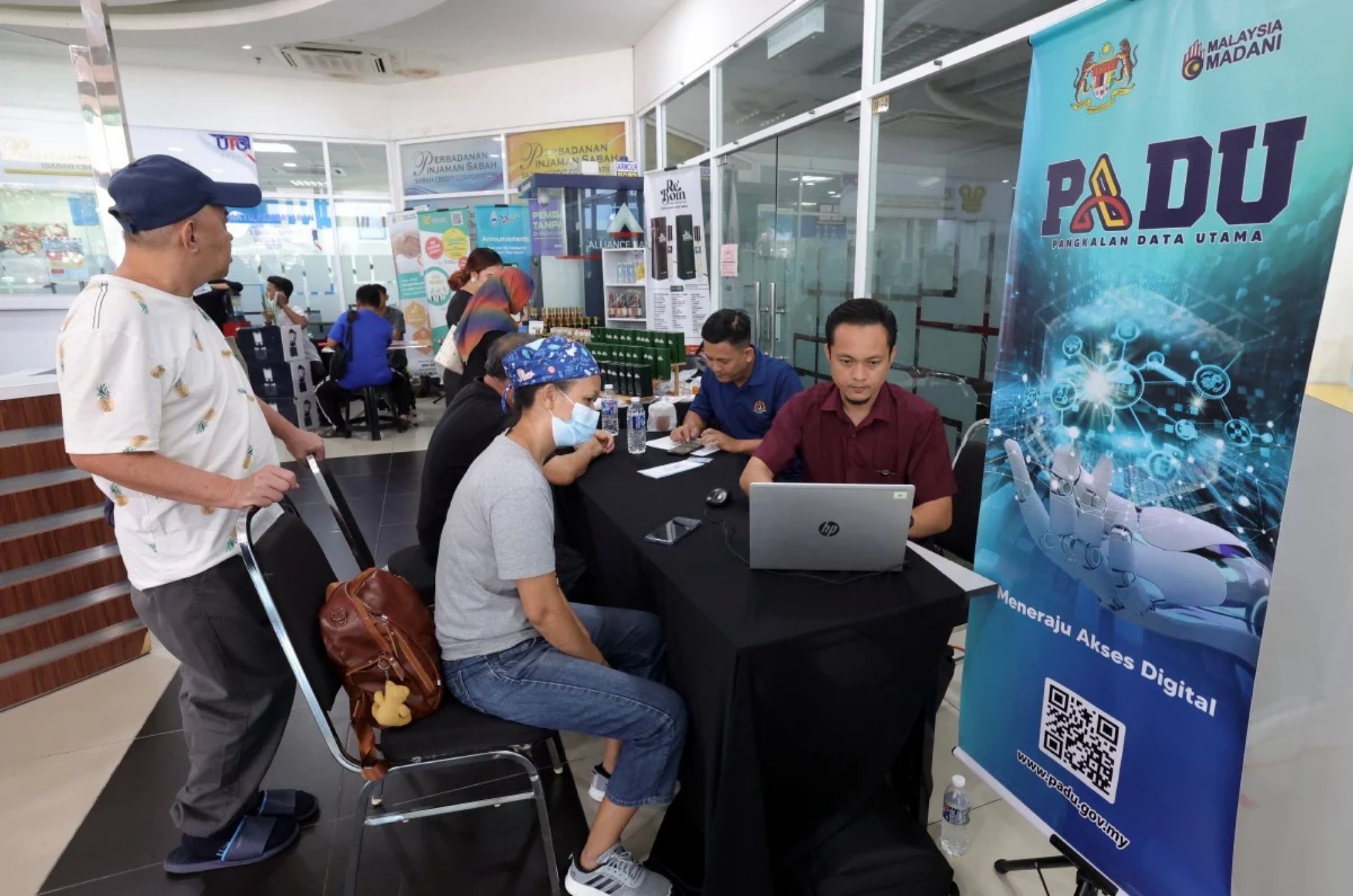
The government is expected to outline a more comprehensive roadmap for the Central Database Hub (PADU) by the end of April 2026, as it looks to strengthen data-driven policymaking in line with the 13th Malaysia Plan (13MP). Economy Minister Akmal Nasrullah Mohd Nasir said the move is part of ongoing efforts to refine the system’s role as a core platform for implementing government programmes more effectively.
Speaking to the media after officiating the Strategic Opportunity Mapping Seminar for Government-Linked Companies (GLCs) under the 13MP, Akmal Nasrullah said the upcoming roadmap will take into account national development requirements. He noted that PADU’s role is not limited to current initiatives, but will also support future improvements in how policies are designed and executed.
Akmal Nasrullah added that PADU remains a key component in ensuring decisions are guided by data rather than assumptions. This includes enabling better coordination across ministries and improving how the government evaluates public needs.

Existing System Still In Use
Despite the upcoming expansion, the minister said the government will continue using the current PADU framework for now to avoid confusion during the transition. He stressed that maintaining the existing system ensures continuity while new enhancements are being developed and rolled out.
Originally launched in January 2024 by former Economy Minister Rafizi Ramli, PADU was designed as a national data repository that consolidates verified information from various government agencies. The system aims to reduce data duplication, provide near real-time insights, and ensure that subsidies and assistance are channelled more accurately to eligible recipients. While PADU was initially positioned as a key reference platform for targeted RON95 fuel subsidies, the government later introduced the Budi Madani RON95 (BUDI95) mechanism.

From Subsidy Targeting To Wider Policy Use
Akmal Nasrullah also reiterated that PADU should not be tied to a single programme, as its objective is to serve as a central data infrastructure supporting multiple policies and initiatives. This reflects the government’s intention to expand PADU’s role beyond any single policy use case.
In a separate post via X on 30 March 2026, he said PADU’s mandate is to support the implementation of government policies and programmes through a data-driven approach involving multiple ministries. He also highlighted collaboration with the Digital Ministry, Ministry of Finance, Ministry of Domestic Trade and Cost of Living, and the Ministry of Rural and Regional Development.
(Source: The Edge Malaysia)
