
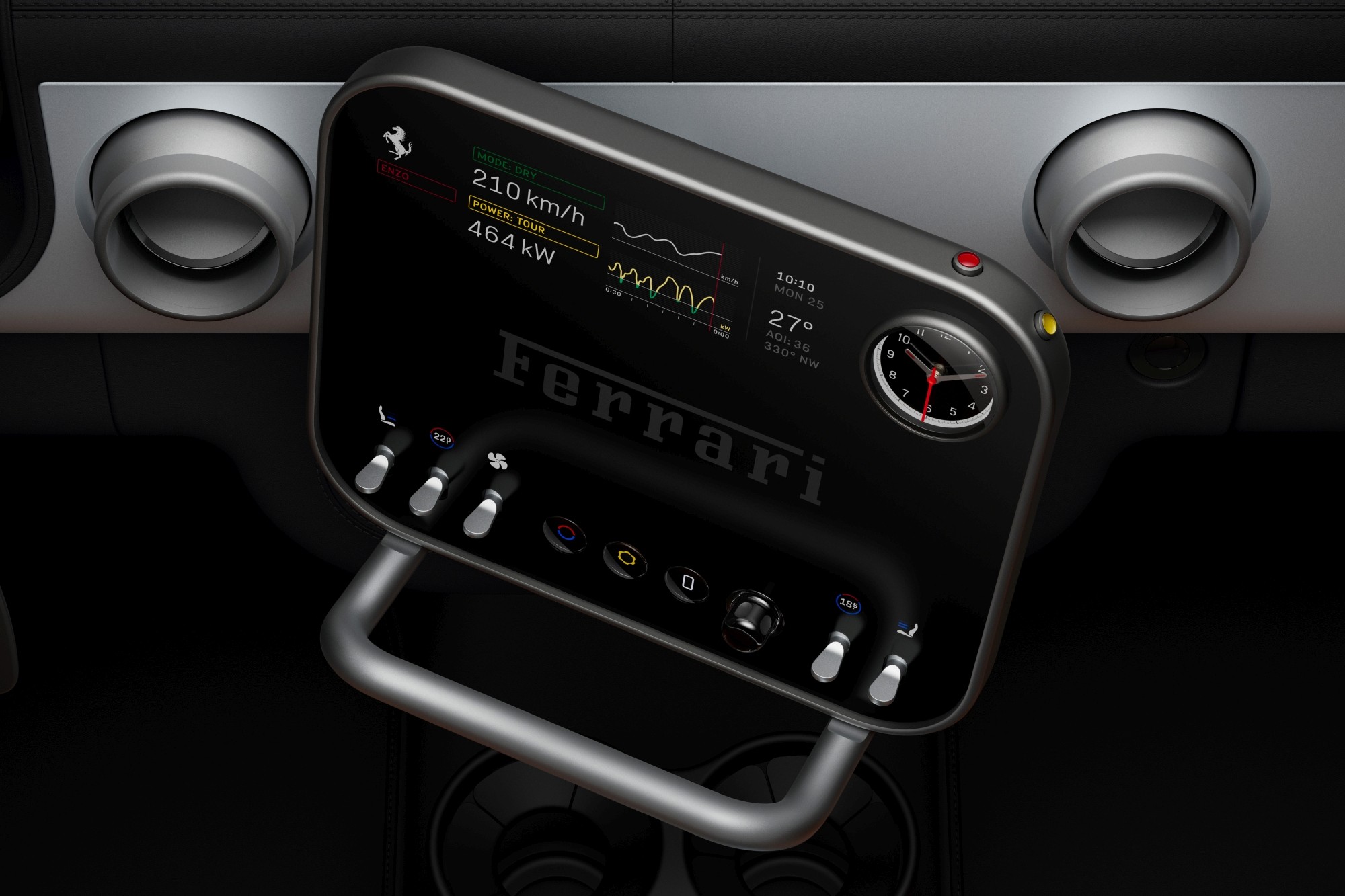
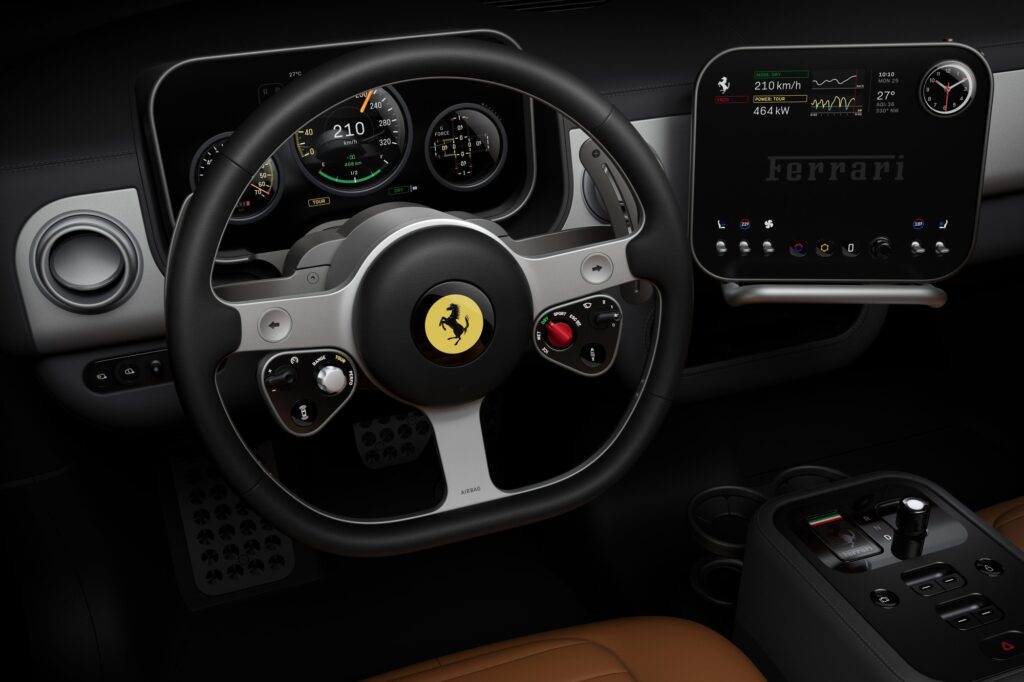
When Ferrari announced that it was changing the name of its EV from Elettra to Luce, it also revealed that LoveFrom, the company co-founded by Jony Ive, was involved with its design. And it kind of shows with the bits of the interior that the prancing horse deigned to show the world. But despite being done by the designer behind many an iPhone and iPad, it had plenty of physical controls still. And there’s a good reason for that – one that should have been obvious for most carmakers.
Autocar cites Ive as saying the reason is simply because a touch screen “requires you to look [away from the road]. So that’s just the wrong technology to be the primary interface”. Addressing the touchscreen of the infotainment display of the Ferrari Luce, he said “we used some touch in the central [screen], but it’s very thoughtful, and the vast majority of the interfaces are physical. Every single switch feels different, so you don’t need to look”.
Touchscreens Became Automotive Fashion
Circling back to when he was designing for Apple, Ive said “the reason we developed touch [for the iPhone] was that we were developing an idea to solve a problem. The big idea was to develop a general-purpose interface that could be a calculator, could be a typewriter, could be a camera, rather than having physical buttons”.
The report also cited Ive’s opinion on why touchscreens remain popular in modern cars. Per the report, he said “I think what happened was touch was seen almost like a fashion. It was the most current technology, so [companies thought] ‘we need a bit of touch’, then the next year ‘we’re going to have an even bigger one’, and it will get bigger and bigger”. Tying this back to iPhone design, Jony Ive said “I think the way that we design [car interiors] isn’t that we’re trying to solve problems [like we did with the iPhone]”.

What Jony Ive said makes intuitive sense, at least from a driver’s perspective. But for carmakers, screens may make more financial sense than buttons and knobs. The Drive reports that the proliferation of screens have made them cheaper. So much so that it is now cheaper for carmakers to use them rather than buttons or dials. Compounding to that is the one screen being able to do the function of all those buttons.
On one hand, we don’t need as many buttons as the Ferrari Luce. And having turn signals on stalks is definitely better than buttons on the steering wheel. But on the other, there should be an easy balance between the number of buttons and the infotainment screen.
