


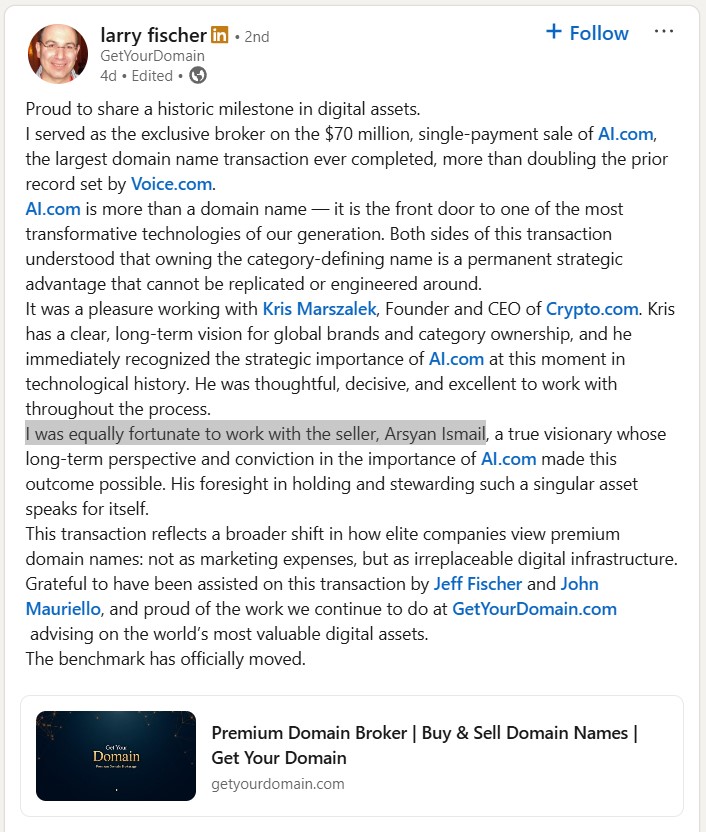
The massive US$70 million (~RM273 million) that Kris Marszalek, Founder and CEO of Crypto.com paid to acquire AI.com has been making headlines all over the world. The deal which was apparently concluded back in April 2025 only came to light after domain name broker Larry Fisher shared the historic milestone as a post on his Linked In page – one day before the domain was to have been exclusively unveiled on a Super Bowl ad slot. The $70 million domain name, and $8 million ad slot didn’t help when the newly minted AI Agent service website crashed immediately after launch.
But we’re not going to be talking about that. In his Linked In post, Larry Fischer disclosed the name of the seller, one Arsyan Ismail, who upon checking was confirmed to be a Malaysian tech entrepreneur with a long history of dabbling in internet-based projects as well as cryptocurrencies since young.
By Monday evening, almost every other media outlet, social media channel and podcasts was flooding our feeds with the story, and everything sounded convincing enough until local news portal SAYS published this story, having spoken to the seller about the history of the sale of the domain.
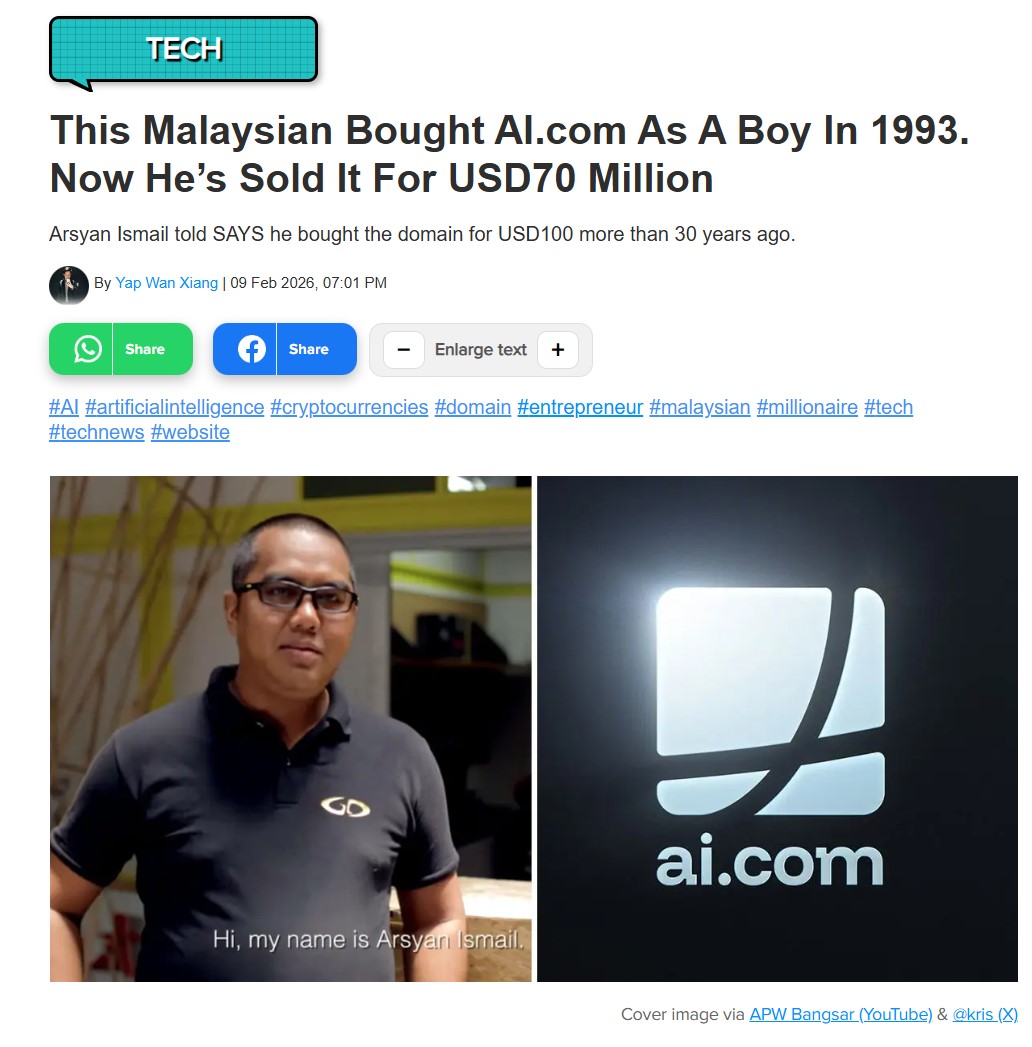
The 10-year-old boy did not faze us. 1993 did. 1993 was when the first graphical Internet Browser Mosaic was launched. The Internet was only a mix of bulletin boards, newsgroups and ftp servers at that time. So how did this 10-year-old purchase a domain in 1993? That too with his mom’s credit card.
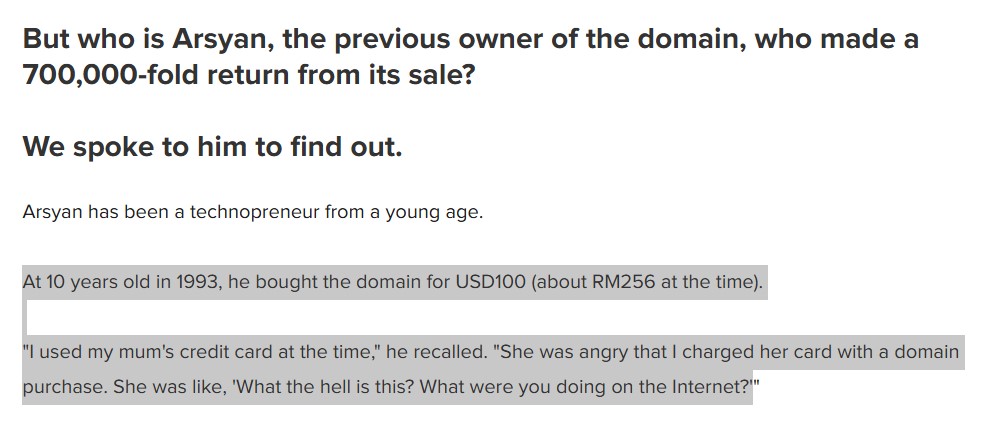
Let’s run through the facts here.
The domain was registered in 1993, specifically on 04 May 1993. No questions there as this is a matter of public record. A mere 5 days after the World Wide Web became official public domain. The first ever online credit card transaction? That didn’t happen until either August 11, 1994, or in the fall of 1993 (OBS). Online credit card transactions only gained proper approval in 1996. CVV security codes were only introduced in 1997. The “internet” in Malaysia in 1993 was even further back compared to the progress that was happening state side. Domain name ownership at that time was unheard of even within technology enthusiast circles, so how does a 10-year-old purchase a domain name with a credit card?
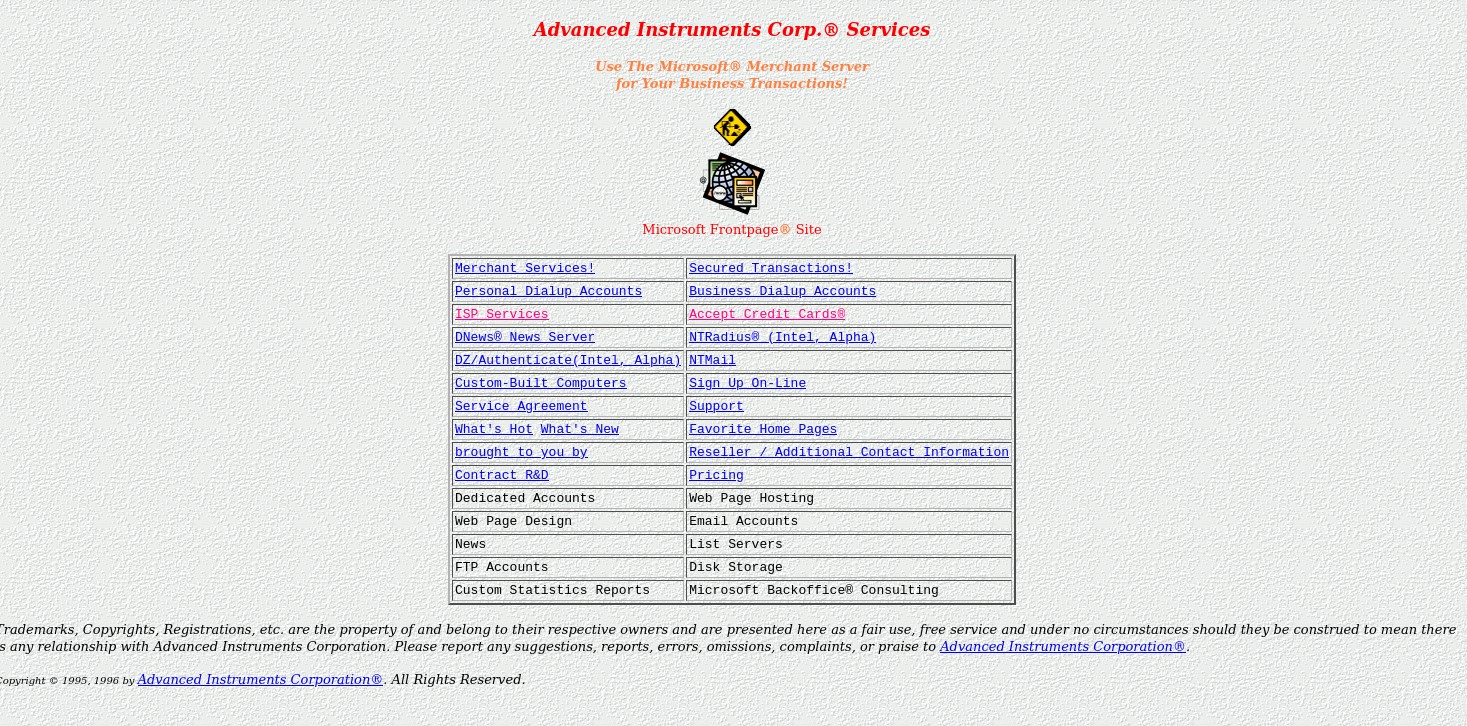
Jaring, Malaysia’s first and pioneering Internet Access Provider was only established in 1992. Commercial internet access via dial up in Malaysia only became available in 1995. If you really dig deeper into the history of domain names, domains registered before 1995 were free, as long as you were able to maintain it, and have legitimate claim on its use. Maintaining it required massive infrastructure at that time including dedicated DNS servers, permanent internet connection and extensive technical knowledge, which was not just expensive outside large corporations, but almost inaccessible at that time to most adults, let alone to a 10-year-old.
Domain purchased in 2021 for millions of crypto dollars
While we can’t shed any more light on how a ten-year-old purchased and maintained a domain in 1993, we can shed some light on some of the facts related to the domain that was uncovered by investor George Kirikos on his X account since early 2023 when the domain was being transacted for millions of dollars in cryptocurrencies.
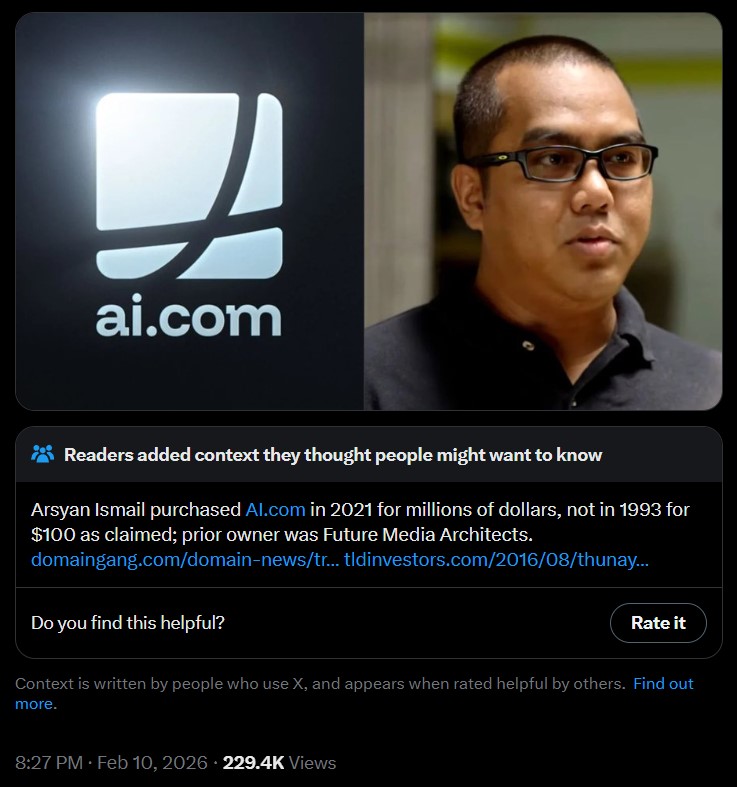
Based on some cleaver sleuthing and visible paper trails discovered by Bill Patterson, it was concluded that the domain name was purchased by Arsyan in 2021 on domain brokerage site SAW.com for an undisclosed sum. The previous owner of the domain was Future Media Architects, Inc, a holding company for domain names owned by Kuwaiti Thunayan Khalid AL-Ghanim, who was a well-known collector of premium domain names.
Why the need for public disclosure?
Flipping the domain for US$70 million is still a lot of money, all things above considered. The most obvious question is why the seller would agree to disclose his identity. There are no legal obligation for public disclosure of the sale, or the selling party. Most of the top 10 domain names sold, that do not involve publicly listed companies have not had their seller’s identity disclosed.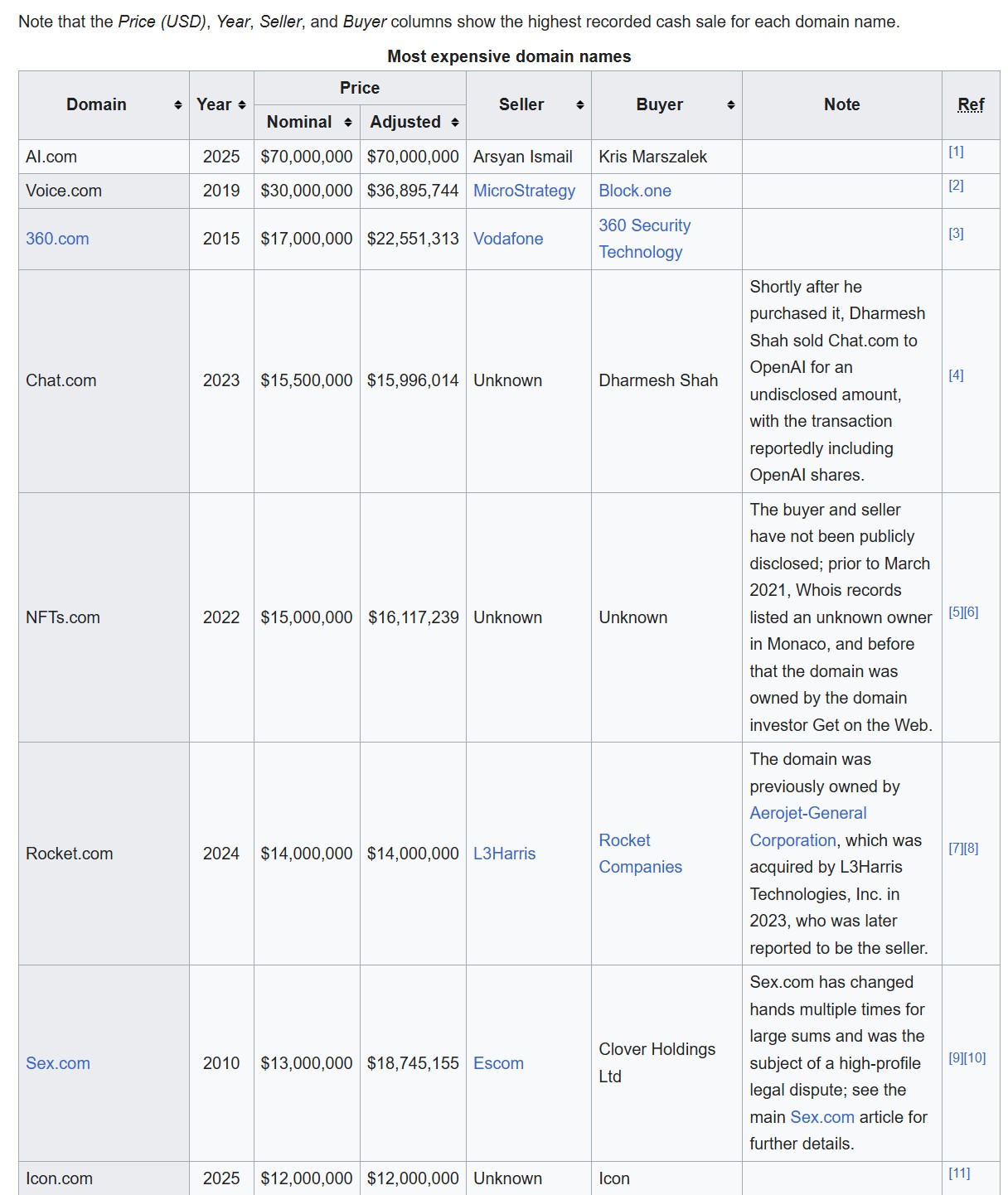
Public disclosure simply means you will have to pay taxes on the sale, as capital gains. And taxes on a $70 million sale is going to be a LOT, depending on how much was spent to purchase it. Further to this, the transaction was paid for using cryptocurrency, which means this was a transaction that did not go through traditional banking systems. Essentially making this information public now means somebody is going to be hit with a huge tax bill from LHDN, which cannot be paid for using cryptocurrency.
The only question that remains now is whether Arsyan Ismail agreed to be name dropped by Larry Fischer on his LinkedIn post or not. Only time will tell.
