

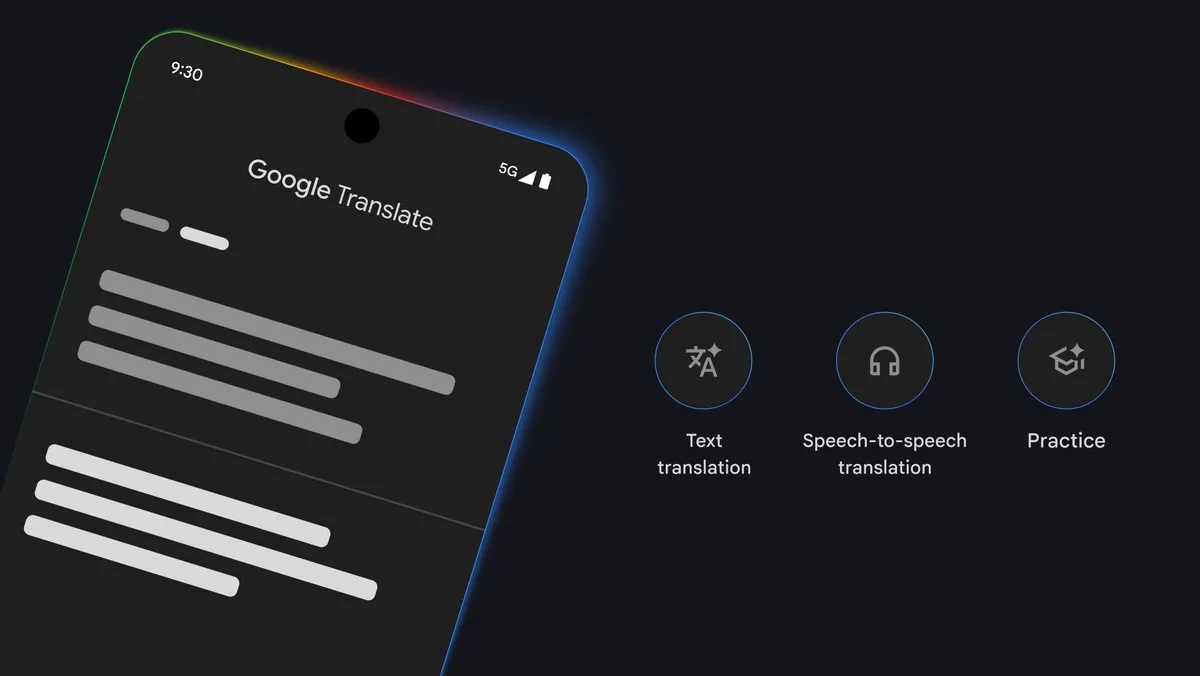
Google has officially announced that it will be bringing its Gemini AI to Google Translate. This revamped version of the decades-old translation tool will now provide more natural and accurate translations, in addition to a whole slew of extra features.
According to the official blog post, users will be able to access this “state-of-the-art translation quality” in Google Search and the Translate app for iOS and Android. However, the rollout is currently limited to the US, Mexico, and India.
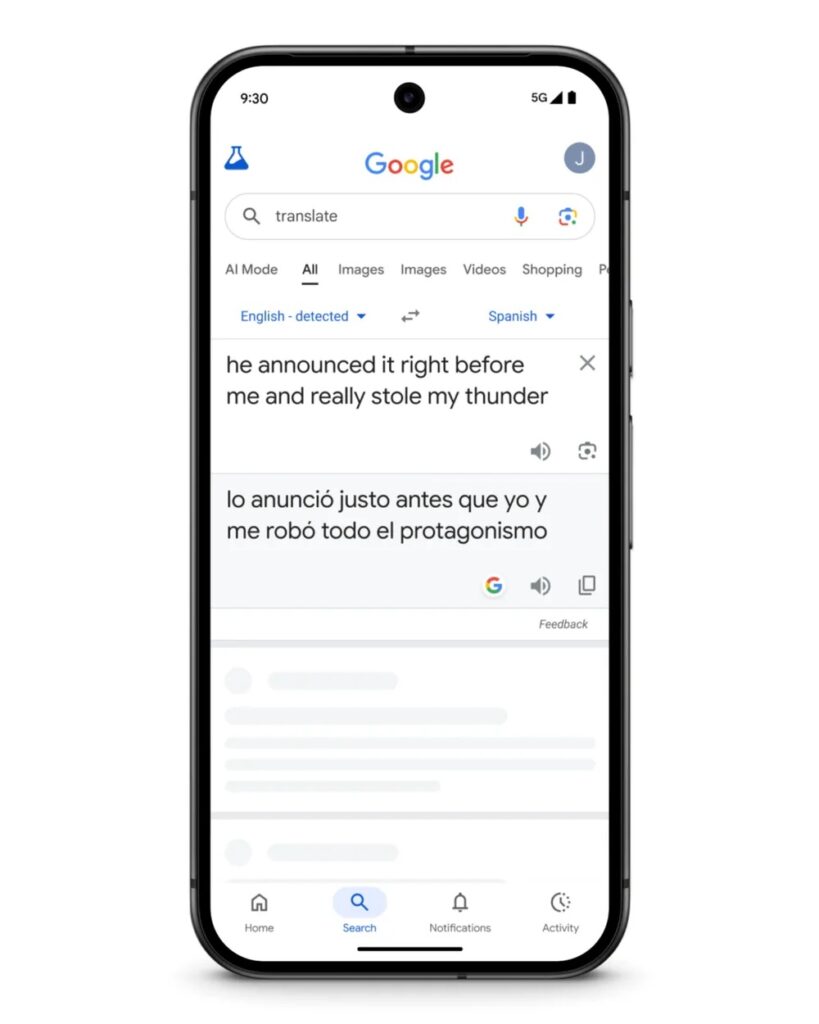
With this new update, Google Translate will now be able to understand idioms, local expressions, and slang. Moreover, Google is also launching a beta experience that lets users hear real-time translations directly through their headphones.
This maintains the tone, emphasis, and cadence, resulting in more natural translations that are easier to follow. All users have to do is pop on their headphones, open the Translate app, and tap Live translate. At present, the beta supports more than 70 languages, including Bahasa Malaysia (not that we need it, though it is good to have).

However, if you’d like to learn the language rather than use a tool, the Google language learning tool also received an update. Moving forward, the Translate app will have an improved feedback system, giving users helpful tips based on their speaking practice.
There is also a new way for users to challenge themselves and reach their learning goals by tracking how many consecutive days they have been learning. Google says that users will clearly see their progress and consistency over time. In a way, it gamifies the way you learn, much like Duolingo, if only the CEO hadn’t messed things up.

The learning tool will be expanding to “nearly 20 new countries”, which include but are not limited to Germany, India, Sweden, and Taiwan. Unfortunately, Malaysia is not on the list. However, since Singapore is, we believe it’s only a matter of time before the update reaches us too.
Moreover, based on Google’s past rollouts, we’ll likely receive the Translation app first. After that, we can start understanding nuanced foreign-language slang or using the earphone live translation feature. However, that is just conjecture and might be subject to change.
(Source: Google)
