
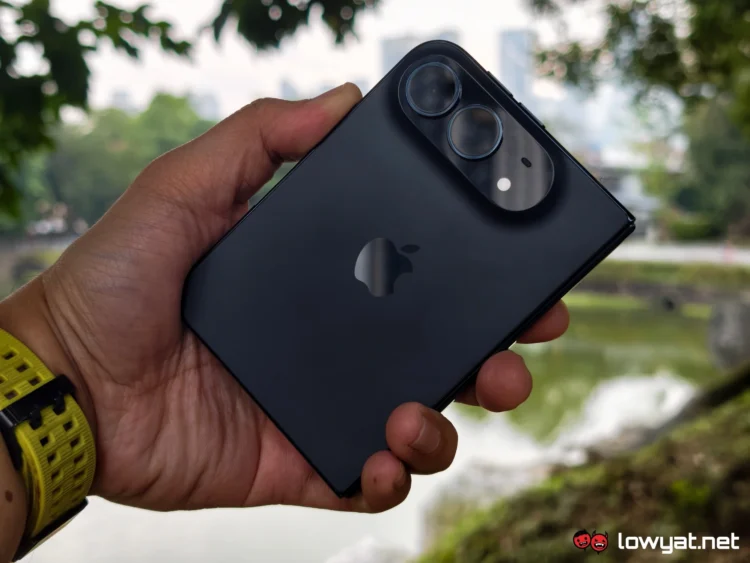
One thing’s for certain: it took Apple a very long time to finally join the foldable smartphone bandwagon. Now that the iPhone Duo has finally arrived, the question is whether the company has spent the last eight years cooking up something worth the wait. In a first-party sense, the answer is yes, though there are still a few things that need work.
As most of us are aware by now, rather than going with the more familiar book or flip-style form factor, Apple has opted for the trendier passport design. While it is neither the first nor the latest manufacturer to adopt this approach, the decision plays to the company’s strengths, particularly when it comes to making the most of its existing iOS ecosystem.
A Mini-er iPad mini
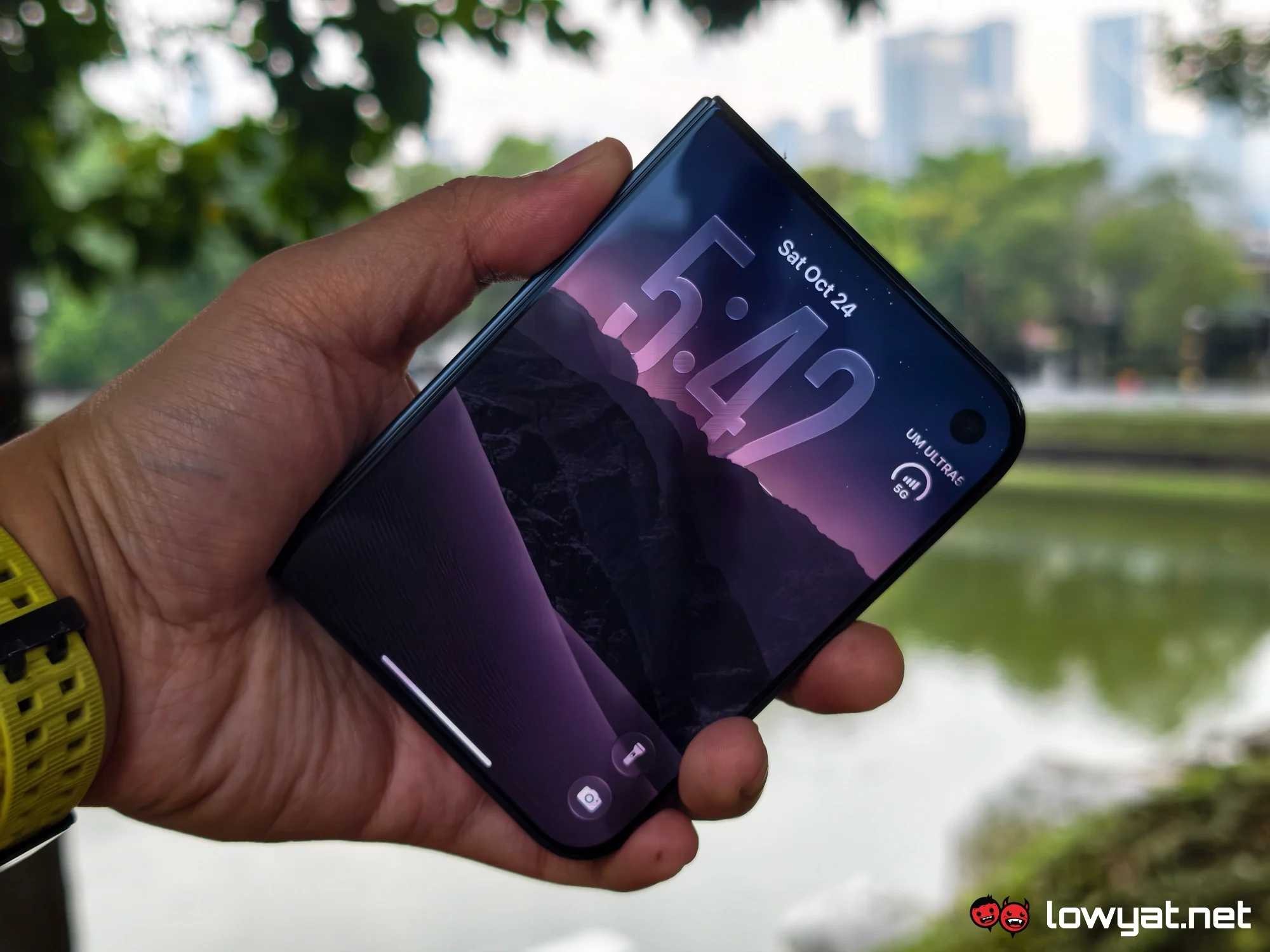
Unfold the Duo, and you essentially get a smaller iPad mini, albeit one that is considerably more compact. The internal display measures 4.64 x 6.48 inches, compared with the iPad mini’s 5.3 x 7.69-inch screen. This gives you a relatively spacious canvas for reading, watching videos, and multitasking without having to carry around a dedicated tablet.
Interestingly, Apple touts the Duo as its thinnest smartphone to date when unfolded, measuring just 5.2mm thick. For some perspective, that is 0.4mm thinner than the iPhone Air, which is already a rather slim device in its own right.
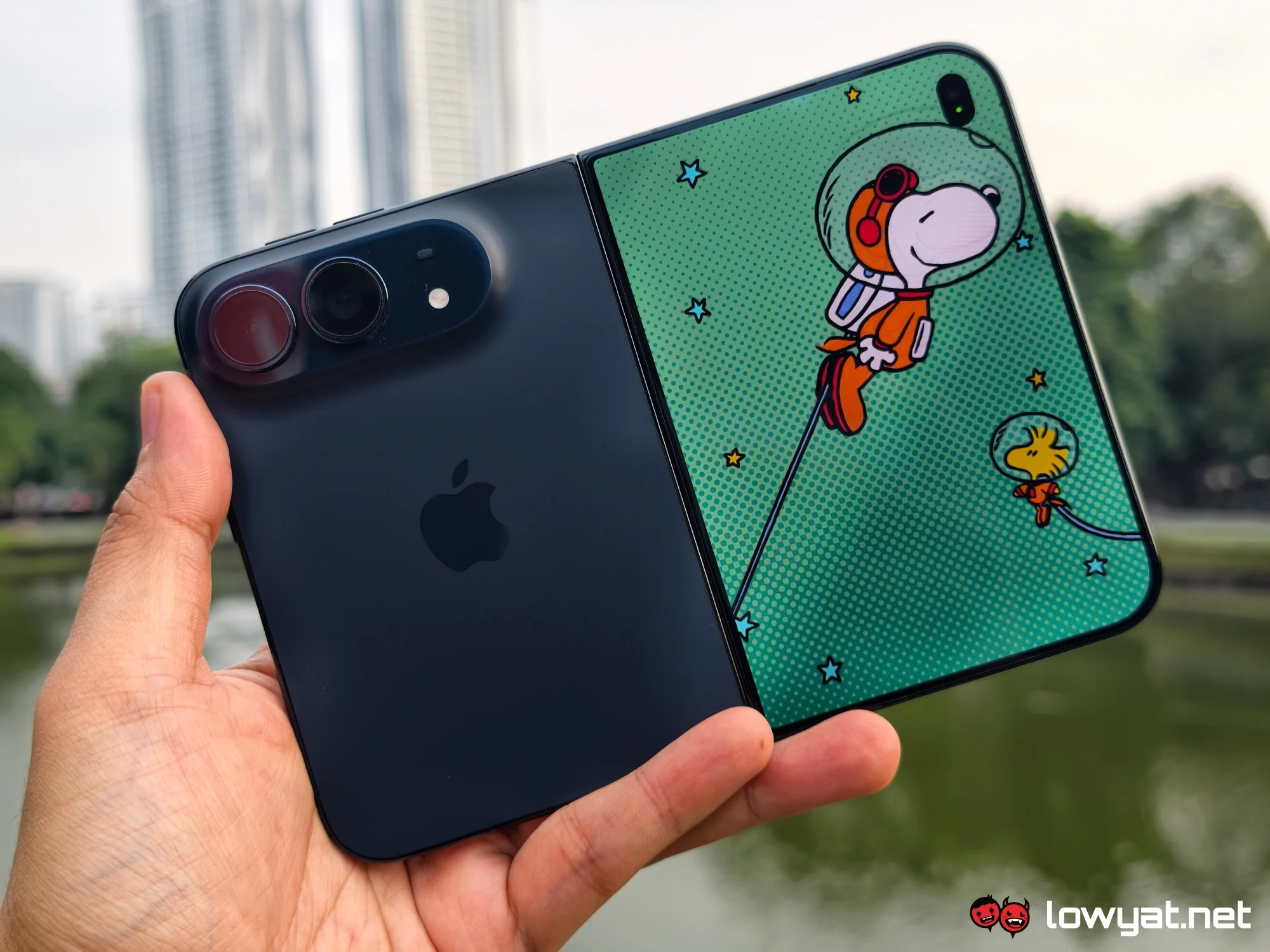
Things swing in the competition’s favour when you fold the Duo shut, however. At 11.3mm thick, it is considerably chunkier than its closest rival, the Samsung Galaxy Z Fold8, which measures 9.77mm. It is also the heavier of the two, tipping the scales at 254g. In fact, the Duo is probably the heaviest foldable smartphone I’ve tested in recent memory, regardless of whether it is folded or unfolded.
Some Getting Used To
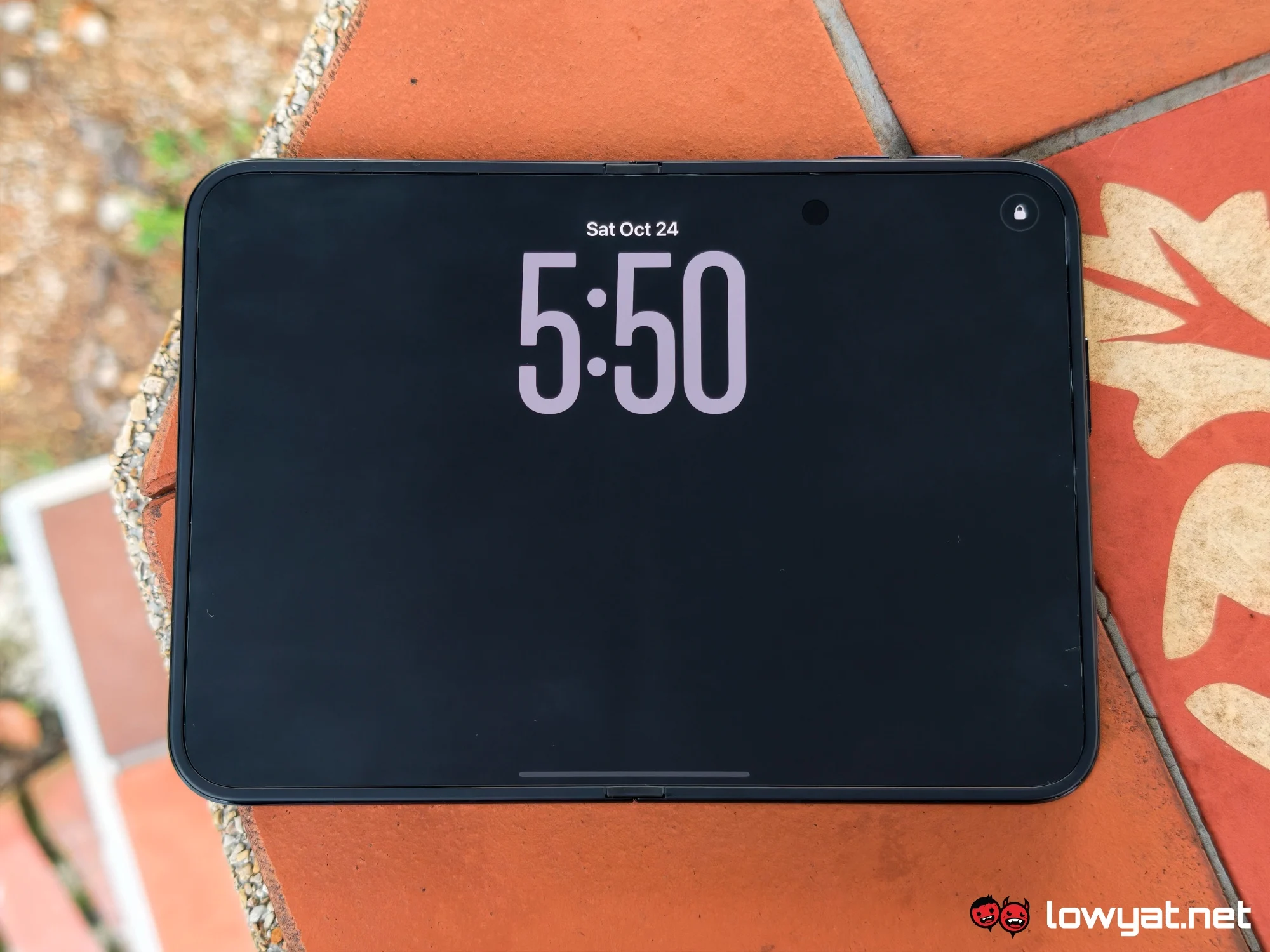
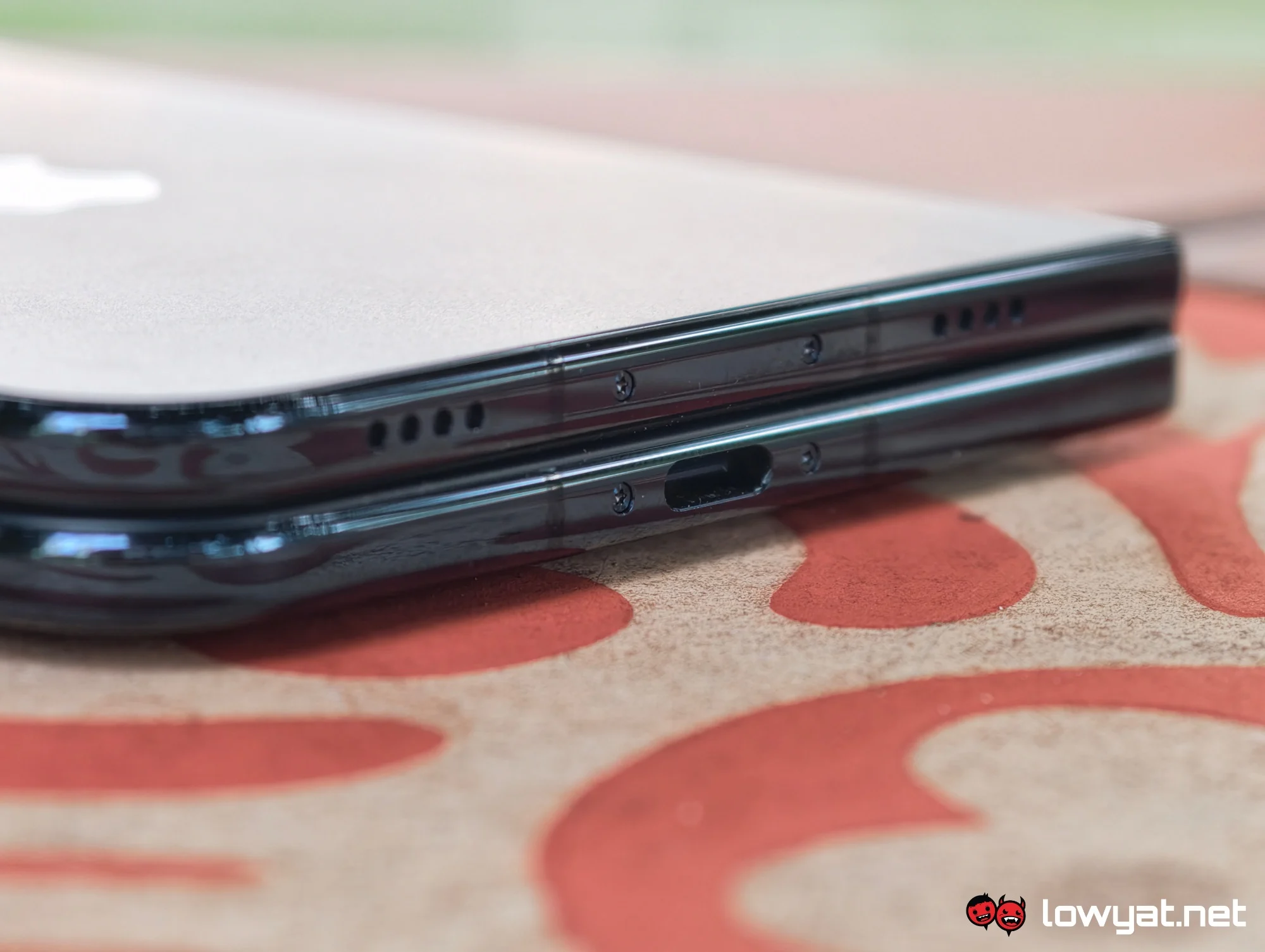
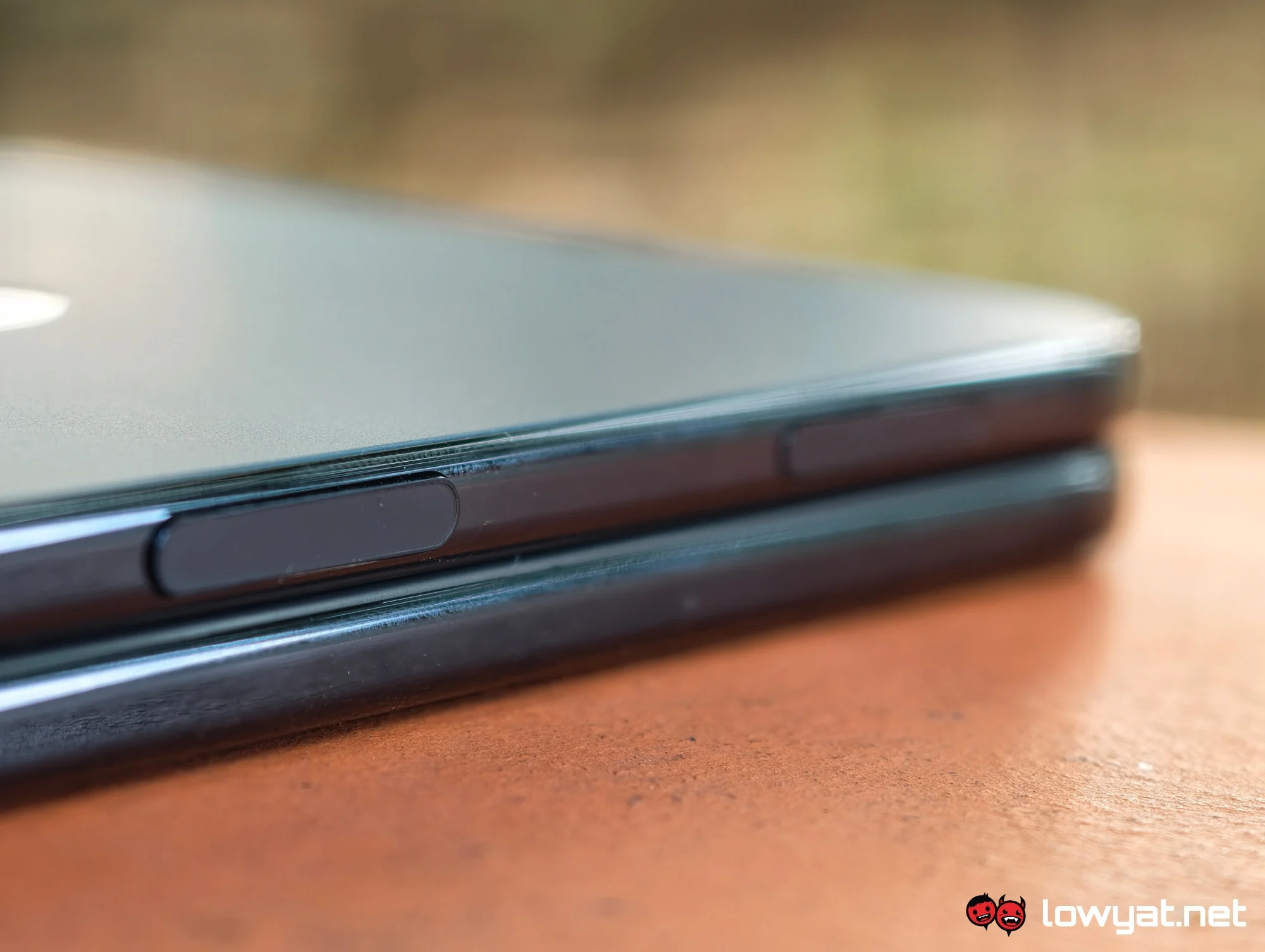
As for the controls, the combination of the Lock and Touch ID buttons works as expected, but the volume rocker being positioned at the top of the phone takes some getting used to. Apple has also decided to include its Camera Control button, which I find a little puzzling. Given the limited camera capabilities on offer (I’ll get to that later), I would have much preferred an Action Button instead.
When folded, the Duo works well enough as a somewhat traditional smartphone. Much like the Galaxy Z Fold8, its passport-like proportions may feel a little strange at first, but you should get used to them after some time. It is not quite the familiar iPhone experience, but it is perfectly serviceable for everyday use.
Impressive Internal Display
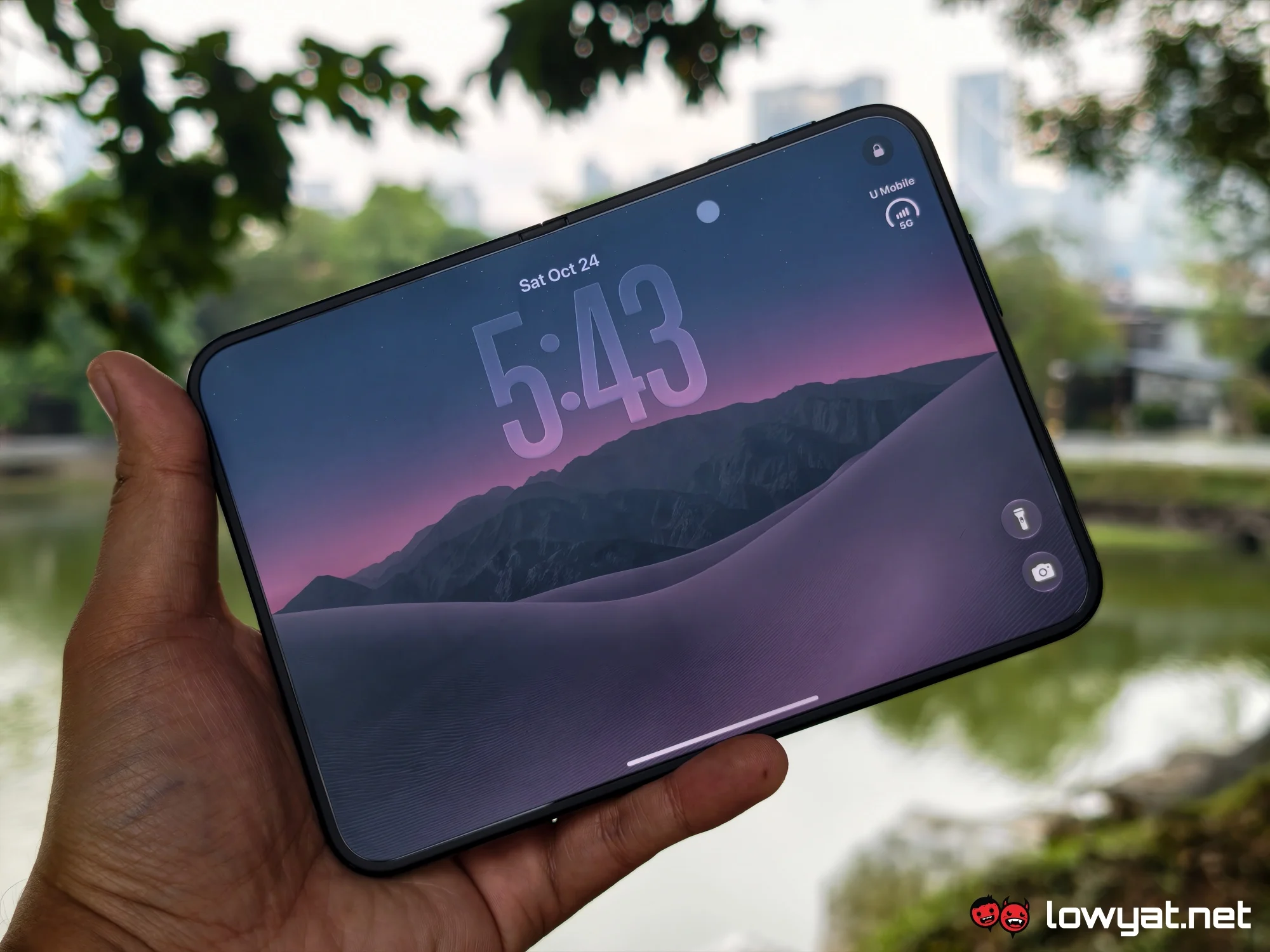
One thing I particularly like is the matte finish on the internal display, especially when reading or watching videos. It does a good job of eliminating glare, making the viewing experience more pleasant. However, switching between this matte surface and the more conventional Ceramic Shield-protected Super Retina display on the outside can feel a little jarring.
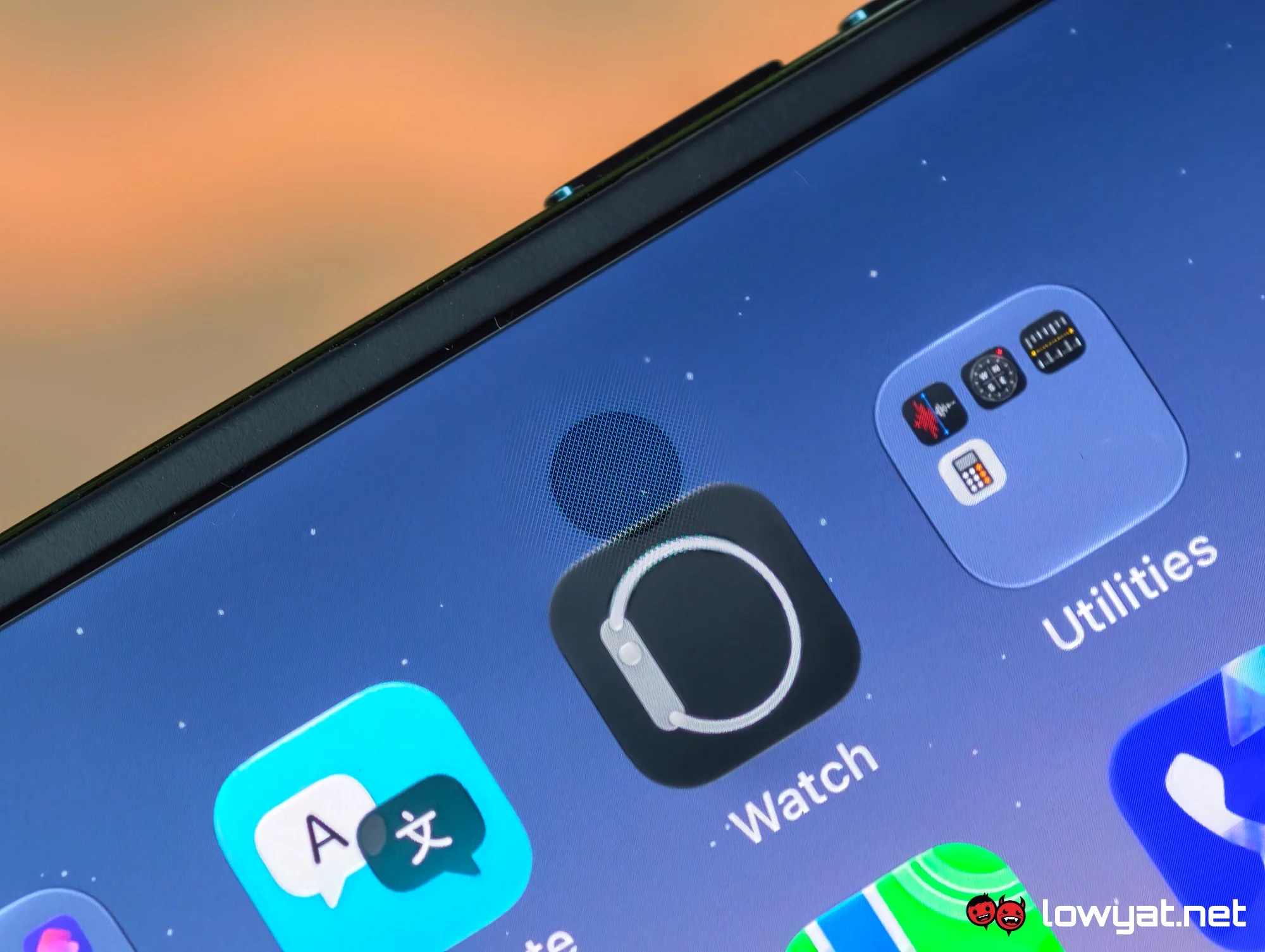
And yes, there is a crease. That said, much like those on most recent foldable smartphones, it is barely noticeable when the screen is active. The same goes for the under-display FaceTime camera, which I occasionally forget is even there.
A Reworked Interface
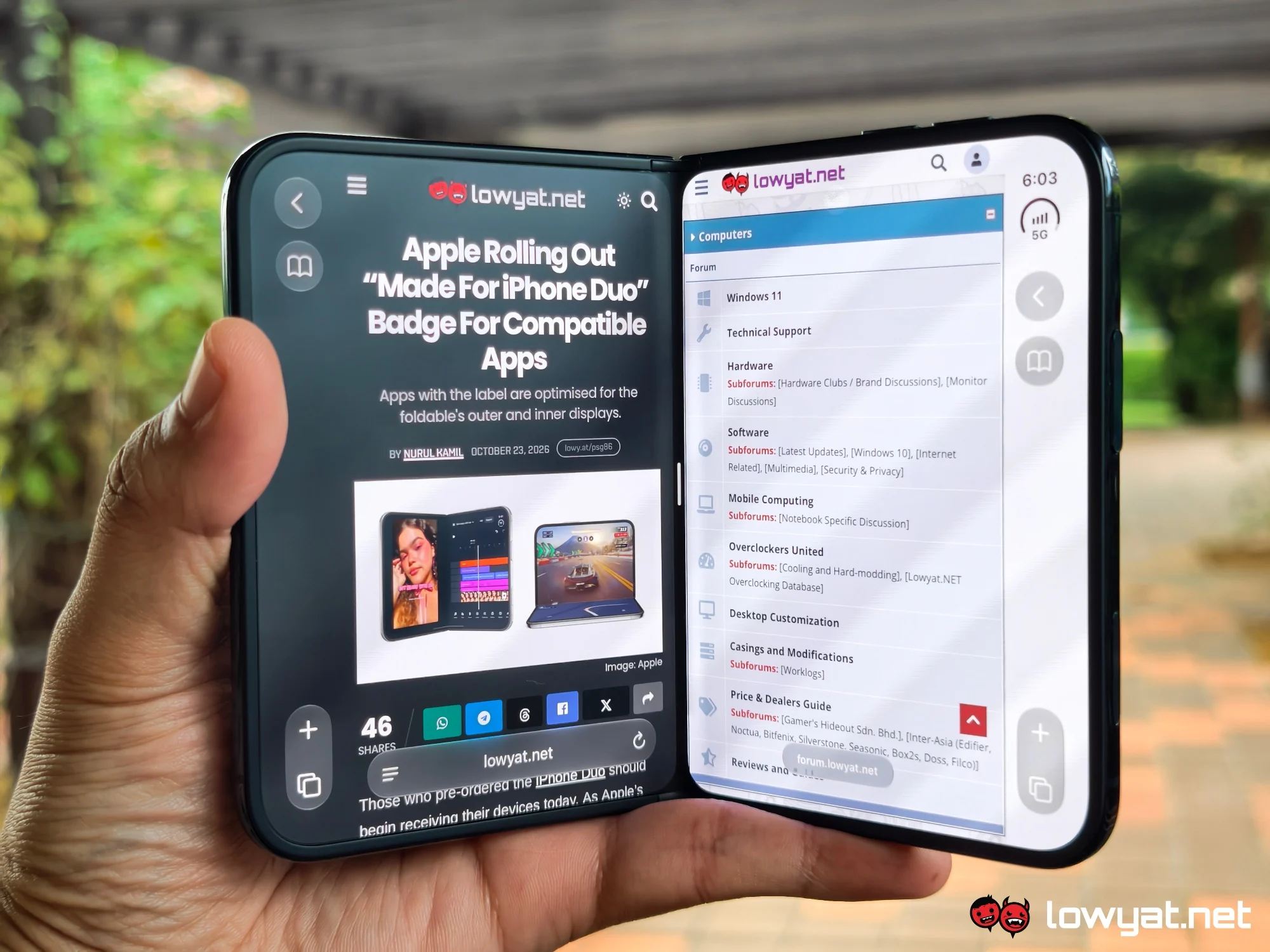
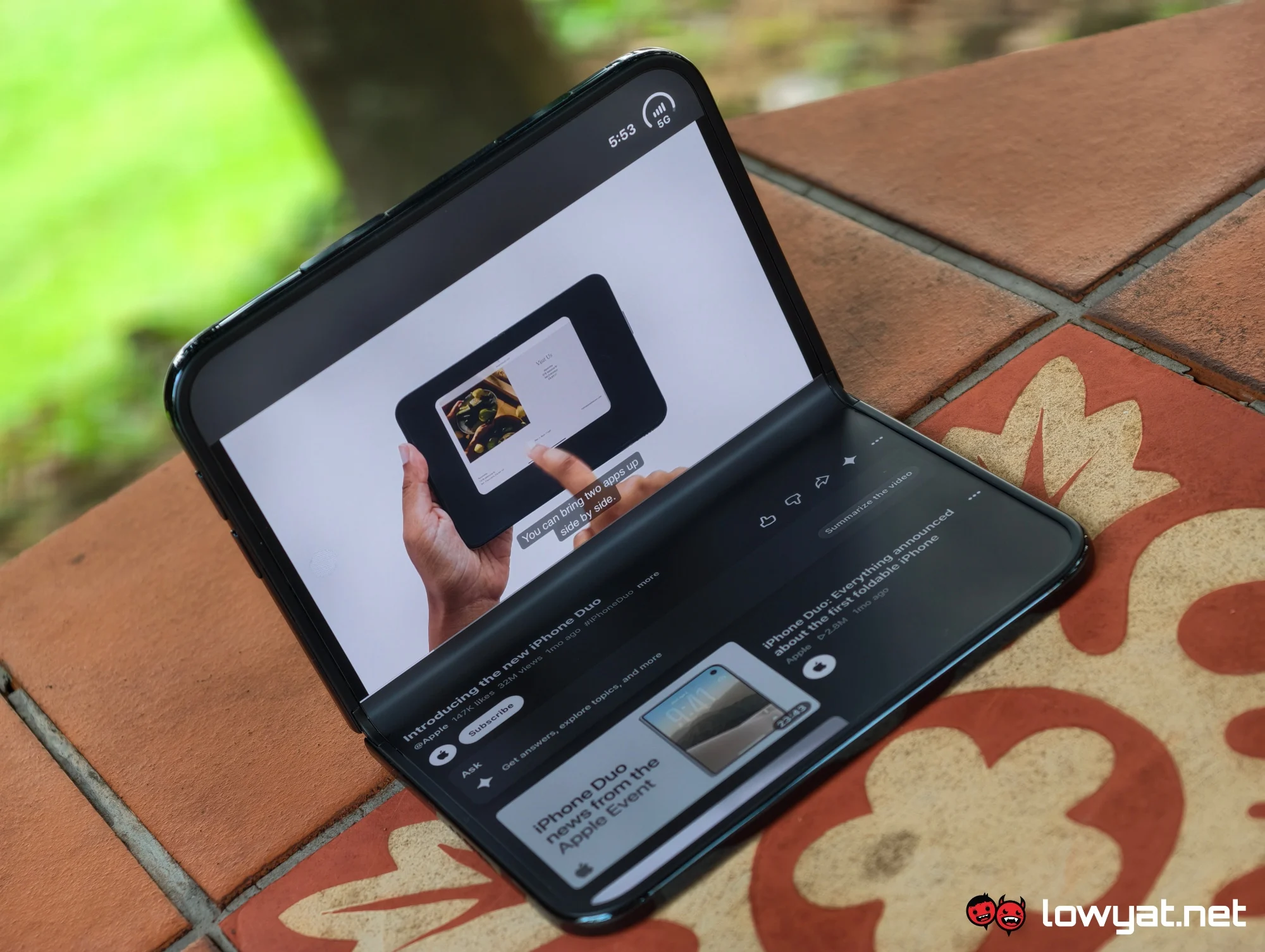
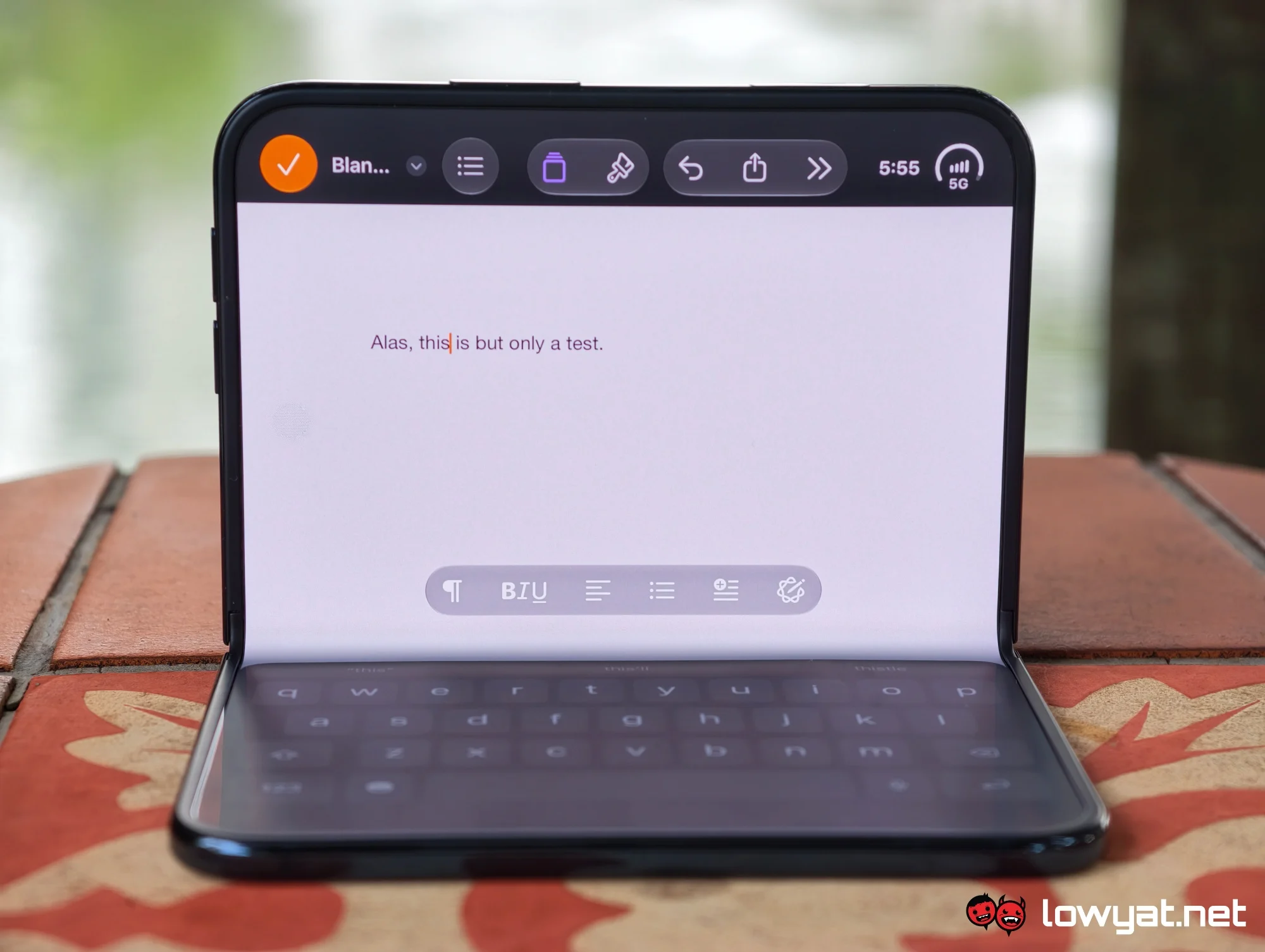
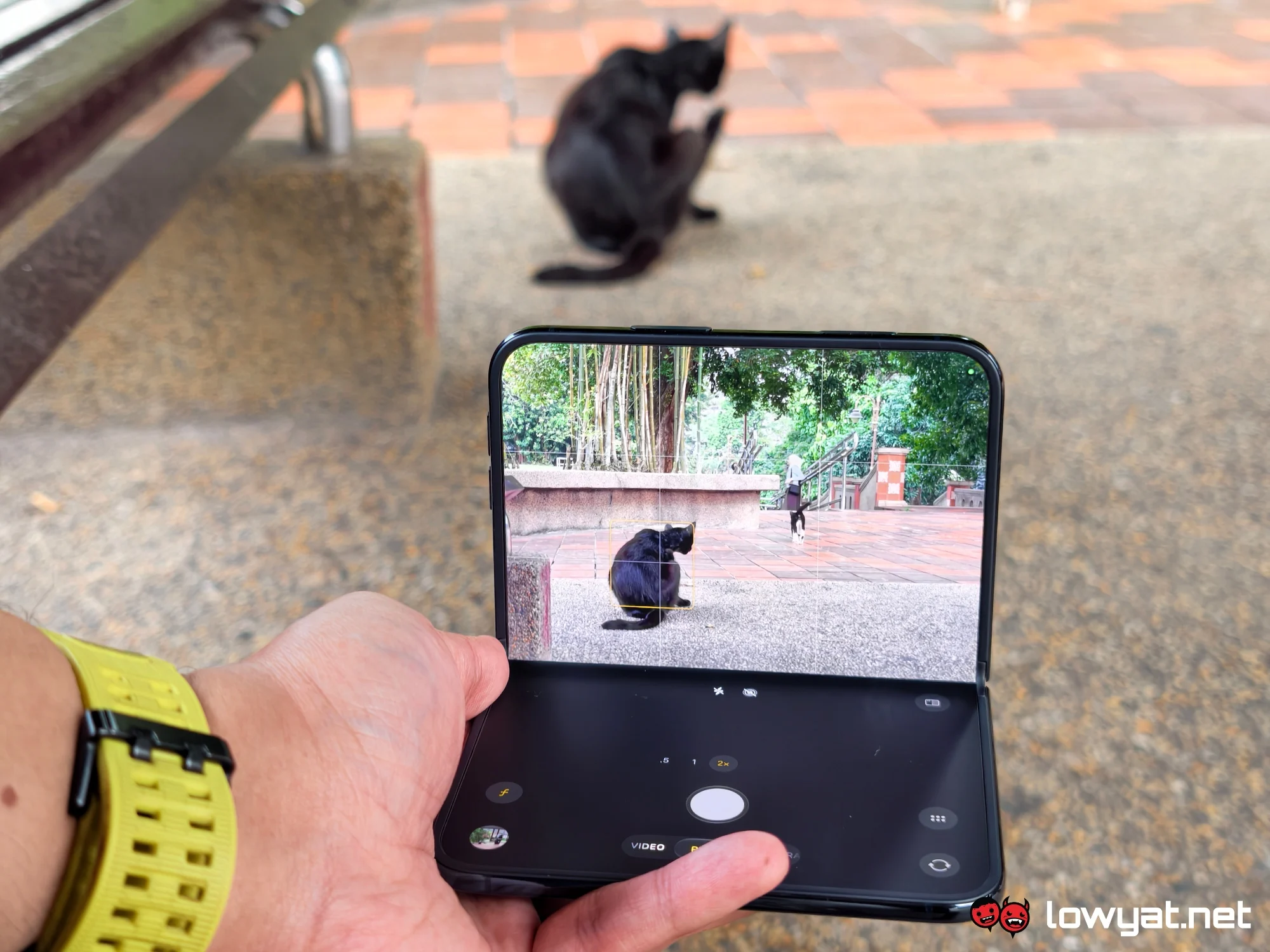
What is more interesting is Apple’s approach to the interface. In both folded and unfolded modes, the Dock and Dynamic Island are positioned vertically along the right-hand side of the display. It is a clever arrangement that makes certain one-handed operations more comfortable, provided you are right-handed. Left-handed users, on the other hand, may not find it quite as convenient.
Tilt the Duo vertically while it is unfolded, and the interface switches to something closer to the familiar iPhone and iPad experience, with the Dock returning to the bottom of the screen. The Dynamic Island, however, remains on the right-hand side.
Despite its considerable heft, using the Duo with one hand in either mode is still manageable. I also appreciate the effort Apple has put into adapting the interface for the device’s unusual form factor. It is not a revolutionary change, but it does make the Duo feel like more than just an iPhone with a folding screen.
Limited App Support For Now
Ironically, while Apple is arguably late to the foldable smartphone game, the Duo’s arrival feels a little premature. The biggest reason for this is app support, or rather, the lack of it. There are still plenty of apps that have yet to properly accommodate the Duo’s displays, let alone take advantage of the seamless transition between its folded and unfolded states.
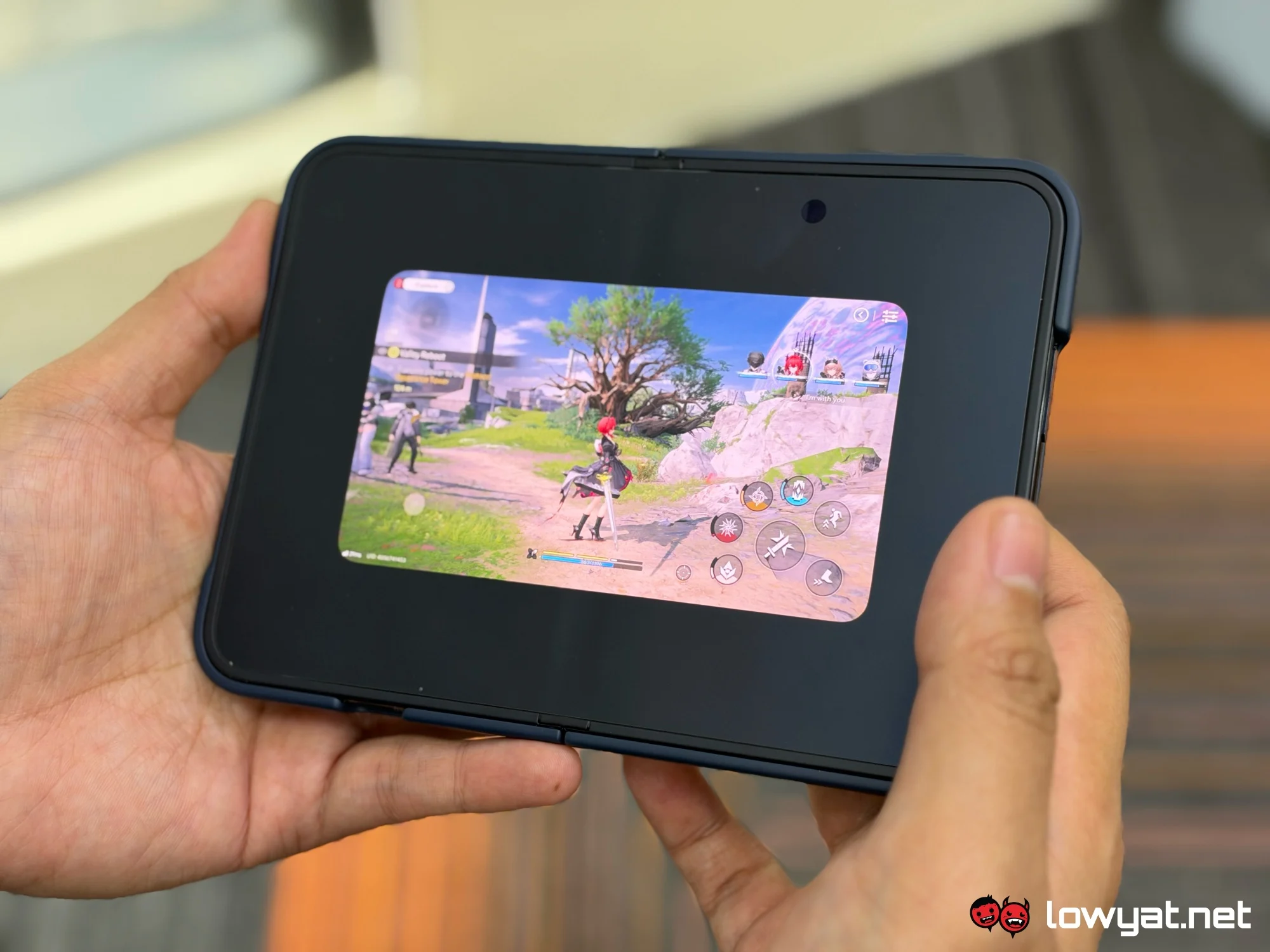
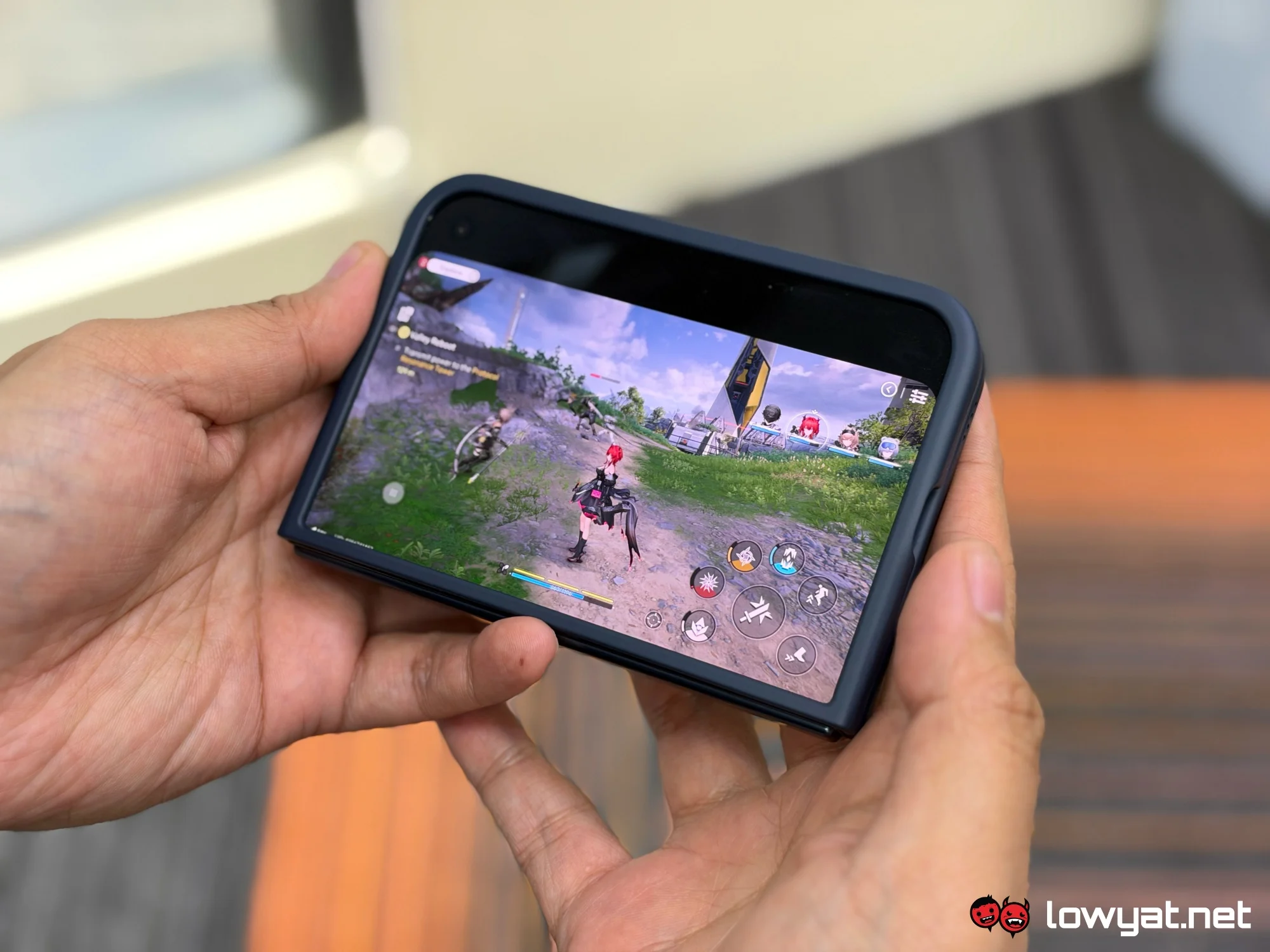
Apps such as Touch ‘n Go eWallet and Grab, along with certain games, end up occupying only a small portion of the available screen real estate in either mode. The result is an awkward-looking interface that makes poor use of what is otherwise a rather impressive display.
Some developers have already promised to address these shortcomings through software updates, but with the sheer number of apps available on iOS, it remains to be seen how quickly the rest of the ecosystem will catch up. For now, this is one of the Duo’s biggest limitations, and it is not something Apple can fix entirely on its own.
A20 Pro Inside
On a more positive note, the Duo has felt silky smooth in both modes so far, thanks to Apple’s A20 Pro chip. More importantly, switching between folded and unfolded states is seamless with apps that support the feature. Watching an app adapt to the larger display as you open the phone is both satisfying and a good reminder of why foldables are appealing in the first place.
Of course, I will reserve my verdict on the Duo’s performance and battery life for the full review. There is still plenty more to put the device through before I can say whether it holds up beyond these initial impressions.
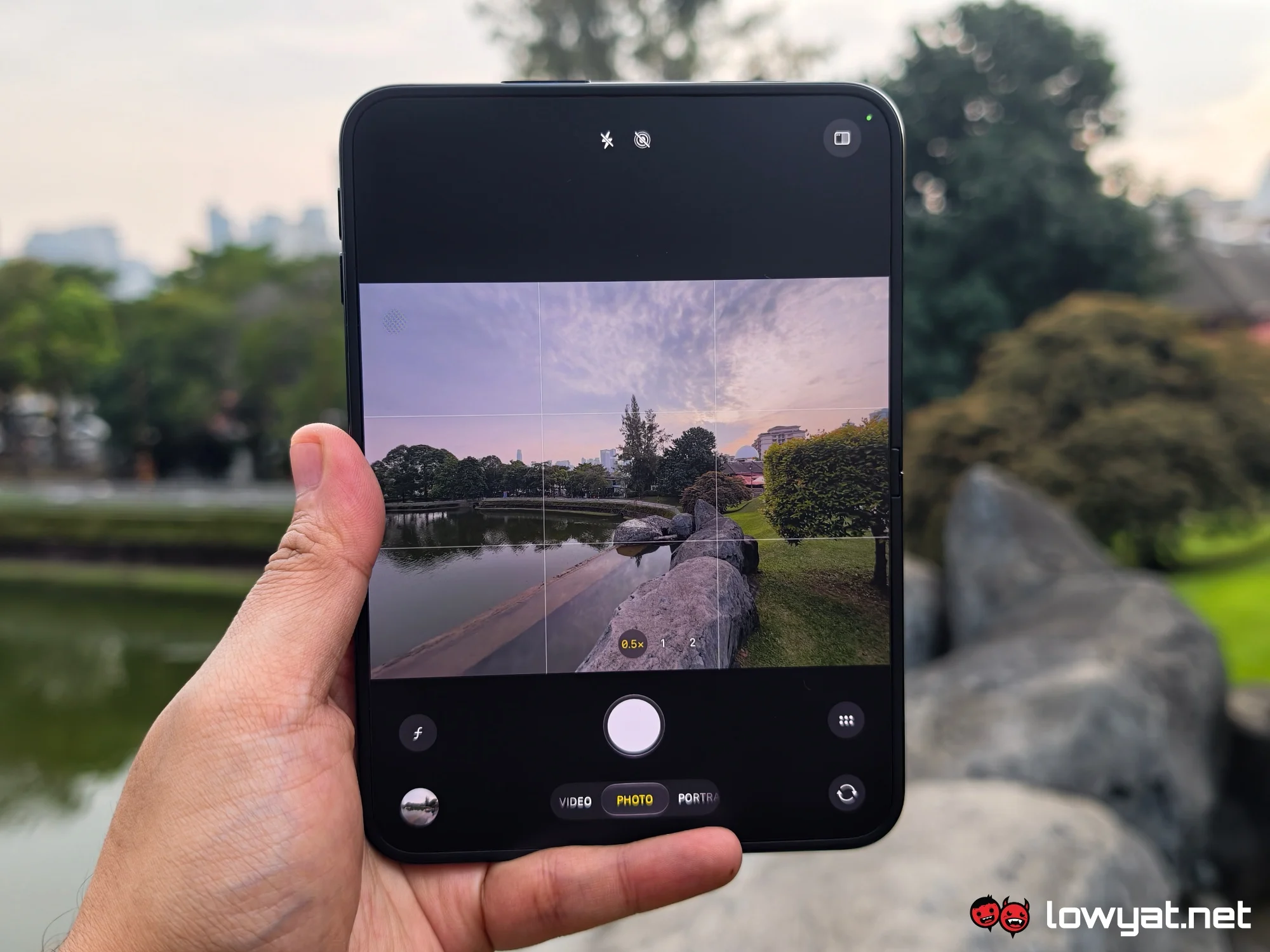
Tried And Tested 48MP Cameras
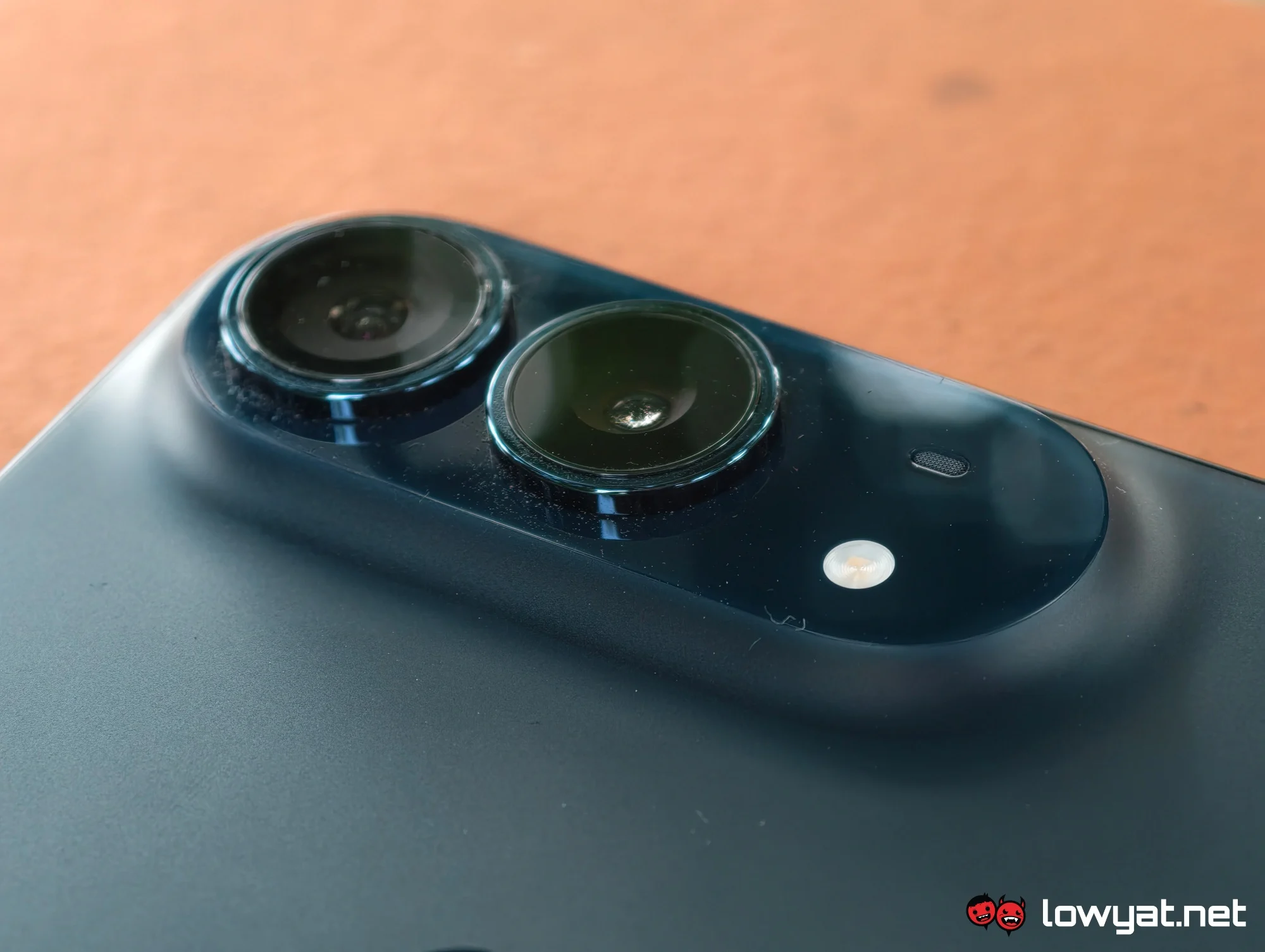
As for the cameras, I’ll be blunt: if you are considering buying the iPhone Duo, photography should not be your primary reason for doing so. That is not to say the cameras are terrible, but the options given to you are pretty limited.
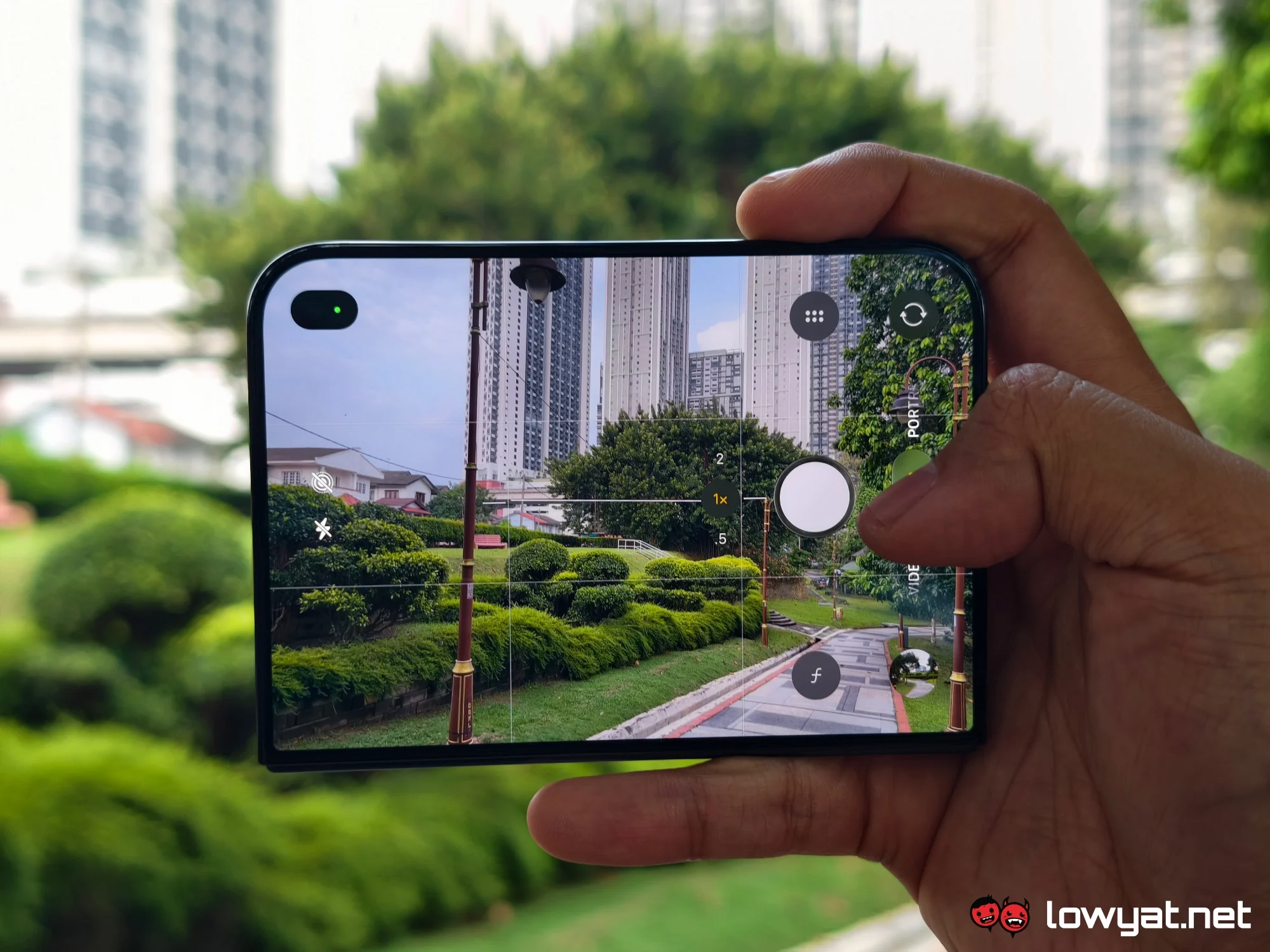
Both the primary and ultra-wide shooters use Apple’s tried-and-tested 48MP sensors, and they are capable of producing decent photos and videos. However, there is no dedicated telephoto camera, which means zooming from 2x all the way to 10x relies on digital zoom. I should also point out that the Duo does warm up when using the camera app, which I hope will be addressed in a future software update.
Meanwhile, the external display’s selfie camera, which sits on the top-right corner of the display, uses a 12MP sensor and supports both portrait and landscape orientations without compromise. Then there’s the under-display FaceTime camera, which uses a modest 4MP sensor and supports Apple’s Center Stage feature.
Sample Photos








A Mixed Bag
Before I wrap things up, we need to address the elephant in the room. There have been reports of the Duo’s internal display cracking due to an alleged hardware flaw. So far, we have not encountered anything unfortunate with our review unit, and hopefully, it stays that way throughout the testing period.
That said, should anything happen, you can bet I will report on it separately. The iPhone Duo starts from over RM9,000 after all, and any significant hardware flaw at that price point deserves proper scrutiny.
For now, my first impressions of the iPhone Duo are mixed. Its foldable design and adaptable interface bring welcome flexibility to the iOS experience, while the A20 Pro chip has kept things silky smooth so far. On the other hand, the limited app support, noticeable heat buildup, and reports of a potential display flaw leave some room for concern.
