

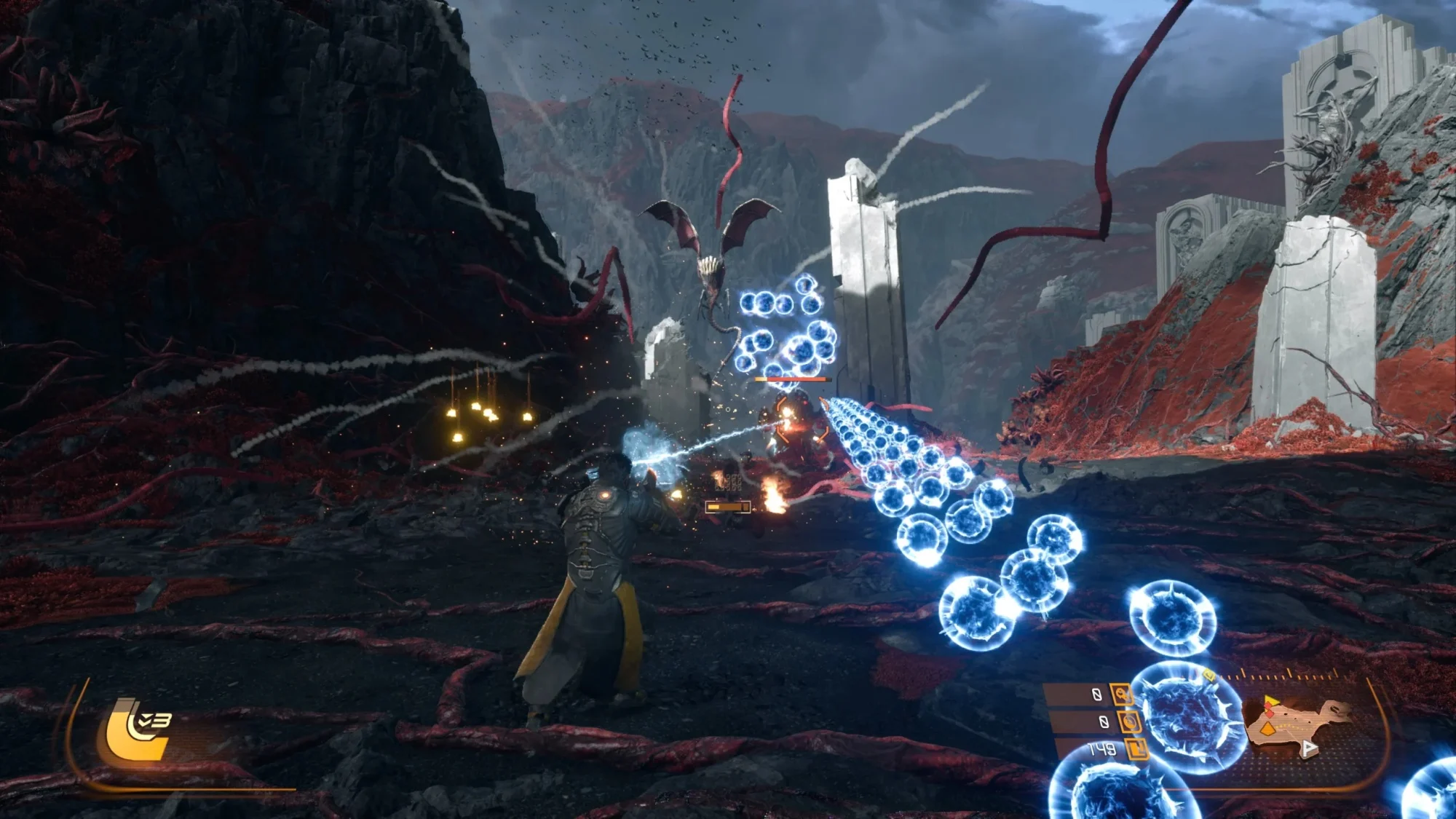
For the fans of Returnal hoping to get another game that plays like it, if not outright a sequel to the title, you’re probably hyped about SAROS. No wonder, since it’s made by the same devs, Housemarque. And the gameplay trailer that was released over a month ago sure teased more of the same, but in a good way if you loved the way Returnal played.
Yesterday, PlayStation invited us to give SAROS a go. But only a slightly-under three-hour session, with a near-final build of the game, running on the base PS5. If you’re looking for confirmation as to whether it really is as the trailer depicts the game to be, the short answer is yes.
But if you’re sticking around for the long answer, then things get just a bit more complicated. Because while the core gameplay is mostly the same, there’s one primary meaningful change that allows SAROS to stand on its own, without being in the shadow of Returnal.
And indeed, Housemarque tells us that while it wanted to make another game like Returnal, the devs wanted the title to stand alone. And so, SAROS ends up being a spiritual successor rather than a direct one. Via a pre-recorded briefing, Gregory Louden, Creative Director at Housemarque, insists that the game is not a bullet hell game, but bullet ballet instead. This doesn’t make much sense at first and, honestly, not much after the preview either. But we’ll get to that in a bit.
Worth mentioning at this point is that we were not allowed to record our own gameplay footage. It’s quite unlike the previews that PlayStation has allowed to be published earlier, but it is what it is. With that, everything you see in this article comes from PlayStation, be it screenshots from the near-final build, or screenshots that we’ve taken from the b-roll the company provided.
So, SAROS. On the very surface, your playable character is Arjun Devraj, a Soltari enforcer sent to the planet of Carcosa to look for members of earlier expeditions that went radio silent. He himself is also looking for someone that’s dear to himself. And I suspect that will be a source of tension in the story later.
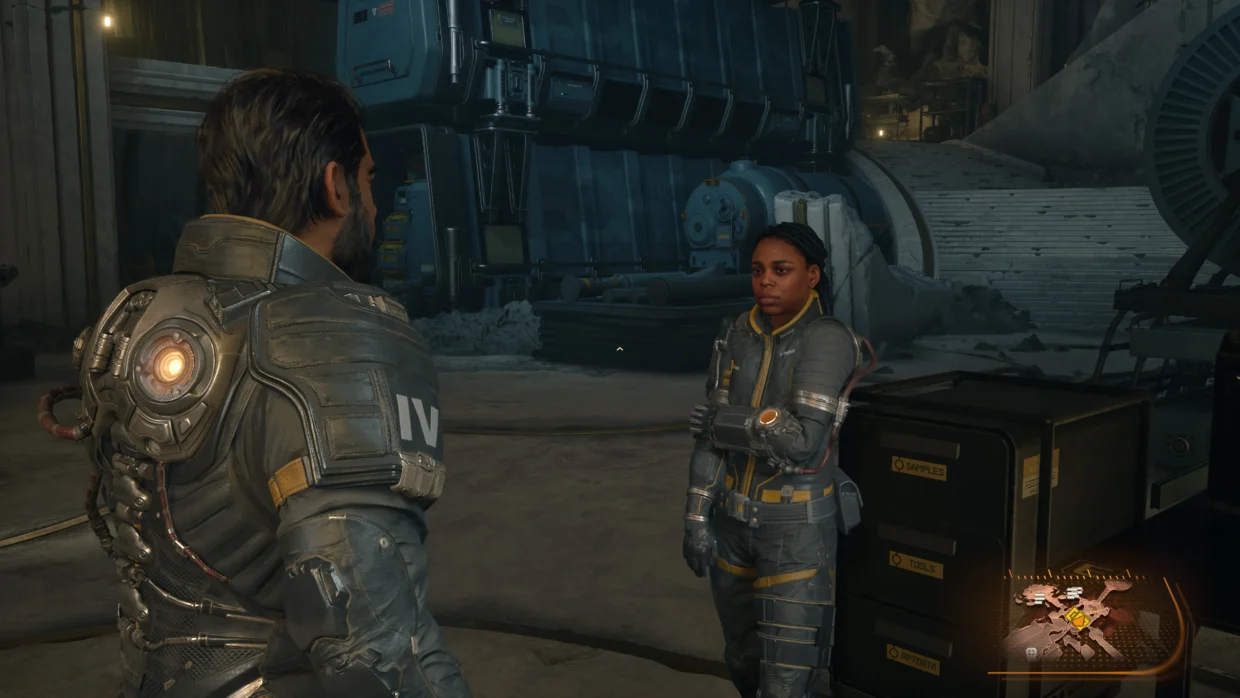
And yes, the story is given a slightly bigger spotlight in SAROS than in Returnal. Arjun wasn’t sent to Carcosa alone. In fact, he was sent with a team, with some members of said team also falling victim to the planet, so to speak. You do get to interact with the surviving team members to a certain degree. And in what little involvement they have in the game, relatively speaking, they are very well animated and voice acted. Their being there also means the opening hours of the game, and the bits between levels, are quite a bit less bleak than Returnal.
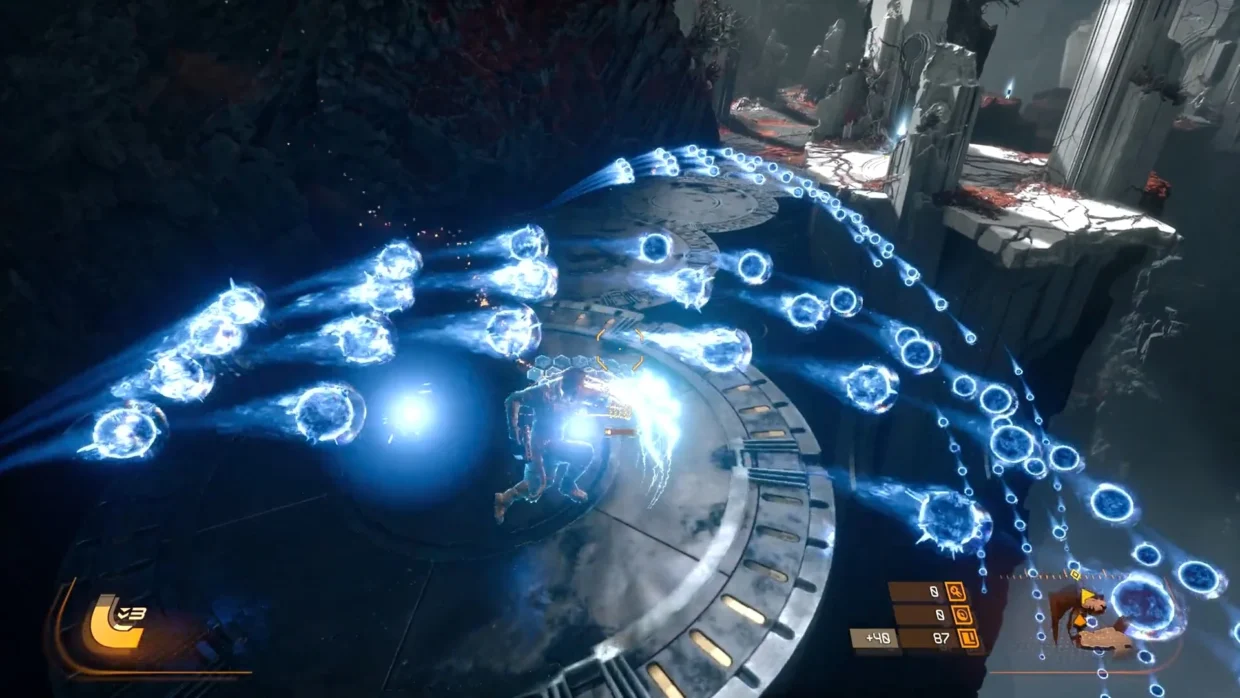
That being said, most of the core of that game returns in SAROS. Which means dancing through projectiles as you get to one objective to the other. Though as I mentioned earlier, the key difference is that, you often do want to dash into the rain of projectiles, and it’s not to take advantage of i-frames either. This is because the new mechanic of the game is the ability to summon a barrier that not only blocks, but also absorbs projectiles as energy.
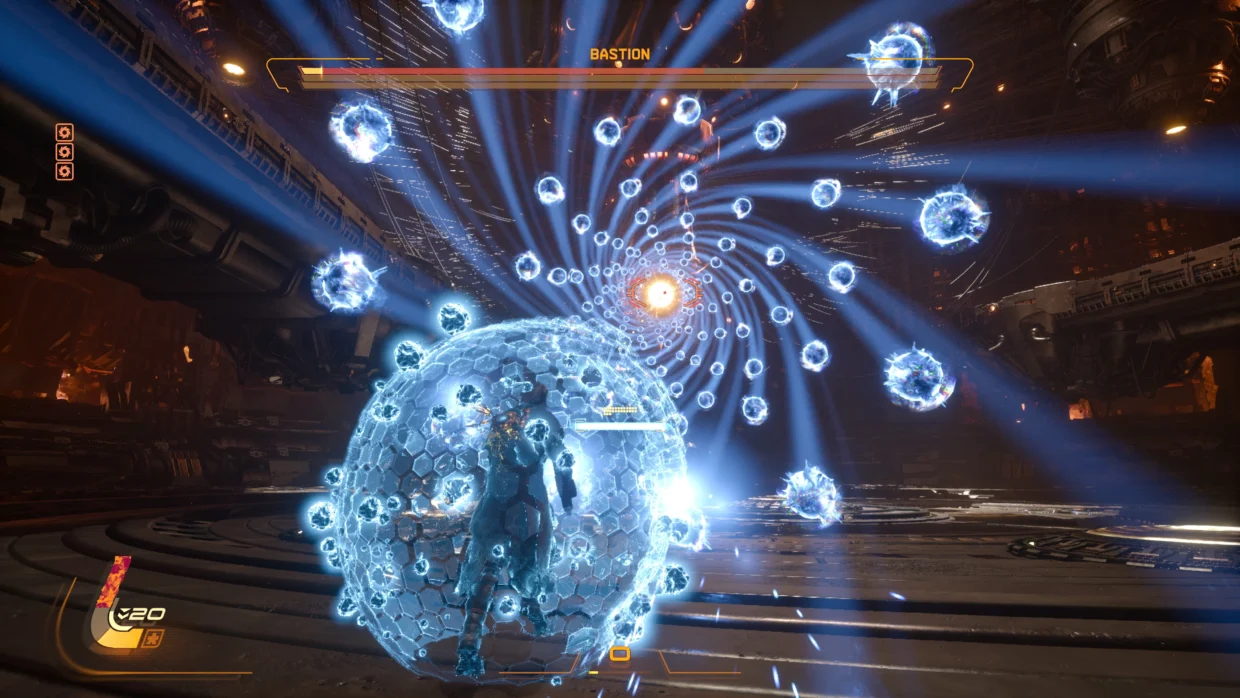
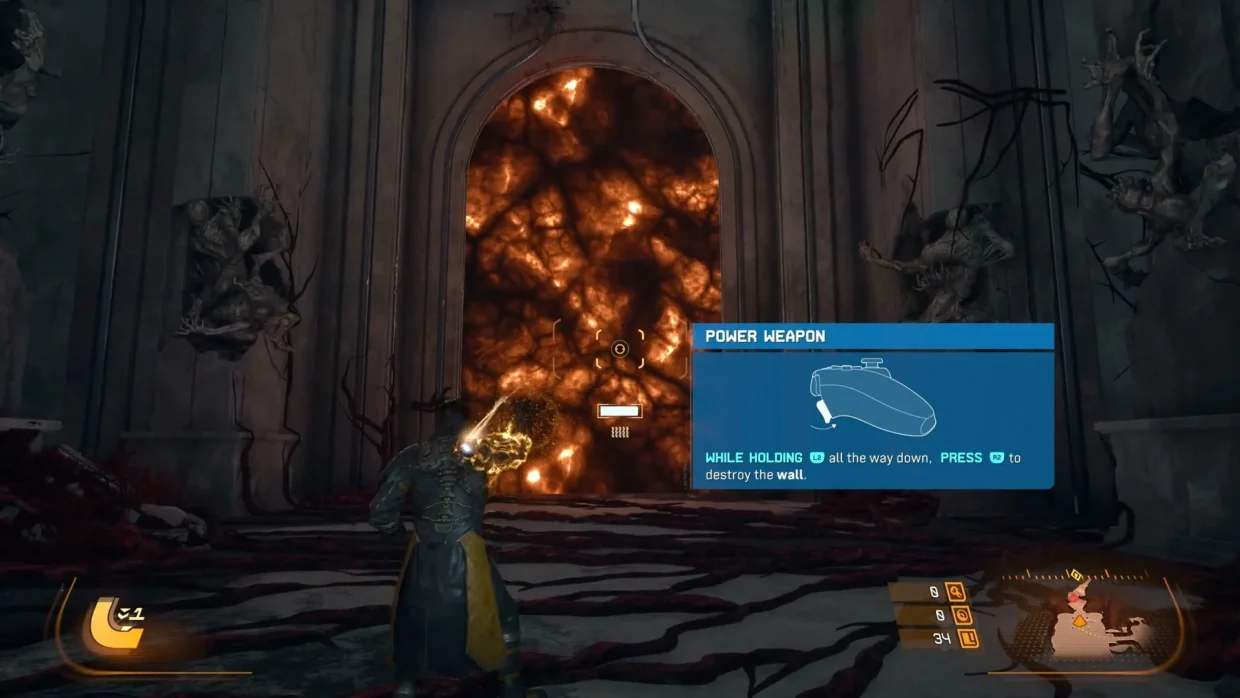
This is not a universal quality, as in you can’t absorb all projectiles, and indeed there are some that cannot even be blocked. And having the shield on consumes your power meter. But absorbing eligible projectiles recharges the very meter the shield itself draws from. It also fuels your Power Weapon. While it’s meant to do immense damage, it’s probably better to think of it as a secondary weapon that you use on occasion to bump up your DPS a bit.
And you use this by holding down the L2 button fully. Yes, SAROS inherits the Returnal feature where half-pressing and fully pressing the L2 button leads to different firing modes. Only now, your primary fire is done while hip-firing. There’s seemingly no aiming down sights this time around, so now you get your alternate fire mode by half-pressing L2. The auto-aim radius varies by weapon, but it’s mostly pretty generous. In fact, it’s generous enough that you can focus fire on a target while also looking out for most of the projectiles flying around. This does take away the need to ADS for the most part, but it can sometimes be a bit annoying when you’re trying to finish off a foe on low-health and a new one pops right in next to it.
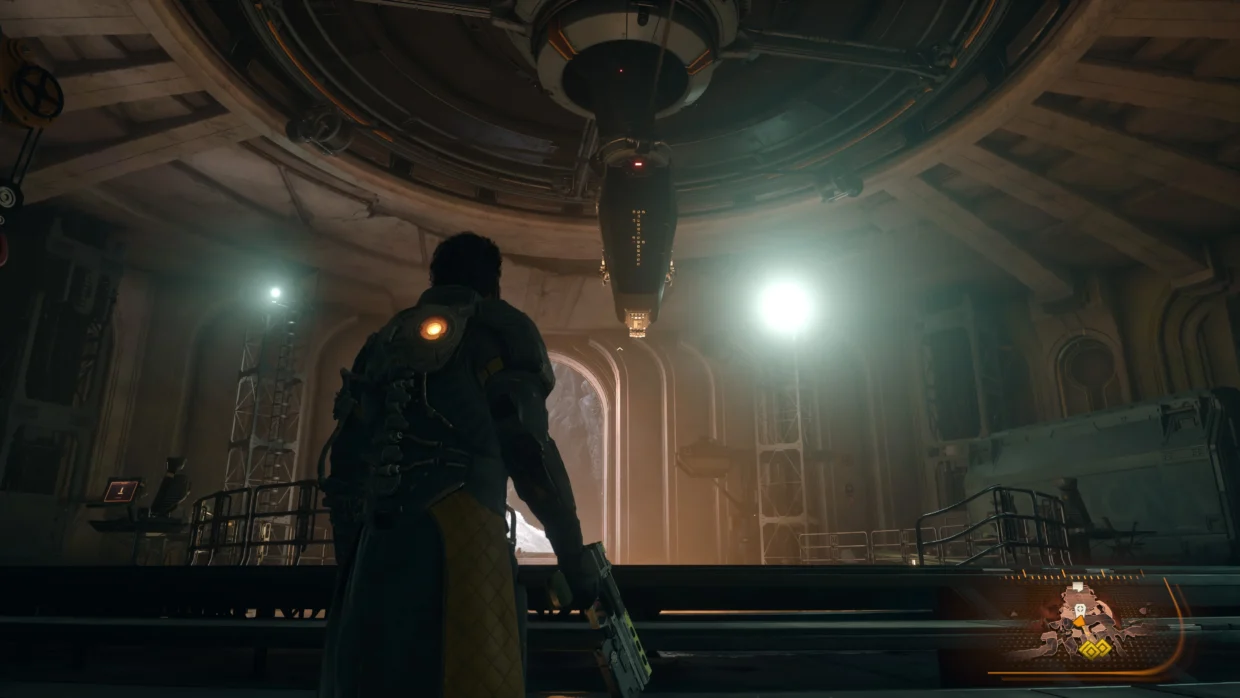
And when a larger foe comes in for a melee strike, you can dash away using the L1 button, complete with i-frames as it’s happening. The default cooldown for this looks to be around a second, before being affected by modifiers that you pick up in each run.
Onto the planet of Carcosa. The in-lore reason to justify your varied roguelite runs is that the planet shapeshifts to some degree every time you die. But even then, after a few loops you’ll begin to recognise some of the layouts. This even applies to some health pickups and “chests”, but for the most part, the randomisation of the layouts means there’s no reasonable way to reliably get what you specifically want.
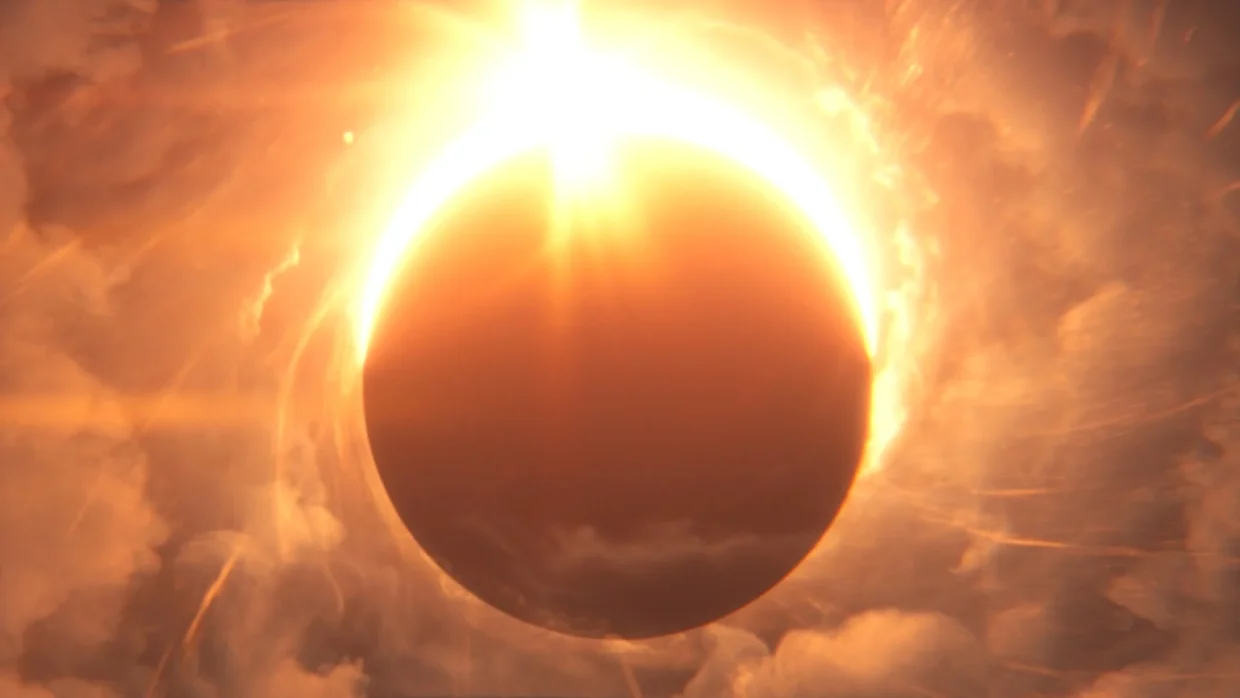
Then we get to the eclipse that was shown in the trailer. It has both story and gameplay significance, and for the former it’s shown pretty early on that it messes with the minds of people. That being said, it’s unclear for now if it has anything to do with Arjun’s ability to respawn. So in that respect, it’s much the same story as Returnal.
Gameplay wise, it is a definite double-edged blade, and personally, a bit of a mixed bag. For one, it looks like there’s no way to get to the boss of a level without triggering an eclipse. But doing so empowers the enemies that spawn, including turning some projectiles they fire red. These corrupted projectiles reduce your “Max Armour Integrity” – basically your health bar – when blocked, and this debuff can only be cleansed by using your Power Weapon. This means either waiting for blue, uncorrupted projectiles to absorb, or taking the max health debuff to charge up your Power Weapon to clear the debuff.
And it’s this counter-intuitiveness that turns the bullet ballet back to being bullet hell. Granted, the shield is still there as a last resort to technically take less damage, but it might take some time adjusting between the two different mindsets of rushing into projectiles with your shield up, and back to avoiding everything if possible. But for what it’s worth, while an eclipse is active, enemies defeated drop more Lucenite when slain.
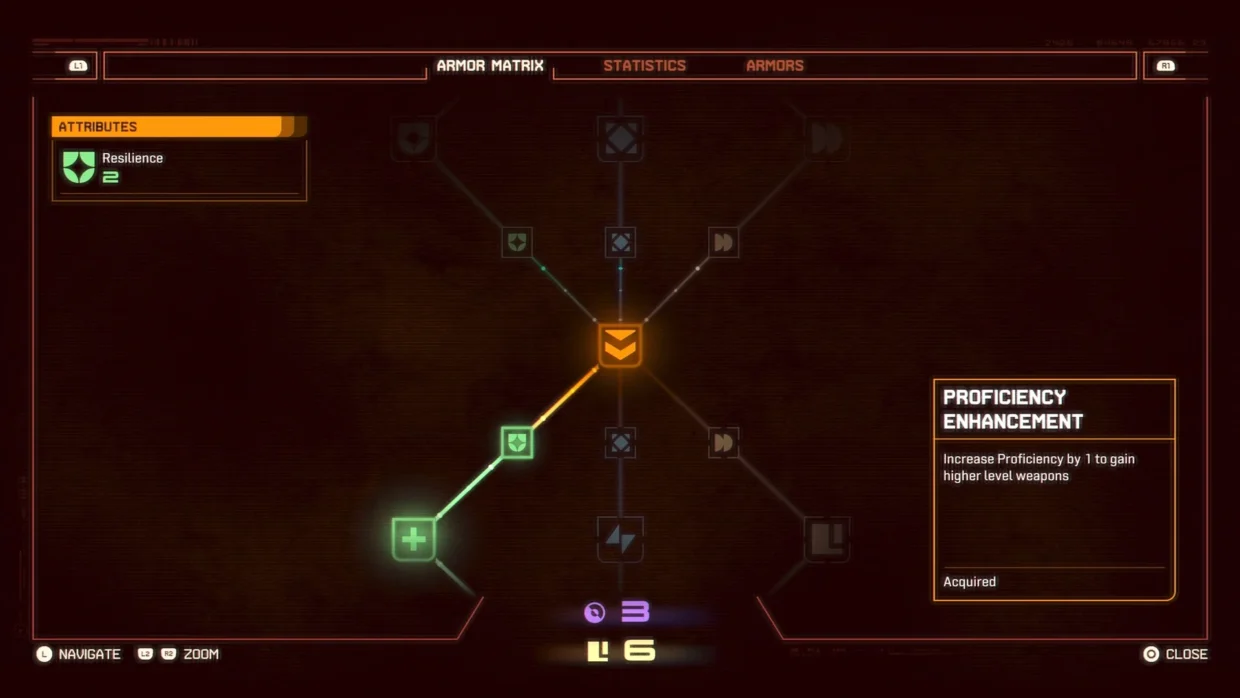
Which brings me to the roguelite mechanic itself. It’s definitely a lot more forgiving in SAROS than Returnal, because while you lose some Lucenite on death, you don’t lose everything. And what’s left can be used to level up and gain some passive skills, as it were, in the Armour Matrix to make your next run a little easier. You also keep the primary weapon that you’re currently equipped with. You can’t keep doing this to cheese the game though, as at some point you’ll hit a node locked behind defeating a boss.
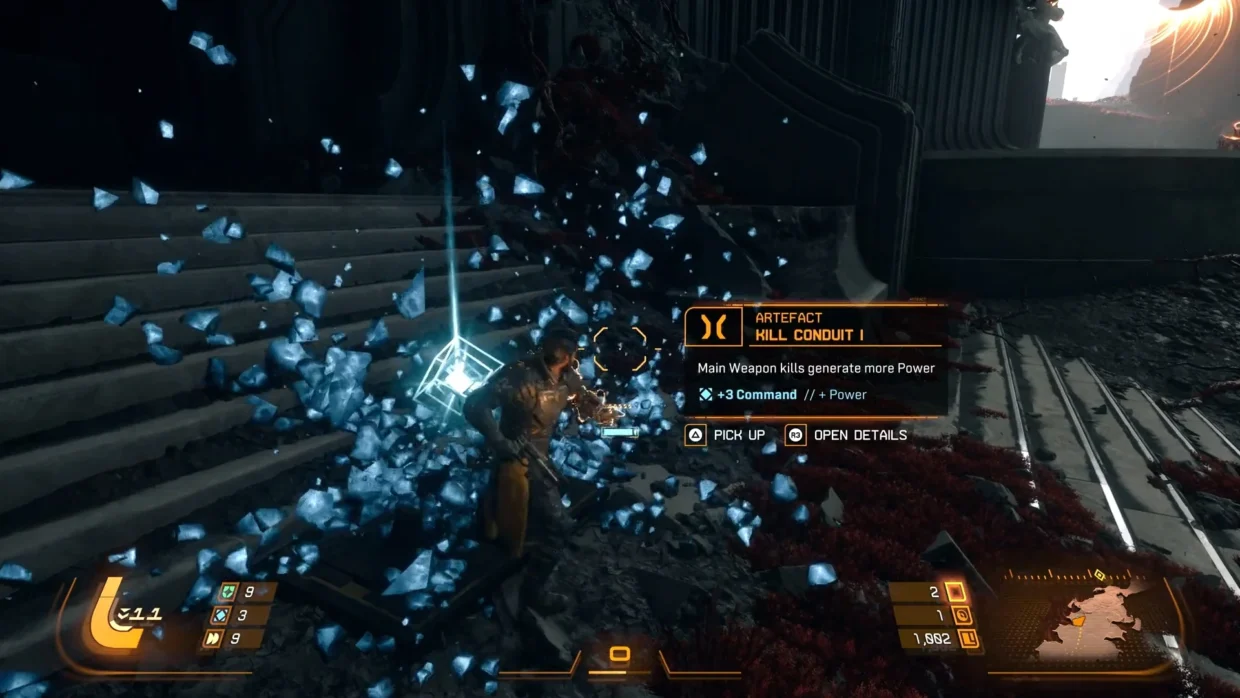
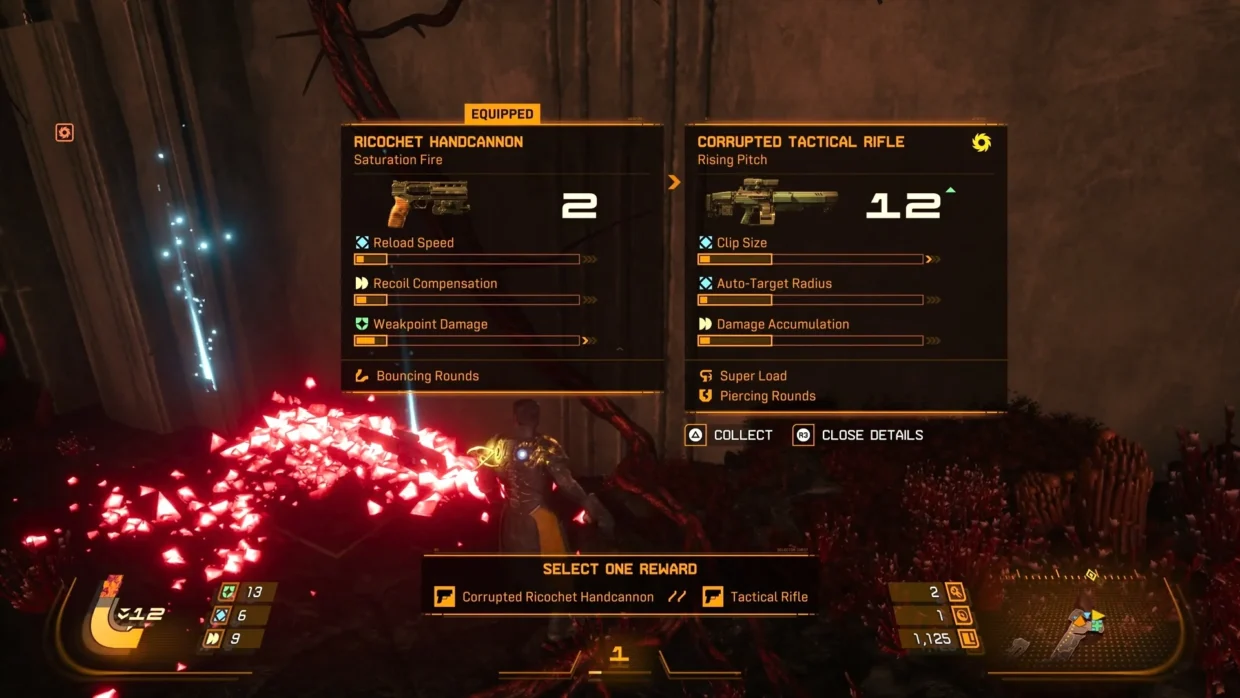
But beyond that, it’s still a roguelite, where you lose all the temporary buffs and debuffs you may pick up during a run. These come in various flavours, like granting immunity for a short while after a kill, or losing Lucenite just for getting hit. You’re still encouraged to swap to new weapons regularly upon starting a new cycle, as regardless of what level it was when you picked it up, it will drop to its level one equivalent upon your respawning.
Further making things easier in SAROS is the much improved mini map. You get the usual markers for healing pickups, collectible voice logs and the like. But most importantly are the flags that show up. The primary path forward will be marked with a yellow flag, until you get to the boss, which has its icon show up instead. But on the way, you’ll see white flags what show alternative paths leading to either a health pickup, a potential temporary upgrade, or even a collectible. Even once you see the boss icon, the yellow flag and white flags are still around, pointing to potential points of interest.
Before I conclude, I should mention the DualSense utilisation of the game. As I’ve already mentioned, you pull L2 down halfway to make use of a weapon’s alternate fire. With adaptive triggers left on, you get a bit of tension to tell you not to overdo it and go into the Power Weapon instead. While not as impactful with R2, you still get some degree of kick-back here that coincides with your weapon recoil. These are criminally underused feature of what’s “next-gen” with the current generation of consoles, but you’d expect at least this much from a first party title.
Also pretty well utilised by SAROS is the haptic feedback and 3D audio. Though in the heat of combat, the latter is probably more noticeable – and therefore useful – of the two. Of course, the ambience and the soundtrack are both great, but you’ll definitely appreciate hearing an enemy winding up an attack off-screen, especially if you miss the on-screen indicator that an attack is coming. And with the number of things going on on-screen, I’ve had that happen to me pretty often.

SAROS, then, is the ideal next game for fans of Returnal. It’s a different story, and while there’s a couple of new mechanics, plus some elements to make the roguelite less punishing, it’s otherwise building off of the same foundation. Though, having said that, I foresee there being some difficulty discourse surrounding those very bits that make the game more forgiving popping up once the game gets released proper.
Speaking of which, SAROS releases on 30 April 2026 exclusively for the PS5 and PS5 Pro.
