


SK hynix recently unveiled its next-generatioon 16 Gigabit, or 16Gb, LPDDR6 DRAM chip. The DRAM is built on the manufacturer’s 6th generation, 10nm 1c process, and is designed to both work and support on-device AI functions on mobile devices.
The memory manufacturer says that its new LPDDR6 DRAM is reportedly 33% faster and 20% more power efficient than the current LPDDR5X memory standard, with operating speeds of up to 10.7Gb/s and beyond. Again, it is designed for mobile devices, including smartphones, tablets, and PC gaming handhelds.
Higher Speeds, Smoother Gaming

While it’s clear that SK hynix is obviously pandering to the realm of AI, having faster operating speeds for RAM is a clear boon, especially for the latter segment that we mentioned: PC gaming handhelds. Unlike the traditional desktop PC and gaming laptops, which typically have their own discrete GPUs installed, systems, gaming handhelds are primarily dependent on the integrated graphics cores, nestled within their core Accelerated Processing Unit (APU).
With an APU, having both higher capacity and speeds means that the integrated graphics can execute graphics-related data, such as texture storage and frame buffering, much faster. A prime example for this would be the difference between the original ASUS ROG Ally and the Xbox Ally X. The former runs on an AMD Ryzen Z1 Extreme and 16GB LPDDR5-6500 RAM, while the latter comes with the more powerful AI Z2 Extreme SoC and faster 24GB LPDDR5X-8000. The APU notwithstanding, the amount of memory and its speed certainly makes a difference in performance, with the Xbox Ally X actually delivering between a 10% and 30% increase in performance.
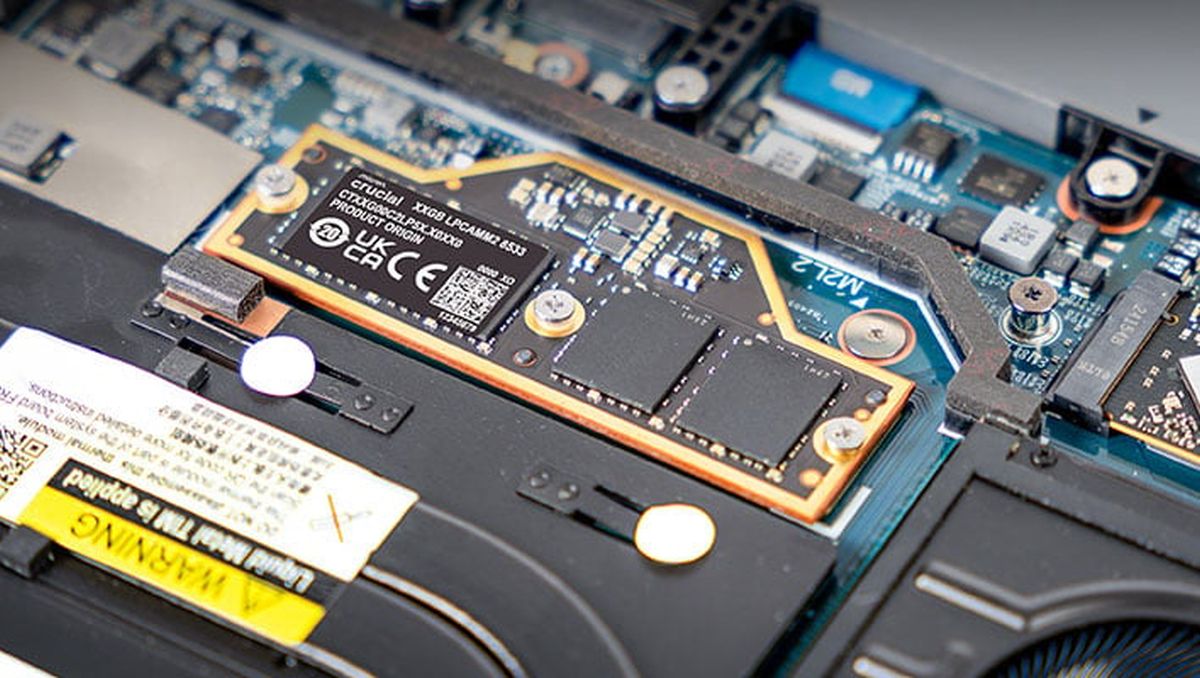
In the case of SK hynix’s LPDDR6 chip, the chip also adopts a sub-channel architecture and dynamic voltage and frequency scaling (DVFS) to optimise performance and energy efficiency. The sub-channel design activates only the data paths needed for specific tasks, while DVFS automatically adjusts voltage and frequency depending on operating conditions.
“We will complete preparations for mass production in the first half of the year and begin supplying the product in the second half,” an SK hynix official said. “This will help build a general-purpose memory lineup optimised for AI implementation.”
(Source: Korea Herald, TweakTown)
