
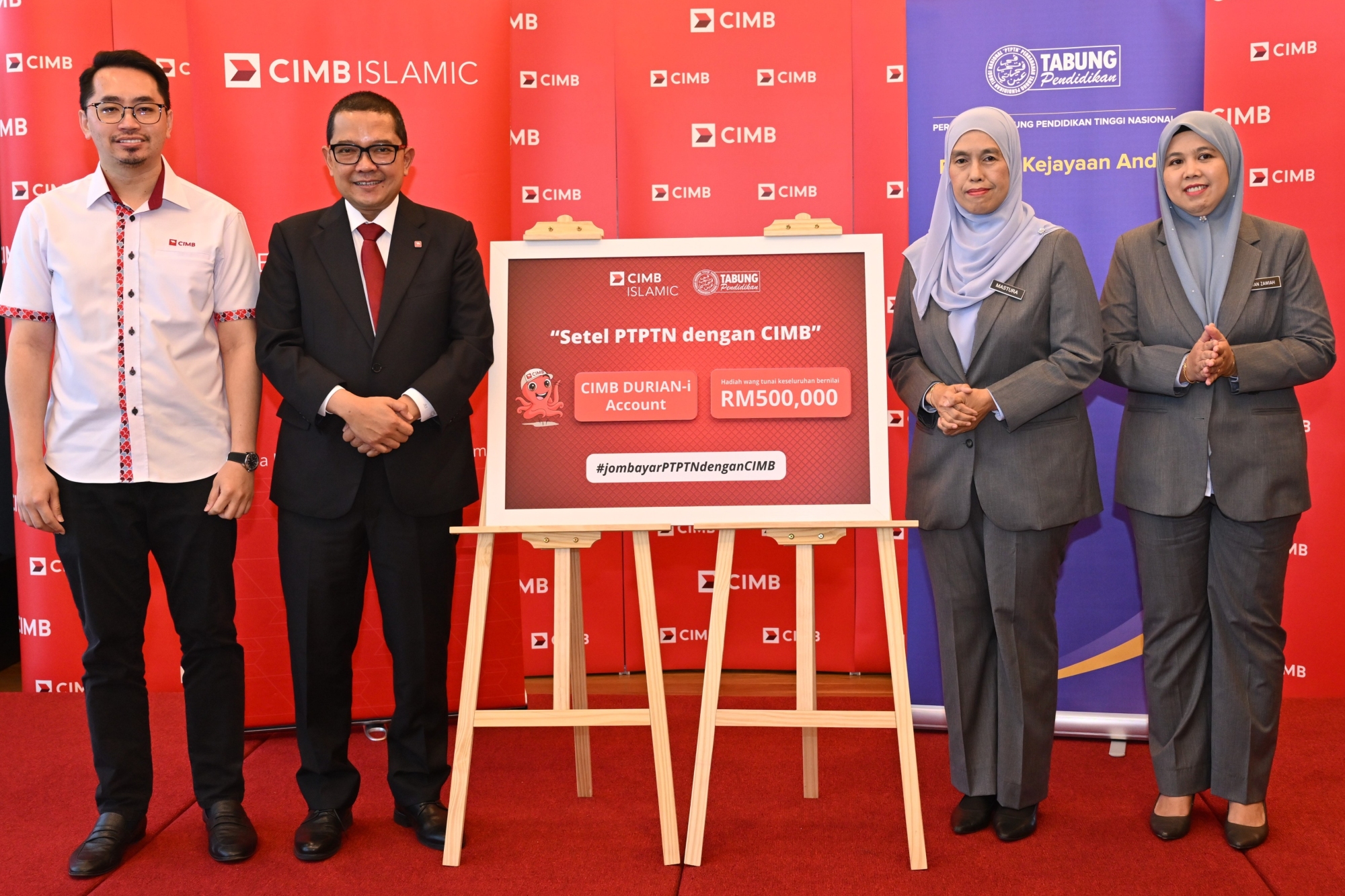
The National Higher Education Fund Corporation (PTPTN) and CIMB Islamic Bank Berhad have formalised an agreement to promote prompt repayment of loans. To that end, both have unveiled a RM500,000 incentive pool that is tied to the latter’s Daily Unrestricted Investment Account-i (DURIAN-i), integrating the cash prize pool into its investment ecosystem.
This is part of what is called the “Setel PTPTPN dengan CIMB” campaign which runs throughout 2026. For its part, PTPTN aims to show that repaying loans can be rewarding, as well as a pathway to personal financial growth. beyond earning reward points, eligible participants may also stand a chance to win gold bars to help kickstart their investment.
PTPTN COO Mastura Mohd Khalid said in a statement that “through this campaign, PTPTN borrowers who win cash prizes are also given additional financial support which indirectly helps them repay their loans or make savings”. On the flip side, the campaign is also noted as being important to ensure PTPTN’s fund remains sustainable for future student loans. As part of the announcement, the corporation shared that it has assisted over 4.27 million borrowers pursue higher education to date, with loan disbursements exceeding RM77.63 billion.
CIMB Islamic CEO Ahmad Shahriman Mohd Shariff says that “Education financing is often the first major financial commitment for many Malaysians, and through this collaboration, we aim to go beyond banking products by supporting PTPTN borrowers with practical solutions and knowledge that encourage disciplined savings, responsible repayment as well as long term
wealth creation. By integrating flexible offerings such as our DURIAN-i account, we seek to make the journey toward financial independence more accessible, meaningful and rewarding”.

Naturally, this requires said participants to have their own DURIAN-i account. This can be created online or at any CIMB branch.
This announcement was made shortly after the Ministry of Higher Education said it is considering extending the PTPTN free education initiative to also cover state government-owned private university students. Deputy minister Adam Adli Abd Halim said “the minister has stressed that we cannot ignore the fact that although state government-owned universities are categorised as private institutions, not all of their students come from high-income families”. He adds that “however, we must also review our fiscal position, as current expenditure is significant”. Which may explain the campaign to incentivise borrowers to replay their loans.
