
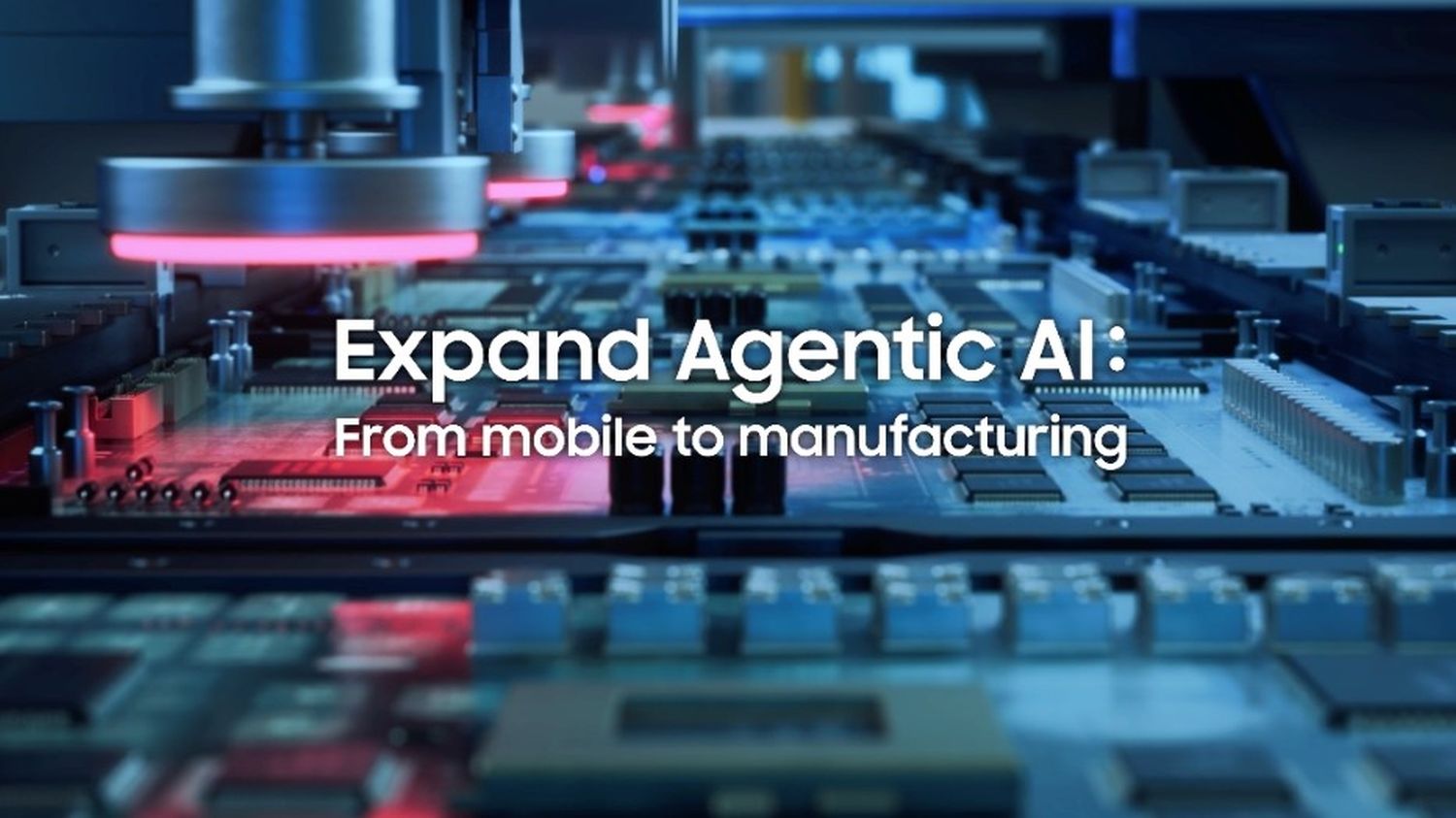
Earlier last week, Samsung announced that it plans on transitioning all its manufacturing operations into “AI Driven Factories” by the year 2030. Basically, it plans on leveraging the new Agentic AI medium and using it to drive autonomous manufacturing across the board.
“As part of the transition, Samsung will implement digital twin-based simulations throughout its manufacturing processes and deploy specialised AI agents dedicated to quality control, production, and logistics. By strengthening data-driven analysis and pre-validation through these agents, the company seeks to elevate quality standards, operational efficiency, and productivity across its global manufacturing network.”
Samsung will also expand AI integration into Environmental, Health, and Safety operations. Through proactive detection and automated hazard prevention systems, the company intends to further enhance workplace safety standards across its production facilities worldwide.”
Agentic AI is widely acknowledged to be the next stage of evolution of Generative AI. As a quick primer, it is basically a new breed of AI systems that can be either semi or fully autonomous, with the ability to analyse, reason, and draw conclusions, all on its own. “Through purpose-built AI agents, Samsung will optimise production workflows, predictive maintenance, repair operations, and logistics coordination — enabling standardised, world-class excellence across every global site.”
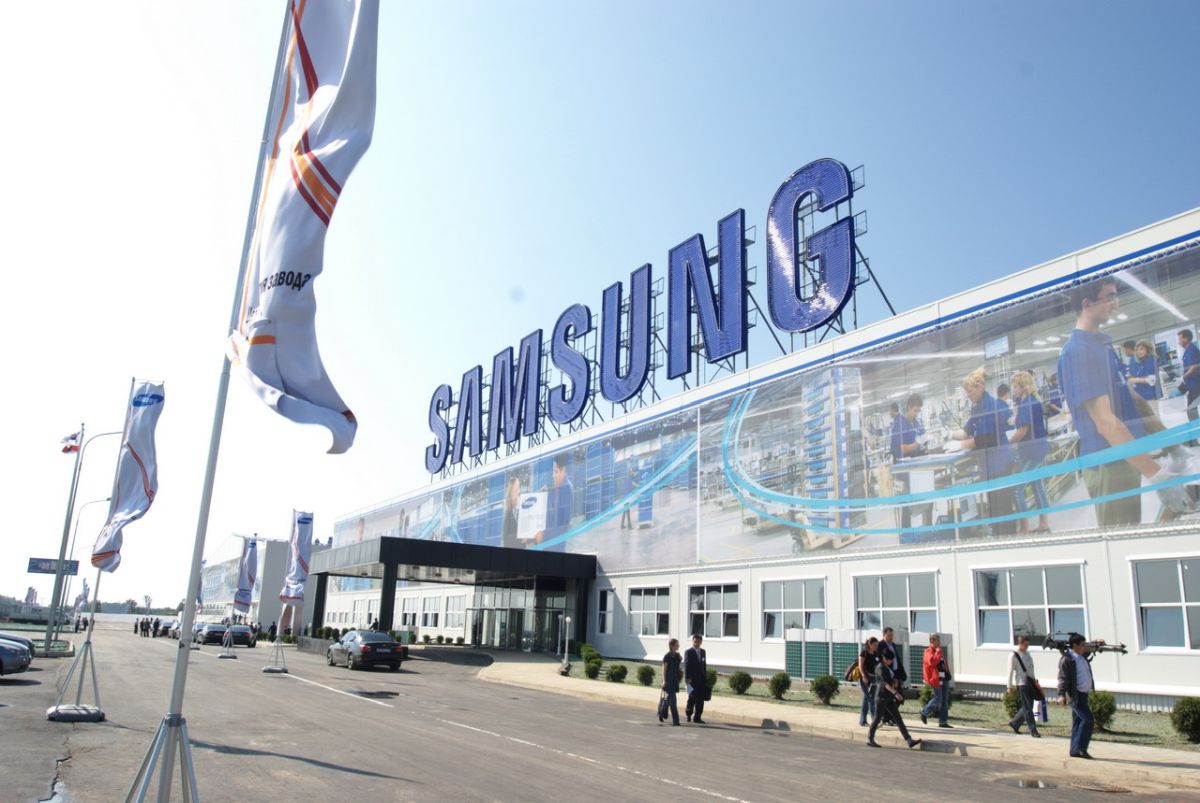
“The next phase of manufacturing innovation lies in building autonomous environments where AI truly understands operational contexts in real time and independently executes optimal decisions.” Young Soo Lee, Executive Vice President and Head of Global Technology Research at Samsung Electronics, said. “We are committed to leading the transformation toward AI-powered global manufacturing innovation.”
We’ve actually writen a breakdown (of sorts) for Agentic AI, along with a couple of use case scenarios.
(Source: Samsung)
