
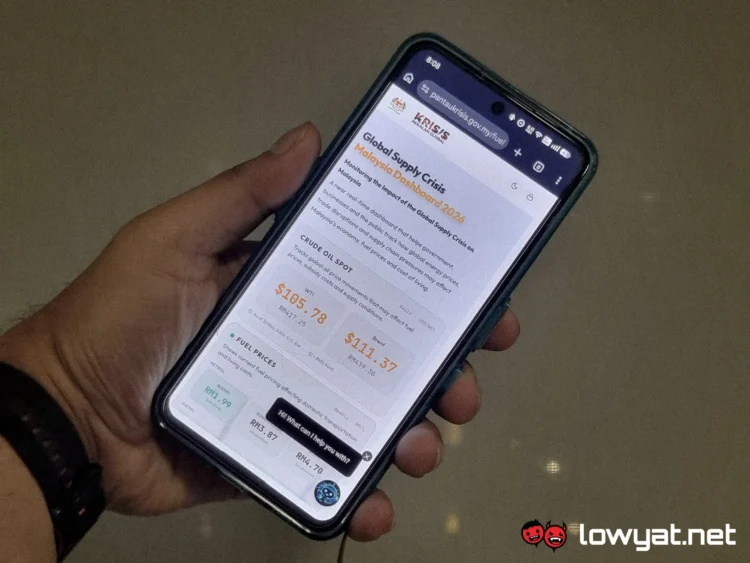
Ongoing geopolitical conflicts, shipping disruptions, and rising costs continue to put pressure on global supply chains, with many Malaysians still feeling the effects through higher prices and supply uncertainty. To improve visibility into the situation, the Malaysian government has launched a new dashboard that tracks the global supply crisis and its impact on the country.
The Ministry of Economy developed the platform, called the Global Supply Crisis Monitoring Dashboard, in collaboration with the Department of Statistics Malaysia (DOSM). In a Facebook post, the ministry said the platform represents a new approach to crisis management by using near real-time data to monitor global supply disruptions.
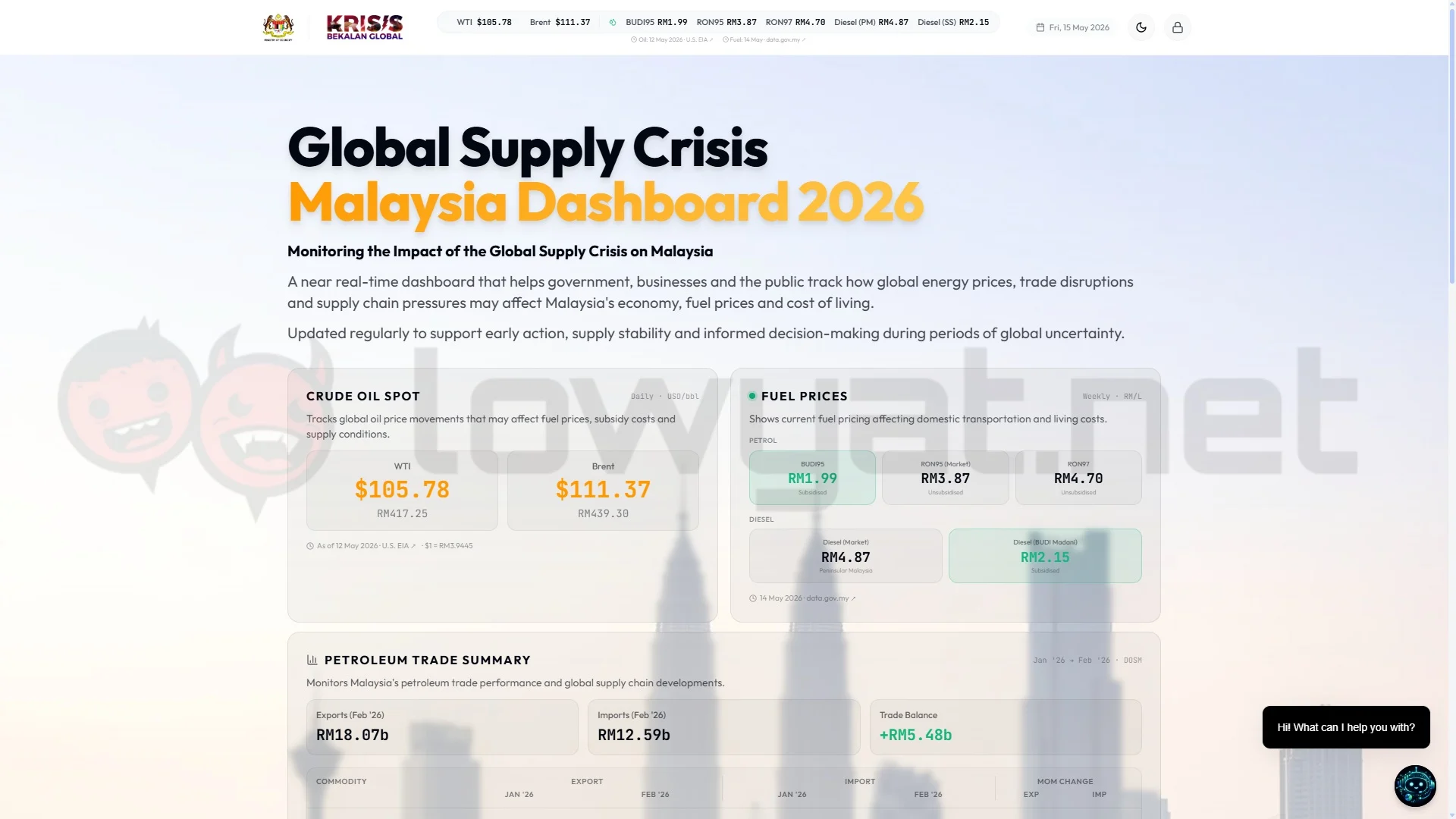
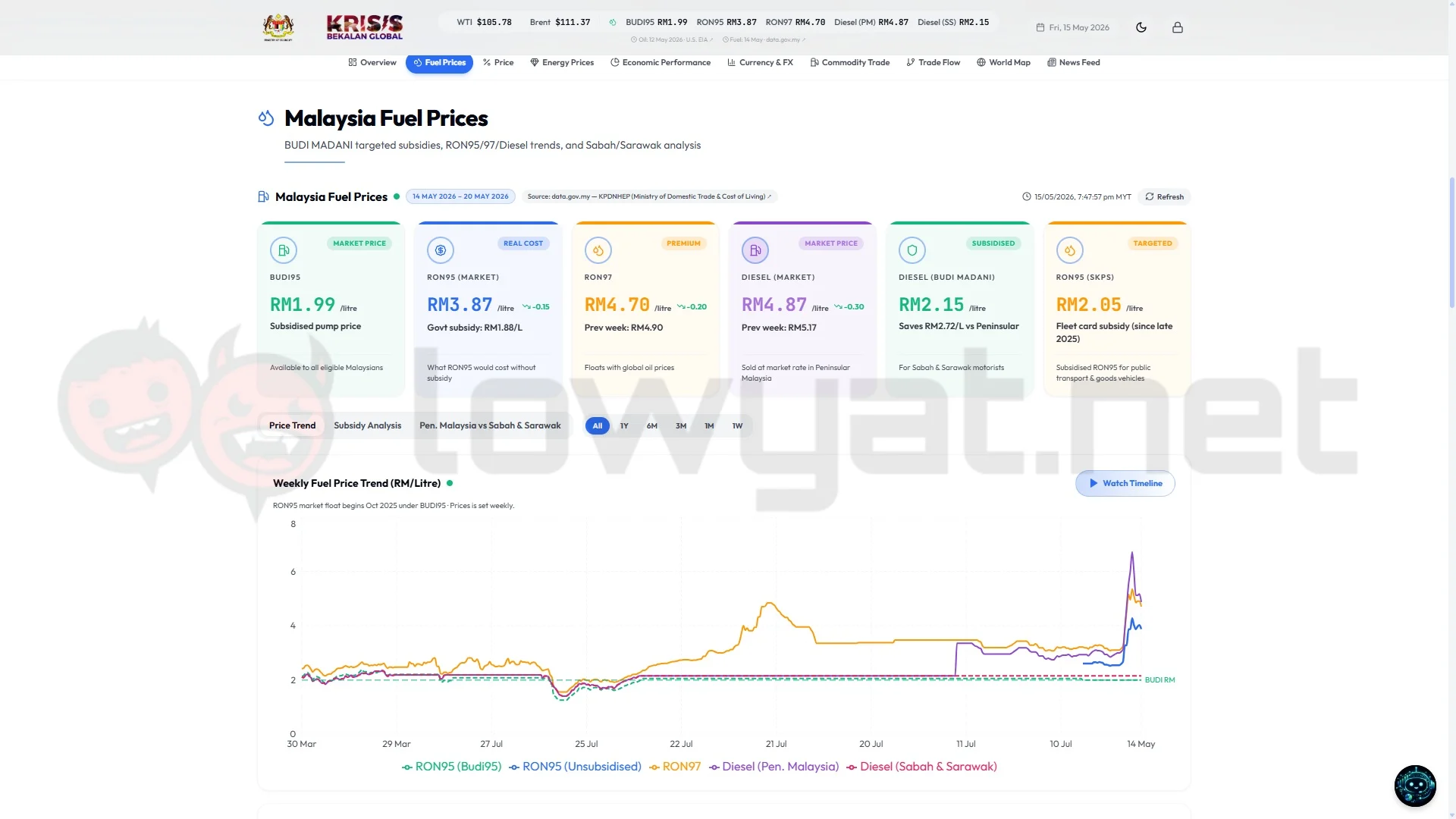
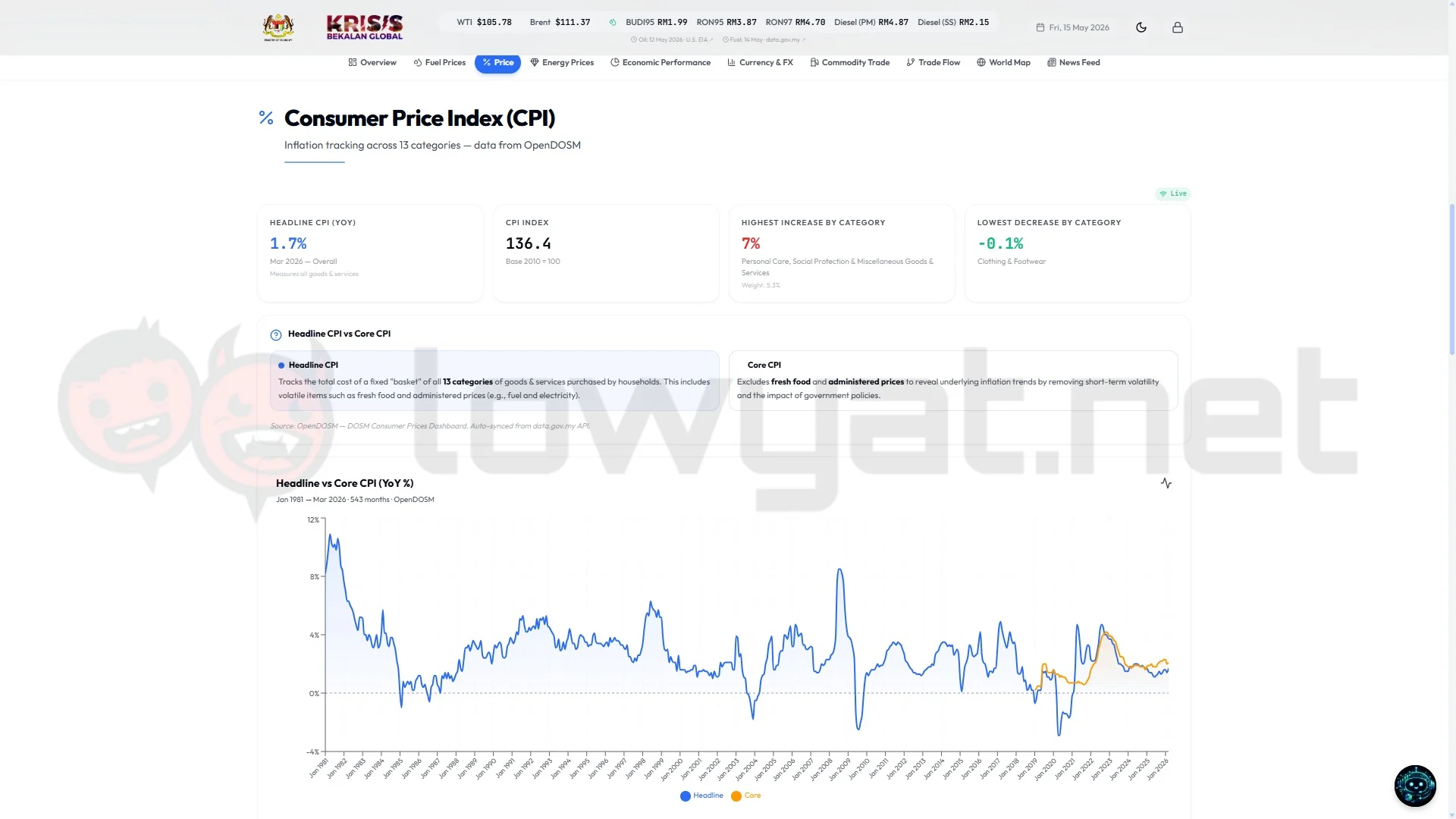
Users can access the dashboard through the official link or by scanning the QR code posted on the ministry’s social media platforms. The dashboard tracks a variety of data, including fuel prices, petroleum trade performance, global energy prices, national economic indicators, currency exchange trends, and commodity trade analytics.
Upon opening the website, users will see an overview of crude oil spot prices, fuel prices, and petroleum trade summaries. Users can also click on individual tables to view the original data sources.
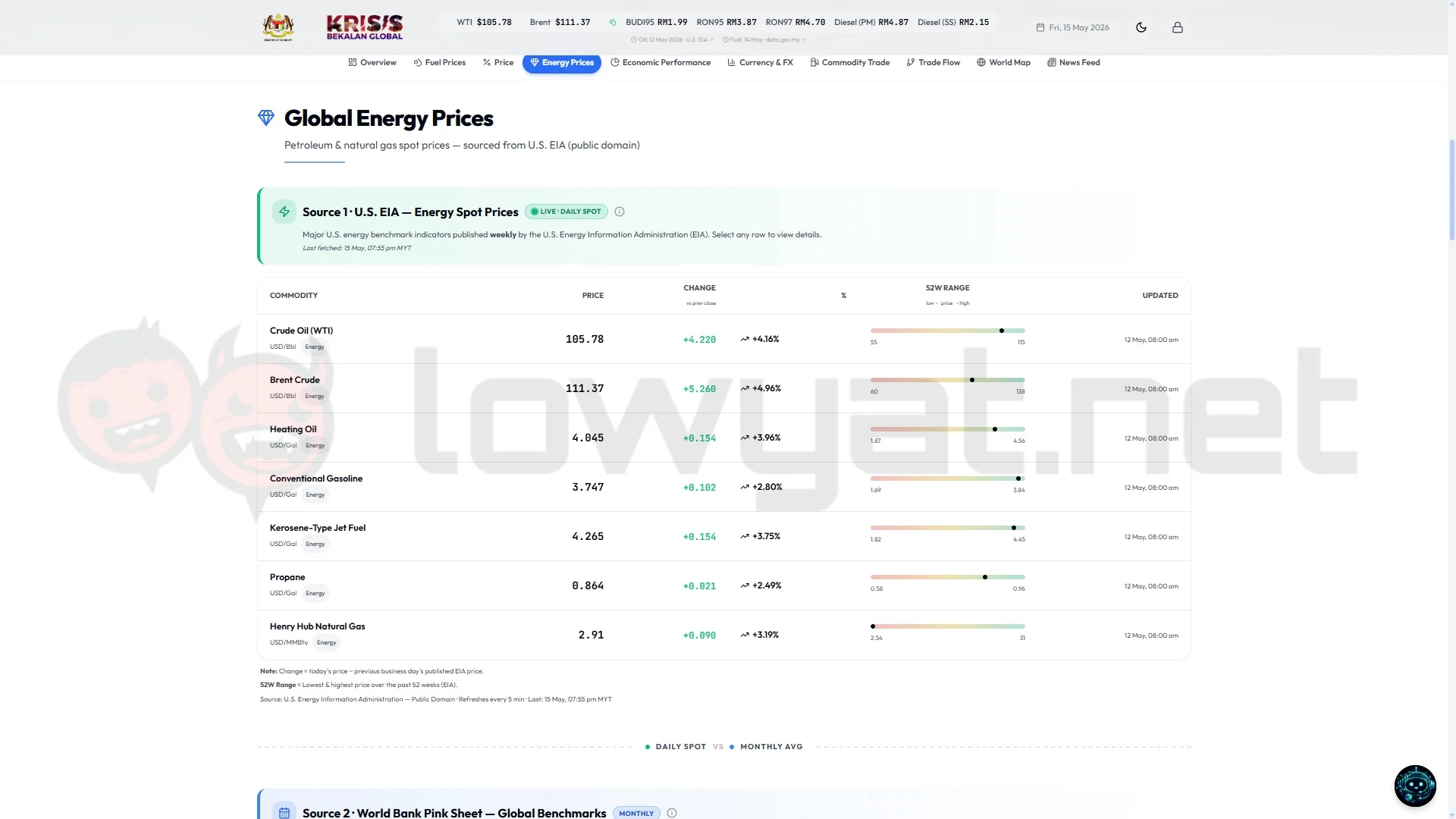
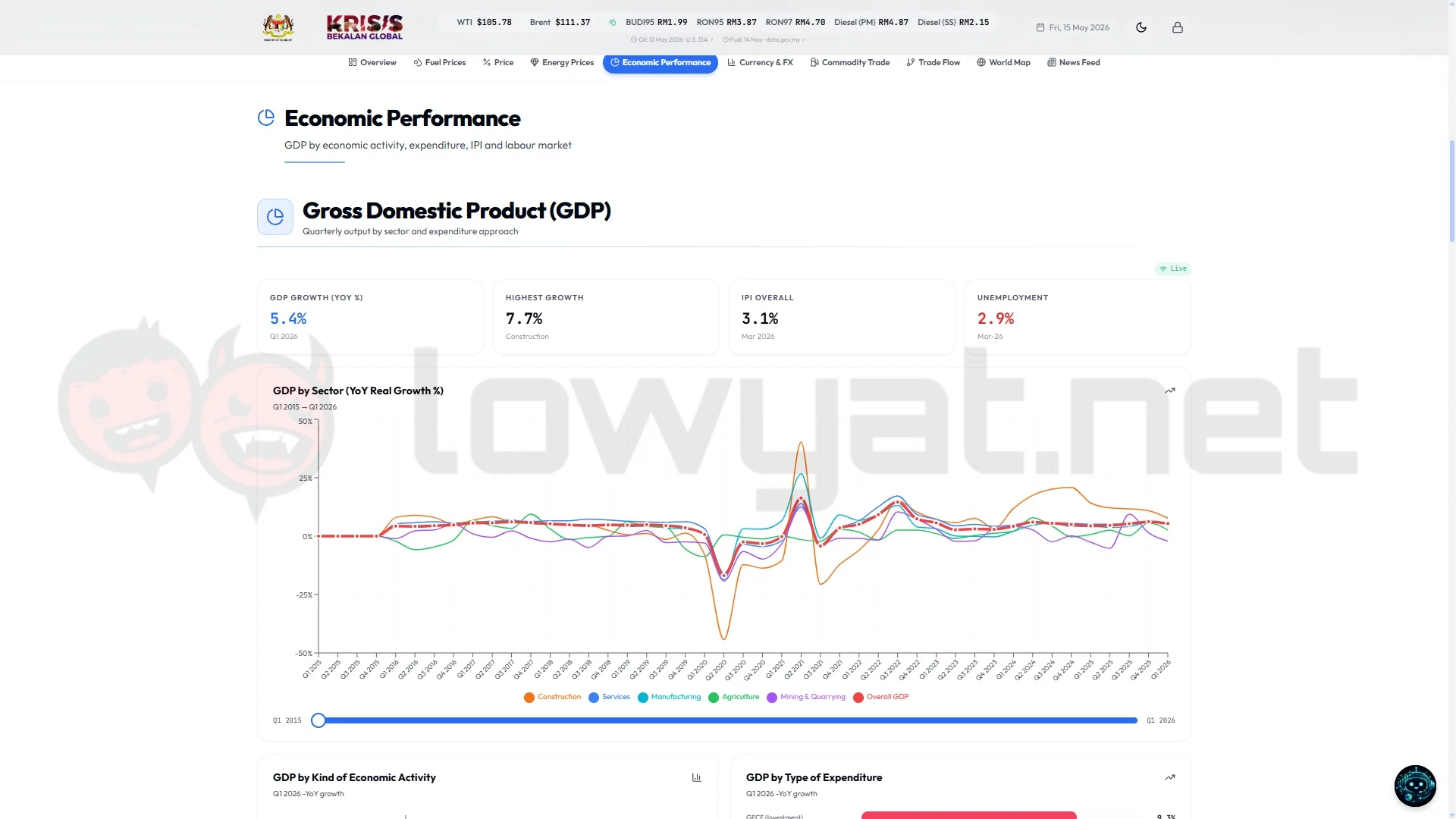
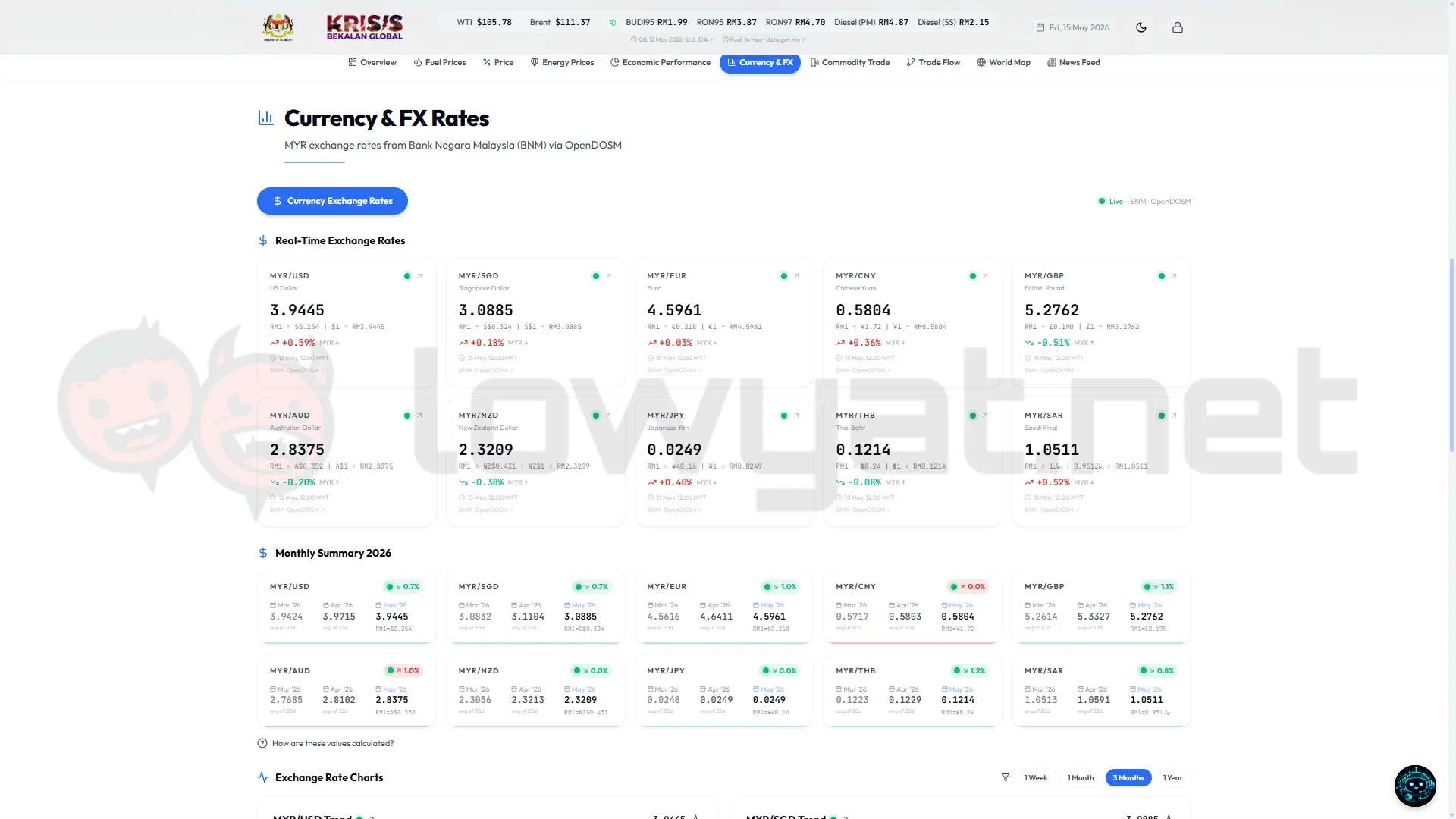
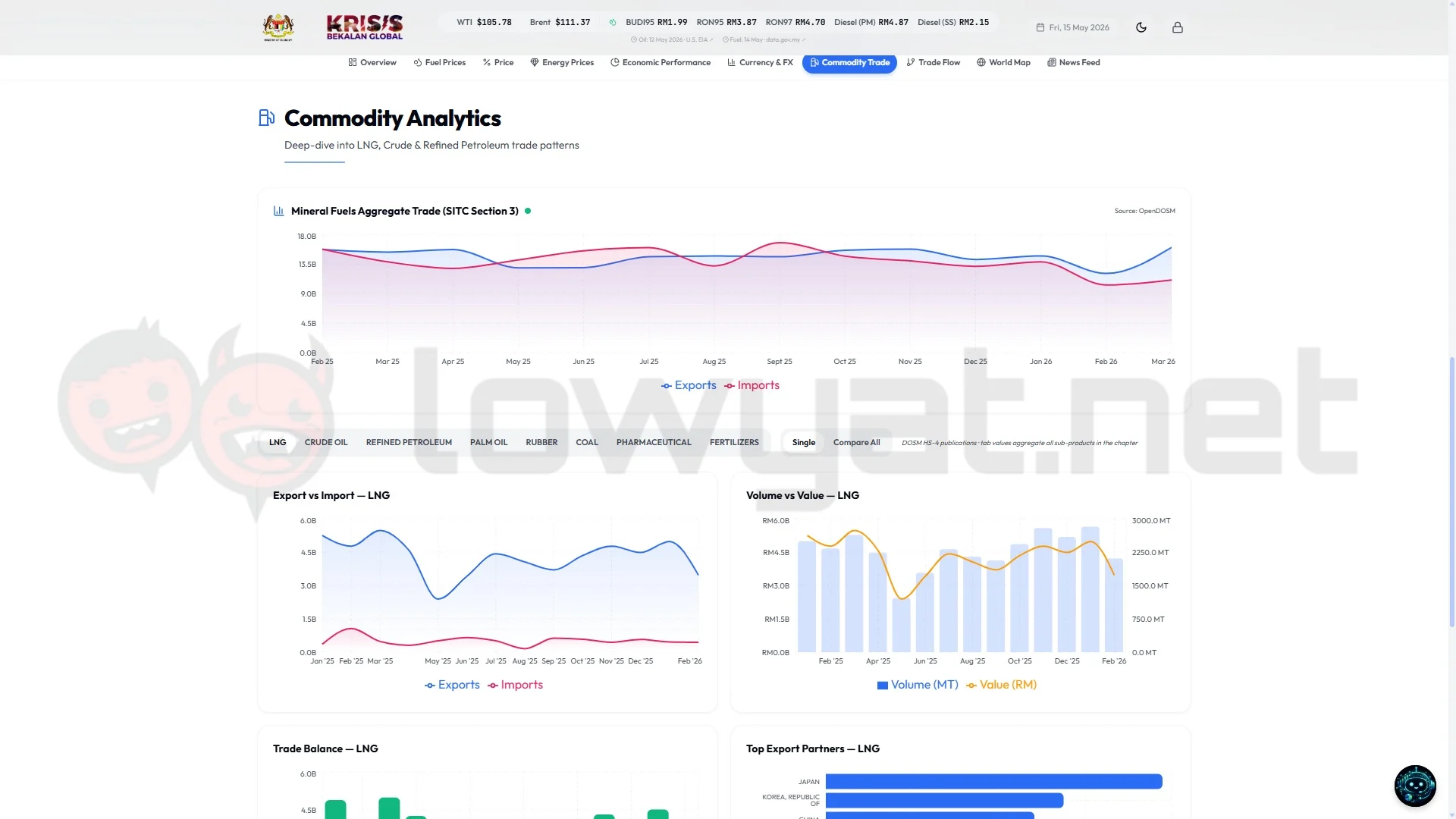
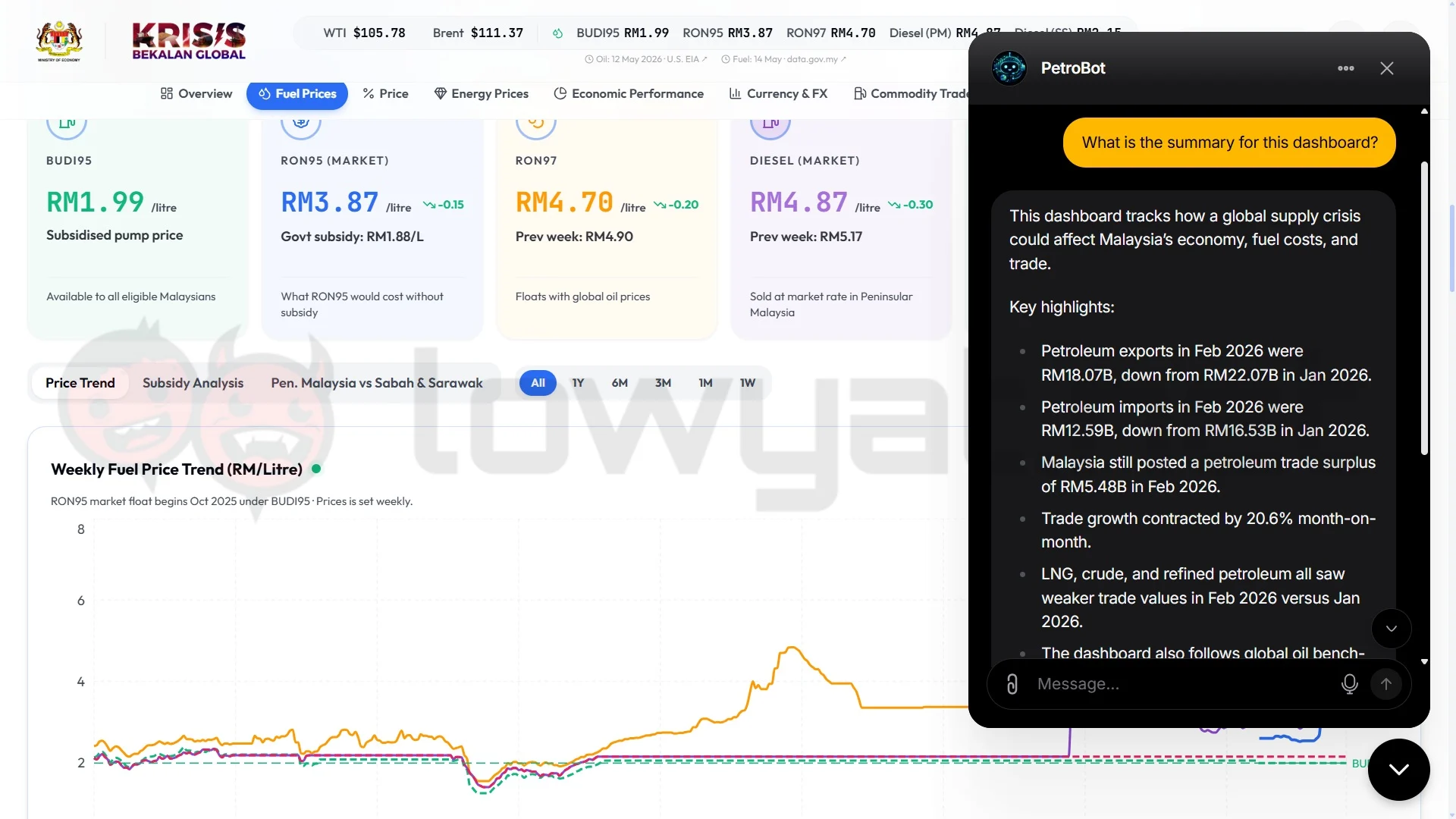
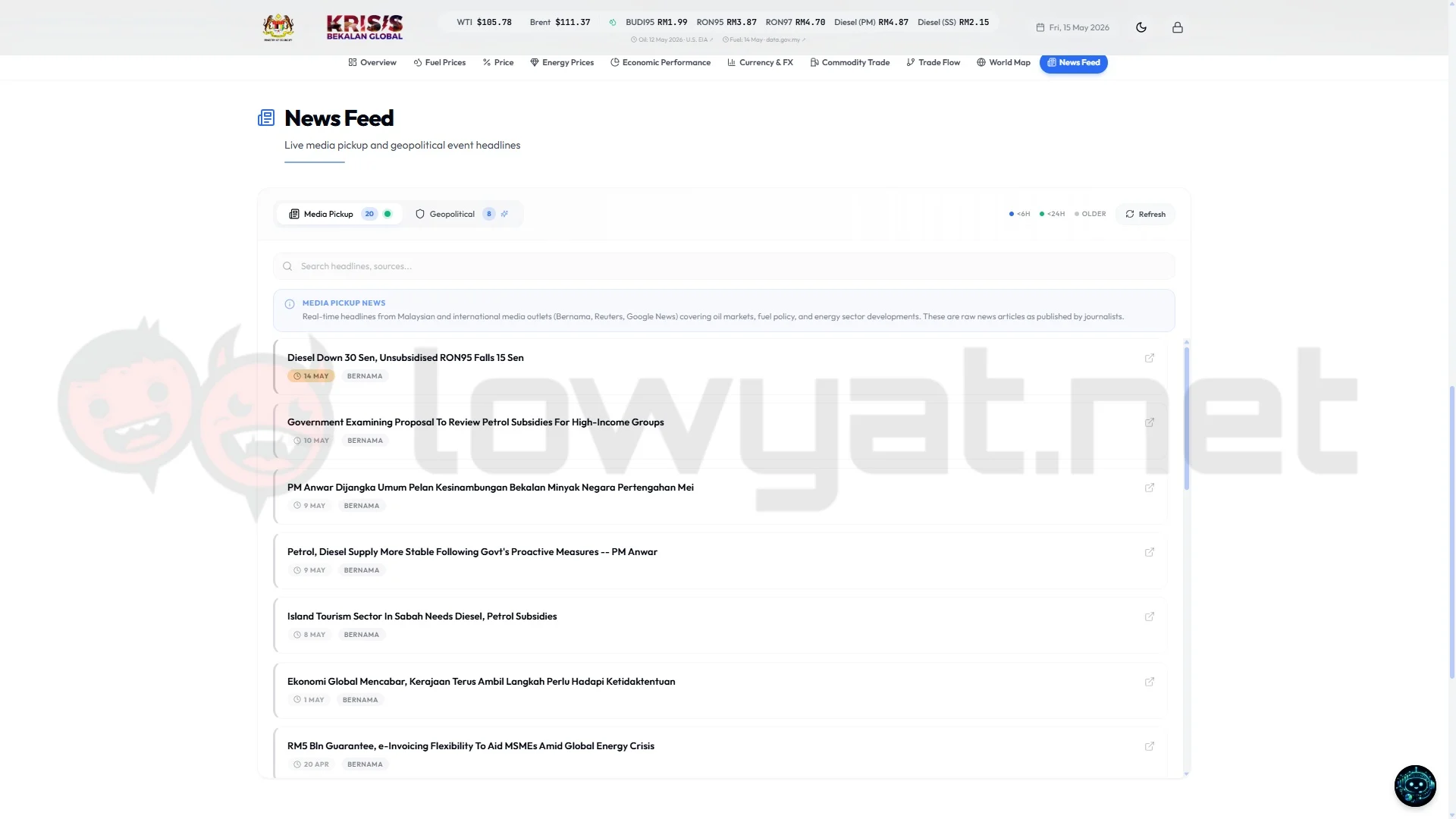
For those who are less familiar with reading graphs and charts, the website also includes an AI assistant that can help summarise the information displayed on the dashboard. Additionally, there is also a news feed that can help users determine what may be causing fluctuations in the market.
“Among others, the dashboard will display information related to energy issues, commodities, cost of living, economic performance and trade flows,” Economy Minister Akmal Nasrullah Mohd Nasir said. He mentions that the dashboard would provide the public with a transparent and easily accessible centralised platform to monitor developments related to the global supply crisis.
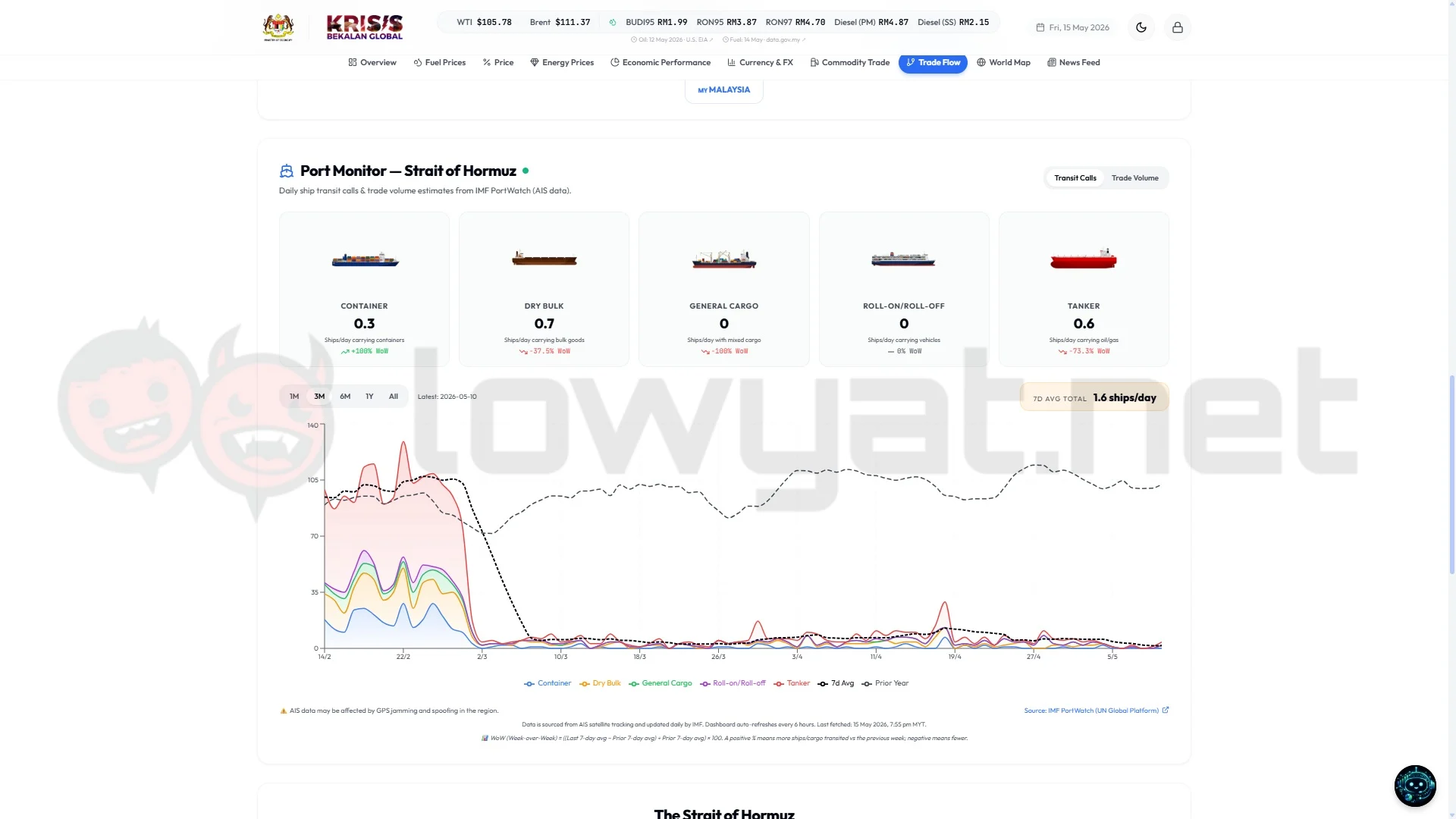
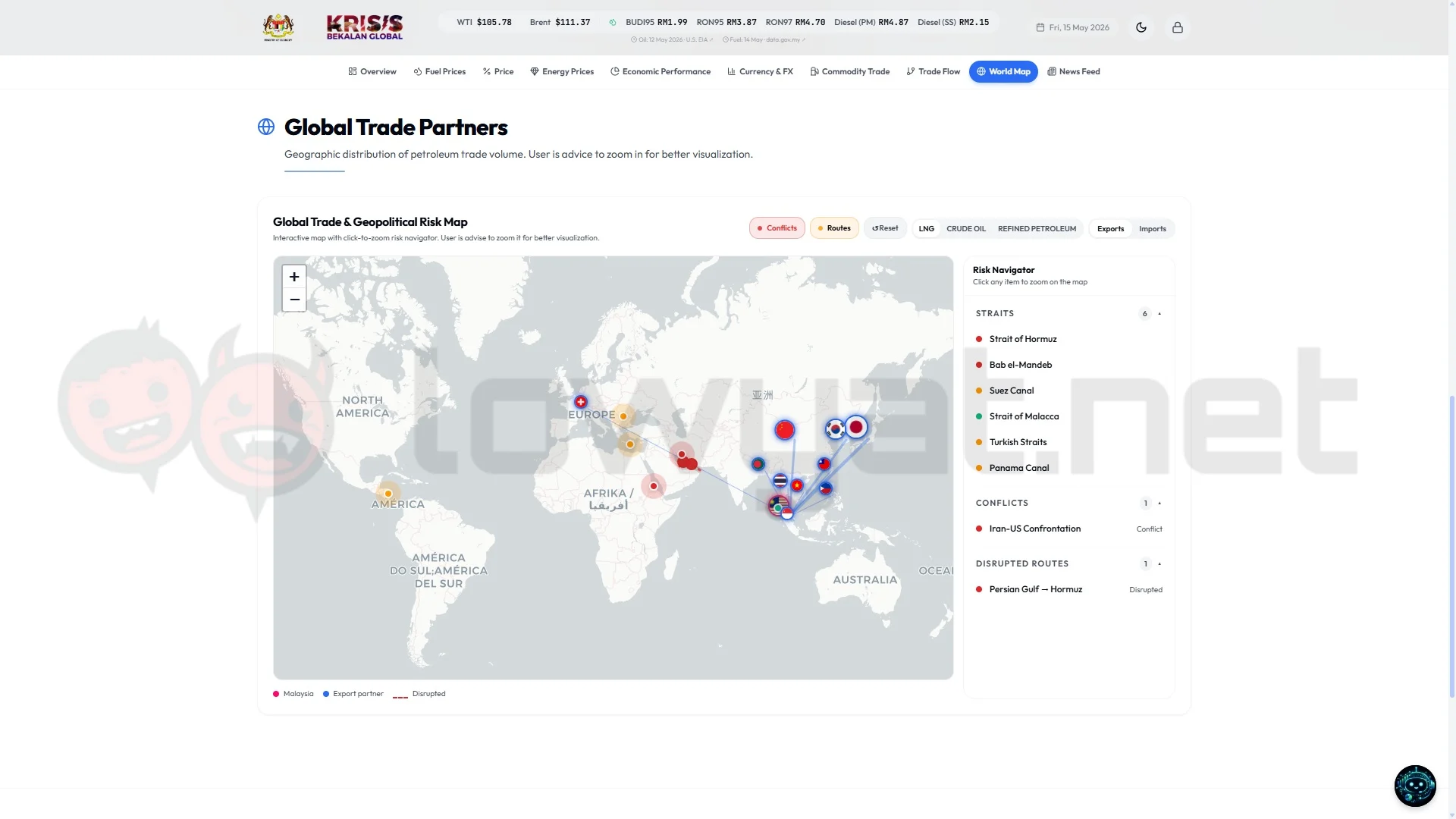
Nasir also said the government is developing a separate internal platform for monitoring crisis developments and identifying potential risks early on. According to him, the platform will help agencies formulate mitigation strategies and response measures in a more structured manner.
The Economy Minister notes that the dashboard marks “an important shift in the way we manage crises”. He further adds that “the new approach is also important to ensure the government is better prepared to face global economic uncertainties, including supply chain disruptions, commodity price fluctuations and cost of living pressures.”
(Source: Bernama, New Straits Times)
