

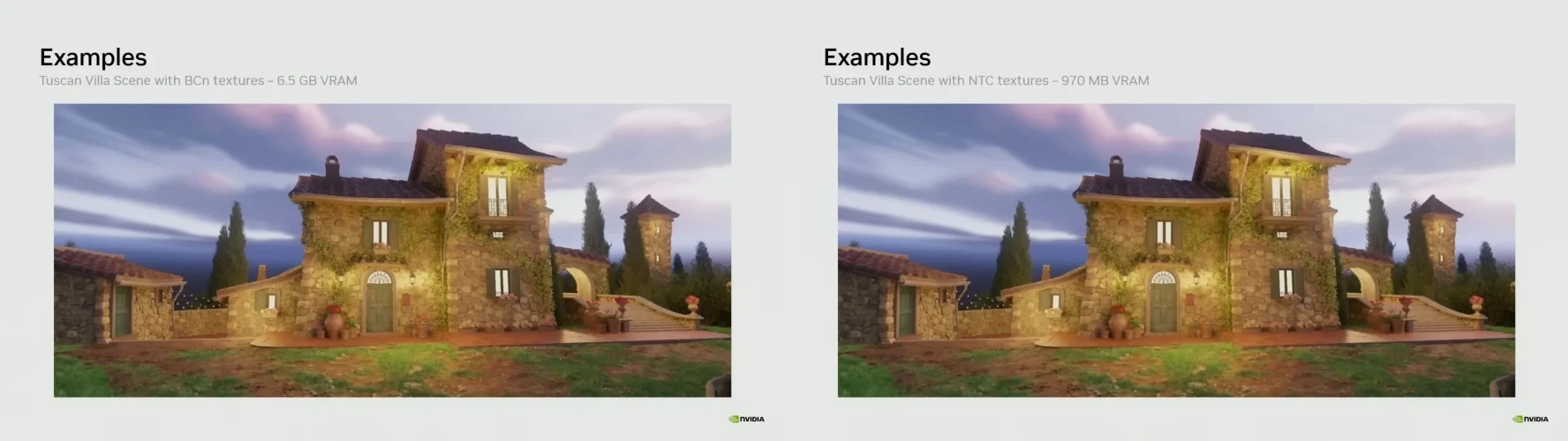
Earlier during the annual NVIDIA GTC 2026, and just after its CEO, Jensen Huang, announced the imminent arrival of DLSS 5, there was a breakout session where some developers talked about applying neural rendering in practice. Specifically, the talk was about Neural Texture Compression (NTC) being put into practice.
Basically, NTC is a technology that is created by NVIDIA, and instead of conventional block-based compression techniques, NTC enables developers to use small neural networks that unpack textures in virtually any scene. To put that into plain speak, and to use gaming as a medium, it basically unpacks textures and assets where and when necessary, rather than having them unpacked and loaded at the start of every gaming session. As an example, Battlefield 6 still does that; it’s a damn sight faster than other games, primarily due to the fact that you’re running the game off a PCIe 4.0 or PCIe 5.0 SSD, but you get the idea.
Why Is This Important?

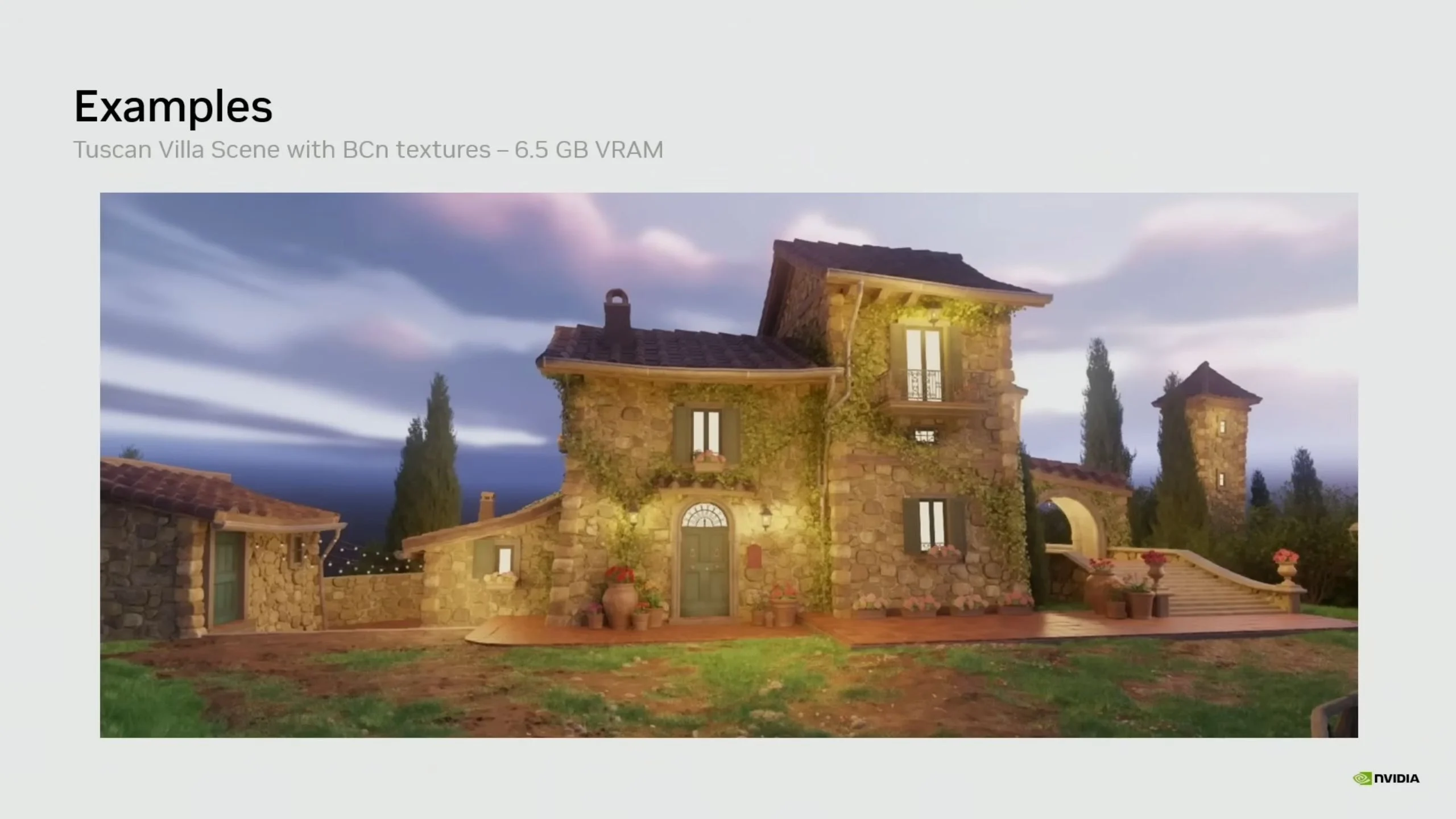
Well, given how NTC works, using neural networks to unpack textures not only reduces file sizes dramatically and make game more manageable, it would also cut down on VRAM usage significantly. In one example, the NVIDIA engineers ran a Tuscan Villa scene as a demo. Without neural rendering and using standard block compression, the scene takes up 6.5GB of VRAM.
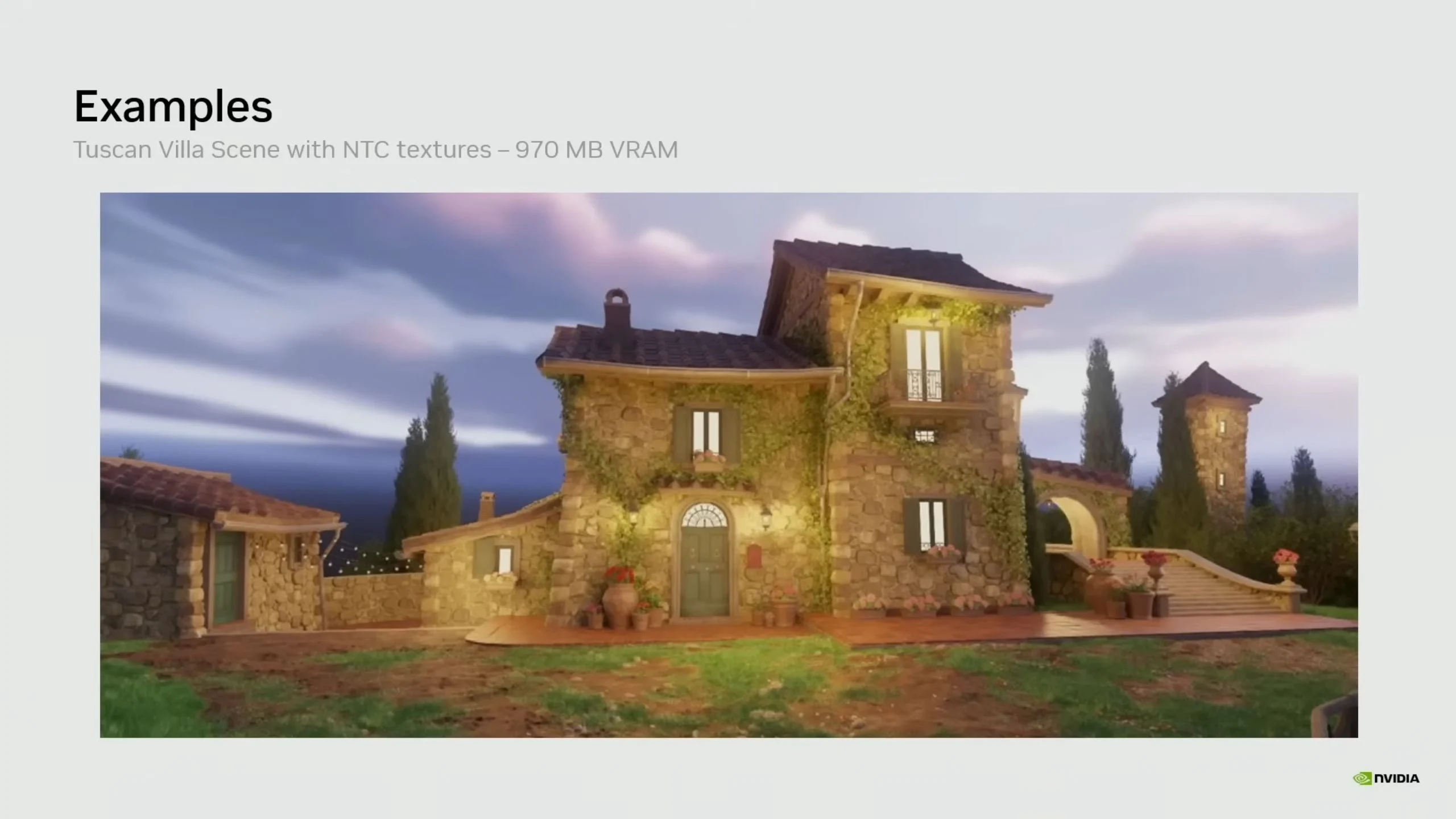
However, with NTC, it basically reduced that compression to just 970MB, with the final images looking identical. Well, almost identical; the NTC actually managed to preserve more details. But yes, the punchline here is more for less.
The underlying technology with NTC also carries forward with another AI-based rendering technology called Neural Materials. Basically, it follows the same logic, but instead of using large, separate texture packs and running the more complicated BRDF maths, Neural Materials simply compresses said data and then decodes it with a smaller network. The end result was, by NVIDIA’s demo, a reduction of channel usage from 19 to eight, and up to 7.7x faster 1080p render times in one test scene. This, in turn, is technology that can be applied to upscalers, which in this case, is what NVIDIA is clearly planning on doing with DLSS 5 when it becomes available.
And just so we’re clear: if you’re thinking that neural rendering is just more AI slop, it is actually the opposite. This use of AI isn’t generative, and NTC essentially requires training on specific sets of textures, meaning that there is virtually no chance of AI hallucination.
(Source: NVIDIA, Tom’s Hardware, Videocardz)
