
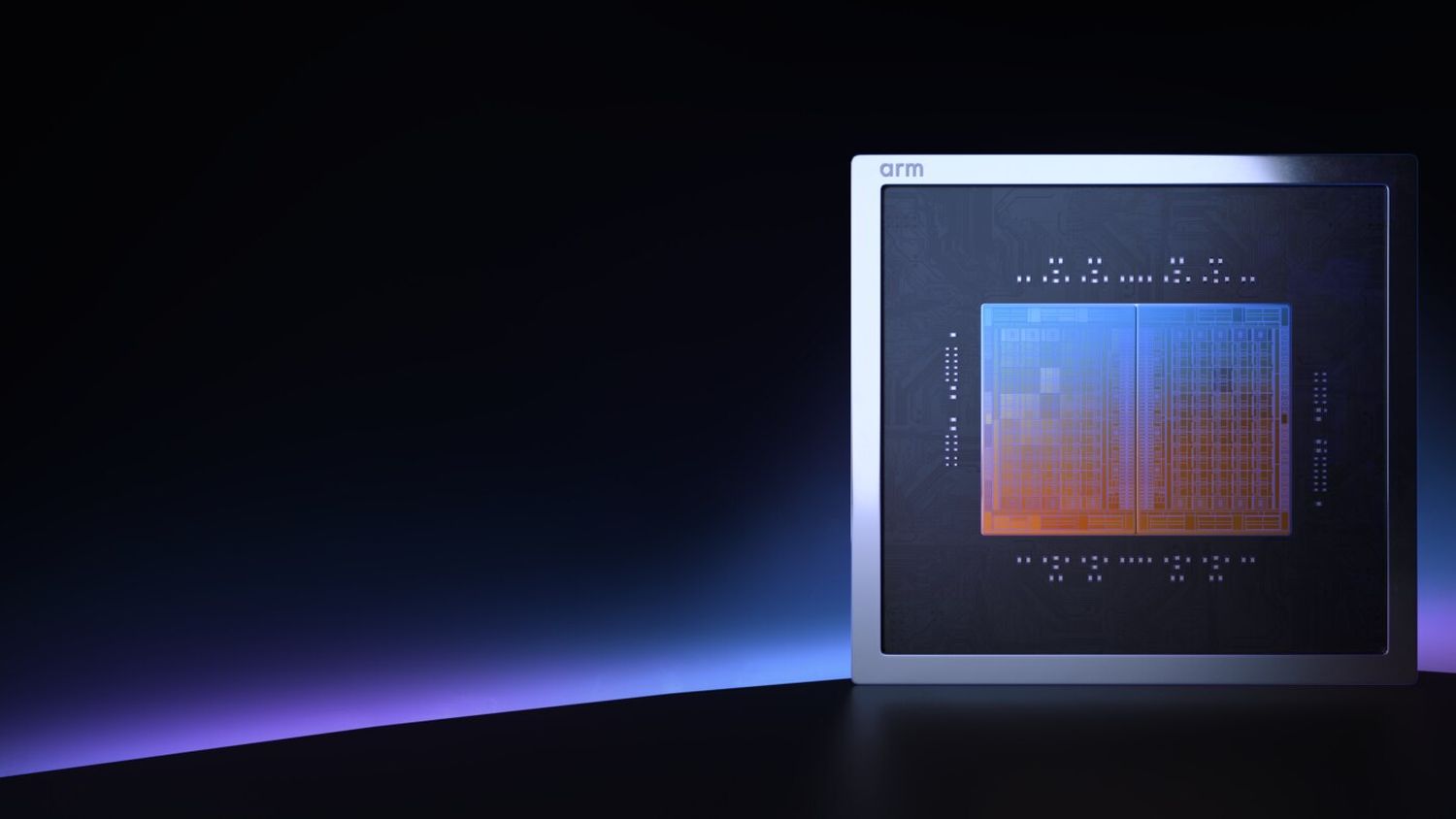
Earlier this week, ARM broke ground in the CPU space when it announced that it is now producing its own semiconductors and, more specifically, its own AI Chips. The announcement was made during a live event by Steve Haas, CEO of ARM, where he unveiled the ARM AGI CPU.
AGI, short for Artificial General Intelligence, is fabricated with the help of TSMC and its 3nm process, and in keeping with both the times and the trend, the CPU is designed for (you guessed it) Agentic AI tasks. “Let me be clear: We are now in a new business for ARM, and we are supplying CPUs,” Haas said during the event.
Taking On The Big Boys Chipmakers

One of ARM’s biggest, if not greatest, strengths is that its products serve as a low-power alternative to the traditional x86 chip architectures, dominated by the industry’s two major players, Intel and AMD. It’s also got its silicon fingers in virtually every pie of the wider tech industry.
Its products or instruction sets sit, in one form or another, within every other major tech player in the industry. From NVIDIA’s to Google’s and Amazon’s servers, to the M Series that powers Apple’s devices, or your Qualcomm-powered Snapdragon devices: almost all of it is powered by ARM.
Already Got The Partners

ARM isn’t just entering the AI chip business without a plan either. It announced that it already has some partners using their AGI CPUs. Meta, OpenAI, and Cloudflare are just some of its first customers, and more importantly, they’re already running several of the chipmaker’s AGI processors within their datacentres too. Other companies that have taken to using its CPUs also include Korean tech companies SK Telecom and Rebellions.
Once again, Agentic AI is key here, and with the new AGI CPU, ARM makes it clear that its chip is designed to deliver more compute and with better performance-per-watt. Of course, there’s also the financial benefits of entering the AI datacentre market.
It is expected that the chips that are capable of inferencing Agentic AI tasks will jump from US$25 billion (~RM100.3 billion) to US$60 billion (~RM240 billion) globally by 2030. Little wonder then that ARM would also want a share of the AI chips profits.
(Source: ARM, Wired, Tom’s Hardware, VOI)
