

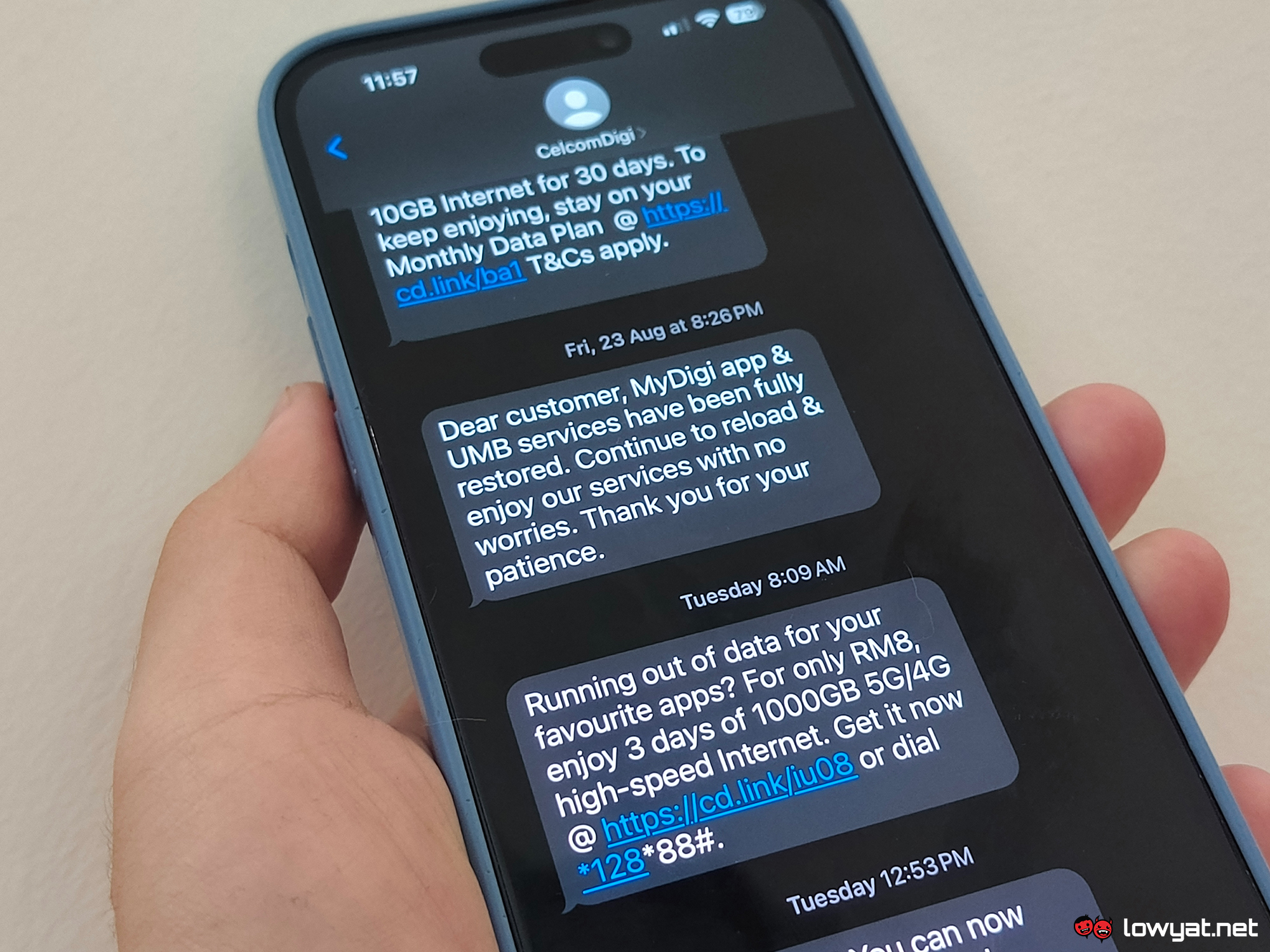
As sad as it is to say, many Malaysians have fallen victim to SMS scams by the day, despite various preventative measures. Unfortunately, stopping SMS scam syndicates is becoming more difficult as the use of fake base transceiver stations (fake BTS) becomes more frequent.
Deputy Communications Minister Teo Nie Ching explained that these devices allow syndicates to operate freely whilst evading detection from the Malaysian Communications and Multimedia Commission (MCMC) and the Royal Malaysian Police (PDRM). For the uninitiated, a fake BTS is a device that not only bypasses and disrupts telco servers but also sends out fake SMS to unknowing victims within the device’s radius. Moreover, people can easily conceal these devices in vehicles or bags.
“Because these devices can be taken anywhere, enforcement action relies heavily on public tip-offs and complaints to help us identify the syndicates’ exact locations,” Teo Nie Ching said earlier today. The Deputy Communications Minister was replying to a question from Senator Datuk Dr Mustafa Musa regarding the steps taken by the Malaysian Communications and Multimedia Commission (MCMC) to address fake BTS syndicates and the misuse of SIM cards for digital fraud throughout the nation’s telecommunications network.
Teo said that since September 2024, the MCMC, alongside the police, has carried out a series of operations that successfully crippled syndicates in high-density areas, namely in Kuala Lumpur and Johor Baru. She stressed that using or possessing these devices constitutes an offence under the Communications and Multimedia Act 1998. Courts may fine offenders up to RM1 million, sentence them to as much as 10 years in prison, or impose both penalties.

Regarding SIM cards, she announced that the new SIM card registration standard operating procedure will take effect on 27 February to curb line misuse. To protect the country’s digital ecosystem, the updated standard will also introduce heavier fines for telecommunications companies that fail to comply.
Through an official Facebook post, Teo explained that the MCMC will continue to strengthen monitoring, research, and enforcement cooperation to protect the people from these cross-border syndicates. In the event you receive a suspicious message, do not interact with it. Instead, you are encouraged to report the incident directly to MCMC through this link.
