

Intel has rolled out its XeSS 3.0 Software Development Kit (SDK) via Github. The highlight of the new AI upscaling technology includes binaries for the integration of multiframe generation, which brings it up to speed with the likes of NVIDIA’s DLSS and AMD’s FSR.
There is just one catch. At current, Intel is limiting the binaries of its XeSS 3.0 SDK to Windows only, with no word when the chipmaker plans to make it available on the Linux platform.
MFG Comes To ARC
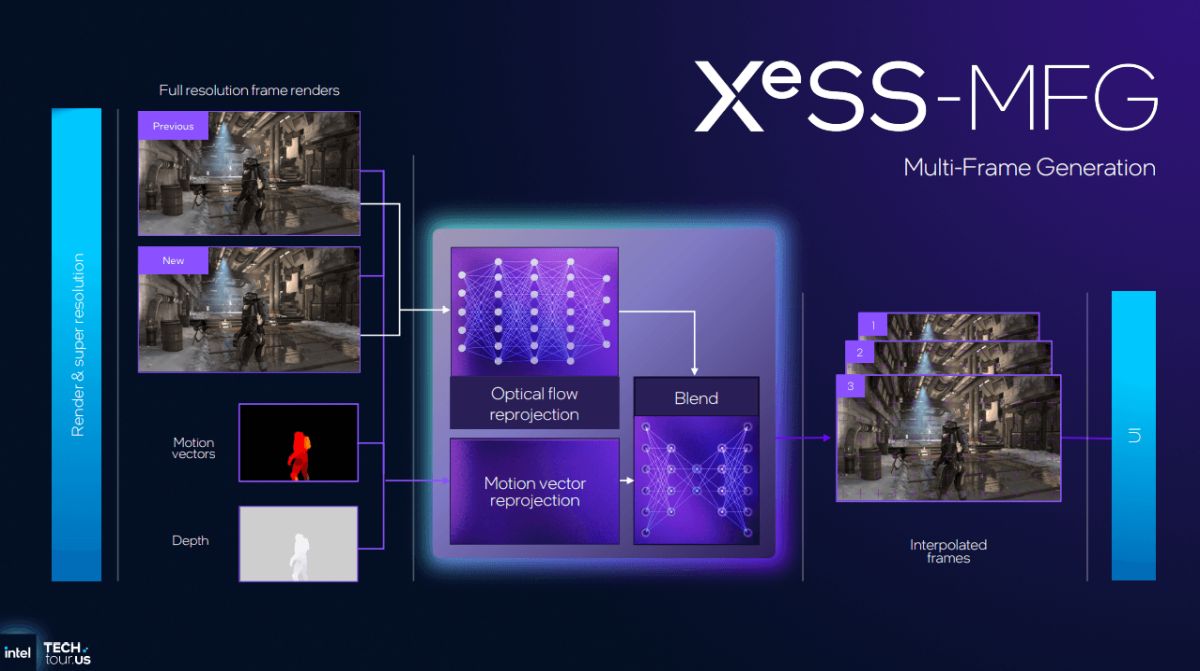
Multiframe Generation, or MFG for short, is basically the more advanced version of Frame Generation (FG) that was first introduced into games with NVIDIA’s RTX 40 Series. To provide the broad strokes of the technology, FG basically uses AI to insert synthetic frames between traditionally rendered frames to boost perceived FPS and improve visual smoothness in games. With FG, the GPU is typically inserting one extra frame between the rendered frame, thus boosting FPS, while technically reducing the stress on the GPU.
By that explanation, MFG is therefore a souped-up, vastly improved version of the technology, generating up to four additional frames, inserted between the traditionally rendered frames. In this case, NVIDIA’s DLSS 4 is the only upscaler capable of doing so, but come 30 March, DLSS 4.5 will be available for GeForce RTX 50 Series GPUs, and that technology will be able to churn out between five and six additional frames, further boosting the FPS in games, but at the cost of latency.
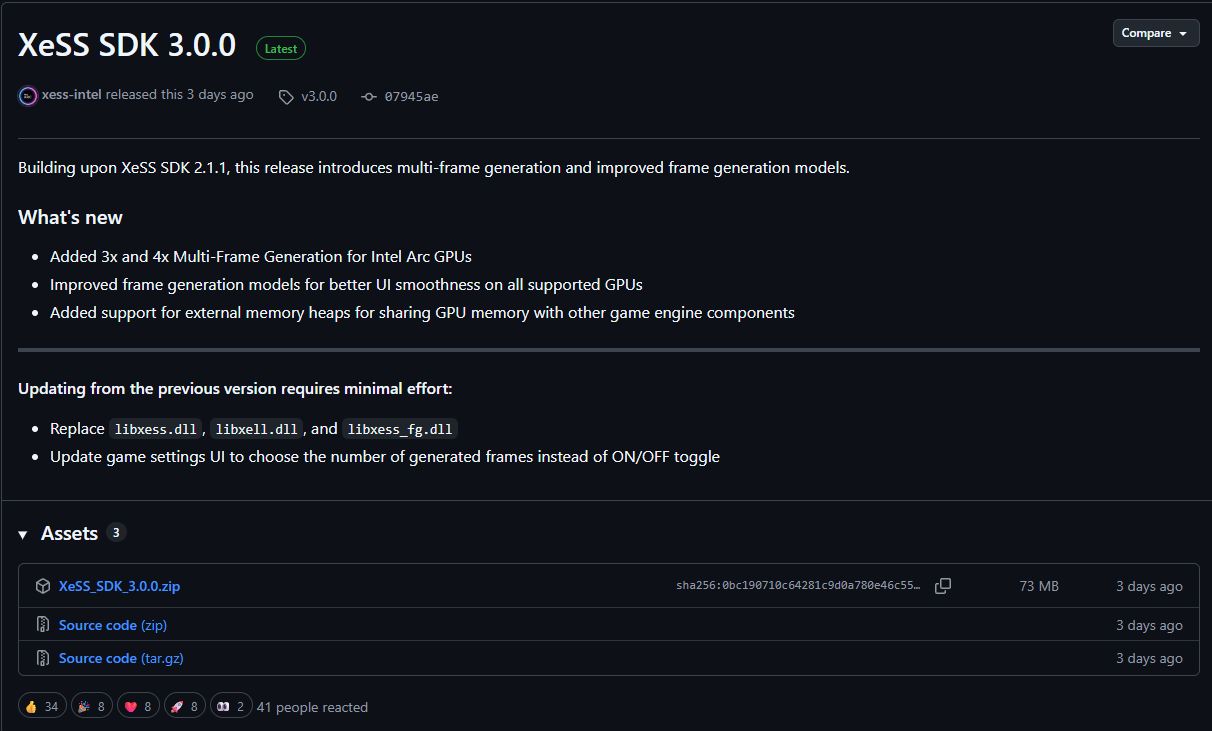
As explained by Phoronix, Intel’s XeSS 3.0 isn’t too difficult to set up for Windows. The tech portal says it’s as easy as replacing existing libxess.dll, libxell.dll, and libxess_gf.dll libraries with the new DLLs available via GitHub. A nice seamless upgrade for Windows gamers. If you’re interested, and you’ve got an ARC GPU, you can download the SDK in the source we’ve provided below.
