

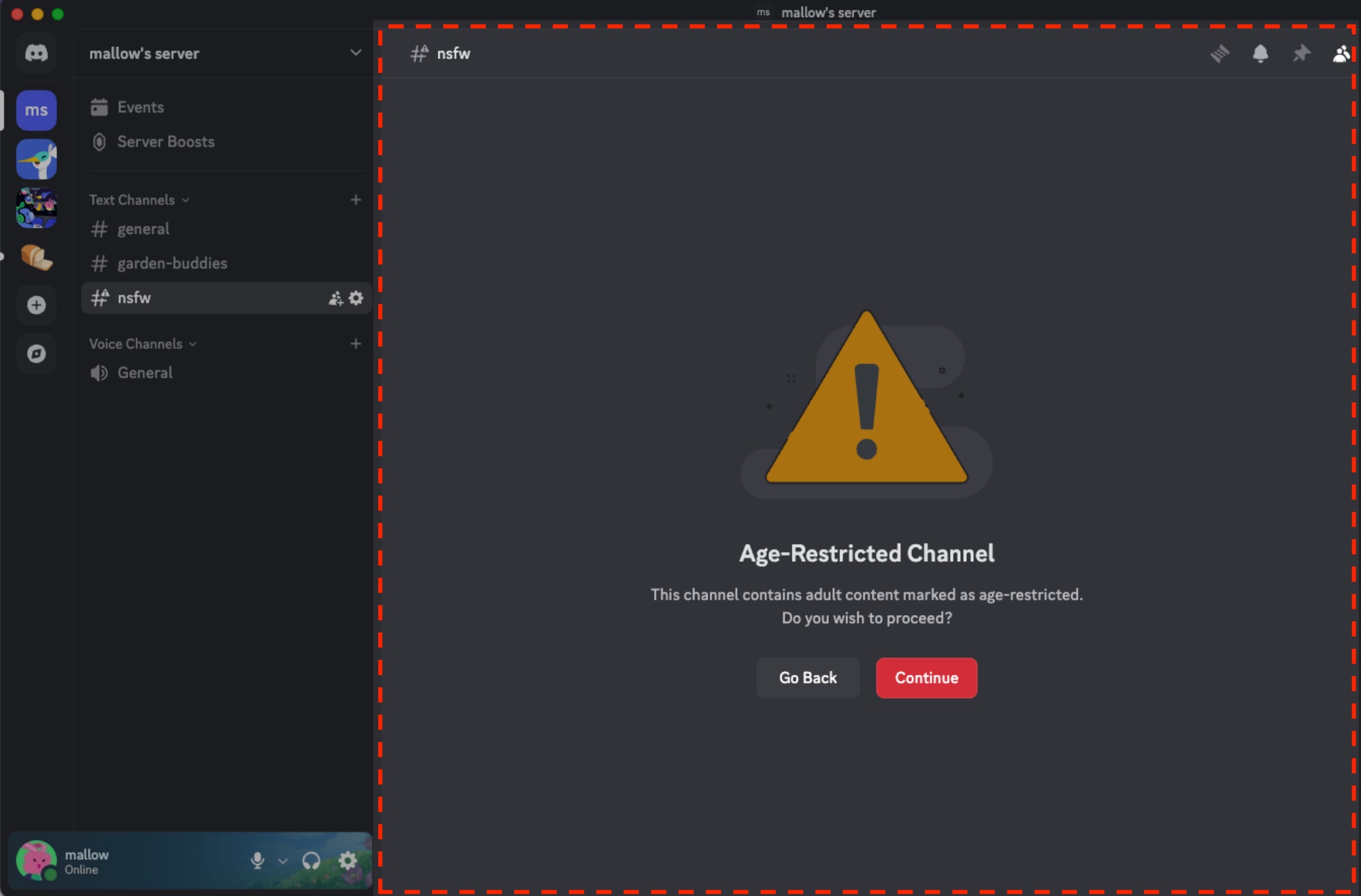
Earlier in the month, Discord announced that it will be treating users as teens by default, requiring age verification for full access. The company would very shortly after say that 90% of users will not be affected. This is because the company, or indeed the app itself, will have collected enough data on users to determine if they are adults. Then this week, with the wave of backlash not relenting, it says that it’s delaying the implementation from March to the second half of the year. There’s also the lengthy blog post by co-founder and CTO, Stanislav Vishnevskiy explaining the situation.
Reading said post though, I can’t help but think that this is a pretty good example of a company completely missing the point. And either genuinely not understanding the reason behind the backlash, or pretending to be obtuse to achieve some other goal. It even opens with a paragraph that’s your quintessential “How do you do, fellow kids?” meme. Which is saying something because he is apparently my age.
Where We Missed The Mark

From the blog post, Vishnevskiy thinks that the reason Discord users are mad is because users thought everyone would need to verify their age. Many have argued that this is not the case, but that hasn’t stopped the company from insisting – pointlessly – that 90% of users won’t have to. That was never the problem. What remains the problem is the 10% that is still required.
In its explanation, Vishnevskiy says that Discord already has an internal system that works accurately to determine a user’s age. This is done by reading account-level signals, including the age of your account, the presence of a payment method, the types of servers you’re in and other general account activity patterns. All of this is supposedly enough to determine that 90% of adults on the platform are actually adults.
It apparently works similarly to the system that catches spam rings and detects coordinated abuse. He further claims the tech doesn’t read convos or analyses them.
This sounds dodgy enough as it is, but not knowing the exact way in which it works, it’s easier to take the company’s word at face value. At the very least, Vishnevskiy says the platform will publish the methodology before all of this gets implemented. So at least those who know more about it can verify these claims.
Just As No Human Is Immune To Illness…
Now, we once again get back to the problematic 10%. If you’re not an adult, you’re locked from anything age restricted, but nothing else changes. And if you’re cool with that, then all’s well and good. If not, you’ll get options to prove your age. Which, for now, looks to be either get your face scanned, or upload an official ID, which is then sent to a third-party partner for verification.
That very last one is obviously problematic because just last year one such partner got breached. And had at least 70,000 photo IDs stolen. While Discord promises full transparency on vendors, from selection to verification, it doesn’t really matter In the end. Just like no human can live to their natural end without falling sick, no company is immune to security breaches. This of course includes Discord. So even if the platform does the age verification internally and nothing goes out to third parties, this just reduces one vector through which data can be leaked. It, itself, remains as one.
If You’re Not Paying For A Product…
Also, only a handful of jurisdictions in the world require verification that a platform user is not a child. Notable ones are obviously Australia and the UK. It’s unclear if there are over 8 million Discord users in Malaysia, so for now this shouldn’t affect us.
But even if it does, why is age verification made a global thing, rather than just the specific, affected markets? Vishnevskiy can claim all he wants that Discord is not collecting user data. But as he admits, it’s his word against the tech industry trend. And sure, people can be convinced to believe that it has enough Nitro subscribers paying to keep it free for everyone else. But that’s probably not going to last.
As to why, I’m not going to bring you, dear reader, down that rabbit hole. Instead, I’m just going to mention the elephant in the room – Discord secretly filed for IPO back in January. And you know what they say about a product or service that you get to use for free…
And that’s before we get to some of the more problematic partners Discord has had in the past, which ties into the point above.
Using Kids As A Cudgel Against Adults
Vishnevskiy also says that the company acknowledges that he is aware that for most users, “the right answer is not to do this at all. We hear you”. And then immediately invalidates this with “teens need real safeguards”, and that “they deserve an experience appropriate to their age”.
Since the beginning of time, a variation of the phrase “think of the children” has been used to push new boundaries in making life difficult for everyone else. Including children at times, but we won’t be discussing the issues with puritanism right now. Because in this specific case, kids are being used as a cudgel against adults, who are made to choose to either risk their personal data going to cybercriminals in order to be treated as one, or to reduce privacy risks and being treated like a teen.
These were never risks to be taken lightly in the first place. It’s especially so these days when cybercriminals are as sophisticated as they are in tracking, impersonating and scamming based on crumbs of leaked info. To say nothing of ad targeting, of course, which is almost all of that but legal, and just business.
Bullheadedly Building Trust
The blog post closes with Vishnevskiy saying things like “we’ve made mistakes. I won’t pretend we haven’t” and “we’re listening. We’ll get this right”. Which are all odd things to say when the company is bullheadedly ploughing ahead with everything people didn’t like. And if you’re a Discord user, you’re tired of hearing game devs use the same two words “we’re listening”. It’s probably the most common of all barefaced lies ever told in the world, commonly accompanied by no change in course or even doubling down.
The post ends with “and when we ship, you’ll be able to see for yourselves”. Though I’m not sure what anyone’s supposed to see. Discord probably thinks “these doubters will see that our age verification works perfectly and it’s for a good cause”. On the other hand, users, current and former, are more likely to wonder if this bold strategy will pay off for Discord.
